
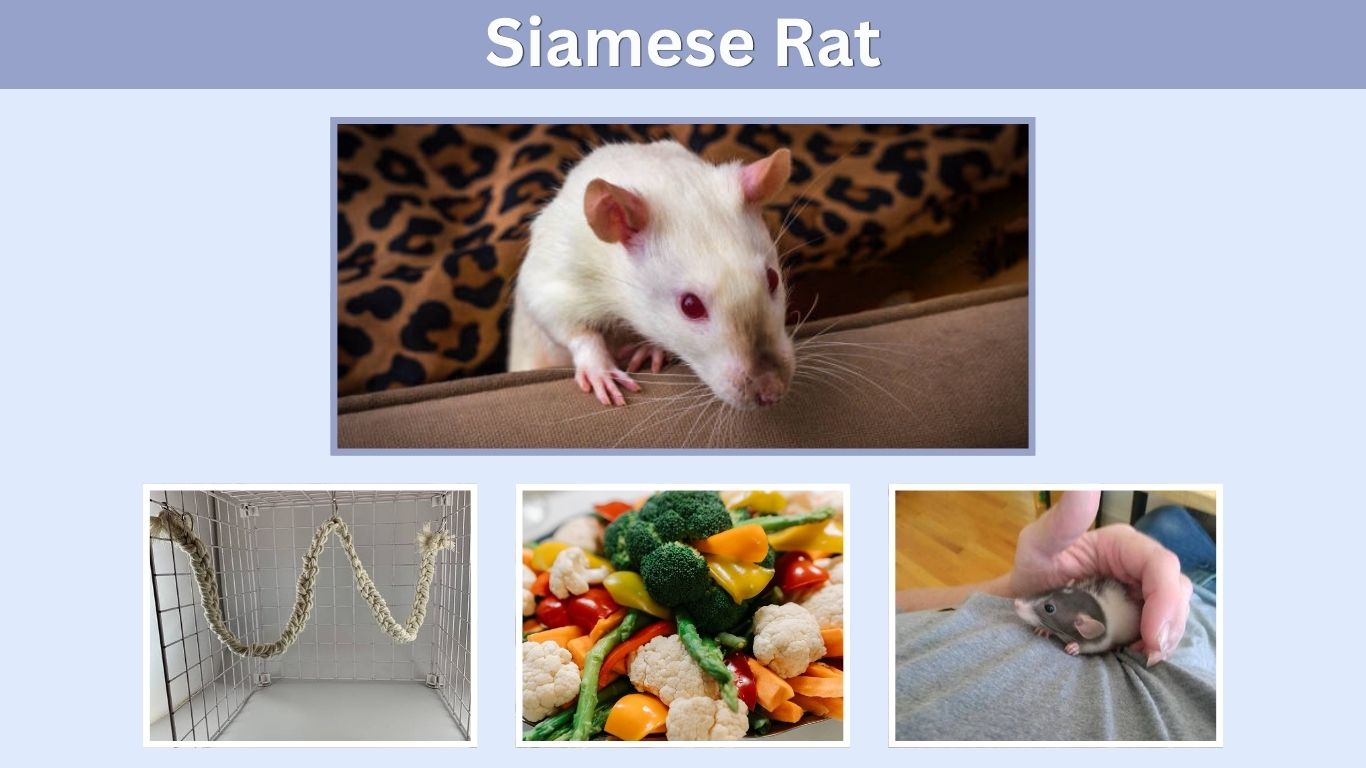
The Siamese rat is a striking fancy rat known for its warm beige body and darker points on the nose, ears, feet, and tail. Its coloration resembles the familiar pattern of Siamese cats, but it is a domesticated Norway rat rather than a separate species. Siamese rats can also have Dumbo ears, Rex coats, and several point colors. Beyond their appearance, they are intelligent, social pets that require companionship, proper nutrition, enrichment, clean housing, and regular attention throughout their relatively short lives.
What Is a Siamese Rat?
A Siamese rat is a domesticated fancy rat identified mainly by its distinctive point coloration. The body is lighter, while the extremities develop darker pigment. Siamese is therefore a color variety rather than a completely separate rat breed. Different genetics can produce seal, blue, Russian blue, and other variations while retaining the recognizable shaded Siamese appearance.
Siamese Rat Identification
Common characteristics include:
- Beige, ivory, or cream-colored body
- Darker nose or facial point
- Dark ears
- Colored feet
- Darker tail and tail base
- Gradual body shading
- Smooth transition between points and body color
- Red, ruby, or black eyes depending on variety
- Standard fancy-rat body structure
In classic seal point Siamese rats, the points are dark sepia while the body remains medium beige and becomes gradually darker toward the hindquarters.
Does a Siamese Rat Change Color?
Siamese coloring can become more obvious as a rat grows. Young rats may initially appear relatively pale, with their nose, feet, ears, and tail gradually becoming darker.
The intensity of the points can also vary between individuals. Genetics strongly influence the final shade, and some rats develop much darker body shading than others.
Siamese Rat Colors and Varieties
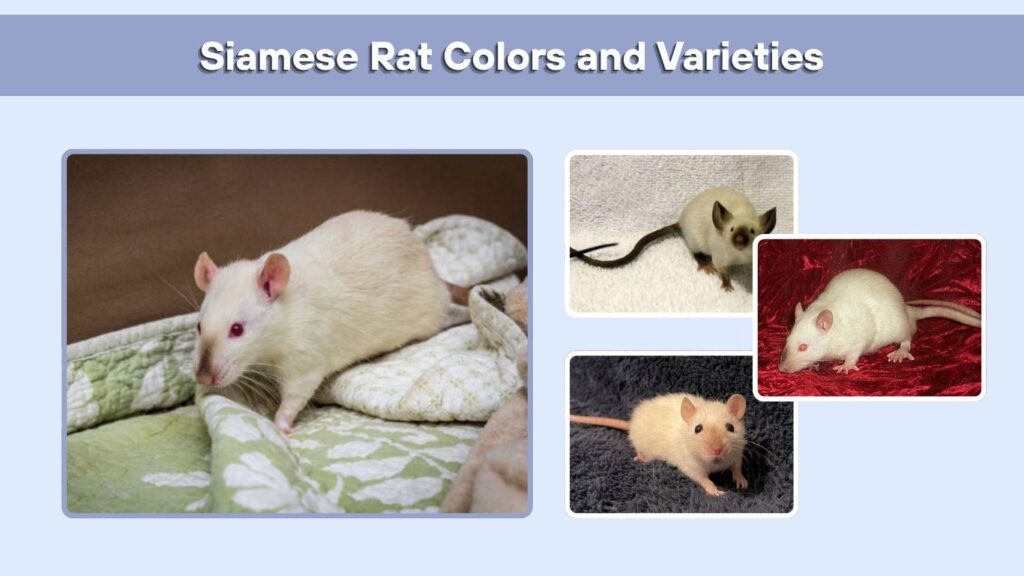
Siamese describes a color pattern, so it can occur alongside different ear shapes and coat types. Rat breeders may combine Siamese coloration with Dumbo ears, Rex fur, Velveteen coats, or other traits. Point colors can also vary according to the genes carried by the animal.
Common Siamese Rat Varieties
Examples include:
- Seal point Siamese rat
- Blue point Siamese rat
- Russian blue point Siamese
- Black-eyed Siamese rat
- Siamese Dumbo rat
- Siamese Rex rat
- Siamese Dumbo Rex rat
- Siamese Velveteen rat
- Dwarf Siamese rat
- Marked Siamese rat
Not every combination is recognized as a standardized show variety, but these descriptions are commonly used to identify inherited characteristics.
Seal Point Siamese Rat
Seal point is one of the best-known Siamese colors. The body is generally medium beige, becoming gradually darker toward the back and hindquarters.
The nose, ears, feet, tail, and tail base develop rich dark sepia points. Traditional seal point Siamese rats commonly have red or light ruby eyes.
Blue Point Siamese Rat
Blue point Siamese rats have cooler coloration. Instead of dark sepia points, the nose, ears, feet, and tail show a slate-blue shade.
Their body tends to be ivory with a warm bluish cast. Red or ruby eyes are commonly associated with this recognized variety.
What Is a Siamese Dumbo Rat?
A Siamese Dumbo rat combines Siamese coloration with the Dumbo ear type. Dumbo ears are positioned lower on the sides of the head and often appear larger and rounder than standard rat ears. The term does not indicate a different species or personality type.
Siamese Dumbo Rat Appearance
A Siamese Dumbo may have:
- Large, rounded ears
- Low-set ear placement
- Beige or ivory body
- Dark facial point
- Dark ears, feet, and tail
- Red, ruby, or other appropriate eye color
- Standard or textured coat
A seal point Siamese Dumbo, for example, combines Dumbo ears with the classic beige body and deep sepia points.
Does Dumbo Affect Temperament?
Dumbo ear shape does not automatically make a rat calmer or friendlier. Temperament depends more heavily on genetics, health, handling, early socialization, and the animal’s individual personality.
A well-socialized Dumbo Siamese can be just as interactive and curious as any other healthy fancy rat.
Siamese Rex Rat
A Siamese Rex rat combines Siamese point coloration with the Rex coat trait. Rex rats have curly or wavy fur and often possess curled whiskers. This creates a very different texture from the smoother coat of a standard Siamese rat while preserving the recognizable point pattern.
Siamese Rex Identification
Typical characteristics can include:
- Wavy or curly fur
- Curled whiskers
- Beige or ivory body
- Darker facial point
- Dark ears and feet
- Darkened tail
- Point coloration that develops with age
A Siamese Dumbo Rex can display all three characteristics: Siamese coloration, Dumbo ears, and a Rex coat.
Siamese Rat vs. Himalayan Rat
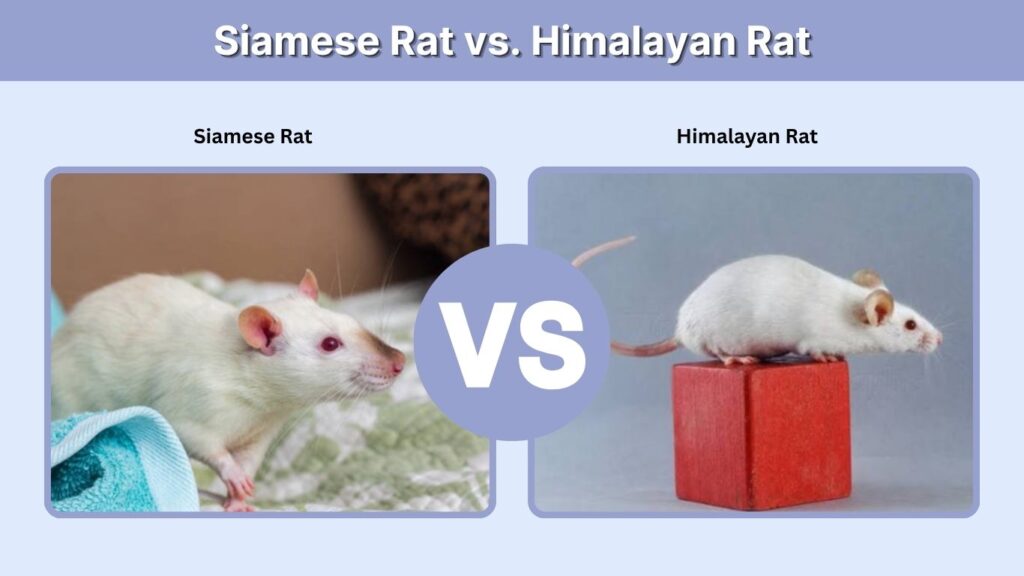
Siamese and Himalayan rats are closely related in appearance and are frequently confused. Both have pale bodies with darker points, but the amount of body shading is one of the easiest ways to distinguish them. A Siamese rat generally has significantly more beige shading across its body than a Himalayan rat.
Main Differences
A Siamese rat typically has:
- Medium beige or ivory body
- Noticeable body shading
- Dark points
- Gradual transition between points and body
- Darker coloration toward the hindquarters
A Himalayan rat typically has:
- White or nearly white body
- Much less body shading
- Clearly defined dark points
- Stronger contrast between points and body
AFRMA’s genetic descriptions also distinguish Siamese and Himalayan varieties rather than treating them as the same color.
Siamese Rat Personality and Temperament
Siamese coloring does not produce a unique personality. Like other domesticated rats, Siamese rats can become highly social, curious, playful, and comfortable interacting with people. Their individual personality is influenced by inherited temperament, upbringing, socialization, environment, age, and previous experiences.
Are Siamese Rats Friendly?
Well-socialized Siamese rats often enjoy exploring their environment and interacting with familiar people. Many learn household routines and may approach their owners for attention or treats.
Rats are naturally social animals, so they should generally live with compatible rat companions. Regular interaction with people is beneficial, but human company does not fully replace the social relationship between rats.
How to Care for a Siamese Rat
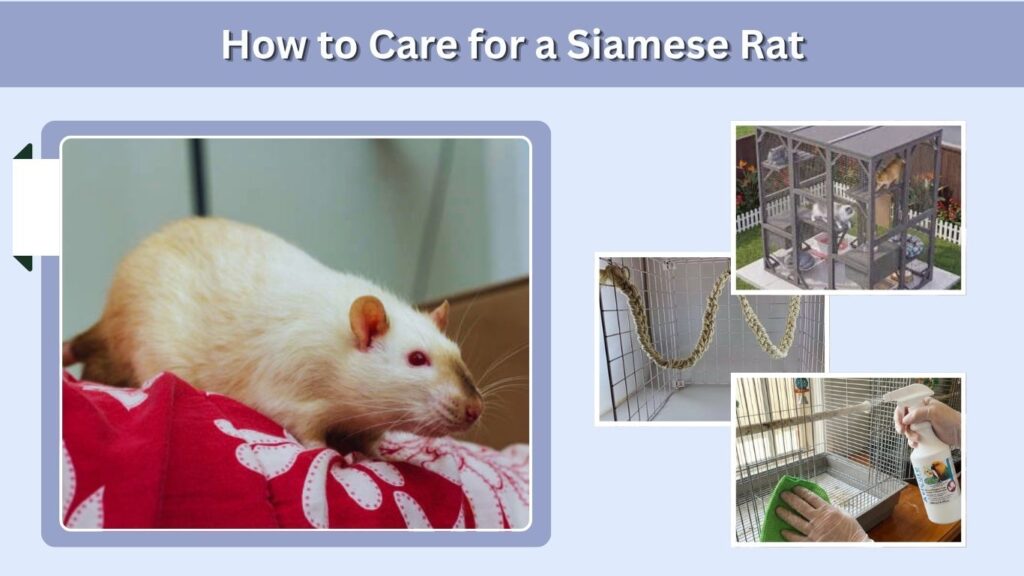
Siamese rats require essentially the same care as other fancy rats. Their enclosure should provide enough room for movement, climbing, hiding, sleeping, and social interaction. Maintaining cleanliness without eliminating all familiar scents helps create a comfortable environment while reducing excess ammonia and waste.
Basic Siamese Rat Care
Provide:
- At least one compatible rat companion
- Spacious, well-ventilated housing
- Solid walking and resting surfaces
- Safe bedding
- Nesting material
- Hammocks and hides
- Climbing structures
- Chew toys
- Foraging opportunities
- Daily exercise and interaction
- Fresh drinking water
- Balanced rat food
Their enclosure should be inspected regularly for damaged accessories, sharp surfaces, excessive moisture, and accumulated waste.
What Do Siamese Rats Eat?
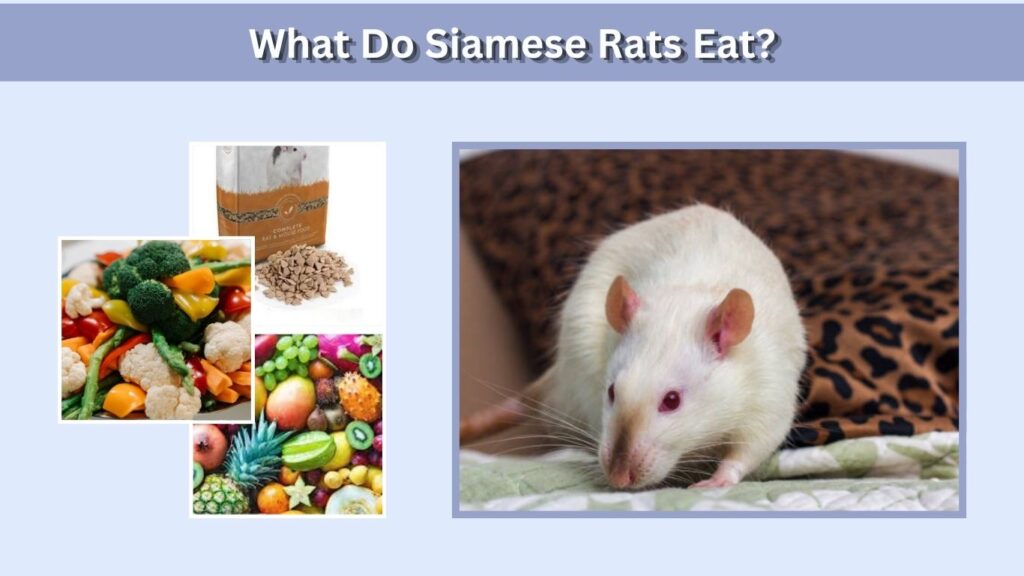
Siamese coloration does not require a special diet. A nutritionally complete food formulated for pet rats should provide the foundation of their daily nutrition. Suitable fresh foods can add variety, but treats and calorie-dense foods should remain limited.
Siamese Rat Diet
A balanced diet may include:
- Complete rat pellets or blocks
- Suitable fresh vegetables
- Small portions of safe fruit
- Occasional healthy treats
- Constant access to clean water
Avoid creating an unbalanced diet based mainly on seeds, sugary treats, or human food.
Maintaining an appropriate body condition is particularly important because obesity can contribute to health problems and reduced mobility as rats age.
Siamese Rat Lifespan and Health
A Siamese rat’s color does not substantially alter the normal lifespan expected for a domesticated rat. Health depends much more on genetics, nutrition, environment, disease exposure, body condition, veterinary care, and overall husbandry. Regular observation helps owners notice behavioral or physical changes before illness becomes more advanced.
How Long Do Siamese Rats Live?
Pet rats typically live around 2–3 years, although some individuals live shorter or longer lives. Merck Veterinary Manual lists two to three years as a typical lifespan range for pet rats.
Common warning signs requiring attention include breathing difficulty, repeated sneezing, unusual lumps, appetite loss, weight changes, poor coat condition, discharge around the eyes or nose, and reduced activity.
FAQs
Is there really a Siamese rat?
Yes. Siamese rats are domesticated fancy rats with characteristic darker points and a lighter shaded body. Siamese refers primarily to coloration rather than a separate rat species.
What is a seal point Siamese rat?
A seal point Siamese has a medium beige body with rich dark sepia coloration on the nose, ears, feet, tail, and tail base. The points gradually blend into the body.
What is a Siamese Dumbo rat?
A Siamese Dumbo rat combines Siamese point coloration with large, low-set Dumbo ears. Both traits can occur in the same fancy rat.
What is the difference between a Himalayan and Siamese rat?
Siamese rats generally have beige body shading that gradually blends into darker points. Himalayan rats have much whiter bodies with more clearly defined points.
How long does a Siamese rat live?
Siamese rats generally live about two to three years, similar to other pet rats. Individual lifespan depends on genetics, nutrition, housing, health, and veterinary care.