
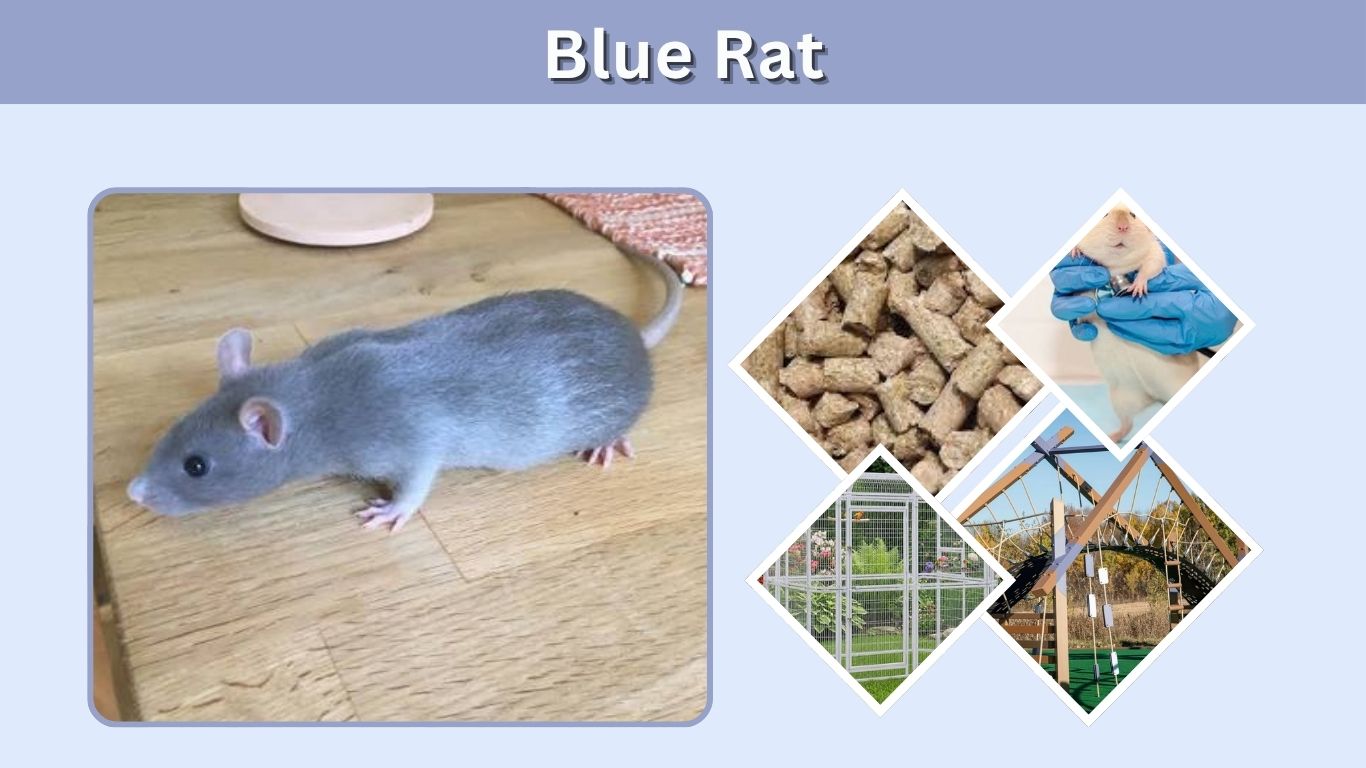
A blue rat is not a separate species of rat but a fancy rat with a coat that appears blue-gray, slate, or smoky silver. Several varieties fall under the blue category, including Russian Blue, American Blue, British Blue, and lighter powder-blue shades. These attractive rats are popular pets because of their unusual coloring, intelligence, and social personality. Blue rats require the same basic care as other domesticated rats, including companionship, proper nutrition, a spacious cage, enrichment, and regular health checks. Here is everything you should know about blue rats.
What Is a Blue Rat?
Blue rats are domesticated brown rats (Rattus norvegicus) selectively bred for coat-color traits that dilute black pigment into shades ranging from dark charcoal-blue to pale silver-gray.
The exact appearance varies considerably. Some blue rats have deep slate coats, while others look softer, lighter, or slightly silvery. Lighting can also change how blue the coat appears.
Blue Rat Identification
Common characteristics include:
- Blue-gray, slate, or smoky coat
- Dark or moderately dark eyes in many varieties
- Standard or Dumbo ear types
- Smooth, Rex, or other coat textures
- Medium-sized domesticated rat body
- Long, mostly hairless tail
- Color ranging from pale silver-blue to dark steel-gray
The word “blue” refers to the diluted gray appearance rather than a bright blue color.
Are Blue Rats a Separate Breed?
No. Fancy rats are generally classified by characteristics such as color, markings, ear shape, and coat type rather than into breeds in the same way dogs are.
For example, a rat can simultaneously be Russian Blue, Dumbo-eared, and Rex-coated.
Types of Blue Rats
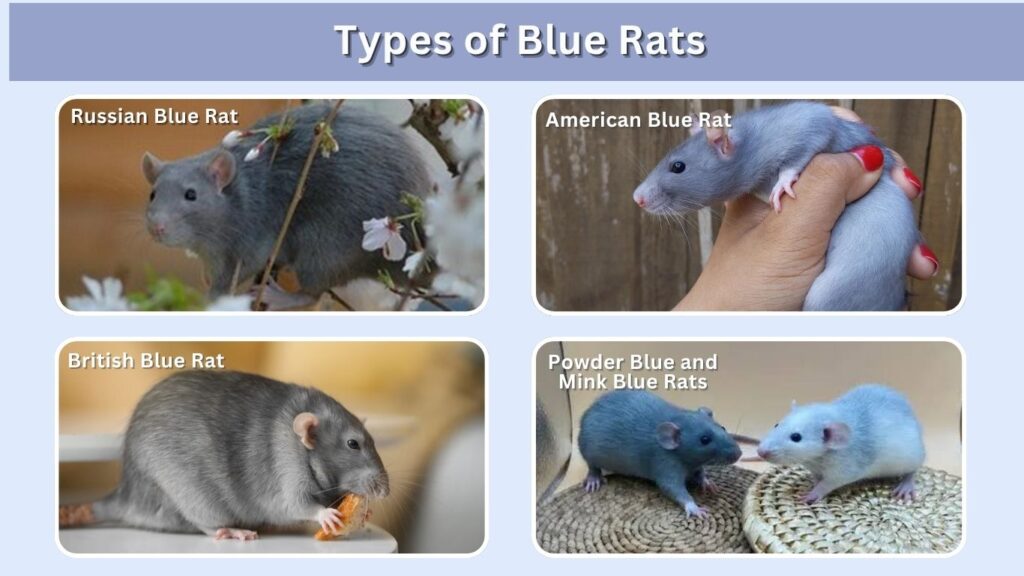
Several names are commonly used for blue-colored fancy rats. Terminology can vary between rat organizations, countries, and breeders, so rats with similar appearances may sometimes be described differently.
Russian Blue Rat
The Russian Blue rat is one of the best-known blue varieties. It typically has a rich, dark slate-blue or gunmetal-gray appearance.
Russian Blues often look darker than many other blue varieties. Their coat can have a cool, slightly metallic tone that becomes particularly noticeable in good lighting.
American Blue Rat
American Blue generally refers to a medium to lighter blue-gray coloration. Compared with Russian Blue, it may appear softer and less intensely dark.
Individual coloring can vary depending on genetics, age, coat condition, and breeding lines.
British Blue Rat
British Blue is another term encountered among fancy-rat breeders. These rats are typically described as having an even blue-gray coloration, although definitions and standards may vary between organizations.
Powder Blue and Mink Blue Rats
Powder Blue describes particularly soft, pale blue-gray coloring. Mink-related blue shades may have warmer undertones compared with the cooler slate appearance associated with Russian Blue.
Because several color genes can interact, identifying an exact variety from appearance alone is not always easy.
Russian Blue Rat vs. Other Blue Rats
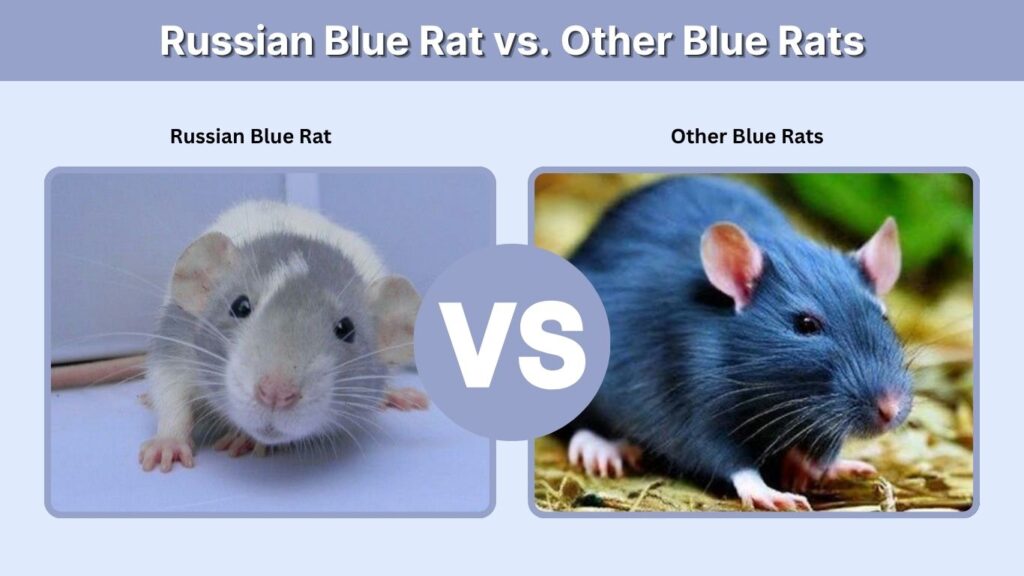
Russian Blue is often confused with other blue fancy rats because all of them have diluted gray coloration.
Main Differences
- Russian Blue: Usually deeper slate or gunmetal blue
- American Blue: Often a softer medium blue-gray
- Powder Blue: Noticeably lighter and more silvery
- Mink-related Blue: May have slightly warmer gray tones
- British Blue: Blue-gray coloration defined according to particular breeding standards
For pet owners, these color differences have little effect on care or behavior.
Does Coat Color Affect Personality?
There is no reliable reason to expect a blue rat to behave differently simply because of its coat color.
Temperament is influenced much more strongly by breeding, early handling, environment, health, individual personality, and socialization.
Blue Dumbo Rats
A Dumbo blue rat combines blue coloration with Dumbo ears.
How to Recognize a Dumbo Blue Rat
- Large rounded ears
- Ears positioned lower on the sides of the head
- Blue-gray coat
- Broad, expressive facial appearance
- Standard fancy-rat body structure
“Dumbo” describes ear placement and shape, not a separate rat species.
Dumbo Russian Blue Rat
A Russian Blue Dumbo rat has both the darker Russian Blue coloration and Dumbo-style ears. These rats are popular among pet owners because the combination produces a distinctive appearance.
Their care needs are essentially the same as those of standard-eared fancy rats.
Blue Rex Rats
Rex rats have curly or wavy coats rather than the smoother coat found on standard rats.
A blue Rex rat therefore combines blue coloration with the Rex coat trait. The whiskers may also appear curled.
Appearance
Blue Rex rats may have:
- Soft blue-gray coloration
- Wavy or curly fur
- Curled whiskers
- Standard or Dumbo ears
- Slightly uneven-looking coat texture
Coat texture may change as the rat matures.
Blue Rat Temperament and Behavior
Well-socialized pet rats are intelligent, curious, interactive animals. Blue rats share these same characteristics.
They can learn routines, recognize familiar people, investigate toys, solve simple food puzzles, and enjoy supervised interaction.
Typical Behaviors
- Exploring tunnels and boxes
- Climbing
- Grooming cage mates
- Nest building
- Searching for hidden food
- Sleeping together
- Learning simple tricks
- Interacting with familiar owners
Rats are social animals and generally do best with compatible rat companions rather than living alone.
Blue Rat Cage and Habitat

A proper enclosure should provide enough room for movement, climbing, sleeping, eating, and enrichment.
Essential Cage Setup
- Spacious, well-ventilated cage
- Secure doors and appropriate bar spacing
- Safe absorbent bedding
- Multiple hiding areas
- Hammocks or sleeping areas
- Climbing structures
- Food bowl
- Water bottle or suitable water source
- Chew-safe enrichment
- Toys and tunnels
Solid resting surfaces are useful, and the cage should be cleaned regularly without eliminating every familiar scent at once.
Enrichment
Rotate cardboard boxes, ropes, tunnels, digging materials, chew items, and food puzzles. Supervised time outside the cage in a rat-safe area can provide additional exercise and mental stimulation.
What Do Blue Rats Eat?
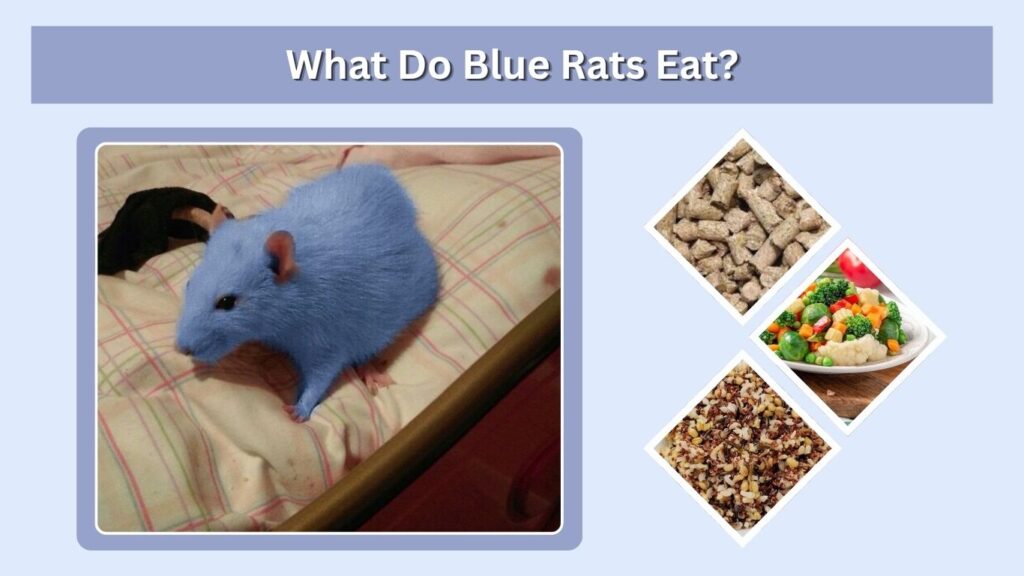
Blue rats need the same balanced diet as other pet rats.
A quality formulated rat food should generally form the nutritional foundation.
Suitable Foods
- Complete rat pellets or blocks
- Small portions of vegetables
- Limited amounts of fruit
- Cooked grains
- Occasional appropriate protein-rich foods
- Fresh water at all times
Foods high in sugar, salt, or fat should remain limited rather than becoming daily staples.
Blue Rat Size and Lifespan
Adult size varies according to sex, genetics, and individual development. Males are generally heavier and more robust, while females are often smaller and more active.
Pet rats commonly live approximately 2–3 years, although individual lifespans vary.
Good nutrition, clean housing, social companionship, appropriate enrichment, and veterinary care can support quality of life throughout that period.
Common Blue Rat Health Problems

Blue coloration does not eliminate the health concerns commonly seen in domestic rats.
Problems Owners Should Watch For
- Sneezing or noisy breathing
- Respiratory infections
- Skin irritation
- External parasites
- Overgrown teeth
- Lumps or tumors
- Weight loss
- Reduced appetite
- Difficulty moving
- Changes in normal behavior
Persistent respiratory symptoms, rapidly growing lumps, significant weight changes, or unusual lethargy should be evaluated by a veterinarian experienced with small mammals.
Are Blue Rats Good Pets?
Blue rats can make excellent companion animals for people prepared to meet their social and environmental needs.
Their unusual blue-gray coloring adds visual appeal, but their intelligence and interactive behavior are usually the bigger reasons people enjoy keeping them.
They do require regular cage maintenance, social companionship, daily observation, enrichment, and access to veterinary care. Prospective owners should therefore consider their care requirements rather than choosing a rat based only on coat color.
FAQs
Are blue rats naturally blue?
Blue rats are actually shades of diluted gray, slate, or silver rather than bright blue. Selective breeding produces the distinctive blue-toned appearance.
What is a Russian Blue rat?
A Russian Blue rat is a fancy-rat color variety typically characterized by deep slate-blue or gunmetal-gray fur. It is not a separate species.
Can a blue rat have Dumbo ears?
Yes. Coat color and ear type are separate traits, so blue rats can have either standard ears or Dumbo ears.
How long do blue rats live?
Domestic blue rats generally have a lifespan of around 2–3 years, although genetics, health, nutrition, and veterinary care can influence longevity.
Are blue rats rare?
Some blue varieties can be less common than standard colors, especially particular combinations such as Russian Blue Dumbo or Blue Rex. Availability depends heavily on local breeders and breeding lines.