
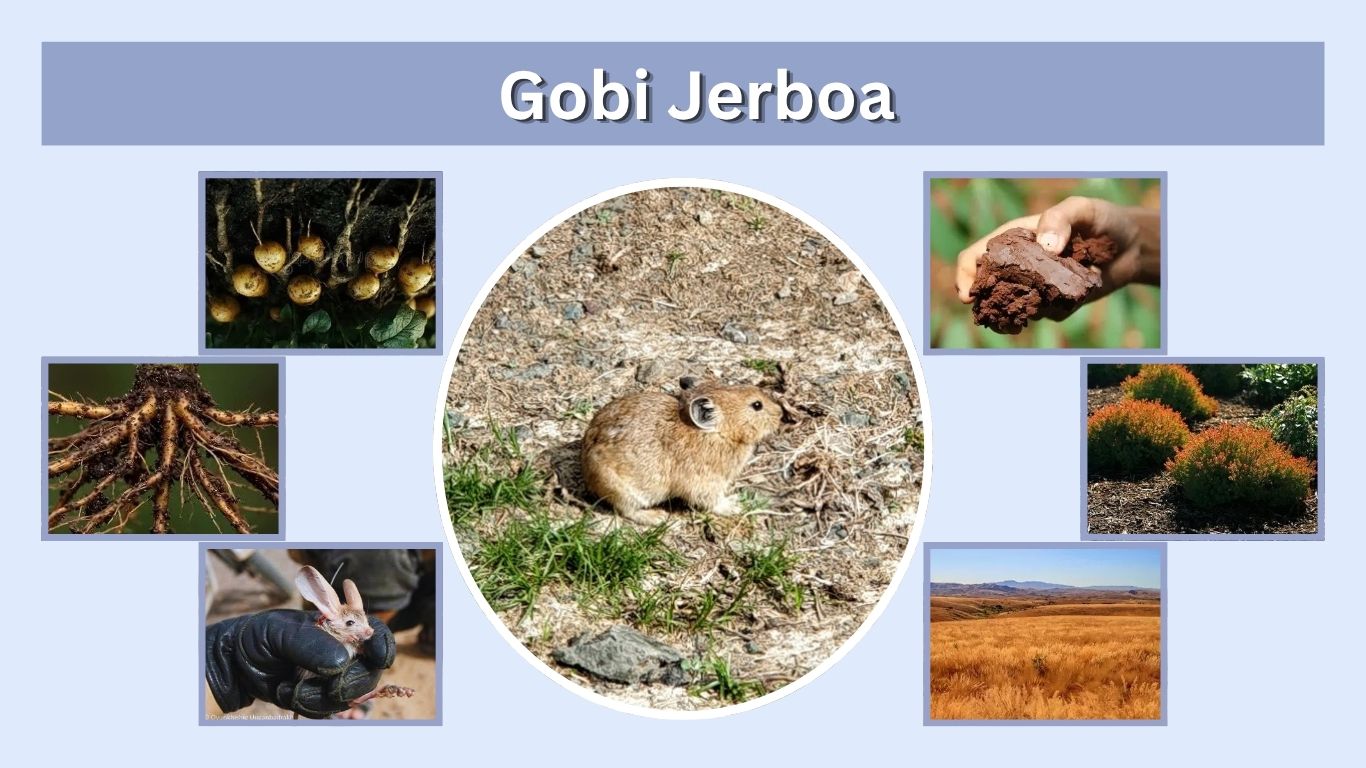
The Gobi jerboa is a small desert rodent recognized by its long hind legs, oversized ears, short front limbs, and tufted tail. It survives in the cold, dry deserts and steppes of Mongolia and northern China, where food, water, and shelter can be difficult to find. Although it resembles a miniature kangaroo, the Gobi jerboa belongs to the rodent family Dipodidae. Its powerful jumping ability, nocturnal lifestyle, and underground burrows help it cope with predators and extreme desert temperatures.
What Is a Gobi Jerboa?
The Gobi jerboa is one of several jerboa species adapted to open deserts and semi-arid grasslands. It spends much of the day underground and emerges after dark to search for vegetation, seeds, roots, and insects.
Classification and Scientific Name
The currently accepted scientific name in the American Society of Mammalogists’ Mammal Diversity Database is Orientallactaga bullata. However, the older name Allactaga bullata is still widely used in field guides, scientific references, and wildlife websites. The species was formally described by American zoologist Glover Morrill Allen in 1925.
| Feature | Information |
| Common name | Gobi jerboa |
| Current scientific name | Orientallactaga bullata |
| Former scientific name | Allactaga bullata |
| Order | Rodentia |
| Family | Dipodidae |
| Subfamily | Allactaginae |
| Distribution | Mongolia and China |
| Main habitat | Desert, steppe and xeric shrubland |
| Activity | Nocturnal |
| Diet | Omnivorous |
What Does a Gobi Jerboa Look Like?
A Gobi jerboa has a compact body, a relatively large head, short front legs, and extremely long hind legs. Its sandy gray or buff-colored upper fur blends into desert soil, while its underside, forearms, inner legs, and upper lip are generally white.
The tail is longer than the animal’s body and ends in a noticeable black-and-white tuft. This tail helps the jerboa maintain balance, steer while jumping, and stabilize its body when standing upright. It also has large eyes for nighttime activity and enlarged auditory structures that improve its ability to detect faint sounds.
Gobi Jerboa Size and Weight
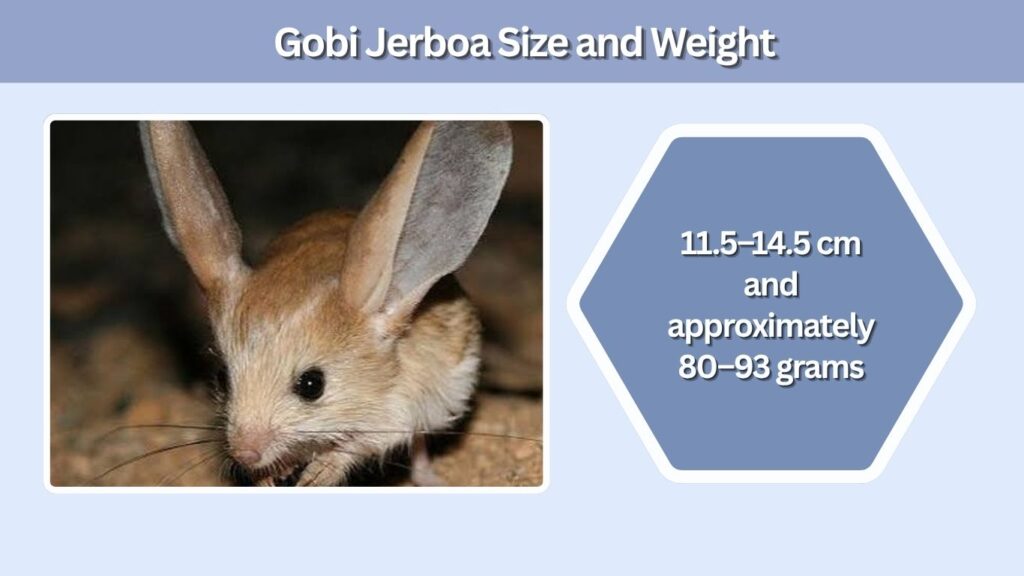
Despite its long-legged appearance, the Gobi jerboa is a relatively small mammal. Much of its apparent length comes from its elongated tail.
An adult generally has:
- Head-and-body length: 11.5–14.5 cm
- Tail length: 16.5–20 cm
- Hind-foot length: 5.6–6.2 cm
- Ear length: 3.1–3.8 cm
- Weight: approximately 80–93 grams
Its tail is therefore noticeably longer than its head and body combined. The long hind feet contain the muscular and skeletal adaptations needed for rapid, two-legged movement across open ground.
Where Does the Gobi Jerboa Live?
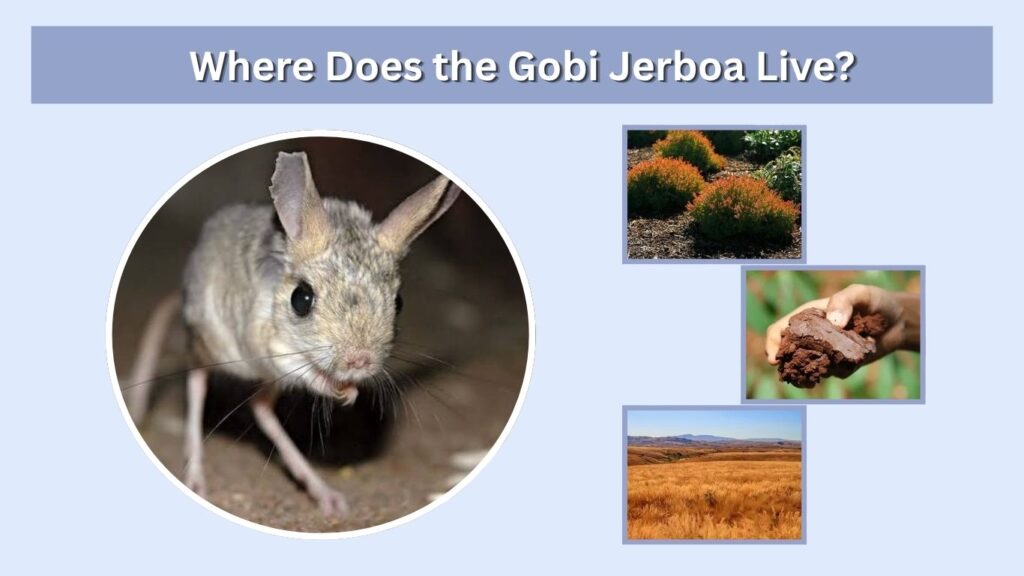
The species occurs across southern and western Mongolia and neighboring parts of northern and northwestern China. Its Chinese range includes areas of Inner Mongolia, eastern Xinjiang, Ningxia, Gansu, and northern Shaanxi.
Gobi Desert Habitat
The Gobi Desert is not composed entirely of loose sand. Much of it contains gravel plains, rocky ground, dry grassland, clay soils, low shrubs, and patches of sandy desert. Gobi jerboas favor open desert and steppe areas where plants such as saltwort, ephedra, and scattered desert bushes grow.
These plants provide food, shade, and cover. Open ground also allows the jerboa to use its speed and unpredictable jumping movements when escaping danger. The species is considered particularly well adapted to extremely dry Gobi environments.
Underground Burrows
During daylight hours, a Gobi jerboa usually remains inside an underground burrow. Documented burrows are relatively simple and may extend approximately 60 centimeters. They include a defined nesting chamber, although this chamber may contain little or no bedding.
The burrow protects the animal from daytime heat, cold nights, strong winds, and many predators. It also provides a sheltered place for resting and raising young. Gobi jerboas are generally solitary, with individual adults occupying separate burrows.
What Does a Gobi Jerboa Eat?
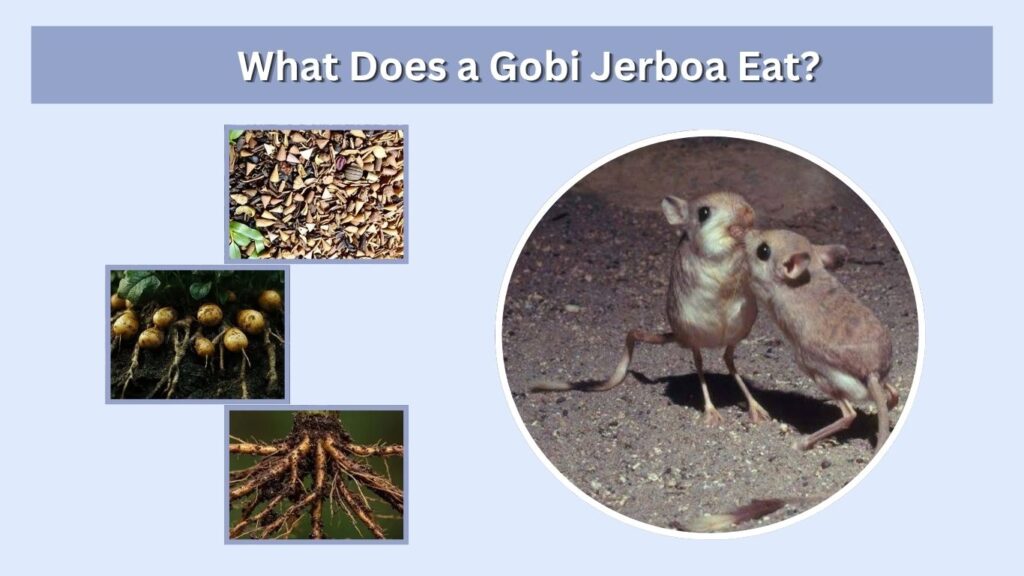
The Gobi jerboa is an omnivore, meaning it consumes both plant and animal material. Its exact menu changes according to season, location, rainfall, and food availability.
Common Foods
Its diet includes:
- Green desert vegetation
- Seeds and grains
- Plant roots
- Underground tubers
- Grasshoppers
- Beetles
- Insect larvae
Seeds and roots provide energy and nutrients when fresh plants are scarce. Insects offer protein and may become especially valuable during periods when vegetation is limited. The jerboa uses its small front paws to handle food while sitting upright on its hind legs.
Does It Need to Drink Water?
Like many desert rodents, the Gobi jerboa obtains part of its moisture from food, particularly fresh vegetation, roots, tubers, and insects. Staying underground during the day and foraging at night also reduces water loss.
However, species-specific research on its drinking behavior remains limited. It is safer to say that the animal is highly water-efficient rather than claiming it never drinks.
Gobi Jerboa Adaptations
The Gobi jerboa survives because several physical and behavioral characteristics work together. These adaptations help it travel efficiently, avoid predators, conserve moisture, and tolerate extreme temperatures.
Powerful Hind Legs
The elongated hind legs allow the animal to move through a series of fast hops. When threatened, jerboas can change speed and direction suddenly, creating an unpredictable escape path that is difficult for a predator to follow.
Research on desert rodents indicates that this irregular bipedal movement can provide an advantage in exposed habitats where there are few trees or rocks behind which to hide.
Long Balancing Tail
The tail works as a counterbalance during rapid movement. When the jerboa pushes forward with its hind legs, the tail helps control body position and assists with turning and landing. When the animal is resting upright, it may also use the tail as an additional point of support.
Large Ears and Sensitive Hearing
Large ears and enlarged auditory bullae help the jerboa detect quiet movements in the dark. This is valuable because many desert predators hunt at night. Sensitive hearing may give the animal enough warning to return to its burrow or begin its rapid zigzag escape.
Nocturnal Behavior
Gobi jerboas remain sheltered through most of the day and become active after sunset. Nighttime activity allows them to avoid intense daytime conditions while reducing exposure to some predators.
They search for food when the ground and air are cooler, helping them conserve moisture and energy.
Camouflaged Fur
The grayish-buff coat resembles the sand, gravel, and dry vegetation of the Gobi. This natural camouflage makes a motionless jerboa difficult to notice, particularly under low nighttime light.
Role of the Gobi Jerboa in the Ecosystem
The Gobi jerboa occupies the role of both consumer and prey. It is a primary consumer when eating seeds, roots, and green vegetation and a secondary consumer when catching insects and larvae.
By eating grasshoppers, beetles, and other invertebrates, it may help regulate local insect numbers. Seeds carried or dropped during feeding may occasionally grow in new locations. Burrowing also disturbs and mixes small amounts of soil, potentially affecting aeration and water penetration.
The jerboa is also an important food source for desert predators. Species-specific predator records are limited, but jerboas are commonly hunted by owls, snakes, foxes, mustelids, and other small carnivores throughout Asian deserts.
If Gobi jerboas disappeared, predators would lose one potential prey source, while some insects and plants could experience changes in feeding pressure. Their disappearance alone would not necessarily collapse the Gobi ecosystem, but it could weaken parts of its food web.
Reproduction and Life Cycle
Gobi jerboas generally reproduce during the warmer months, from May through August. A female may breed once or twice per year and usually produces a small litter of one to three young.
The young are born inside a protected nesting chamber and depend completely on their mother during their early development. As they grow, their hind legs, balance, coordination, and jumping ability develop. Eventually, they leave the maternal shelter and establish independent burrows.
Reliable information about the species’ average lifespan in the wild remains limited. Predation, severe weather, food shortages, disease, and human disturbance can all influence survival.
Predators and Survival Challenges
Likely predators include nocturnal owls, foxes, snakes, weasels, polecats, and feral or domestic cats. The jerboa relies on camouflage, sensitive hearing, nighttime awareness, underground shelter, and rapid hopping to avoid being captured.
Although older conservation assessments commonly described the Gobi jerboa as Least Concern because of its broad distribution and presumed large population, detailed population data remain scarce. The current Mammal Diversity Database page displays its IUCN status as “Not Evaluated,” so updated field surveys are needed to clarify its present abundance and population trend.
Can a Gobi Jerboa Be Kept as a Pet?
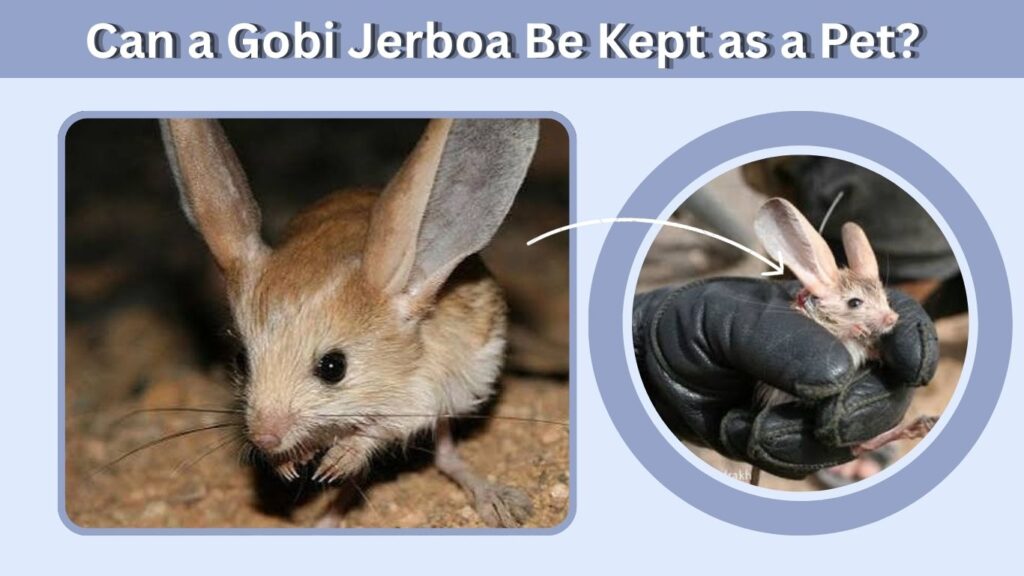
The Gobi jerboa is a wild desert animal rather than a domesticated pet. It requires deep digging material, substantial jumping space, carefully controlled temperatures, nocturnal feeding opportunities, and specialized veterinary care.
A normal cage cannot reproduce its natural desert environment or allow its full burrowing and hopping behavior. Anyone encountering one in the wild should observe it without attempting to capture, handle, or remove it.
FAQs
What is the scientific name of the Gobi jerboa?
Its current name in the Mammal Diversity Database is Orientallactaga bullata. It was formerly classified as Allactaga bullata, and that older scientific name continues to appear in many wildlife guides and online references.
Where does the Gobi jerboa live?
It lives in deserts, dry steppes, and shrub-covered plains of southern and western Mongolia and neighboring regions of northern China, including parts of Inner Mongolia, Xinjiang, Ningxia, Gansu, and Shaanxi.
What does a Gobi jerboa eat?
The Gobi jerboa eats green vegetation, roots, tubers, seeds, grasshoppers, beetles, and insect larvae. Its mixed diet allows it to use whichever foods are available during different seasons.
What predators eat Gobi jerboas?
Likely predators include owls, foxes, snakes, weasels, polecats, and cats. Direct records for this particular species are limited, but these animals commonly hunt jerboas and other small rodents in Asian desert habitats.
What is the Gobi jerboa’s role in the ecosystem?
It consumes plants, seeds, roots, and insects while also providing food for larger predators. Its feeding and burrowing may contribute to insect control, seed movement, soil disturbance, and nutrient cycling within the desert ecosystem.