
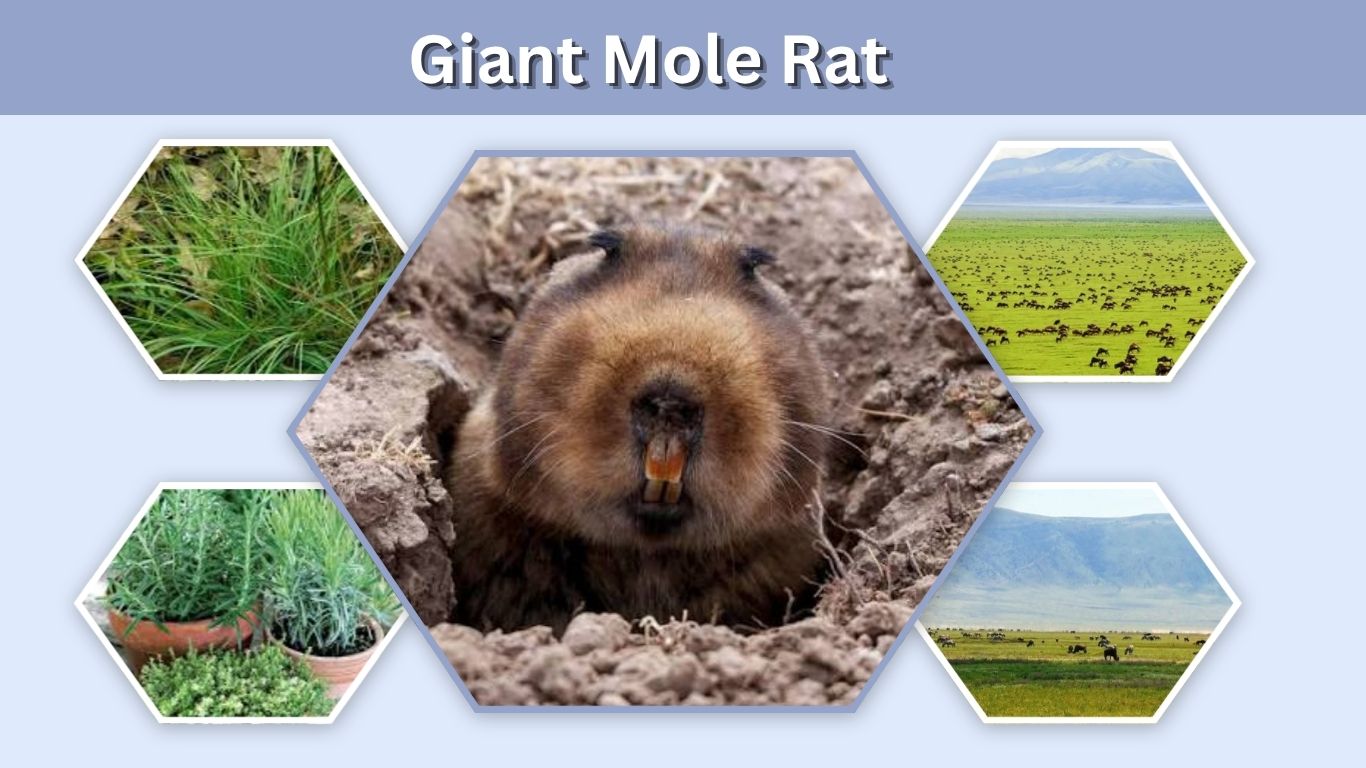
The giant mole rat is a large burrowing rodent best known from Ethiopia’s Bale Mountains. It is also called the giant root-rat or big-headed African mole-rat. Unlike the naked mole-rat, it has thick fur, a large head, and a more above-ground feeding style. People also confuse it with the giant blind mole-rat of Russia or fictional mole rats from games. This guide explains the real animal, where it lives, what it eats, and why it matters.
What Is a Giant Mole Rat?
The name “giant mole rat” usually refers to the Ethiopian giant mole-rat, also known as the giant root-rat. Its scientific name is Tachyoryctes macrocephalus. It is a fossorial rodent, meaning it is adapted for digging and living in underground tunnel systems. Mammal Diversity Database lists Tachyoryctes macrocephalus as a species in Ethiopia with an Endangered IUCN Red List status.
Identification
- Large, stocky rodent body
- Big head compared with the rest of the body
- Thick brown, golden-brown, or mottled fur
- Short legs and strong digging claws
- Prominent front teeth
- Small eyes positioned high on the head
- Short tail
- Lives in burrow systems
- Often seen near tunnel openings in high-altitude grassland
The species is described as a large, soft-furred mole-rat with a notably large head and mottled golden-brown color.
Why Is It Called “Giant”?
It is called “giant” because it is large compared with many other mole-rats and root-rats. It is not giant like a beaver or capybara, but among underground rodents it is unusually big and heavy-bodied. Its large head also makes it look more powerful than smaller mole-rat species.
Is It the Same as a Naked Mole-Rat?
No. The giant mole rat is not the same as the naked mole-rat. The naked mole-rat is nearly hairless and lives in colonies in eastern Africa, while the Ethiopian giant mole-rat has fur and belongs to a different genus. Smithsonian’s National Zoo describes naked mole-rats as nearly hairless underground rodents with sensory hairs and colony-based social lives, which makes them very different from the furred giant mole-rat.
Where Do Giant Mole Rats Live?
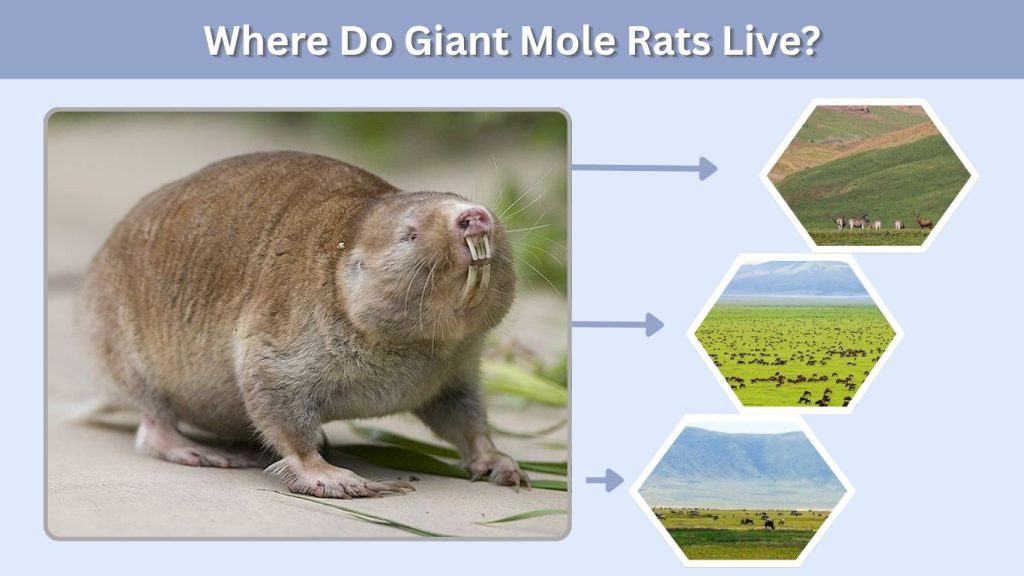
The Ethiopian giant mole-rat is strongly linked with the Bale Mountains of Ethiopia. It is considered endemic to the Afroalpine grasslands of that region, meaning it naturally occurs there and not widely elsewhere. A mitochondrial genome study describes the giant root-rat as an endangered fossorial rodent endemic to the Afroalpine grasslands of the Bale Mountains.
Habitat and Range
The giant mole-rat lives in high-altitude grasslands where soil and vegetation support burrowing and feeding. Research on root-rats notes that Tachyoryctes macrocephalus is a high-surface-activity species and the largest member of its genus.
| Feature | Giant Mole Rat |
| Scientific name | Tachyoryctes macrocephalus |
| Other common name | Giant root-rat, big-headed African mole-rat |
| Main location | Bale Mountains, Ethiopia |
| Habitat | Afroalpine grassland |
| Lifestyle | Burrowing and partly surface-foraging |
| Diet | Grasses, herbs, roots, and other plant material |
| Conservation status | Endangered |
Why the Bale Mountains Matter
The Bale Mountains are one of Ethiopia’s most important highland ecosystems. They support several endemic species, including the giant mole-rat and the Ethiopian wolf. The Ethiopian Wolf Conservation Programme notes that the Bale Mountains are home to giant molerats and other endemic Afroalpine wildlife.
What Do Giant Mole Rats Eat?
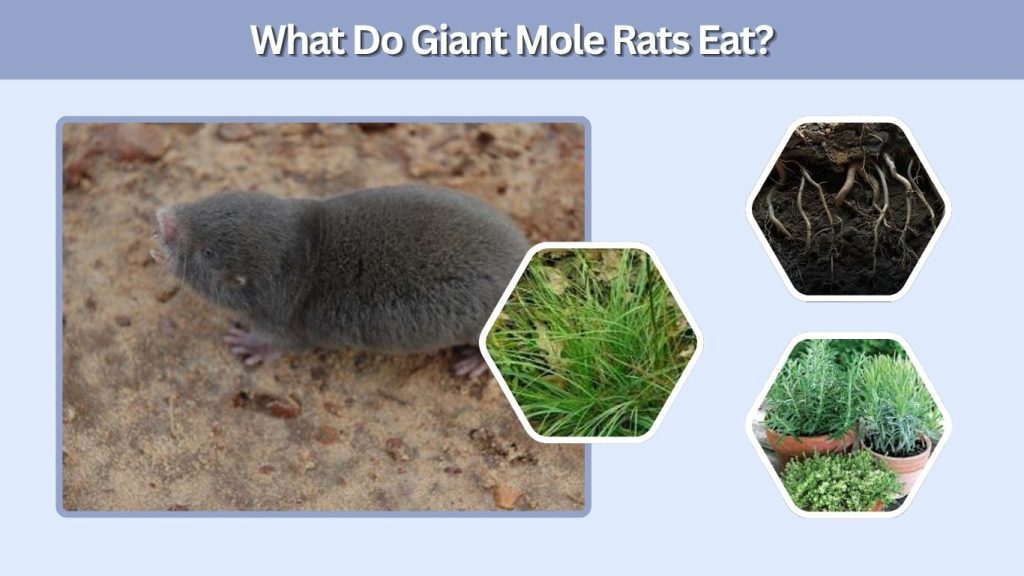
Giant mole rats are herbivores. They feed mostly on plant material such as grasses, herbs, and roots. A study on food selection and feeding behavior describes the giant mole rat as an endemic mammal of Ethiopia and an important prey species for the Ethiopian wolf.
Diet
The giant mole-rat’s diet is closely tied to its burrow system. It can dig tunnels to reach nearby vegetation and may feed around tunnel entrances. Animalia describes big-headed mole-rats as herbivorous animals that eat grasses and herbs, with some individuals feeding mainly on roots.
How It Feeds
Unlike some fully underground rodents, the giant mole-rat may show more surface activity. It can open tunnels near feeding spots, gather plant material, and retreat quickly underground if danger appears. This behavior is important because predators, especially Ethiopian wolves, often watch for mole-rats near tunnel openings.
Does It Eat Insects?
The giant mole-rat is mainly plant-eating. It is not known as an insect-hunting predator. Its body, teeth, and burrowing lifestyle are adapted for underground plant foods, grasses, herbs, and roots rather than active hunting.
Giant Mole Rat Burrows and Behavior
Giant mole rats spend much of their lives in tunnel systems. Burrows protect them from predators, weather, and temperature changes. Their digging also changes soil structure and plant growth in the grassland ecosystem.
Digging and Tunnel Systems
The giant mole-rat uses its strong front teeth and body to dig. Its tunnel systems allow it to move, hide, nest, and reach food. The species has been studied for its ecological role in Afroalpine habitats because burrowing can influence vegetation and soil conditions.
Daily Activity
The giant mole-rat is not as invisible as some underground rodents. In the Bale Mountains, it may appear at tunnel openings or above the surface while feeding. This makes it easier for predators to detect than completely subterranean rodents.
Predators
The Ethiopian wolf is one of the best-known predators of the giant mole-rat. The Ethiopian Wolf Conservation Programme says that in the Bale Mountains, Ethiopian wolves feed almost exclusively on diurnal small mammals, mainly giant molerats and grass rats. African Wildlife Foundation also notes that the Ethiopian wolf’s diet consists mainly of giant mole rats and common grass rats in its habitat.
Giant Mole Rat vs Giant Blind Mole-Rat
The giant mole rat and giant blind mole-rat are not the same animal. They have similar names because both are burrowing rodents, but they live in different places and belong to different groups.
Main Differences
| Feature | Giant Mole Rat | Giant Blind Mole-Rat |
| Scientific name | Tachyoryctes macrocephalus | Spalax giganteus |
| Main region | Ethiopia | Russia/North Caucasus region |
| Habitat | Afroalpine grasslands | Sandy or semi-desert burrow habitats |
| Eyes | Small but visible | Eyes are reduced and covered |
| Conservation status | Endangered | Least Concern |
| Common confusion | “Giant root-rat” | “Russian mole-rat” |
Mammal Diversity Database lists Spalax giganteus, the giant blind mole-rat, as a Russian species with Least Concern status. Animal Diversity Web explains that blind mole-rats have reduced eyes covered by skin and fur, short limbs, tiny external ears, and burrowing adaptations.
Why People Confuse Them
The names are very close. “Giant mole rat,” “giant mole-rat,” “giant blind mole-rat,” and “Russian mole-rat” may appear together in searches. However, the Ethiopian giant mole-rat is the species usually connected with Ethiopia, the Bale Mountains, and the Ethiopian wolf.
Giant Mole Rat vs Naked Mole-Rat
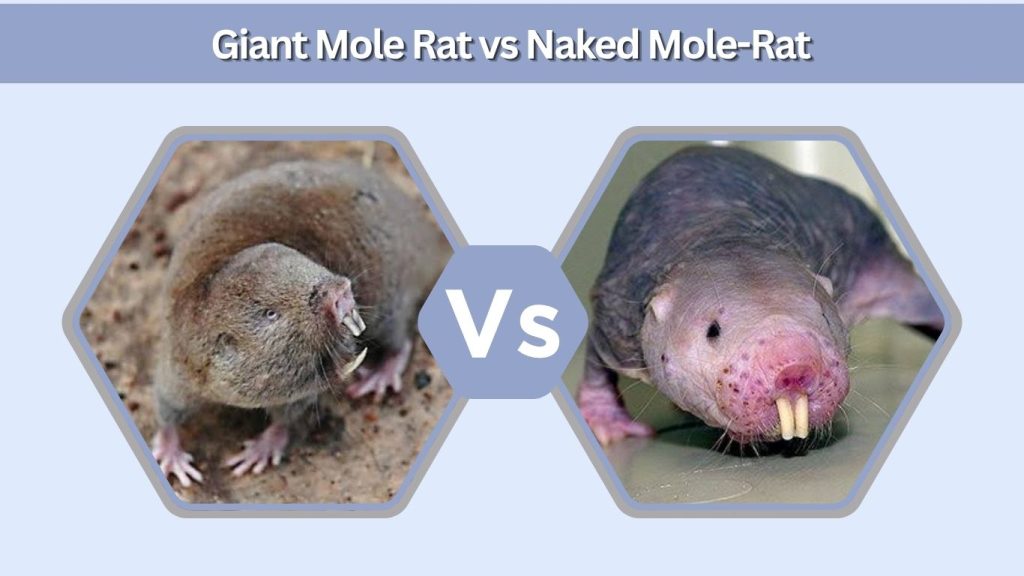
The phrase “giant naked mole rat” is usually a mistaken search term. The giant mole-rat and naked mole-rat are different animals.
Key Differences
The giant mole-rat has thick fur and is linked to Ethiopia’s Bale Mountains. The naked mole-rat has wrinkled, nearly hairless skin and lives in colonies in eastern Africa. Naked mole-rats are also famous for long lifespan, cancer resistance research, and eusocial colony life, while the giant mole-rat is more famous as an Ethiopian highland species and major prey for the Ethiopian wolf.
Which One Is Bigger?
The giant mole-rat is generally larger and heavier-looking than the naked mole-rat. It has a stockier body, thicker fur, and a larger head. The naked mole-rat is smaller, nearly hairless, and more specialized for colony tunnel life.
Are Giant Mole Rats Endangered?
Yes, the Ethiopian giant mole-rat is listed as Endangered. Its small natural range makes it vulnerable to habitat change. Mammal Diversity Database lists Tachyoryctes macrocephalus as Endangered, and other conservation summaries connect threats to habitat loss and overgrazing.
Threats
- Restricted range in Ethiopia’s Bale Mountains
- Habitat loss
- Overgrazing by livestock
- Changes to Afroalpine grassland
- Pressure on native vegetation
- Climate-related habitat shifts
Animalia notes that big-headed mole-rats are threatened by habitat loss through overgrazing by domestic livestock, and that their population trend is decreasing.
Why Conservation Matters
Protecting the giant mole-rat also helps protect the wider Bale Mountains ecosystem. This rodent is an important herbivore and a key prey species for the Ethiopian wolf. When giant mole-rat habitat declines, the effects can ripple through the food web.
Giant Mole Rat in Games and Pop Culture
Some keyword searches mention “giant mole rat Fallout,” “Fallout 3 giant mole rat,” “Fallout 4 giant mole rat,” “RuneScape,” “OSRS,” “RS3,” “CDDA,” “ARK,” and “5e.” These searches usually refer to fictional or game-based creatures, not the real Ethiopian giant mole-rat.
Fallout Giant Mole Rats
In games like Fallout, mole rats are fictional mutated creatures. They are inspired by real burrowing rodents but are not accurate representations of the Ethiopian giant mole-rat or the giant blind mole-rat.
RuneScape and OSRS Searches
Searches such as “giant mole pet drop rate OSRS” are about the Giant Mole boss or pet mechanics in RuneScape-related games. That content is gaming-related and should not be confused with real animal biology.
Real Animal vs Fictional Creature
The real giant mole-rat is a highland burrowing rodent, not a monster or oversized fantasy enemy. It does not attack people like fictional mole rats in games. Its real ecological role is as a plant-eating burrower and prey species in Ethiopia’s Afroalpine ecosystem.
Can You Keep a Giant Mole Rat as a Pet?
A giant mole-rat is not a normal pet. It is a specialized wild burrowing rodent with specific habitat needs. It is also connected with a restricted natural range and conservation concerns, so it should not be treated like a domestic pet.
Why It Is Not a Good Pet
It needs soil, burrows, correct food plants, temperature conditions, space, and expert care. Unlike pet rats or guinea pigs, giant mole-rats are not domesticated companion animals. Keeping one would be difficult, unethical in many situations, and possibly illegal depending on wildlife laws.
Better Alternatives
People interested in small mammal pets should consider domesticated rats, mice, hamsters, gerbils, or guinea pigs from responsible sources. These animals are bred for human care and are much more suitable than a rare wild burrowing rodent.
FAQs
Is a giant mole rat a real animal?
Yes. The giant mole rat is a real burrowing rodent. The Ethiopian species is Tachyoryctes macrocephalus, also called the giant root-rat or big-headed African mole-rat. It is endemic to Ethiopia’s Bale Mountains.
Where do giant mole rats live?
The Ethiopian giant mole-rat lives in the Afroalpine grasslands of the Bale Mountains in Ethiopia. It is closely tied to high-altitude grassland habitats and burrow systems.
Is the giant mole rat the same as the giant blind mole-rat?
No. The Ethiopian giant mole-rat is Tachyoryctes macrocephalus, while the giant blind mole-rat is Spalax giganteus, a different species associated with Russia and the North Caucasus region.
What eats giant mole rats?
The Ethiopian wolf is a major predator of giant mole-rats in the Bale Mountains. Ethiopian wolves rely heavily on small mammals such as giant mole-rats and grass rats.
Are giant mole rats dangerous?
No, giant mole-rats are not considered dangerous to people. They are wild burrowing rodents that mostly eat plant material and avoid predators by staying near or inside tunnels.