
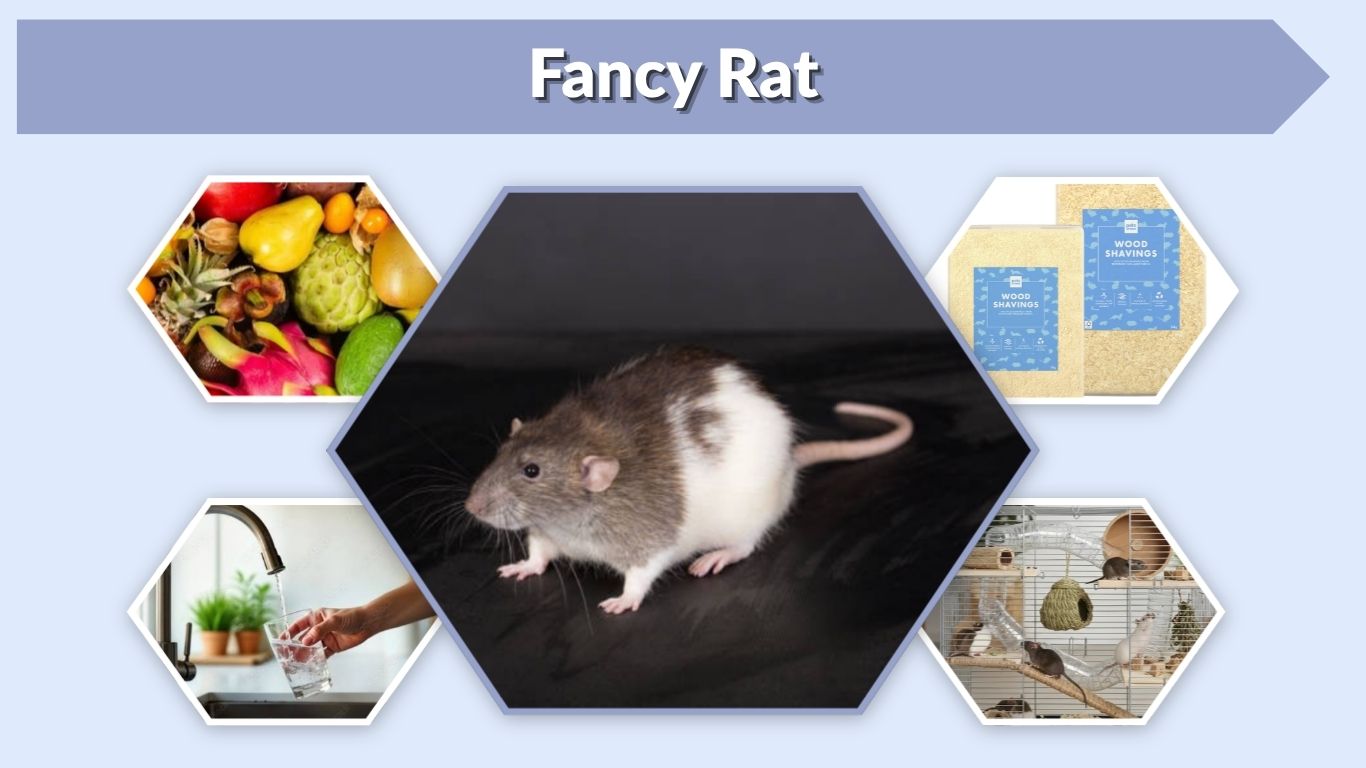
A fancy rat is a domesticated form of the brown rat bred for companionship, temperament, coat type, color, and markings. These intelligent, social rodents can form strong bonds with their owners and often enjoy handling, play, and simple training. However, keeping a pet fancy rat involves more than providing food and a small cage. Understanding lifespan, housing, diet, companionship, size, varieties, and everyday care helps owners create a healthier and more stimulating life for these affectionate pets.
What Is a Fancy Rat?
Fancy rats are domesticated brown rats (Rattus norvegicus) selectively bred as pets and for exhibition. Unlike wild rats, generations of controlled breeding have produced animals with calmer temperaments and many different colors, markings, ear shapes, and coat varieties. Despite the word “fancy,” it does not refer to one particular breed or expensive type of rat.
Fancy Rat Characteristics
Common characteristics of a pet fancy rat include:
- Intelligent and highly trainable behavior
- Strong social instincts
- Numerous colors and coat patterns
- Smooth, rex, hairless, and other coat varieties
- Standard or dumbo-style ears
- Long tail used for balance and temperature regulation
- Curious and playful personality
- Ability to recognize familiar people and routines
Individual personalities vary. Some rats enjoy sitting quietly with their owners, while others constantly explore, climb, and investigate their surroundings.
Fancy Rat vs. Wild Rat
Fancy rats and wild Norway rats belong to the same species, but domestication has produced major behavioral differences. Fancy rats are generally bred for predictable temperament and human interaction, whereas wild rats naturally avoid people and depend heavily on survival behaviors.
Domestic rats also occur in far more coat colors and patterns. Wild Norway rats usually have agouti-brown coloration that provides camouflage.
Fancy Rat Lifespan and Life Expectancy
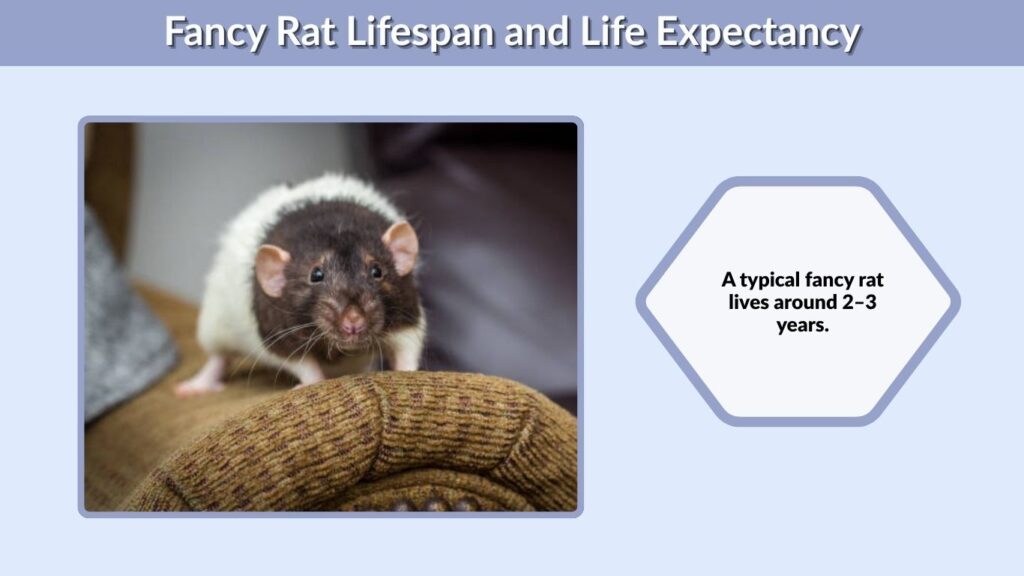
The relatively short fancy rat lifespan is one of the most important things prospective owners should understand. With appropriate housing, nutrition, veterinary attention, exercise, and genetics, many pet rats live approximately two to three years. Some individuals live longer, although reaching an exceptionally advanced age is uncommon.
How Long Does a Fancy Rat Live?
A typical fancy rat lives around 2–3 years. Genetics can influence longevity considerably, but daily care also matters.
Factors that may affect life expectancy include diet quality, obesity, respiratory health, tumors, dental problems, housing conditions, stress, and access to veterinary treatment.
Older rats may become less active and develop mobility difficulties. Regularly checking body condition, breathing, appetite, coat quality, and behavior can help owners notice health changes early.
Supporting a Longer, Healthier Life
Good husbandry cannot guarantee a particular lifespan, but it can improve overall welfare. Keep the enclosure clean without using harsh fragrances, provide balanced food, prevent obesity, encourage daily movement, and arrange veterinary care when illness appears.
Because rats often hide early signs of sickness, changes in breathing, appetite, movement, or social behavior deserve attention.
Fancy Rat Size and Growth
Fancy rats start extremely small but develop quickly during their first several months. Adult size varies according to sex, genetics, nutrition, and body condition. Males generally become larger and heavier than females, although there is considerable individual variation.
How Big Does a Fancy Rat Get?
Adult fancy rats are generally around 9–11 inches in body length, excluding the tail. The tail can add another several inches.
Common adult characteristics include:
- Males: Usually larger, broader, and heavier
- Females: Typically smaller and more streamlined
- Body length: Often around 9–11 inches
- Tail: Usually approximately as long as the body
- Growth: Fastest during the first several months
- Adult appearance: Usually established by roughly 6–12 months
Body weight is a better health indicator when considered alongside body condition rather than compared with one universal target number.
Full-Grown Fancy Rat Appearance
A full-grown fancy rat has a sturdy but flexible body, prominent whiskers, rounded or low-set ears depending on variety, and a long scaly tail.
Healthy adults should be alert, curious, and well-muscled without being excessively thin or overweight. Males often develop broader heads and heavier shoulders as they mature.
Fancy Rat Colors, Types, and Coat Varieties
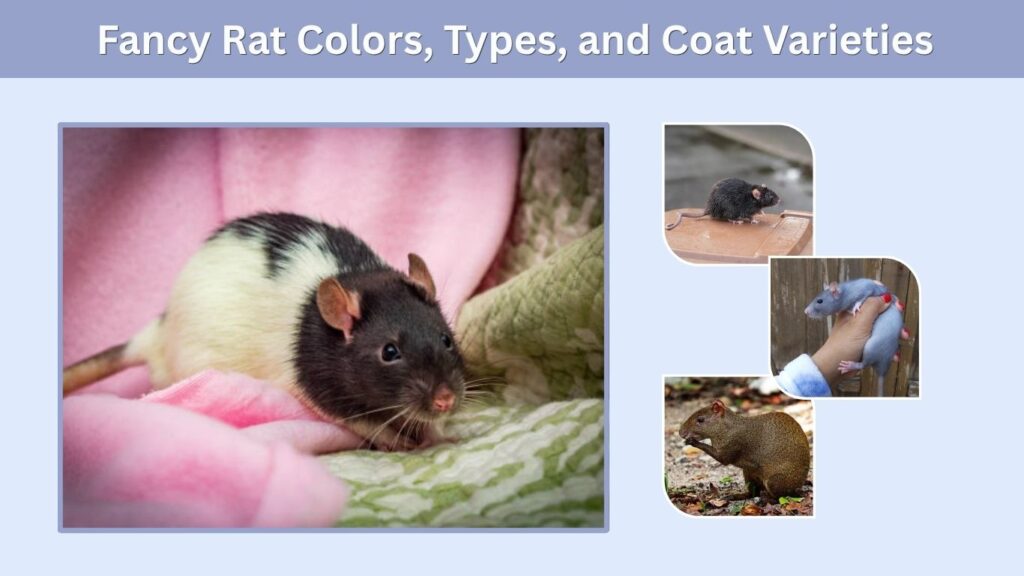
One reason fancy rats are popular is their enormous variety. Different rats may vary in color, markings, coat texture, ear position, and eye color. These differences are varieties rather than separate biological breeds in the same way dog breeds are classified.
Popular Fancy Rat Colors and Markings
Frequently seen colors and patterns include:
- Black
- Blue
- Agouti
- Cinnamon
- Champagne
- Beige
- Albino or pink-eyed white
- Berkshire
- Hooded
- Capped
- Variegated
- Black and white
- Brown and white
A hooded fancy rat typically has color covering the head and shoulders with a stripe or markings continuing down the back. Berkshire rats normally have a colored body with a contrasting white underside.
Rex, Curly, and Double Rex Fancy Rats
Rex fancy rats have curly or wavy fur and curled whiskers. A Double Rex can have a thinner, patchier coat that may change as the rat grows.
Coat type should not determine personality. Temperament is influenced more strongly by genetics, early socialization, handling, health, and environment.
Dumbo Rat vs. Fancy Rat
A Dumbo rat is not separate from a fancy rat. “Dumbo” describes an ear type found in domesticated fancy rats.
Standard-ear rats have ears positioned higher on the head. Dumbo rats have larger-looking ears positioned lower and more toward the sides of the head. Both can occur in numerous colors, markings, and coat types, and their general care requirements are the same.
Fancy Rat Cage and Habitat Requirements

A good fancy rat cage should provide enough room for climbing, exploring, resting, eating, and interacting with companions. Rats are active animals that benefit from vertical space and environmental enrichment rather than living permanently in a small tank or basic starter cage.
What a Fancy Rat Cage Needs
A suitable habitat should include:
- Secure metal-bar construction
- Good ventilation
- Safe, absorbent bedding
- Multiple sleeping areas or hammocks
- Platforms and climbing opportunities
- Food and water stations
- Tunnels and hiding places
- Chew-safe enrichment
- Enough room for multiple rats
Avoid wire flooring that may contribute to foot problems. Rats also need regular opportunities for supervised exercise outside the enclosure.
Fancy Rat Toys and Enrichment
Fancy rats are intelligent and can become bored in an empty environment. Cardboard boxes, tunnels, climbing ropes, hammocks, paper for nesting, chew items, and foraging activities can provide stimulation.
Many rats also learn their names, come when called, retrieve small objects, navigate simple obstacle courses, or perform tricks using reward-based training.
Fancy Rat Diet and Daily Care

Fancy rat care becomes much easier when owners establish a consistent feeding, cleaning, handling, and exercise routine. A complete rat food should form the foundation of the diet rather than relying heavily on seed mixes or human snacks.
What Should Fancy Rats Eat?
A balanced diet can include:
- Quality commercial rat pellets or blocks
- Small portions of suitable vegetables
- Limited fruit
- Occasional healthy treats
- Constant access to clean drinking water
Foods that are very sugary, salty, or high in fat should remain occasional treats rather than dietary staples.
Fresh foods should be introduced gradually, and leftovers should be removed before they spoil.
Social Care and Companionship
Fancy rats are highly social and generally benefit from living with compatible rats of the same sex or appropriately altered companions.
Human attention is valuable but does not completely replace rat-to-rat interaction. Companions sleep together, groom one another, play, communicate, and provide social comfort throughout the day and night.
Buying or Adopting a Fancy Rat
Anyone looking for a fancy rat for sale should focus on health and responsible breeding rather than simply choosing the cheapest or closest animal. Adoption can also be an excellent option because rat rescues sometimes have bonded pairs or groups needing suitable homes.
What to Check Before Getting a Rat
Before choosing a fancy rat, consider:
- Clear, bright eyes
- Quiet, comfortable breathing
- Clean nose and coat
- Healthy body condition
- Curious or relaxed behavior
- Responsible breeding history when available
- Whether compatible companions are available
- Availability of an exotic-animal veterinarian
- Long-term cage and medical costs
Fancy rat prices vary significantly by breeder, location, color, variety, and whether the animal comes from a pet store, rescue, or specialist breeder.
Fancy Rat Breeder vs. Adoption
Responsible breeders usually select animals for health and temperament and should be willing to discuss their breeding practices. Rescues offer another valuable option, particularly for people comfortable adopting adults.
Wherever a rat comes from, avoid sellers keeping animals in overcrowded, dirty, poorly ventilated, or unhealthy conditions.
FAQs
Fancy rats are relatively small pets, but their social and environmental needs are surprisingly complex. Learning about companionship, cage requirements, lifespan, and domestication before bringing rats home can prevent many common care mistakes.
1. Are fancy rats good pets?
Yes. Fancy rats can be affectionate, intelligent, interactive pets. They are especially suitable for owners who can provide daily attention, enrichment, compatible rat companions, and appropriate veterinary care.
2. How long do fancy rats live?
Most fancy rats live approximately two to three years. Genetics, diet, housing, body condition, disease, and access to veterinary treatment can influence individual life expectancy.
3. What is the difference between a Dumbo rat and a fancy rat?
A Dumbo rat is a type of fancy rat characterized by ears positioned lower on the sides of the head. It is not a separate species or fundamentally different pet.
4. Should fancy rats live alone?
Generally, no. Rats are social animals and usually do best with compatible companions. Keeping at least two appropriately matched rats allows them to groom, play, sleep, and communicate together.
5. How much does a fancy rat cost?
The purchase or adoption price varies by location, breeder, store, rescue, and variety. The initial rat price is only a small part of ownership costs because a suitable cage, bedding, food, enrichment, and veterinary treatment can cost considerably more over the animal’s lifetime.