
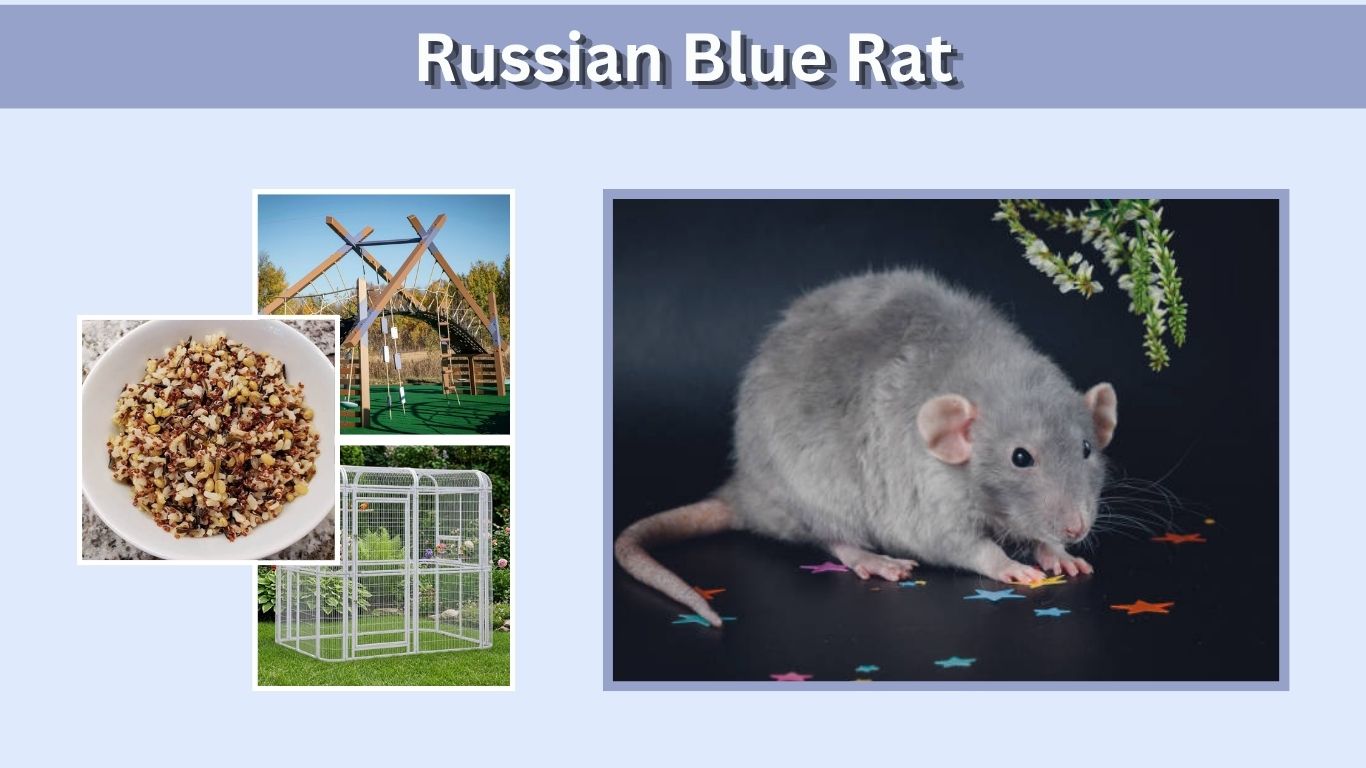
The Russian Blue rat is a striking fancy rat known for its deep slate-blue coat, dark ticking, and friendly domestic-rat personality. Despite its name, it is not a separate rat species or breed. Instead, Russian Blue describes a genetically inherited coat color found in fancy rats. These rats may have standard or Dumbo ears and can appear with different markings, including hooded patterns. If you are considering a Russian Blue rat as a pet, understanding its genetics, temperament, size, lifespan, housing, and care requirements is important.
What Is a Russian Blue Rat?
A Russian Blue rat is a domesticated fancy rat with a distinctive dark blue-gray coat. The color is created by a recessive dilution gene acting on a black-based coat. According to AFRMA standards, Russian Blue is characterized by a very dark slate-blue appearance with darker ticking throughout the fur. It was standardized by AFRMA in 1996.
Russian Blue Rat Identification
Russian Blue rats can usually be recognized by several characteristics:
- Dark slate-blue or gunmetal-gray coat
- Dark ticking distributed through the fur
- Black eyes
- Dense, smooth-looking coat
- Standard or Dumbo ear varieties
- Solid, hooded, or other possible markings
- Typical domesticated fancy-rat body shape
The word “blue” does not mean that the animal is bright blue. Instead, the diluted black pigment creates a cool gray-blue appearance that may look darker or lighter depending on lighting.
Is the Russian Blue Rat a Separate Breed?
Russian Blue is a color variety, not a separate species or traditional breed. Russian Blue rats belong to the domesticated brown rat, Rattus norvegicus, just like most pet fancy rats.
Color, markings, ear type, and coat type can occur in different combinations. For example, one rat may simultaneously be Russian Blue, Dumbo-eared, and hooded.
Russian Blue Rat Genetics and Varieties
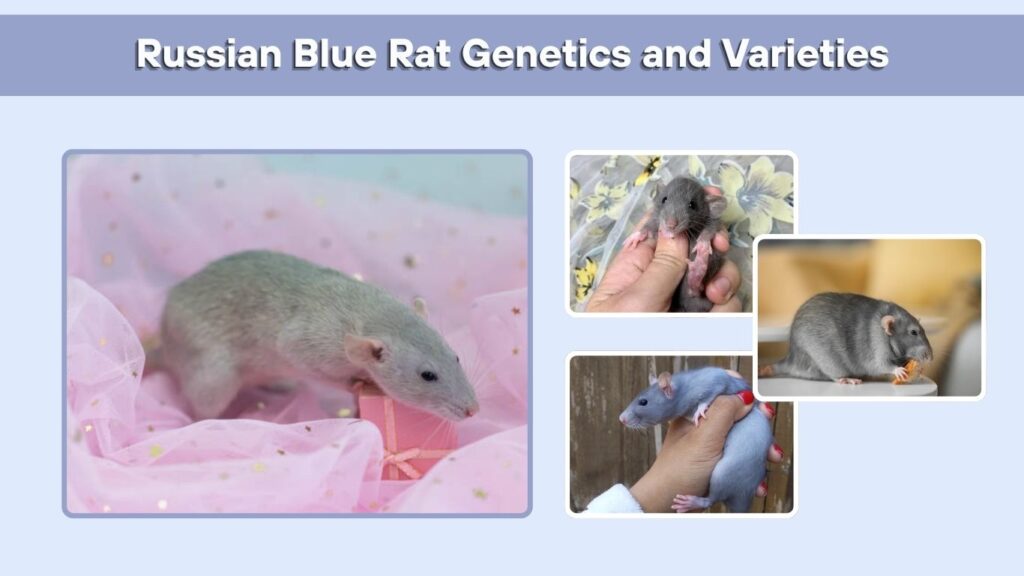
Russian Blue coloration is particularly interesting to fancy-rat enthusiasts because it is genetically different from some other colors commonly called blue. AFRMA identifies Russian Blue on a black background as aa dd, with the Russian Blue dilution being recessive. Two copies of the recessive allele are required for the characteristic coloration.
How Russian Blue Rat Genetics Work
The Russian Blue color behaves as a recessive trait. A rat generally needs to inherit the relevant recessive allele from both parents to visually express Russian Blue.
When two genetically compatible Russian Blue parents are bred, Russian Blue offspring can be produced predictably. A Russian Blue bred with a rat that does not carry the trait may produce offspring that carry the gene without looking Russian Blue themselves.
Other genes can interact with Russian Blue and create additional colors or patterns.
Dumbo, Hooded, and Marble Russian Blue Rats
Russian Blue describes color, so it can occur alongside other traits.
- Dumbo Russian Blue rat: Has the Russian Blue color with large, low-set rounded Dumbo ears.
- Russian Blue hooded rat: Shows Russian Blue coloration concentrated around the head and along portions of the body according to its marking genes.
- Marble Dumbo Russian Blue: May be used by breeders to describe rats combining blue coloration, Dumbo ears, and patterned or marbled appearance.
- Russian Blue Agouti: A genetically distinct combination involving Russian Blue dilution on an agouti background. AFRMA lists this separately from standard Russian Blue.
These appearance differences do not create separate species and generally do not fundamentally change everyday husbandry requirements.
Russian Blue Rat Size, Babies, and Lifespan
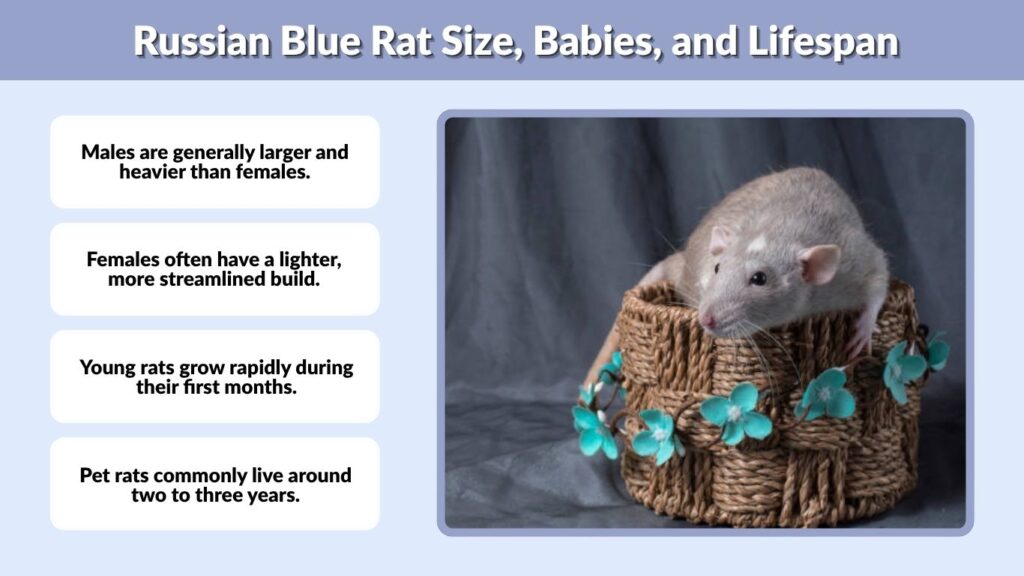
Russian Blue rats grow like other domesticated fancy rats. Coat color itself does not make them miniature or unusually large. Adult size depends more on sex, genetics, nutrition, and individual development. Babies develop their characteristic coloring as their coat grows, although the exact shade and texture may become easier to evaluate as they mature.
Russian Blue Rat Size and Lifespan
Important expectations include:
- Males are generally larger and heavier than females.
- Females often have a lighter, more streamlined build.
- Young rats grow rapidly during their first months.
- Adult proportions vary significantly between individuals.
- Pet rats commonly live around two to three years.
- Nutrition, genetics, environment, and veterinary care can influence longevity.
A Russian Blue rat does not require different care simply because of its coloration.
What Does a Russian Blue Rat Baby Look Like?
Russian Blue babies develop a slate or blue-gray coat rather than the intense black seen in standard black fancy rats. As the coat develops, darker ticking may become increasingly noticeable.
Ear type can also be identified independently of color. A Dumbo Russian Blue baby has lower-set rounded ears, whereas a standard-eared Russian Blue has ears positioned higher on the head.
Temperament is not determined by how dark or light the baby’s coat appears.
Russian Blue Rat Temperament and Pet Care
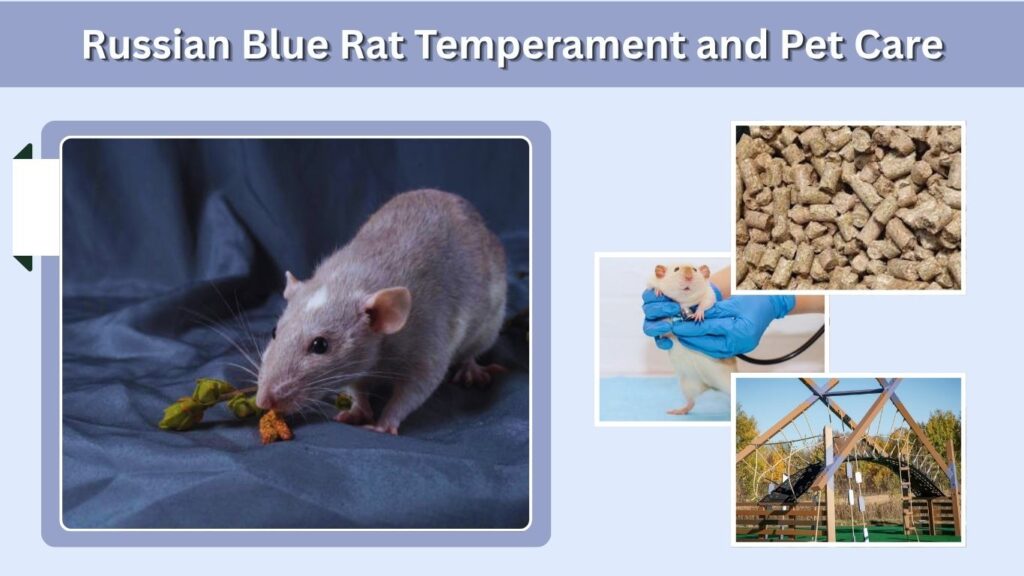
A Russian Blue rat can make an engaging companion when properly socialized. Its behavior is essentially that of other domestic fancy rats: curious, intelligent, social, and often highly interactive with familiar people. Coat color should therefore be treated as an appearance preference rather than a predictor of whether an individual rat will be friendly or easy to handle.
Personality as a Pet
Russian Blue rats may learn routines, recognize familiar caregivers, investigate new objects, solve simple food puzzles, and enjoy supervised exploration.
Individual personality varies. Some rats are energetic explorers, while others become relaxed and comfortable sitting near their owners.
Early positive handling and responsible breeding can contribute greatly to temperament. Rats are also strongly social animals and generally benefit from living with compatible rat companions rather than being kept alone.
Cage, Diet, and Everyday Care
A suitable Russian Blue rat setup should include:
- Spacious, well-ventilated enclosure
- Compatible rat companionship
- Safe and absorbent bedding
- Hides, hammocks, tunnels, and climbing areas
- Appropriate chew materials
- Quality nutritionally complete rat food
- Fresh drinking water
- Small amounts of appropriate fresh foods
- Regular cage maintenance
- Daily enrichment and interaction
- Veterinary care when illness develops
Watch for respiratory noises, persistent sneezing, appetite changes, lumps, skin problems, weight loss, or unusual inactivity. These signs warrant veterinary attention regardless of the rat’s coat variety.
American Blue vs. Russian Blue Rat
American Blue and Russian Blue can appear similar because both produce blue-gray rats, but they are genetically distinct color varieties. Russian Blue tends to have a deeper slate or gunmetal appearance with dark ticking, while other blue varieties may appear lighter and more evenly gray-blue. AFRMA specifically distinguishes Russian Blue genetics from the other Blue dilution found in fancy rats.
Russian Blue vs. American Blue Appearance
Russian Blue generally looks darker and richer, particularly under natural lighting. The dark ticking can give the coat more depth rather than a completely uniform pale-blue appearance.
American Blue terminology and standards can vary between organizations and breeders, which is why visual identification alone is not always enough to determine genetics with certainty.
For a pet owner, the distinction is primarily cosmetic. Both need the same responsible housing, nutrition, companionship, enrichment, and veterinary care.
Finding a Russian Blue Rat Breeder
When looking for a Russian Blue rat for sale, focus on responsible breeding practices rather than coat color alone.
A good breeder should prioritize healthy animals, stable temperament, appropriate socialization, clean housing, and responsible breeding records. Ask about the parents’ health and temperament and how young rats have been handled.
Avoid choosing a rat solely because it is described as rare or because its blue coloration is unusually dark. Health and temperament are far more important qualities in a companion animal.
FAQs
Russian Blue rats attract plenty of questions because their unusual coloration can make them seem like a separate breed. In reality, most differences involve genetics and appearance rather than everyday care. The following answers cover some of the most common questions about Russian Blue pets, Dumbo varieties, lifespan, color, and availability.
1. Are Russian Blue rats rare?
Russian Blue rats may be less commonly available than basic black, agouti, or some widely bred fancy-rat varieties. Availability varies considerably between regions and breeders.
2. How long does a Russian Blue rat live?
A Russian Blue rat generally has a lifespan similar to other domestic rats, commonly around two to three years. Individual longevity depends on genetics, diet, environment, and health care.
3. What is a Dumbo Russian Blue rat?
A Dumbo Russian Blue rat combines Russian Blue coat genetics with the Dumbo ear trait. Its ears are typically larger, rounder, and positioned lower on the sides of the head.
4. Are Russian Blue rats good pets?
Yes. Properly socialized Russian Blue rats can be intelligent, affectionate, playful companion animals. Their care and social requirements are essentially the same as those of other fancy rats.
5. What is the difference between Russian Blue and American Blue rats?
Russian Blue rats generally have a darker slate or gunmetal coat with characteristic dark ticking. American Blue-type rats typically have a different blue-gray appearance and genetic basis. The difference mainly concerns coloration rather than temperament or pet-care requirements.