
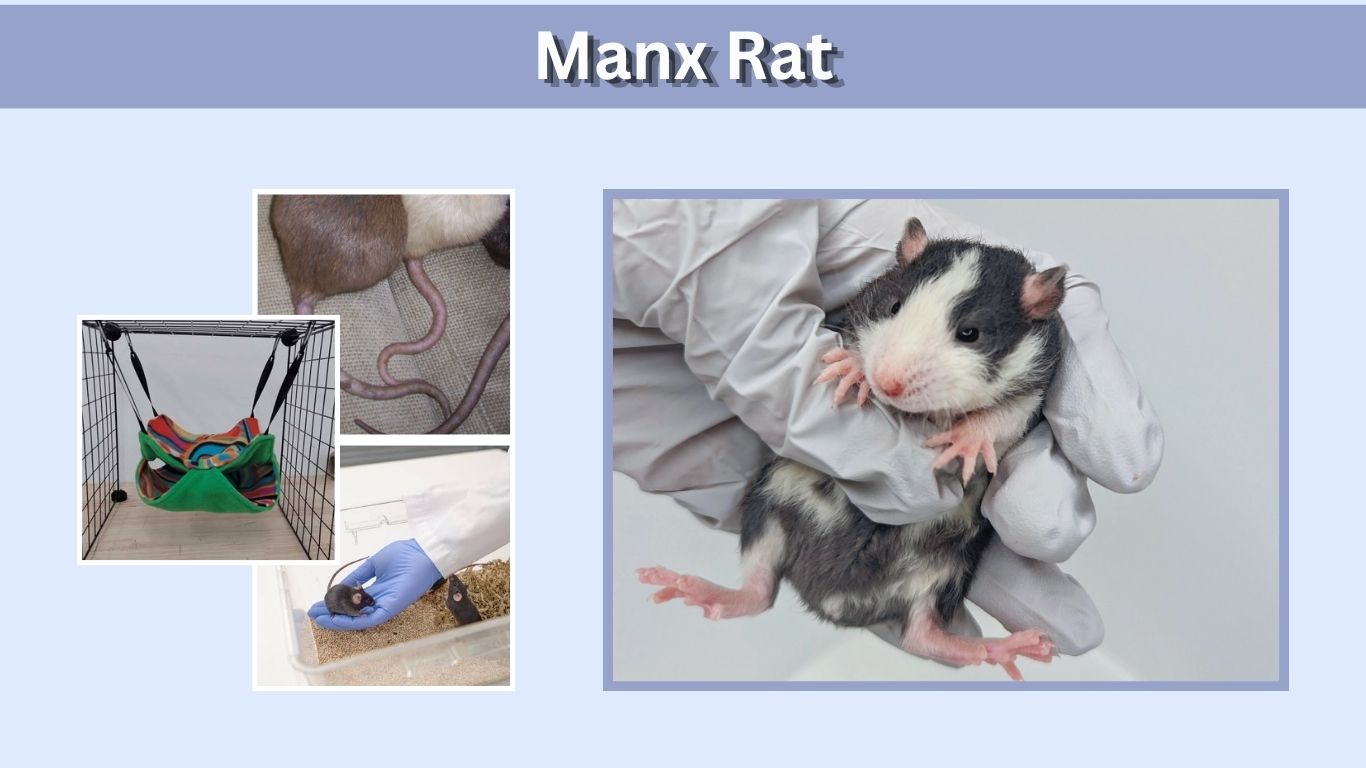
A Manx rat stands out because it is born without the long tail most people associate with rats. Behind that unusual appearance is a domestic fancy rat with familiar needs for companionship, enrichment, good nutrition, and gentle handling. However, taillessness can involve more than a cosmetic difference, making health assessment especially important. Whether you already care for one or are considering adoption, this guide explains Manx rat traits, possible health concerns, housing, behavior, genetics, and the practical questions to ask before bringing one home.
What Is a Manx Rat?
A Manx rat is a domestic rat with congenital taillessness, meaning the feature is present from birth. The name draws a comparison with the tailless Manx cat, but these are entirely different animals. Manx rats belong to the same species as other fancy rats, Rattus norvegicus. Their unusual body shape does not remove their ordinary social, dietary, or environmental needs.
A Variety Rather Than a Separate Breed
“Manx rat breed” is a common description, but rat organizations generally describe differences in body shape, coat, and ears as varieties. A Manx rat is not a separate species or a miniature version of another pet.
Born Tailless Versus Losing a Tail
A rat that loses its tail through injury or veterinary amputation is not automatically a congenital Manx. Appearance alone may not establish its history. Never remove a rat’s tail for cosmetic reasons.
Manx Rat Appearance and Varieties
The missing tail is the most obvious feature, but Manx rats can differ in body shape, coloring, coat, and ear position. Some have a rounded rear and relatively compact build. Others born with shortened tails may be loosely described as Manx by owners. These labels cannot tell you whether an individual rat has normal mobility or healthy internal anatomy underneath.
Identification Features
- Tail: Absent from birth in fully tailless individuals.
- Body shape: May appear compact, with a rounded rump.
- Color: No single coat color defines a Manx rat.
- Ears and coat: Can vary independently of tail length.
- Movement: Needs assessment; hopping or dragging should not be dismissed as a variety trait.
Dumbo and Hairless Manx Rats
Dumbo refers to larger ears positioned lower on the sides of the head. Hairless refers to reduced or absent coat coverage. These traits can occur alongside taillessness, so a rat may be both Dumbo and Manx, or hairless and Manx.
A hairless animal also needs attention to skin protection and warmth. Combining unusual features does not establish better health or temperament.
Manx Rat Health Concerns
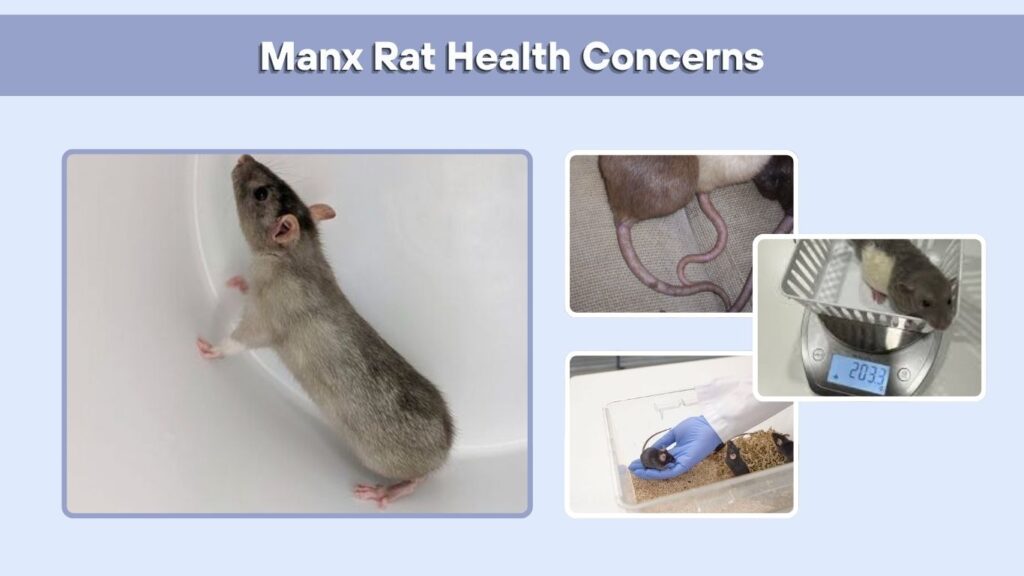
A rat’s tail contributes to balance and helps regulate body temperature. Congenital taillessness can also occur alongside changes in the spine or pelvis. Rat societies have reported hindlimb, bladder, and bowel problems in some affected animals. These reports do not establish that every Manx rat is unhealthy, but they support checking the individual carefully rather than relying on appearance alone.
Mobility and Temperature Regulation
Watch how the rat walks, climbs, turns, and reaches food. A rounded rear does not by itself reveal whether movement is comfortable. Ask a veterinarian experienced with rats to assess abnormalities.
Keep housing away from direct sunlight and overheating. A stable room around 19–23°C is a useful general rat-care target, with adjustments discussed with your vet.
Signs That Need Veterinary Attention
- Dragging the hind legs, repeated falls, or difficulty standing.
- Persistent urine leakage, straining, or a repeatedly soiled rear.
- Difficulty passing droppings or a swollen abdomen.
- Reduced appetite, weight loss, unusual lethargy, or signs of pain.
- Labored breathing or collapse, which require urgent veterinary attention.
These signs can have several causes and should not be diagnosed from tail length alone.
Everyday Manx Rat Care
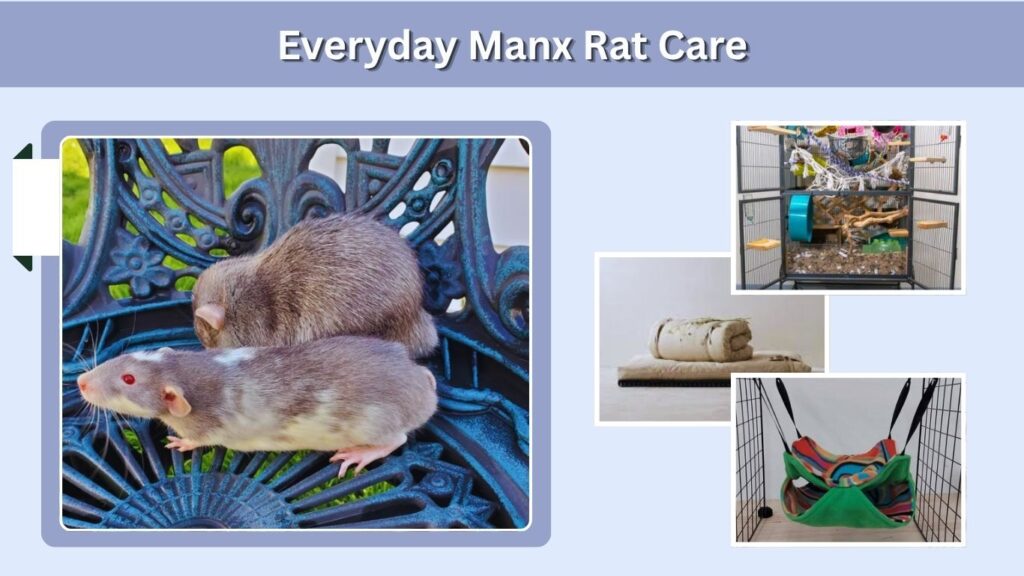
Daily care should support normal rat behavior while accommodating any physical limitations. A tailless rat still needs room to explore, places to hide, opportunities to forage, and suitable companions. Assess what your particular pet can manage safely. Adapt routes and resting places when necessary, and monitor changes over time rather than assuming the same arrangement will work throughout its life.
A Safe Cage Setup
- Provide a spacious, secure, well-ventilated enclosure.
- Use solid resting surfaces and comfortable, low-dust bedding.
- Add broad ramps and accessible platforms when mobility is limited.
- Position hammocks or shelves to reduce long, unobstructed falls.
- Keep food, water, and sleeping areas within easy reach.
Continue offering safe enrichment. Restricting all activity simply because the rat lacks a tail can unnecessarily reduce its quality of life.
Food and Water
- Base meals on a nutritionally complete food formulated for rats.
- Offer small portions of suitable fresh vegetables and occasional fruit.
- Keep treats limited and account for them in the daily ration.
- Provide fresh water continuously and check bottles for blockages.
- Monitor body condition and discuss weight changes with your veterinarian.
Handling and Hygiene
Scoop the rat up while supporting its chest and hindquarters. Keep early handling close to a safe surface. Check bedding and the rear daily; persistent soiling calls for veterinary assessment, not just repeated cleaning.
Temperament, Companionship, and Aggression
Manx rats can be curious, affectionate companions, but a missing tail does not guarantee any particular personality. Individual history, handling, health, and social experiences matter. Observe the rat’s behavior with familiar people and compatible rats. A shy animal may need time to settle, while a sudden change in behavior deserves attention because discomfort or stress can affect previously friendly pets.
Can a Manx Rat Live With Other Rats?
Yes, provided the rats are compatible and introduced appropriately. Keep rats in suitable pairs or groups, usually of the same sex unless reproduction has been prevented under veterinary guidance. Human attention does not replace rat companionship.
If mobility is impaired, make sure the rat can reach resources and avoid unwanted attention from cage mates.
Understanding Biting or Aggression
Do not assume aggression is an inherent “Manx problem” or label it psychological without assessment. Pain, fear, unsuitable introductions, and competition can contribute. Sudden aggression warrants a veterinary check. Use patient, reward-based handling and avoid punishment.
Manx Rat Genetics and Breeding
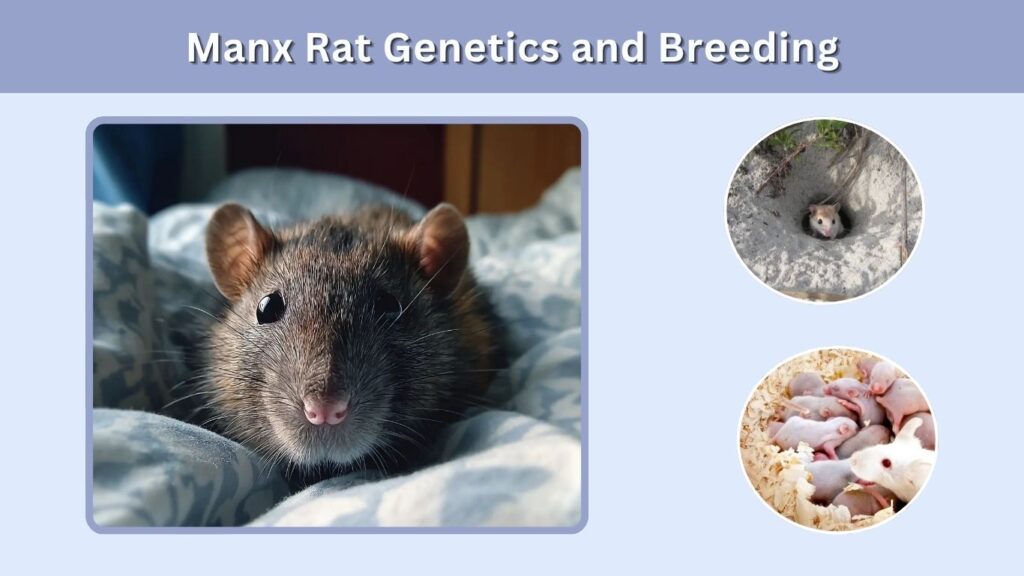
Taillessness in pet rats should not be explained using a simple inheritance chart copied from Manx cats. Rat organizations describe complicated inheritance, and animals with similar external features may have different underlying developmental changes. Breeding for a missing tail therefore involves uncertainty alongside welfare concerns. Understanding those limits is more useful for prospective owners than promises about producing particular-looking babies.
Why Simple Genetic Claims Can Mislead
AFRMA describes taillessness as more complicated than a straightforward recessive trait. NFRS discusses multiple genes and possible environmental influences. A seller’s claim that a pairing guarantees healthy Manx offspring should therefore be treated cautiously.
Breeding and Welfare
Pelvic abnormalities can create serious birth difficulties in affected females. Deliberately producing tailless rats is not an appropriate beginner breeding project.
Organizations also differ in recognition. AFRMA recognizes a Tailless variety, while NFRS excludes Manx rats from its shows on welfare grounds. A show restriction is not the same as a legal ban on keeping one.
Finding a Manx Rat and Planning Costs
Before looking for a Manx rat for sale, consider whether you can provide compatible companions, appropriate housing, and access to a veterinarian who treats rats. Adoption may offer a way to care for an existing animal without selecting primarily for an unusual feature. Availability varies by location, and a seller’s description should always be checked against the rat’s actual condition.
Questions to Ask Before Adoption
Ask whether the rat was born tailless, what medical problems have occurred, and whether veterinary records are available. Discuss walking, toileting, previous companionship, and any support needs. Request honest information about relatives’ health when known.
Observe the rat moving naturally. A photograph cannot demonstrate bladder control, comfortable movement, or normal behavior.
What Does a Manx Rat Cost?
There is no dependable single Manx rat price. Adoption fees and seller prices vary, so request current local figures. Budget separately for companions, housing, food, bedding, examinations, and emergency care. An unusual appearance or high price does not guarantee health.
FAQs
Questions about Manx rats often mix appearance, personality, and medical assumptions. The most useful answers separate what the name describes from what must be assessed in the individual animal. General rat-care advice still applies, but mobility or toileting difficulties may require adjustments. Discuss your pet’s particular circumstances with a knowledgeable veterinarian, especially before changing care or making decisions about breeding.
How Long Do Manx Rats Live?
Pet rats generally live around two to three years. Use that as a general guide, not a guarantee for a Manx rat. Existing health problems can affect an individual’s lifespan.
Can a Manx Rat Be Hairless?
Yes. Hairlessness and taillessness describe different features and can occur together. Such a rat needs care that accounts for both skin exposure and any effects of taillessness.
Are Dumbo Manx Rats a Separate Species?
No. Dumbo describes ear shape and position, while Manx describes congenital taillessness. Both traits can occur in the same domestic fancy rat.
Can a Manx Rat Live Alone?
Rats normally need compatible rat companions. Taillessness alone is not a reason for solitary housing. Medical separation or serious fighting should be managed with professional advice.
Does Every Rat Without a Tail Have Manx Genetics?
No. Injury, amputation, and different developmental causes can produce a missing or shortened tail. History and veterinary assessment are more reliable than appearance alone.