
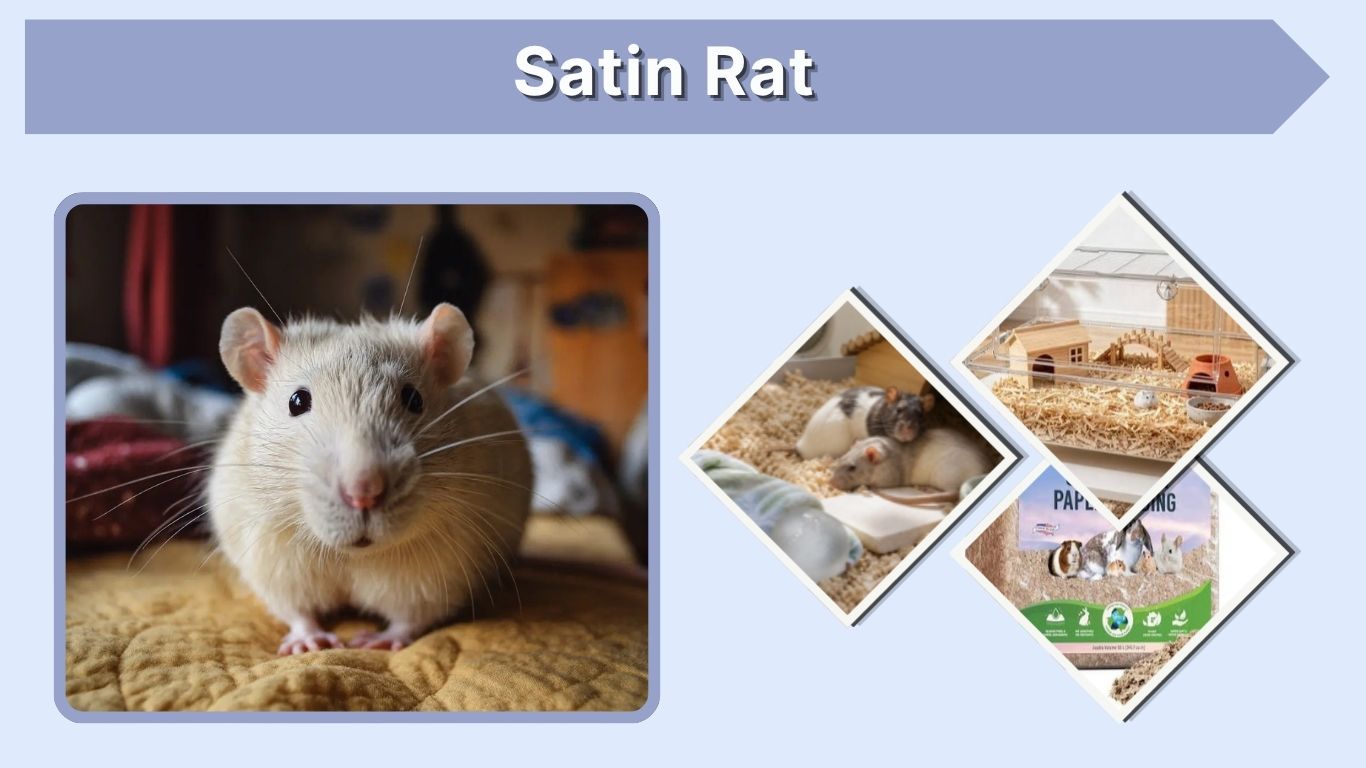
The Satin Rat is a fancy rat distinguished by an unusually fine, lustrous coat that reflects light and can give the fur a sparkling or polished appearance. Satin is not a separate rat species or breed; it is a coat variety found in domesticated fancy rats. Satin rats can appear in many colors and markings, including black, blue, Siamese, and patterned forms, and the Satin trait can also occur alongside features such as Dumbo ears or Rex curls. Aside from their special coat, their basic care and social needs are the same as those of other pet rats.
What Is a Satin Rat?
A Satin Rat is a domesticated fancy rat whose hair structure produces a distinctive shine. According to the American Fancy Rat and Mouse Association (AFRMA), Satin is one of the recognized rat varieties. The ideal Satin coat is fine, somewhat longer and thinner-looking than a standard coat, with a clear lustrous sheen.
Satin Rat Identification
Look for these characteristics:
- Fine, soft hair
- Noticeably lustrous or shiny coat
- Hair that appears thinner and slightly longer
- Sparkling effect on darker colors
- Warmer or yellowish cast on white areas
- Wavy, kinky, or curled whiskers
- Normal fancy-rat body shape
- Any recognized color or marking
The shine comes from differences in the structure of individual hairs rather than simply from a healthy, glossy standard coat.
How to Tell If a Rat Is Satin
Identifying an adult Satin Rat can occasionally be difficult because healthy standard-coated rats can also look glossy. Satin should have more than ordinary shine.
The hairs themselves tend to be finer and more translucent, producing a distinctive reflective appearance.
Look at the Whiskers
Whiskers are particularly useful.
AFRMA notes that Satin whiskers are typically wavy, kinky, or curled, whereas standard-coated rats normally have straight whiskers. This difference may be visible even when Satin rats are very young.
Look at the Coat in Bright Light
Dark Satin rats can appear especially sparkly because light reflects through their modified hairs.
Lighter Satin colors may show the effect differently. White areas, for example, can develop a slightly creamy or yellowish appearance rather than looking brilliant white.
Young Satin rats may temporarily become less obviously shiny while changing into their adult coat, so coat texture and whisker shape can sometimes be more reliable than shine alone.
Is a Satin Rat a Breed?
No. Fancy-rat organizations generally describe rats in terms of varieties, colors, and markings rather than distinct breeds.
AFRMA currently recognizes varieties including Standard, Rex, Tailless, Hairless, Satin, Dumbo, and Bristle Coat.
This means a rat can combine different traits.
For example, you might encounter:
- Black Satin
- Blue Satin
- Dumbo Satin
- Satin Rex
- Marked Satin
- Siamese Satin
A Satin Rat is therefore defined primarily by its coat rather than by one specific body color or ear shape.
Black Satin Rat
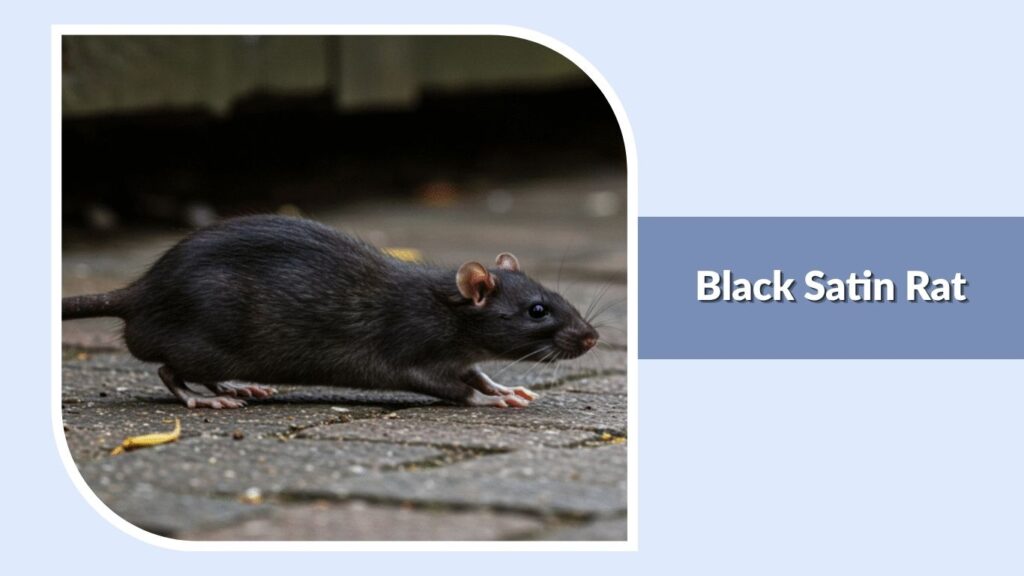
Black Satin Rats combine black coloration with the Satin coat trait.
Because Satin hairs transmit and reflect light differently from standard hairs, dark colors can appear especially deep, polished, or sparkling. AFRMA notes that Satinization can make colors look darker or more intense than the same color on a standard-coated animal.
A Black Satin should still display the characteristic fine coat and altered whiskers rather than simply having naturally shiny black fur.
Blue Satin Rat
Blue is another color that can occur with the Satin variety.
A Blue Satin Rat generally has the normal blue-gray coloration of a Blue fancy rat combined with the fine, reflective Satin coat. AFRMA specifically illustrates Blue Self Satin rats in its Satin standard.
Depending on lighting, the coat may appear silvery blue, steel-gray, or more intensely reflective than a standard Blue rat.
What Is a Dumbo Satin Rat?
A Dumbo Satin Rat carries both the Satin coat trait and Dumbo ear type.
Dumbo rats have large, rounded ears set lower on the sides of the head rather than higher on top. Satin changes the coat, while Dumbo changes ear placement. One does not cancel out the other.
Therefore, a Dumbo Satin may have:
- Low-set rounded ears
- Fine shiny Satin fur
- Curled or wavy Satin whiskers
- Any compatible color or marking
Its personality is not determined by having Dumbo ears or a Satin coat.
Satin Rat vs Rex Rat
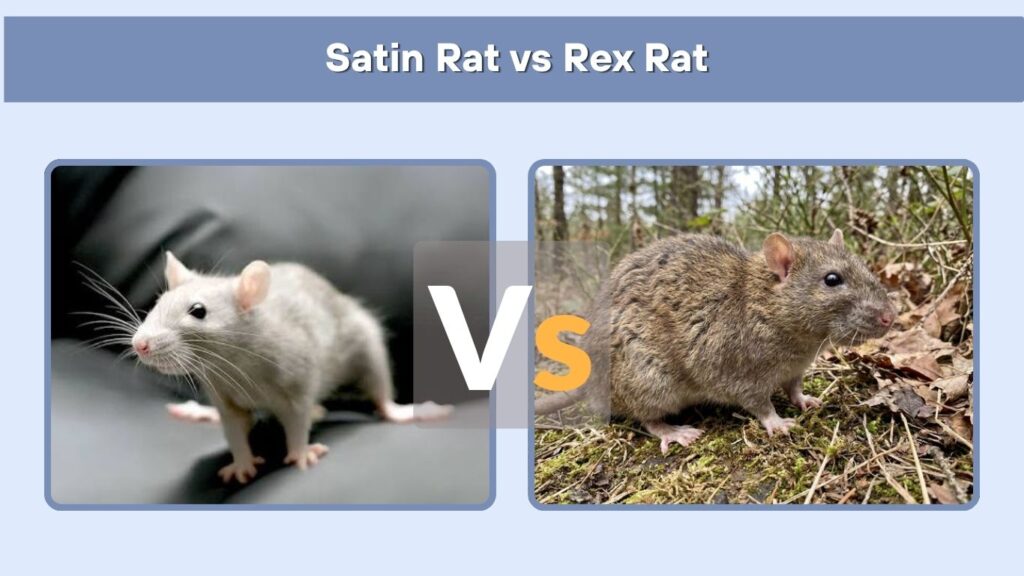
Satin and Rex describe different coat characteristics.
| Feature | Satin Rat | Rex Rat |
| Main feature | Lustrous, fine coat | Curly coat |
| Hair | Fine and somewhat longer-looking | Dense and curled |
| Whiskers | Wavy or curled | Distinctly curled |
| Shine | Strong characteristic sheen | Not the defining feature |
| Coat texture | Fine | Curly, sometimes coarse-feeling |
A Rex Rat gets its appearance from curling of the coat, while a Satin Rat is recognized primarily by hair structure and sheen.
What Is a Satin Rex Rat?
A rat can inherit both Satin and Rex traits, producing a Satin Rex.
These rats combine the curled coat characteristics of Rex with the altered shine and pigmentation associated with Satin. AFRMA recognizes combinations such as Satin Rex as multi-variety rats in show classifications.
Satin Rex rats may appear darker than comparable Rex siblings and can have more tightly curled whiskers. Young Satin Rex animals may also temporarily show very short or sparse areas during an early coat change before developing their adult coat.
Satin Rat Genetics
The Satin trait is hereditary.
AFRMA describes Satin as a simple recessive trait, meaning a rat generally needs to inherit the Satin gene from both parents to visually express the Satin coat.
A Satin bred to a rat that does not carry Satin can therefore produce standard-looking offspring that carry the trait without displaying it.
This genetic inheritance is also why breeders can produce Satin in many different colors, patterns, and combinations.
Satin Rat Temperament
The Satin coat does not create a special personality type.
Like other domestic fancy rats, Satin Rats can be curious, social, intelligent, playful, and strongly interested in interacting with familiar humans. Personality depends much more on genetics, early handling, socialization, individual temperament, and living conditions than coat type.
Rats are highly social animals and should generally have compatible rat companions rather than living alone. The RSPCA recommends keeping rats in pairs or small compatible groups.
Satin Rat Care
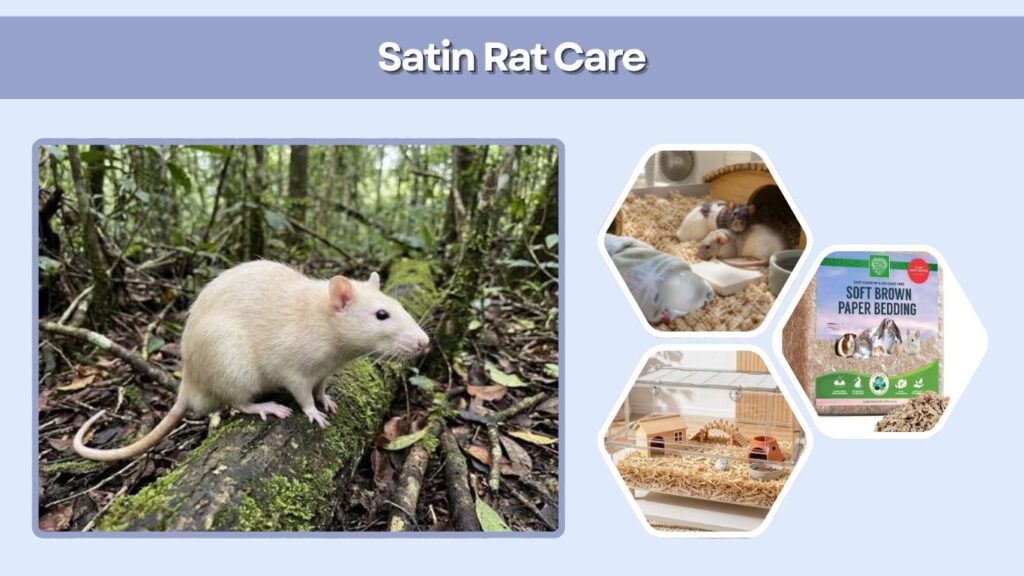
A Satin Rat requires essentially the same husbandry as any healthy fancy rat. The shiny coat does not remove its need for spacious housing, companionship, enrichment, exercise, and appropriate nutrition.
Basic Care Needs
- Keep compatible rats together.
- Provide a spacious, well-ventilated cage.
- Include hides, hammocks, tunnels, and climbing opportunities.
- Use safe, low-dust bedding.
- Provide fresh water continuously.
- Feed a nutritionally complete rat diet.
- Offer safe vegetables and other suitable foods in moderation.
- Provide regular supervised exercise and enrichment.
- Monitor weight, breathing, skin, teeth, and behavior.
Rats form strong social relationships and benefit from having other rats as companions.
How Long Do Satin Rats Live?
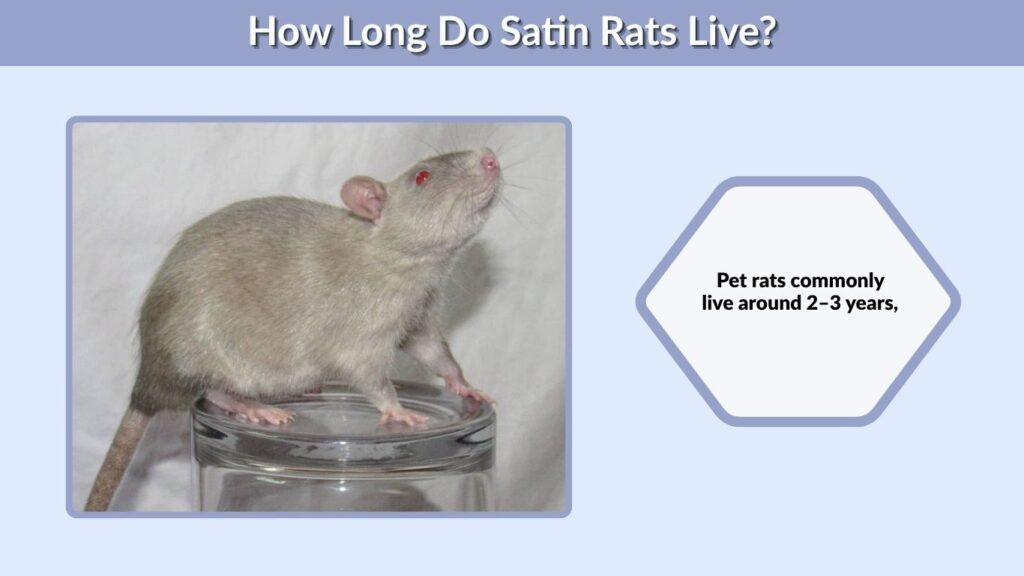
Satin does not define a separate lifespan. A Satin Rat has approximately the same expected lifespan as other domesticated fancy rats.
Pet rats commonly live around 2–3 years, although individuals can live shorter or longer depending on genetics, disease, diet, veterinary care, and general husbandry.
Because respiratory illness and tumors are important concerns in domestic rats generally, changes such as noisy breathing, persistent sneezing, lumps, weight loss, inactivity, or appetite changes should be assessed promptly by a veterinarian experienced with rodents.
Satin Rats for Sale: What to Look For
When looking for a Satin Rat, coat shine should not be your only consideration.
Health and temperament are much more important.
Before Getting a Satin Rat
Look for a rat that has:
- Clear, bright eyes
- Quiet, normal breathing
- Clean nose and ears
- Healthy skin and coat
- Good body condition
- Curious behavior
- No obvious wounds or swellings
- Appropriate socialization
Ask about the rat’s age, sex, health history, temperament, parents, and whether it has been housed with compatible companions.
If adopting only one rat, remember that human attention does not fully replace interaction with another rat. Consider obtaining a compatible pair or group.
FAQs
1. What is a Satin Rat?
A Satin Rat is a fancy rat with a genetically inherited coat that is finer, somewhat longer-looking, and noticeably more lustrous than a standard coat.
2. How can you identify a Satin Rat?
Look for a fine reflective coat, deeper-looking coloration, and wavy or curled whiskers. The combination is more reliable than coat shine alone.
3. Can Satin Rats be black or blue?
Yes. Satin is a coat variety rather than a specific color, so Satin Rats can occur in black, blue, and many other recognized colors and markings.
4. What is a Satin Rex Rat?
A Satin Rex carries both Satin and Rex coat traits, producing a coat that combines Rex curling with Satin characteristics such as increased sheen and altered color intensity.
5. Are Satin Rats good pets?
They can make excellent pets when properly socialized and cared for. Their Satin coat does not fundamentally change their behavior or everyday care requirements, and they still need companionship from other compatible rats.