
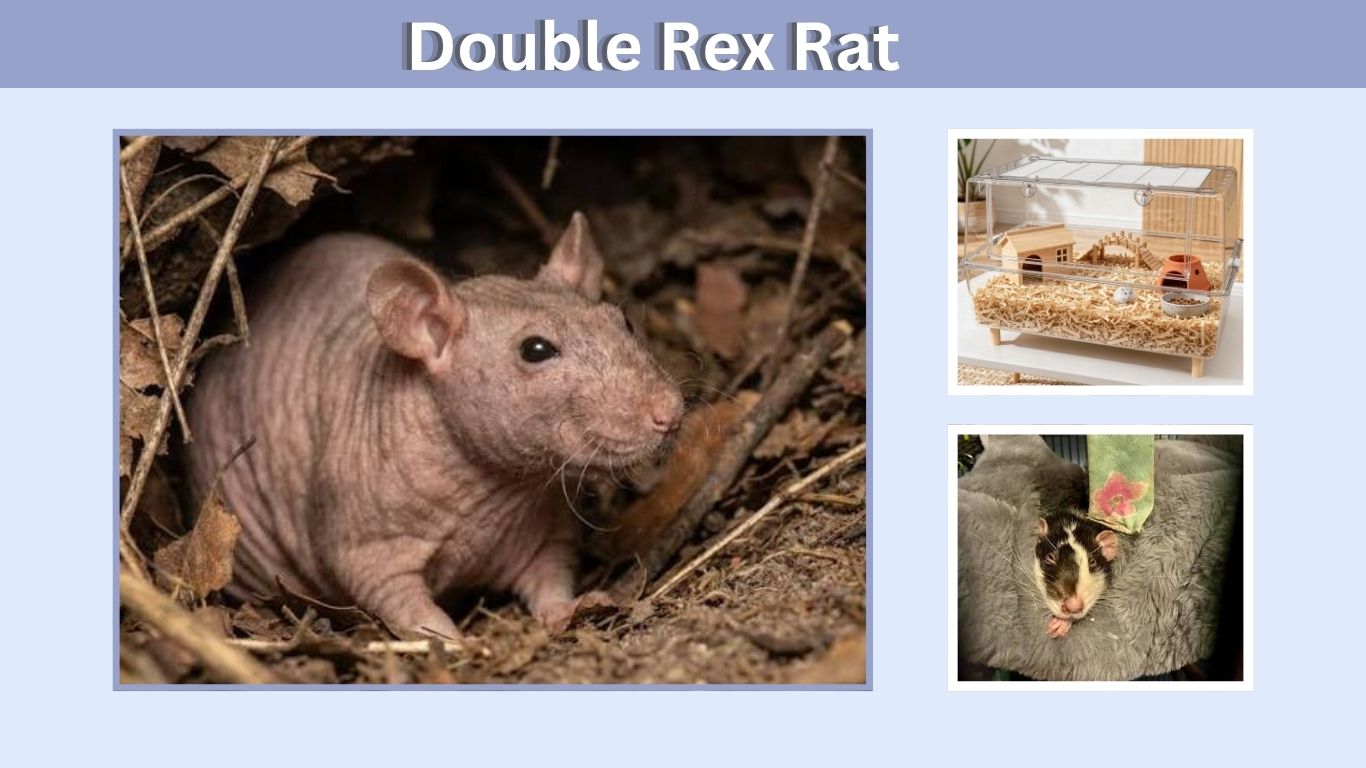
A double Rex rat is a domesticated fancy rat that inherits two copies of a Rex-type curly-coat gene. Rather than keeping the dense curls seen on a regular Rex, many double Rex rats develop thin, patchy fur that repeatedly grows, breaks, and disappears. Some appear almost hairless, while others retain fuzz around their face, legs, and belly. Double Rex rats are not a separate breed, and their unusual coat does not change their intelligence or social nature. However, exposed skin requires thoughtful housing and regular health checks.
What Is a Double Rex Rat?
“Double Rex” describes a coat genotype and appearance, not a distinct rat species. These animals are domesticated Norway rats, Rattus norvegicus, and are also considered fancy rats. Their patchwork appearance results from inheriting a Rex mutation from both parents.
Double Rex Characteristics
- Sparse, curly, or patchy fur
- Coat that grows and disappears in different areas
- Curled, bent, or shortened whiskers
- Exposed pink, gray, brown, or pigmented skin
- Fuzz commonly remaining on the face, feet, or lower body
- Standard pet-rat body size and personality
- Any recognized color, marking, or ear type
A double Rex may look mostly covered one week and nearly naked several weeks later. The changing pattern is why these rats are sometimes called patchwork, semi-hairless, or werewolf rats, although terminology varies among breeders.
Double Rex Rat Genetics
The familiar Rex mutation is dominant. A rat with one copy generally develops a curly Rex coat, while a rat with two copies may develop the sparse double Rex coat. Research has connected one laboratory Rex mutation to the hair-formation gene Krt71.
However, fancy-rat populations contain several curly-coat mutations. Some are dominant and others are recessive, so appearance alone cannot always identify the exact gene.
Rex Breeding Outcomes
Using Re for the dominant Rex allele and re for a standard coat:
| Pairing | Expected Offspring |
| Rex × Rex | 25% standard, 50% Rex, 25% double Rex |
| Double Rex × standard | 100% Rex |
| Double Rex × Rex | 50% Rex, 50% double Rex |
| Double Rex × double Rex | 100% double Rex |
These percentages assume both parents carry the same simple Rex mutation. Actual litters may differ when other coat genes are involved. The American Fancy Rat and Mouse Association describes the same Rex-to-Rex inheritance pattern.
Breeding pet rats should not be attempted solely to obtain a particular coat. Temperament, respiratory health, longevity, maternal health, and genetic diversity should be considered before appearance.
Rex vs. Double Rex vs. Hairless Rat
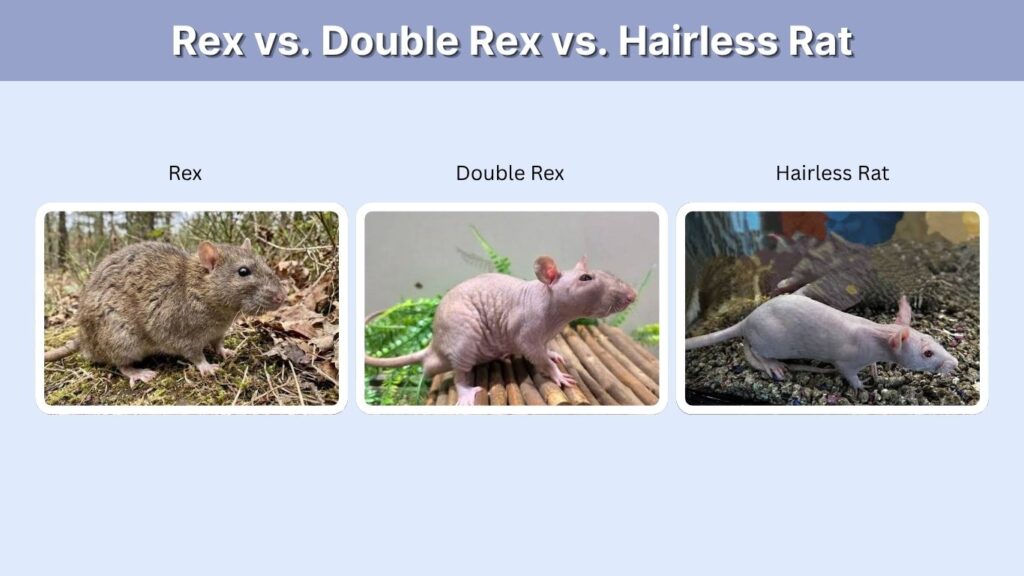
These varieties may look similar as babies or during a molt, but their coats usually develop differently. Breeding history provides stronger evidence than a single photograph.
Main Differences
| Feature | Rex Rat | Double Rex Rat | True Hairless Rat |
| Rex copies | Usually one | Usually two | Different hairless mutation |
| Coat | Dense and curly | Thin, patchy or nearly absent | Mostly or completely absent |
| Coat changes | May soften with age | Repeated growth and loss | Depends on the hairless gene |
| Whiskers | Curly | Curly, short or brittle | May be short, curled or absent |
| Hair on face and feet | Normally present | Often remains | May be minimal or absent |
Double Rex rats are sometimes advertised as hairless because a heavily molting adult can appear almost naked. Genetically, however, double Rex and true hairless are not necessarily the same.
Do Double Rex Rats Grow Their Fur Back?
Yes, patches commonly regrow. New growth may appear on the shoulders, back, sides, face, or hips while fur disappears elsewhere. The pattern can continue changing throughout adulthood.
Normal coat cycling should not cause severe itching, bleeding, swelling, thick crusts, or obvious pain. Those signs suggest mites, lice, infection, allergies, injury, or barbering rather than an ordinary double Rex molt.
Hairless or Double Rex at Three Weeks Old?
At three weeks, identification may be difficult because double Rex babies often begin with curly coats and lose much of their fur at around four weeks. Helpful clues include:
- Curly or bent whiskers
- Uneven hair loss rather than complete nakedness
- Rex-coated parents
- Temporary fuzz on the face and legs
- Patchy regrowth as the baby matures
Ask for the parents’ coat information and photographs taken at different ages. A single image of a young rat may not provide a definitive answer.
Dumbo, Dwarf and Color Combinations
Dumbo, dwarf, coat, color, and markings are inherited separately. Therefore, these descriptions can occur together without creating a different species or breed.
Double Rex Dumbo Rat
A Dumbo double Rex has the sparse double Rex coat and large, low-set Dumbo ears. The ears sit farther down the sides of the head than standard top ears. Dumbo rats do not require different general care because of their ear placement.
A double Rex Dumbo dwarf rat combines three traits: double Rex coat, Dumbo ears, and genetically smaller body size. Dwarf rats should not be confused with underweight or poorly growing babies.
Available Colors and Markings
Double Rex rats may be:
- Black
- Blue
- Agouti
- Silvermane
- Himalayan
- Siamese
- Hooded
- Berkshire
- Variegated
- Self-colored
Color does not determine whether the rat is double Rex. A black double Rex Dumbo, for example, combines a black color, double Rex coat, and Dumbo ears.
Double Rex Rat Care
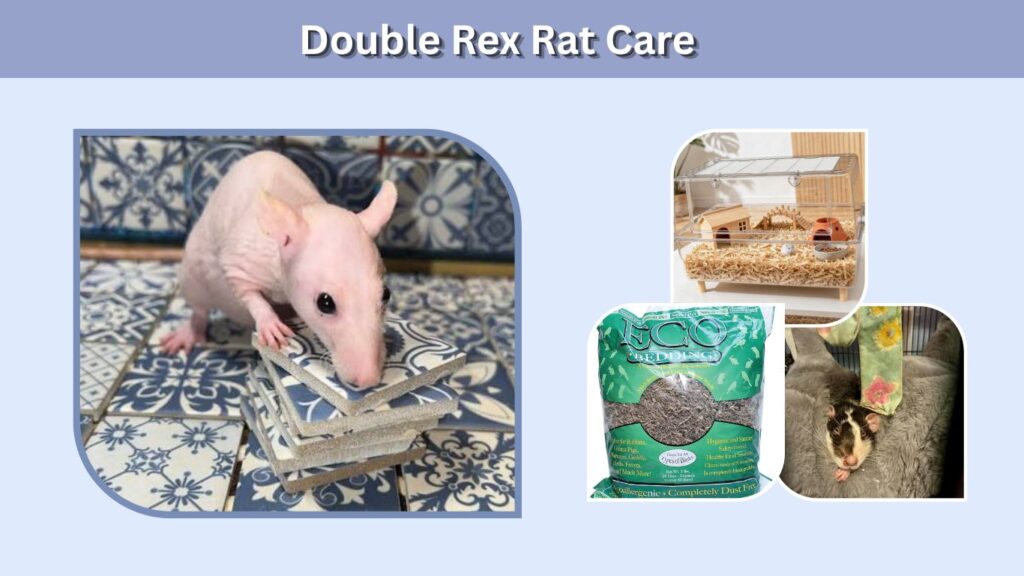
Double Rex rats need the same companionship, enrichment, diet, and veterinary care as other fancy rats. Their sparse coat adds an important requirement: housing must protect exposed skin from cold, rough surfaces, and scratches.
Housing and Temperature
Provide:
- A spacious, well-ventilated cage
- Solid floors and covered levels
- Dust-free, absorbent bedding
- Soft hammocks and nesting materials
- Hides large enough for rats to sleep together
- Climbing, digging, chewing, and foraging opportunities
- Several warm sleeping areas
- Regular spot-cleaning and weekly cage maintenance
Maintain a stable indoor temperature. The RSPCA recommends approximately 19–23°C or 66–73°F for pet rats. Double Rex rats may seek warm sleeping areas more frequently because their sparse fur provides less insulation.
Do not place the cage in direct sunlight, beside a heater, under an air conditioner, or in a cold draft. Avoid abrasive fabric, exposed wire floors, sharp plastic, and splintered wood.
Diet and Companionship
Feed a nutritionally complete rat food as the dietary foundation, supplemented with suitable vegetables and occasional treats. Provide clean drinking water at all times. Double Rex rats do not need a high-fat diet simply because they have less fur.
Rats are social and should normally live with compatible same-sex companions or properly neutered group members. Human attention cannot completely replace rat companionship.
Skin Care
Check exposed skin several times a week for:
- Scratches and bite marks
- Redness or swelling
- Dry scales and crusts
- Small scabs around the shoulders and neck
- Parasites or parasite debris
- Lumps and unusual growths
- Discharge or unpleasant odor
Healthy skin normally requires no lotion. Human moisturizers, essential oils, medicated creams, and scented products may irritate the skin or be swallowed during grooming. Ask an exotic-animal veterinarian before applying anything.
Frequent bathing is unnecessary and may worsen dryness. Spot-clean dirt with a soft, slightly damp cloth when needed.
Double Rex Rat Health and Lifespan

A healthy double Rex rat has approximately the same expected lifespan as other pet rats. The coat gene itself does not automatically shorten life, although overall longevity depends heavily on genetics, breeding quality, diet, environment, and veterinary care.
Double Rex Rat Lifespan
The average pet-rat lifespan is approximately two to three years, although some live longer. The RSPCA gives the same general lifespan for domesticated rats.
Common health concerns include:
- Respiratory infections
- Mammary and other tumors
- Mites or lice
- Abscesses
- Dental problems
- Hind-leg weakness in older rats
- Skin wounds and dermatitis
Sparse fur makes parasites and scratches easier to see, but it can also leave the skin less protected. Hair loss accompanied by persistent scratching, scabs, flaky skin, or irritation warrants veterinary examination. Veterinary guidance notes that mites and lice can cause itching, flaking, and generalized coat loss in rats.
Finding Double Rex Rats for Sale or Adoption
Double Rex rats may be available through rescues and responsible fancy-rat breeders in the United States, UK, Australia, and other countries. Availability and legal requirements vary by location.
Before obtaining one, ask about:
- The rat’s age and sex
- Parents’ health and lifespan
- Respiratory illness in the breeding line
- Temperament and early socialization
- Rex or hairless genetics
- Current cage companions
- Parasite treatment history
- Return and health policies
Avoid sellers who cannot confirm sex, keep rats in dirty conditions, intentionally breed sick animals, or market double Rex rats as completely hypoallergenic. They still produce urine proteins, saliva, dander, and other potential allergens.
FAQs
Are double Rex rats completely hairless?
Not always. Most retain sparse fur or fuzz, and patches may repeatedly grow and disappear.
Do double Rex rats need special care?
They need standard rat care plus additional protection from cold, sharp surfaces, skin injuries, and irritating products.
Are double Rex rats hypoallergenic?
No. Reduced fur does not eliminate the proteins responsible for most rat allergies.
How large does a double Rex rat grow?
A non-dwarf double Rex generally reaches the same adult size as another fancy rat of similar sex and ancestry.
Why is my double Rex suddenly losing fur?
Patchy shedding may be normal. However, itching, scabs, redness, wounds, or widespread inflammation may indicate parasites, infection, barbering, or another medical problem requiring veterinary care.