
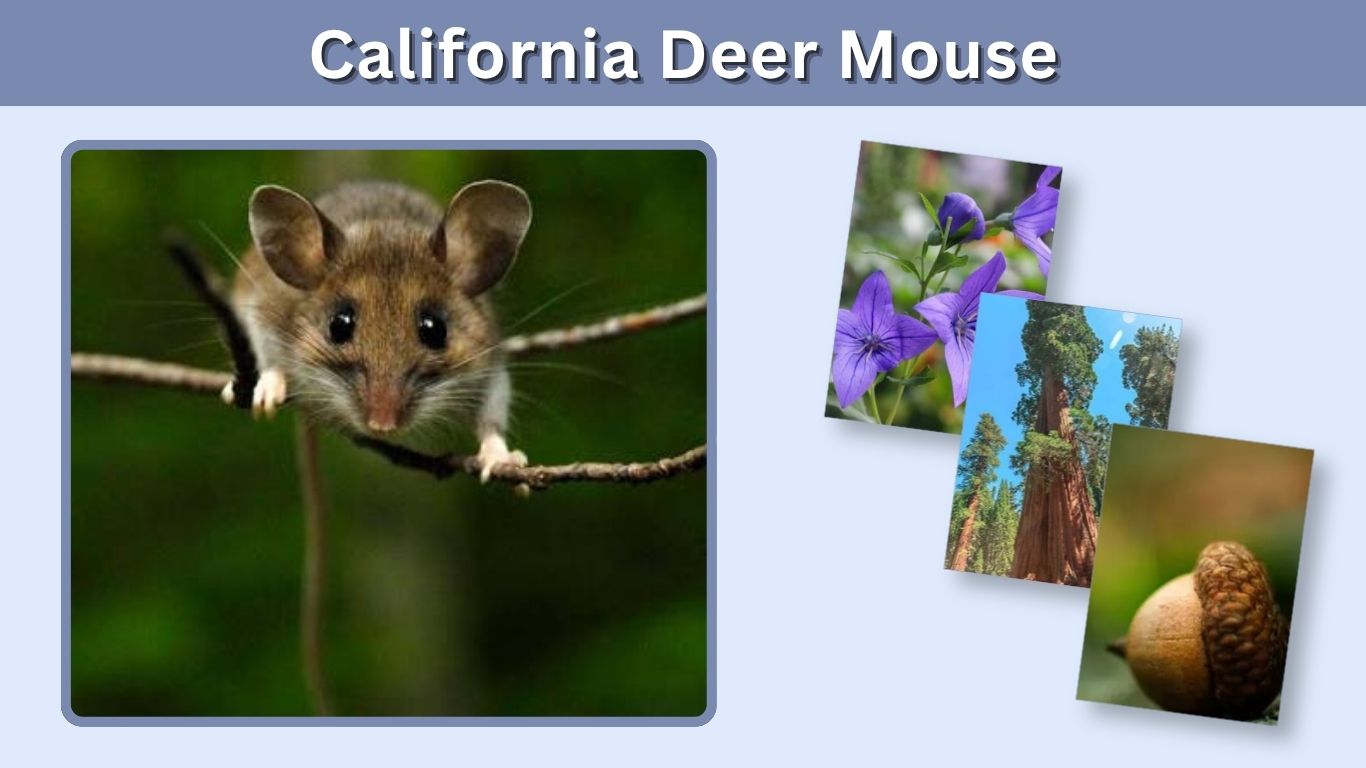
The California deer mouse is a large, nocturnal rodent native to California and northwestern Baja California. Also called the California mouse, it lives in chaparral, oak woodland, coastal scrub, redwood forest, and brush-covered hills. Its brown-gray coat, white underside, large ears, dark eyes, and long tail give it the familiar appearance of a deer mouse. However, it is a separate species with distinctive behavior. California mice are especially notable for forming stable monogamous pairs and raising their young together—an uncommon arrangement among rodents.
What Is a California Deer Mouse?
The California deer mouse is scientifically known as Peromyscus californicus. It belongs to the same genus as the common deer mouse, white-footed mouse, cactus mouse, and several other native North American rodents.
“California mouse” and “California deermouse” are accepted common names for the same species. It should not be confused with the California pocket mouse, California vole, house mouse, or the widespread deer mouse Peromyscus maniculatus.
Scientific Classification
| Category | Classification |
| Kingdom | Animalia |
| Class | Mammalia |
| Order | Rodentia |
| Family | Cricetidae |
| Genus | Peromyscus |
| Species | Peromyscus californicus |
What Does a California Mouse Look Like?
The California mouse is one of the largest members of the genus Peromyscus. It has a sturdy body, pointed snout, prominent whiskers, large ears, and dark eyes adapted for nighttime activity.
Adults generally have yellowish-brown, gray-brown, or brown fur mixed with black hairs. Their undersides and feet are white. Some individuals display a warm orange or buff-colored patch on the throat and a similar line separating the dark upper coat from the white belly.
Identification
- Total length of approximately 8.7–11.2 inches
- Body weight of roughly 1.2–1.9 ounces
- Yellowish-brown or gray-brown upper fur
- White belly, chest, and feet
- Large, rounded ears
- Large black eyes
- Long whiskers and a pointed nose
- Long, lightly furred tail
- Tail usually not sharply divided into dark and white halves
- Juveniles typically grayer than adults
Its tail measures approximately 4.6–6.1 inches and often makes up more than half of the animal’s total length. Unlike the common deer mouse, the California mouse normally lacks a sharply defined color boundary along its tail.
California Mouse Habitat and Range
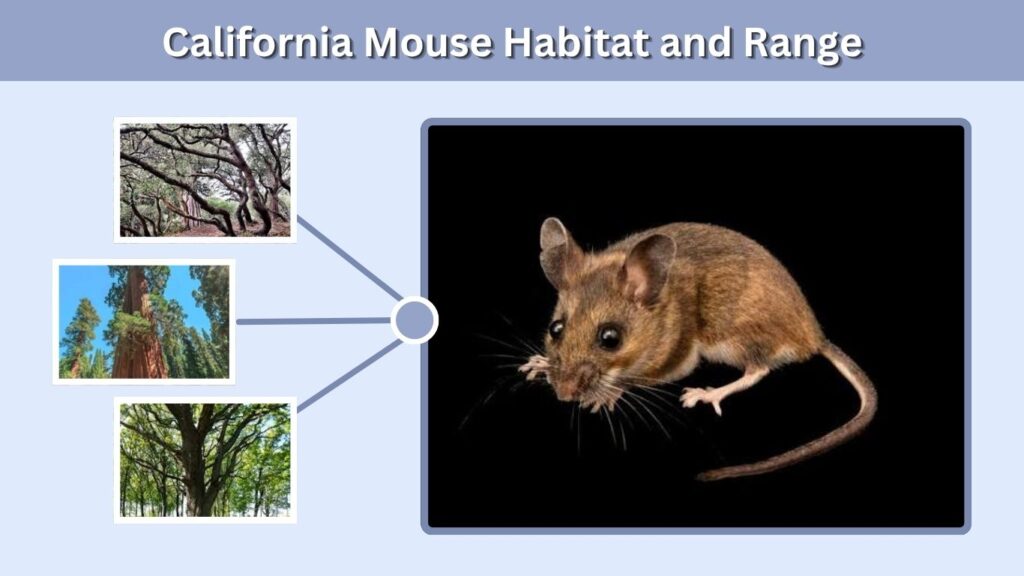
California deer mice have a relatively limited geographic range. They occur from the San Francisco Bay region south through California’s Coast Ranges and into northwestern Baja California. Inland populations occur along lower elevations of the western Sierra Nevada from around Mariposa County south toward Kern County.
Preferred Habitat
California mice commonly inhabit:
- Dense chaparral
- Coastal sage scrub
- Oak and bay woodland
- Redwood forest
- Brushy hillsides
- Mixed hardwood forest
- Woodland edges
- Shrub-covered ravines
- Foothill woodland
They prefer habitats with thick vegetation, fallen logs, leaf litter, stumps, snags, and natural cavities. Dense cover protects them from predators and supplies suitable places for nesting and foraging.
Nesting Sites
California mice are relatively poor burrowers. Instead of digging extensive tunnels, they frequently occupy existing cavities and abandoned or active woodrat houses.
They may also build rounded nests from grasses, sticks, and soft plant material inside logs, dense brush, tree cavities, debris piles, or shallow burrows. The availability of woodrat nests can strongly influence how many California mice occupy a particular area.
What Do California Mice Eat?
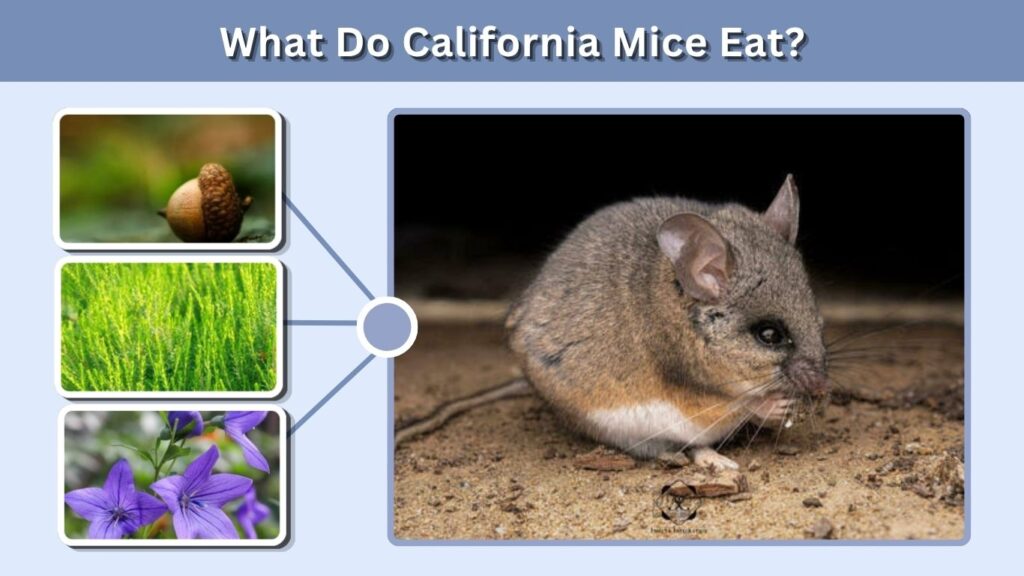
California mice eat mainly plant-based foods, although they occasionally consume insects and other small arthropods. Their exact diet changes with habitat, season, and local food availability.
Common Foods
Their diet includes:
- Seeds
- Acorns
- Nuts
- Berries and other fruits
- Flowers
- Fungi
- Shrub seeds
- Sage fruits and seeds
- California bay laurel seeds
- Insects and other arthropods
California bay laurel seeds can be an especially important woodland food. In coastal scrub, the mice commonly eat the seeds and fruits of shrubs, including sage plants. They may store surplus food for later use.
Foraging and Water
California mice search for food both on the ground and in shrubs. They are skilled climbers despite often being encountered at ground level.
Much of their water comes from moist food and dew. However, they do not conserve water as efficiently as some rodents adapted to extremely arid habitats. This partly explains their preference for dense woodland and chaparral rather than exposed desert.
California Mouse Behavior
California mice are active throughout the year and primarily emerge after dark. Activity may increase during the hours after sunset and shortly before dawn.
They use keen hearing, vision, smell, touch, and vocal signals to locate food, recognize partners, detect predators, and defend the nest. They are generally secretive but may act aggressively toward unfamiliar mice of the same sex near their nesting area.
Monogamous Pair Bonds
The California mouse is famous for its unusual social system. Males and females form stable monogamous pairs and may remain together for life. A bonded pair occupies the same home range and often lives with its dependent young as a small family group.
This behavior contrasts with the more flexible or promiscuous mating systems found in many other mice. Long-term pair bonding has made the California mouse an important research species for studying social attachment, parenting, aggression, and family behavior.
Shared Parental Care
Both parents care for their offspring. The female nurses and attends the young, while the male may groom, lick, huddle over, retrieve, and protect the pups.
The father’s warmth and attendance can help the young regulate their body temperature while allowing the nursing female more time to forage. California mice are therefore described as both monogamous and biparental.
Reproduction and Lifespan
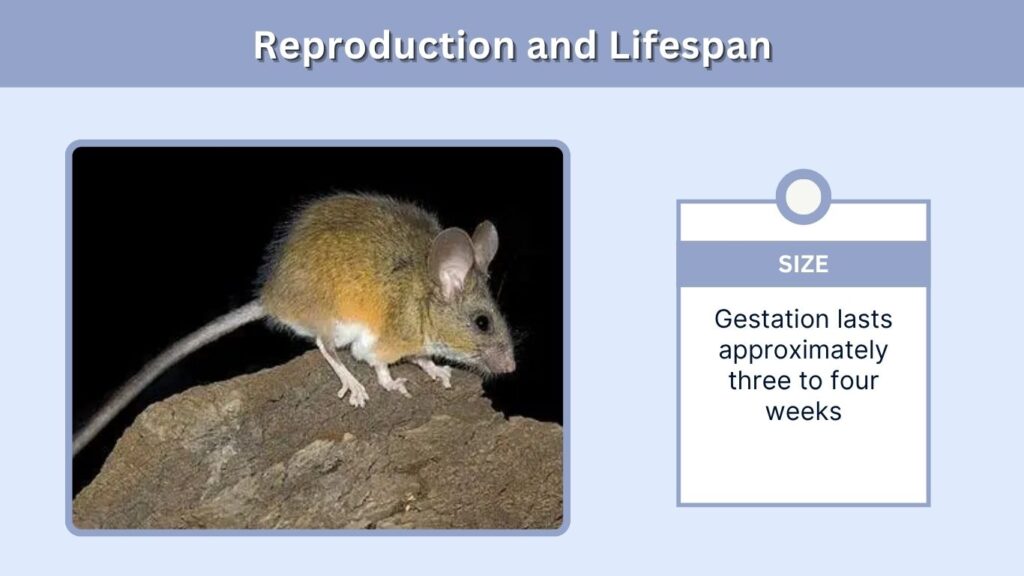
Breeding can occur throughout much of the year, although activity is usually strongest during favorable seasons. Wild females may produce three or four litters annually when food and environmental conditions support reproduction.
Gestation lasts approximately three to four weeks. A litter usually contains one to three pups, with two being typical. The young remain dependent longer than many other small mice and are generally weaned at around five weeks.
Development of the Young
Newborn California mice are small and unable to care for themselves. Both parents keep them warm and protected inside the nest.
Females may reach reproductive maturity at approximately 11 weeks, while males can take longer. The extended period of development and small litter size are consistent with the species’ high level of parental investment.
Lifespan
Wild California mice generally live for approximately 9–18 months. Predation, disease, food shortages, drought, and habitat conditions prevent many from surviving longer.
In captivity, where food and shelter are reliable and predators are absent, individuals may live for several years. Recorded captive averages can approach five years or more.
Predators and Ecological Importance
California mice are prey for owls, hawks, rattlesnakes, weasels, coyotes, feral cats, and other small predators. Their nocturnal activity, camouflaged coloring, climbing ability, and use of dense cover help them avoid detection.
They also influence plant communities by consuming and storing seeds. Some cached seeds are never recovered and may later germinate, although the mice also destroy many seeds by eating them. Their role as both seed consumers and prey makes them an important part of California woodland and chaparral food webs.
California Mice and Humans
California deer mice usually avoid people, but they may occasionally enter garages, sheds, cabins, crawl spaces, or homes near suitable habitat. They can squeeze through small exterior gaps while searching for shelter or food.
Indoors, they may leave droppings, damage food packaging, store seeds, or build nests from insulation and other soft materials. Sealing exterior openings and storing food in rodent-resistant containers are the most effective preventive measures.
Safe Handling and Cleanup
Do not handle a wild California mouse with bare hands. Rodents can contaminate surfaces through urine, droppings, saliva, and nesting material.
Wear gloves when cleaning rodent waste. Soak droppings and contaminated material with disinfectant before wiping them up, and never sweep or vacuum dry waste because this can send contaminated particles into the air.
California Deer Mouse vs. Common Deer Mouse
The California mouse and common deer mouse are related but separate species.
| Feature | California mouse | Common deer mouse |
| Scientific name | P. californicus | P. maniculatus |
| Size | Larger and heavier | Usually smaller |
| Range | California and Baja California | Widespread across North America |
| Tail | Long but weakly bicolored | Often sharply dark above and white below |
| Habitat | Chaparral and woodland | Forests, fields, grasslands, and mountains |
| Social system | Stable monogamous pairs | Usually not permanently monogamous |
| Parenting | Male and female care for pups | Female provides most care |
The California mouse’s larger body, limited range, less sharply bicolored tail, and stable pair bond provide the strongest distinctions. Exact identification may still be difficult without measurements and knowledge of the local mouse species.
FAQs
Is the California mouse a deer mouse?
Yes. It belongs to the deer mouse genus Peromyscus and is commonly called the California deermouse. However, it is not the same species as the widespread common deer mouse, Peromyscus maniculatus.
Are California mice monogamous?
California mice form stable monogamous pairs and commonly remain with the same partner. Males and females share a home range and cooperate in raising their pups, making the species unusual among small rodents.
Do California mice enter houses?
They may enter buildings located near woodland, chaparral, or brushy habitat, particularly when seeking shelter. They do not depend on buildings in the same way as house mice but can create similar sanitation and property problems indoors.
What does a California mouse eat?
It eats mostly fruits, seeds, flowers, nuts, acorns, fungi, and shrub material. California bay laurel seeds are important in some woodland habitats. Insects and other arthropods form a smaller portion of its diet.
Is the California mouse dangerous?
California mice are not aggressive toward people and normally flee when disturbed. However, all wild rodents and their waste should be handled cautiously. Avoid direct contact and use safe disinfection procedures when cleaning droppings or nesting material.