
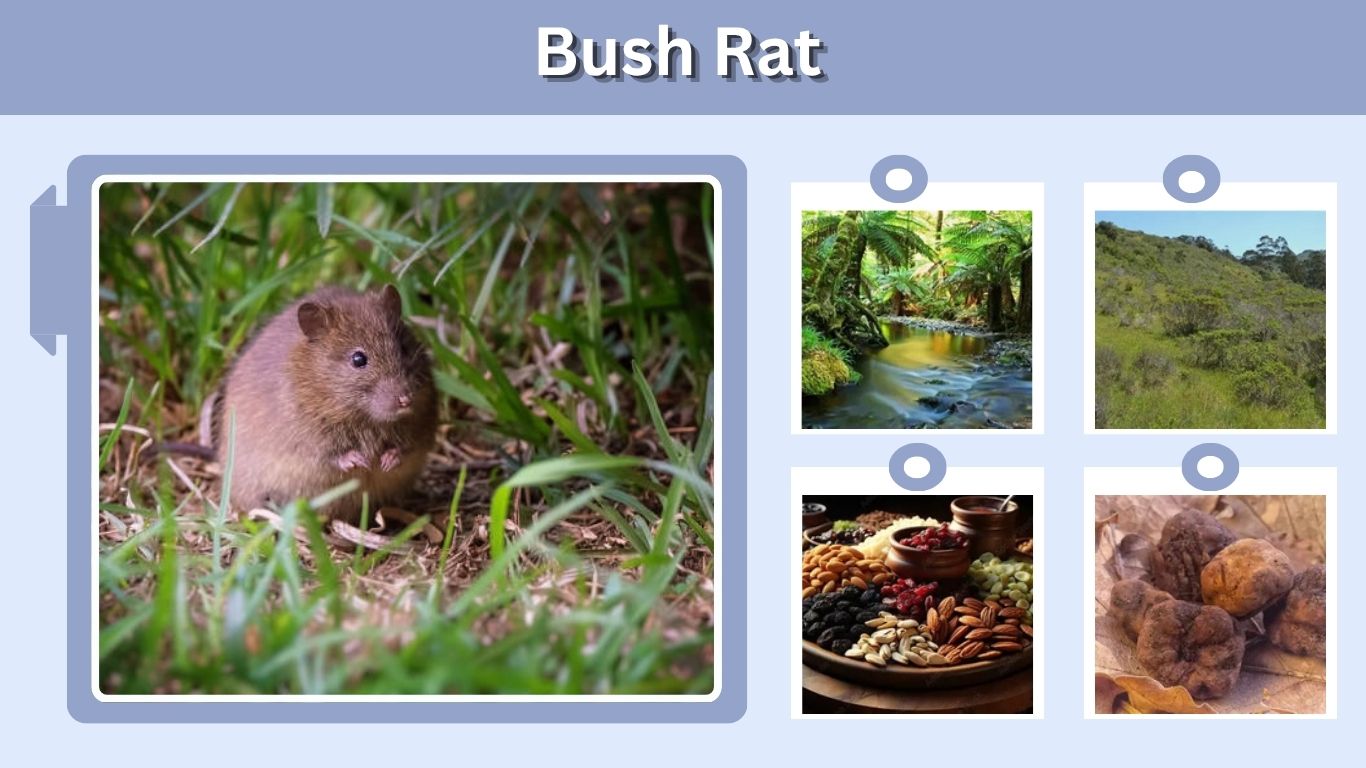
The bush rat is a shy, ground-dwelling rodent native to Australia. Known scientifically as Rattus fuscipes, it lives mainly in forests, woodlands, coastal scrub, and other areas with dense vegetation. Although it may occasionally enter gardens or outbuildings, it usually avoids people and prefers natural habitats. Bush rats are sometimes confused with introduced black rats and brown rats. Understanding their size, tail, droppings, diet, and behavior can help you identify them correctly and choose a safe response.
What Is a Bush Rat?
The Australian bush rat is a native species belonging to the family Muridae. It is primarily nocturnal, spending daylight hours inside burrows, hollow logs, thick vegetation, or natural cavities.
The name “bush rat” can also refer to several African rodents, particularly species belonging to the genus Aethomys. These African bush rats are different from the Australian bush rat and should not be treated as the same species.
| Feature | Australian bush rat |
| Scientific name | Rattus fuscipes |
| Body length | About 12–20 cm |
| Tail length | About 10–19 cm |
| Weight | Approximately 50–225 grams |
| Color | Gray-brown to reddish-brown |
| Diet | Omnivorous |
| Activity | Mainly nocturnal |
| Native range | Australia |
Bush Rat Identification
Bush rats have compact bodies, rounded ears, relatively short faces, and soft fur. Their coloring helps them remain hidden among soil, leaves, bark, and vegetation.
Size and Color
An adult bush rat generally measures between 12 and 20 cm from its nose to the base of its tail. Body size varies according to age, sex, location, and food availability.
The upper fur is commonly gray-brown, reddish-brown, or dark brown. The belly is usually lighter but does not have the sharply defined white coloring seen in some other native rodents.
Tail and Physical Features
A bush rat’s tail is usually approximately as long as, or slightly shorter than, its head and body. It is generally dark, thinly haired, and relatively uniform in color.
A distinctly white-tipped tail is not a dependable characteristic of the Australian bush rat. A rodent with a strongly contrasting white tail may be another native species, so identification should include its body shape, feet, ears, color, and location.
Bush Rat Droppings
Bush rat droppings are dark, narrow, and pellet-shaped. Their size and appearance can overlap with the droppings of other rats, so droppings alone cannot confirm the species.
Fresh droppings are usually dark and slightly shiny, while older ones become dry and dull. Avoid touching wild rodent droppings with bare hands.
Where Do Bush Rats Live?
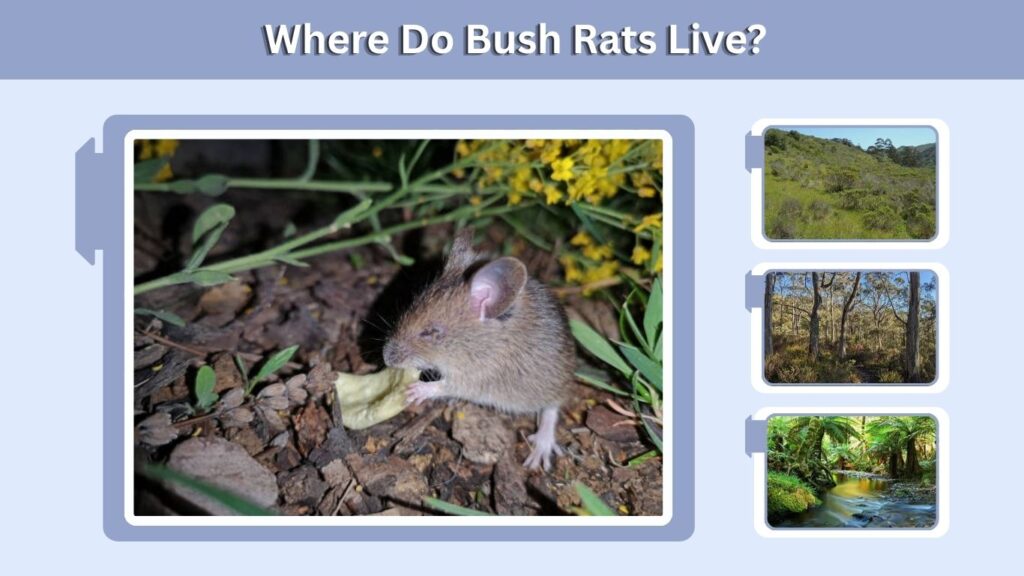
Australian bush rats occupy a variety of habitats containing thick ground cover. They are found in parts of eastern, southeastern, southern, and southwestern Australia, including areas of Queensland, New South Wales, Victoria, and Western Australia.
Natural Habitat
Their preferred habitats include:
- Rainforests and wet forests
- Dry eucalyptus woodlands
- Coastal heath and scrub
- Dense grass and undergrowth
- Fallen logs and leaf litter
- Creek banks and damp gullies
- Bushland near suburban areas
Bush rats need vegetation and debris for concealment. They commonly create shallow burrows beneath roots, logs, rocks, or dense plants.
Bush Rats in Queensland and Sydney
Bush rats occur in suitable habitats across parts of Queensland and around Sydney. They can survive in bushland reserves, forested parks, and vegetated suburban edges.
A rat observed in a city building is more likely to be an introduced black or brown rat. However, a bush rat may occasionally enter a shed, garage, or house located close to natural vegetation.
What Do Bush Rats Eat?
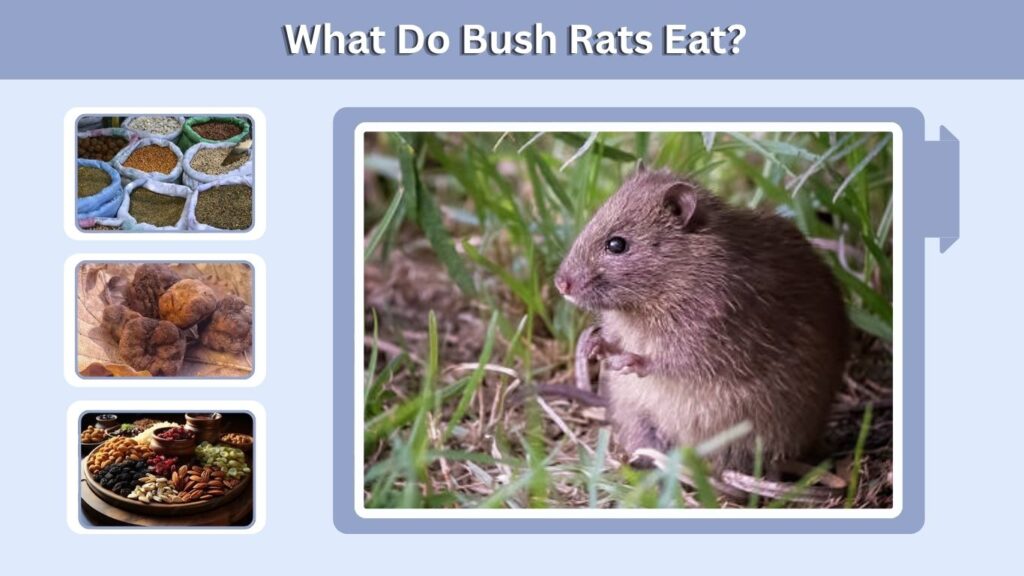
Bush rats are opportunistic omnivores. Their diet changes according to habitat, season, and available food. Fungi can form an especially important part of their natural diet.
Common foods include:
- Fungi and underground truffles
- Seeds and grains
- Fruits and berries
- Leaves and plant shoots
- Roots and other plant material
- Insects and larvae
- Other small invertebrates
- Nuts, including macadamia nuts
Bush rats can eat fallen macadamia nuts in orchards and gardens. Their gnawing may leave visible tooth marks on shells. However, damaged nuts do not always indicate bush rats because black rats and other rodents may feed on the same crop.
Behavior and Life Cycle
Bush rats are secretive animals that are most active from sunset through the night. They search through leaf litter for fungi, seeds, insects, and fruit while remaining close to protective cover.
Social Behavior
They are generally solitary outside the breeding period. Individual rats use scent to communicate and may maintain home ranges that overlap with those of other bush rats.
When threatened, they usually hide or run rather than confront people. Their natural predators include owls, snakes, quolls, foxes, cats, and other carnivorous animals.
Reproduction
Breeding varies by region and environmental conditions. Females can produce multiple litters when temperatures, rainfall, shelter, and food availability are favorable.
After a short pregnancy lasting approximately three weeks, a female gives birth to several undeveloped young. The babies remain in a protected nest until they can move and feed independently.
Are Bush Rats Dangerous?
Bush rats are not normally aggressive and rarely approach people intentionally. They do not hunt pets or attack humans. However, any wild rodent may bite when captured, cornered, or handled.
They may also carry fleas, ticks, internal parasites, or microorganisms. Food and surfaces contaminated by urine or droppings should be cleaned carefully. Wear gloves, dampen contaminated material with disinfectant, and avoid sweeping or vacuuming dry droppings because this can release particles into the air.
Bush Rats in the House
A bush rat may approach homes where dense vegetation, pet food, compost, fallen fruit, or open rubbish bins provide food and shelter. Correct identification is essential because native bush rats should not automatically be treated like introduced pest rats.
To discourage them:
- Store food and animal feed in sealed containers.
- Remove fallen fruit, nuts, and spilled birdseed.
- Secure rubbish and compost bins.
- Seal gaps around doors, roofs, pipes, and foundations.
- Trim heavy vegetation touching the building.
- Remove unused piles of wood and garden waste.
- Contact a wildlife professional if identification is uncertain.
Native wildlife rules vary by location, and trapping or relocating animals may be restricted. Avoid using poison where native rats, pets, owls, or other wildlife could be exposed.
Bush Rat vs Black Rat vs Brown Rat
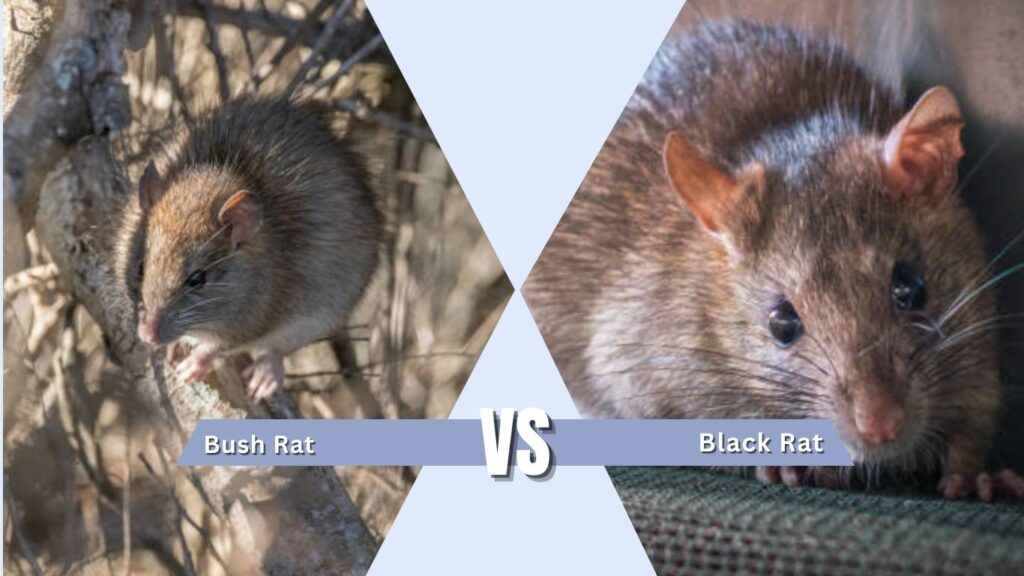
Bush rats are commonly mistaken for introduced rats. Tail length, body build, ear size, habitat, and behavior can help separate them.
| Feature | Bush rat | Black rat | Brown rat |
| Scientific name | Rattus fuscipes | Rattus rattus | Rattus norvegicus |
| Status in Australia | Native | Introduced | Introduced |
| Build | Compact | Slender | Heavy and robust |
| Tail | Usually equal to or shorter than body | Usually longer than body | Usually shorter than body |
| Ears | Rounded, moderate | Large and prominent | Relatively small |
| Typical habitat | Forests and dense vegetation | Roofs, trees and buildings | Sewers, ground burrows and buildings |
| Behavior | Shy and secretive | Agile climber | Strong burrower |
African Bush Rats
“African bush rat” usually refers to rodents in the genus Aethomys. They occur across parts of sub-Saharan Africa, including regions near Nigeria and Ghana. Depending on the species, they inhabit grasslands, savannas, forests, farms, and rocky areas.
African bush rats generally eat seeds, fruits, vegetation, and small invertebrates. They may enter agricultural land or buildings when food is available. Because many local rodents are called bush rats, photographs, body measurements, and location are needed for accurate identification.
FAQs
Are bush rats protected?
Australian bush rats are native wildlife and may receive legal protection depending on the state or territory. Rules covering capture, relocation, and control vary. Confirm the species and contact the appropriate local wildlife authority before trapping or harming a suspected bush rat.
How big is an Australian bush rat?
An adult Australian bush rat usually has a head-and-body length of approximately 12–20 cm and may weigh around 50–225 grams. Its tail is commonly about 10–19 cm long, although measurements vary among individuals and regional populations.
Do bush rats enter houses?
Bush rats occasionally enter sheds, garages, or homes located near bushland, particularly when food or shelter is available. However, rats living permanently inside urban buildings are more likely to be introduced black rats or brown rats.
What is the difference between a bush rat and a black rat?
A bush rat usually has a compact body and a tail approximately equal to or shorter than its body. A black rat is generally slimmer, has larger ears, and usually has a tail longer than its head and body combined.
What should I do if I find a bush rat?
Keep your distance, remove accessible food, and prevent pets from approaching it. Do not handle the rat with bare hands. If it is inside a building, injured, or difficult to identify, contact a wildlife rescuer or licensed pest professional.