
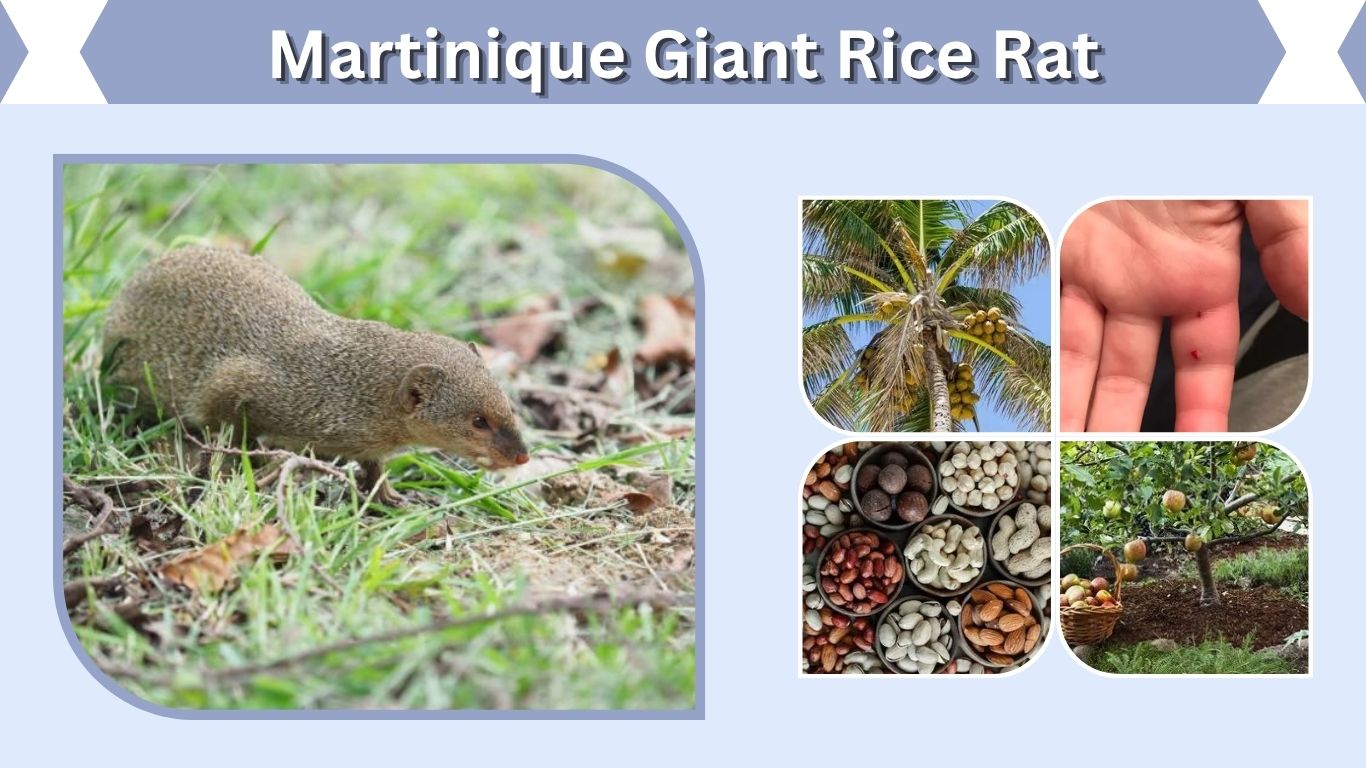
The Martinique giant rice rat (Megalomys desmarestii) was a large rodent found only on the Caribbean island of Martinique. Also called Desmarest’s pilorie, the Martinique muskrat, or the Antillean giant rice rat, it was comparable in size to a small domestic cat. This extinct animal probably lived mainly on the ground, sheltered in burrows, and ate fruits, seeds, and nuts. Because few specimens and historical accounts survive, researchers have reconstructed much of its behavior from its teeth, skull, feet, and other physical features.
Martinique Giant Rice Rat Overview
The Martinique giant rice rat belonged to the rice-rat tribe Oryzomyini within the family Cricetidae. Despite its common name, it was not closely related to the common brown and black rats introduced around the world.
| Feature | Description |
|---|---|
| Scientific name | Megalomys desmarestii |
| Other names | Desmarest’s pilorie, Martinique muskrat, Antillean giant rice rat |
| Animal group | Rodent |
| Native range | Martinique, Lesser Antilles |
| Head-and-body length | Approximately 36 cm (14 inches) |
| Tail length | Approximately 33 cm (13 inches) |
| Estimated weight | Around 1 kg (2.2 pounds) |
| Diet | Mainly fruits, seeds, and nuts |
| Activity | Probably most active around dusk and dawn |
| Lifestyle | Primarily ground-dwelling and partly burrowing |
| Conservation status | Extinct |
The species was formally described in 1829, although people living on Martinique had known about it for centuries. Historical descriptions refer to the animal as a pilorie and report that it occurred around coconut plantations.
Size and Physical Appearance
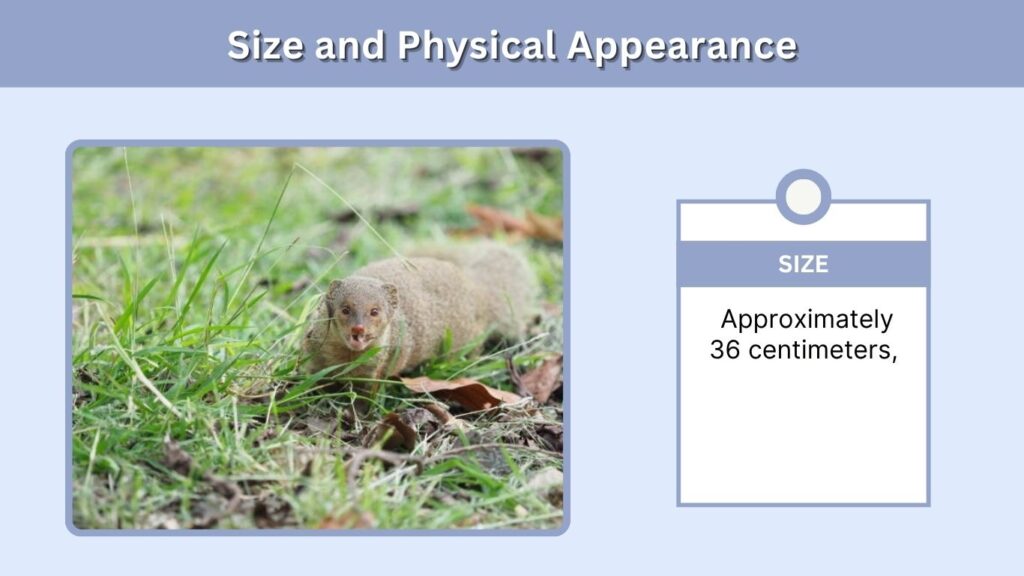
The Martinique giant rice rat was among the largest known members of the New World rice-rat group. Its unusually large body is one of its most recognizable characteristics.
How Big Was the Martinique Giant Rice Rat?
An adult had a head-and-body length of approximately 36 centimeters, or 14 inches. Its tail measured about 33 centimeters, making its total length close to 69 centimeters, or 27 inches.
Its exact weight was never reliably recorded from a freshly collected individual. Based on its measurements and body structure, researchers estimate that it probably weighed approximately one kilogram. Historical observers often compared it to a cat, although it would have had a much narrower, more rat-like body.
Identification and Traits
Important Martinique giant rice rat traits included:
- A large and strongly built body
- A relatively small, rounded head
- A short, blunt muzzle
- Long, coarse body fur
- Small eyes and moderately sized ears
- A long tail covered with short hairs and scales
- Powerful incisors and strong jaw muscles
- Moderately curved claws with relatively blunt tips
- Large hind feet with tough, textured soles
- Glossy black upperparts and whitish underparts
Living individuals were reportedly coal-black across the back and milky white underneath. Surviving museum specimens often look dark reddish-brown, probably because their original black fur faded during preservation.
Strengths and Adaptations
Its greatest strengths were its large size, strong jaws, durable feet, and ability to use several escape routes. Its robust skull and deep incisors allowed it to open hard foods such as nuts.
The relatively blunt claws and tough soles indicate that it spent considerable time moving across the ground and possibly digging. Its long tail may have helped with balance, although its feet suggest it was not an especially skilled tree climber.
Habitat and Biome
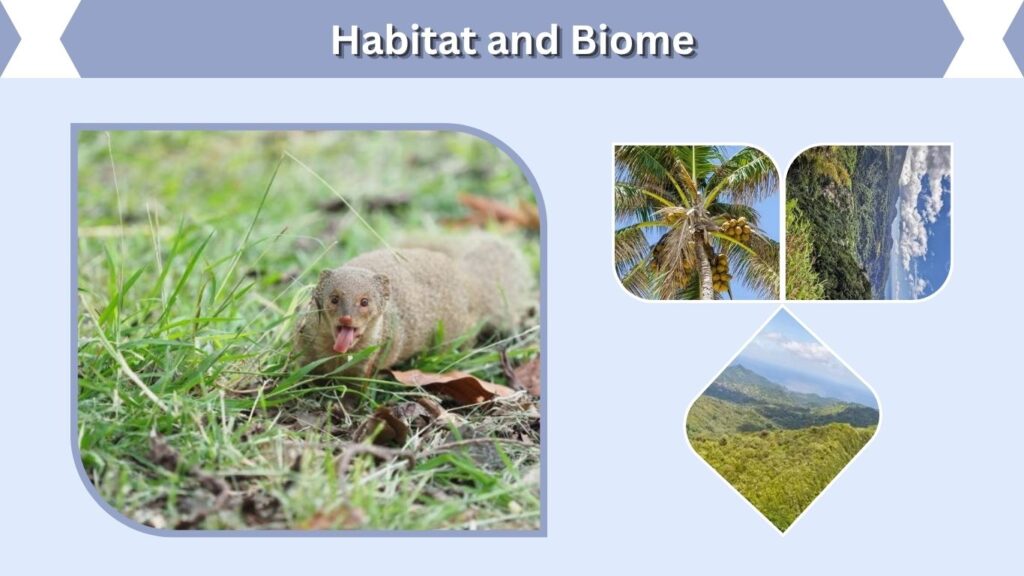
The Martinique giant rice rat was endemic to Martinique. This means it lived naturally nowhere else in the world.
Where Did the Martinique Giant Rice Rat Live?
The animal inhabited Martinique in the Lesser Antilles of the eastern Caribbean. Historical reports placed it around coconut plantations near the Rivière Blanche and Saint-Pierre in northern Martinique. The slopes surrounding Mount Pelée may have provided one of its final refuges.
It probably occupied a combination of tropical forest, wooded ground, plantation edges, and areas with dense vegetation. Its original habitat would have been part of Martinique’s warm, humid tropical biome.
Did It Live in Trees or Burrows?
Historical accounts sometimes described the rat as living among coconut trees. However, its blunt claws, small gripping pads, and other features suggest that it was not highly adapted to climbing.
Researchers now believe it probably foraged mainly on the ground and sheltered in underground burrows. It may occasionally have climbed low trees or moved around their bases to find fruit, but it was likely more terrestrial than arboreal.
Its connection to coconut plantations was probably related to food and shelter rather than an entirely tree-dwelling lifestyle.
Diet and Feeding Behavior

The Martinique giant rice rat had a strong skull, powerful chewing muscles, and deep incisors. These features show that it could process hard plant material.
What Did the Martinique Giant Rice Rat Eat?
Its probable diet included:
- Fruits
- Seeds
- Nuts
- Coconut material
- Leaves and tender stems
- Roots and other plant matter
- Insects and other invertebrates
- Possibly very small vertebrates
The structure of its molars is most consistent with eating fruits and seeds. Its strong incisors were particularly useful for breaking hard shells and coverings.
Was It a Herbivore, Carnivore, or Omnivore?
The Martinique giant rice rat was probably an omnivore with a strongly plant-based diet. Fruits, seeds, and nuts likely formed most of its food, but it may also have eaten small amounts of insects or other animal matter when available.
Calling it strictly herbivorous would therefore be too limiting. Like many rodents, it was probably an opportunistic feeder that adjusted its diet according to the season and available resources.
Behavior and Movement
No detailed behavioral study was conducted while this species was alive. Researchers must therefore combine historical observations with evidence from preserved specimens.
Activity and Speed
The animal’s relatively small eyes and moderate whiskers suggest that it was probably crepuscular, meaning it was most active around dawn and dusk. It may also have moved during the day or night, depending on disturbance and food availability.
Its exact speed is unknown. Its body and limbs suggest that it moved using bounding steps typical of rats but was probably not exceptionally fast. Burrows, thick vegetation, trees, and nearby water provided more reliable protection than speed alone.
Could the Martinique Giant Rice Rat Swim?
Yes, the Martinique giant rice rat could swim. Historical observers reported that individuals entered the water when chased from shelter.
However, it lacked the webbed feet, flattened tail, dense underfur, and other characteristics of a truly semiaquatic mammal. Swimming was probably an emergency escape behavior rather than a central part of its everyday life.
Defense Against Predators
When threatened, the rat probably attempted to reach:
- An underground burrow
- Dense vegetation
- A low tree or elevated shelter
- Nearby water
If cornered, its powerful incisors could have delivered a painful defensive bite. Large body size also protected adults from some smaller snakes and birds of prey. Nevertheless, historical accounts confirm that sufficiently large snakes could capture and eat these rodents.
Position in the Food Chain
The Martinique giant rice rat was primarily a consumer of plant material. By eating fruits, nuts, and seeds, it occupied the role of a primary consumer. When it ate insects or other small animals, it also functioned as a secondary consumer.
It was probably important to Martinique’s ecosystem in several ways. The rat may have dispersed some seeds after carrying or eating fruit. It could also have influenced which plants successfully reproduced by consuming seeds and seedlings.
Its known and probable predators included:
- Large native snakes
- Birds of prey
- Humans
- Introduced cats and dogs
- Introduced mongooses
As a large native rodent, it would have transferred energy from plants to predators and contributed to soil disturbance through digging and burrow construction.
Was the Martinique Giant Rice Rat Dangerous?
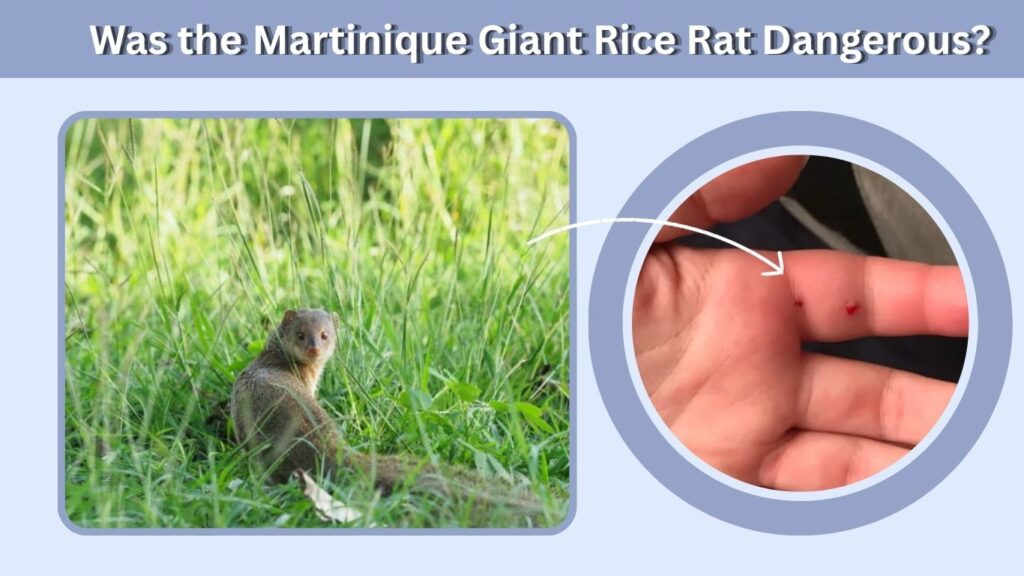
The Martinique giant rice rat was not a predator of humans and would not normally have been dangerous. It probably avoided people and tried to escape when approached.
A cornered individual could have defended itself with a strong bite, as can most large rodents. However, there is no reliable evidence that it regularly attacked people. It was mainly considered troublesome because it entered plantations and damaged crops.
Extinction of the Martinique Giant Rice Rat
The Martinique giant rice rat disappeared around the end of the 19th or beginning of the 20th century. The last commonly cited historical record dates from approximately 1897.
Several pressures probably contributed to its extinction:
- People killed it because it damaged plantations.
- It was sometimes hunted for food.
- Forest clearance reduced its natural habitat.
- Introduced rats may have competed with it for food.
- Cats, dogs, and mongooses created new predation pressures.
- The 1902 eruption of Mount Pelée may have destroyed its remaining refuge.
The Mount Pelée eruption is often presented as the single cause of extinction. However, the species was already rare or declining before the eruption. Introduced mongooses, habitat change, persecution, and competition probably weakened the population, while volcanic activity may have eliminated any final survivors.
Interesting Martinique Giant Rice Rat Facts
- It was found naturally only on Martinique.
- Adults were approximately the size of a small cat.
- Its tail was almost as long as its head and body combined.
- Living animals probably had black backs and white bellies.
- It had powerful jaws adapted for opening nuts and hard fruits.
- It probably rested in burrows and searched for food on the ground.
- It could swim but was not a specialized aquatic mammal.
- It was one of several extinct giant rice rats from the Caribbean.
- The related Saint Lucia giant rice rat also became extinct.
- Only a small number of preserved museum specimens remain.
FAQs
Is the Martinique giant rice rat still alive?
No. The Martinique giant rice rat is officially classified as extinct. The last reports came from the end of the 19th century, and no confirmed individuals have been found since. It may have survived until approximately 1902, but the exact extinction date remains uncertain.
How much did a giant rice rat weigh?
No reliable weight was taken from a freshly collected Martinique giant rice rat. Researchers estimate that an adult probably weighed around one kilogram, or approximately 2.2 pounds. Its head and body measured about 36 centimeters, excluding its nearly equally long tail.
Was the Martinique giant rice rat a good swimmer?
It was capable of swimming and reportedly entered water while escaping danger. Nevertheless, its body lacked specialized aquatic features. It was a land-dwelling rodent that occasionally used water as an escape route, rather than a semiaquatic species that regularly fed or lived in water.
Are the Martinique and Saint Lucia giant rice rats the same?
No. The Martinique giant rice rat was Megalomys desmarestii, while the Saint Lucia giant rice rat was Megalomys luciae. They were closely related but distinct species native to different Caribbean islands. Unfortunately, both species are now extinct.
Who would win: a baiji or a Martinique giant rice rat?
The comparison is unrealistic because a baiji was a large freshwater dolphin, while the giant rice rat was a terrestrial rodent. They lived in different parts of the world and would never naturally meet. In water, the much larger and fully aquatic baiji would have an overwhelming advantage.