
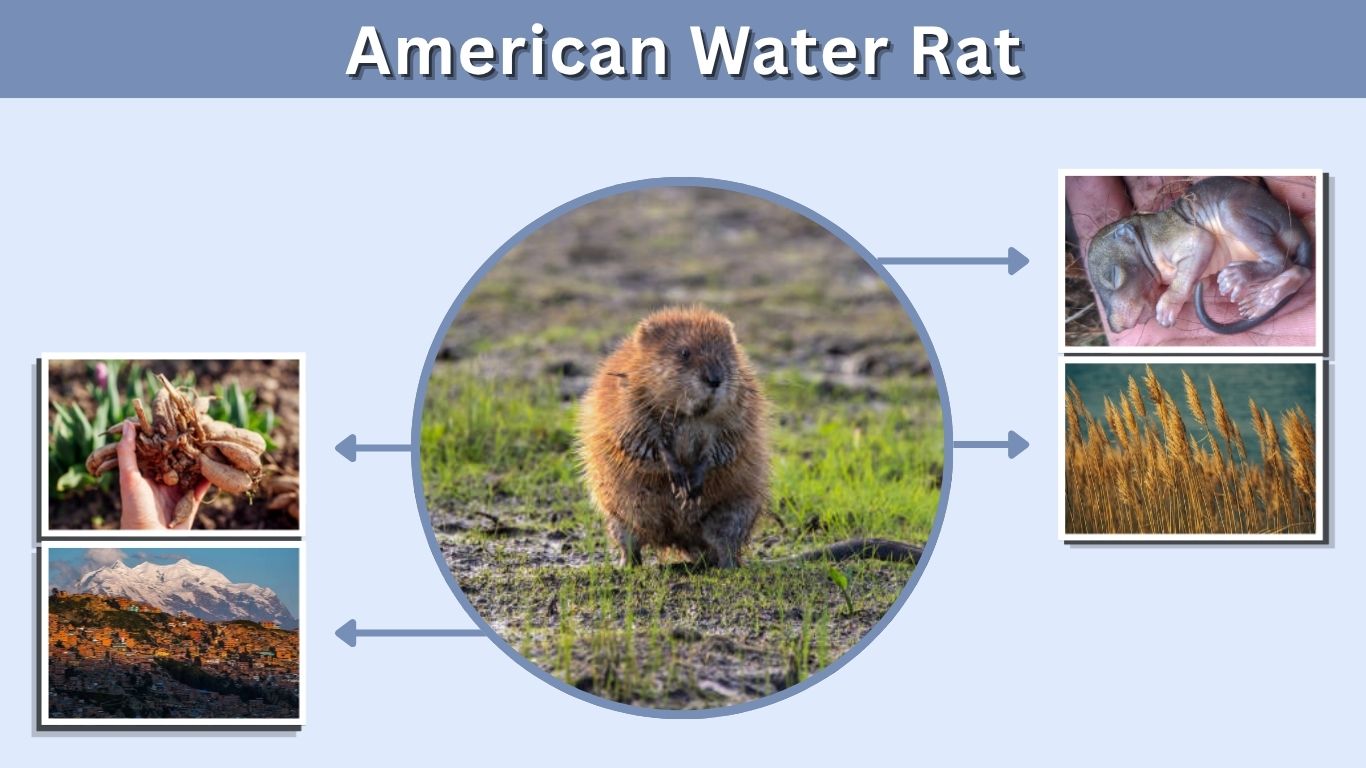
The name American water rat is often used informally for large semiaquatic rodents living around rivers, marshes, ponds, and wetlands. It most commonly points to the nutria, also called the coypu, nutria rat, or swamp beaver. However, it can also be confused with the much smaller Florida water rat. These animals may resemble rats, muskrats, or young beavers, but their size, tails, teeth, habitat, and geographic ranges make identification possible.
What Is an American Water Rat?
“American water rat” is not a precise scientific name for one animal. The phrase can describe different aquatic rodents found in North or South America. In most searches involving a large or giant South American water rat, the animal being described is the nutria.
Nutria or South American Water Rat
The nutria, scientifically known as Myocastor coypus, is a large semiaquatic rodent native to South America. Its recognized common names include coypu, nutria rat, swamp beaver, and coypu rat. Although it resembles an oversized rat, it belongs to a different rodent group from common household rats.
Nutria were introduced into the United States for fur production. Escaped and intentionally released animals later established wild populations, particularly around wetlands. The species is now treated as invasive in areas where it damages vegetation and wetland habitats.
Florida Water Rat
The Florida water rat is another animal entirely. Its scientific name is Neofiber alleni, and it is more commonly called the round-tailed muskrat. It is native to much of peninsular Florida and southeastern Georgia and is smaller than both the common muskrat and nutria.
Therefore, a report of a “giant South American water rat” probably refers to nutria, while “Florida water rat” normally refers to the native round-tailed muskrat.
What Does an American Water Rat Look Like?
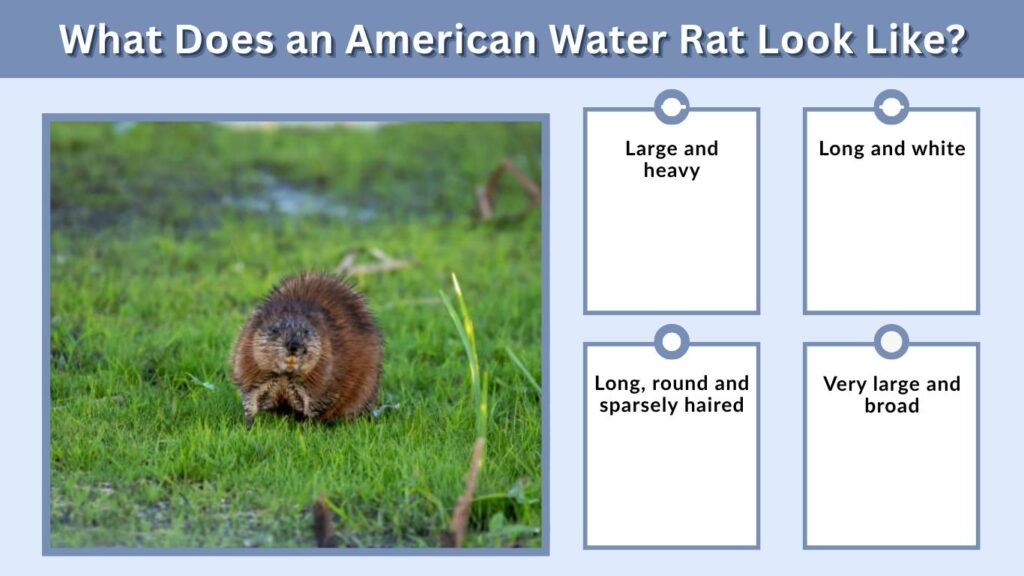
Nutria have a heavy, arched body that can make them look like a cross between a large rat, muskrat, and small beaver. Their orange teeth, white whiskers, and long rounded tail are the most useful identification features.
| Feature | Nutria | Florida Water Rat | Beaver |
| Typical build | Large and heavy | Small and compact | Very large and broad |
| Tail | Long, round and sparsely haired | Shorter and round | Wide and flattened |
| Front teeth | Bright orange | Less noticeable | Orange |
| Whiskers | Long and white | Darker and shorter | Usually dark |
| Hind feet | Partially webbed | Adapted for wetlands | Fully adapted for swimming |
| Native status in the U.S. | Introduced | Native | Native |
Size and Weight
Adult nutria commonly have bodies approximately two feet long, with an additional tail measuring roughly one to one-and-a-half feet. Many adults weigh between 15 and 20 pounds, although size varies according to age, sex, food, and local conditions.
The Florida water rat is considerably smaller. Its total nose-to-tail length is approximately 10 to 15 inches, placing it between a meadow vole and a typical muskrat in size.
Color and Body Features
Nutria usually have yellowish-brown, reddish-brown, or dark-brown coats composed of dense underfur and longer coarse guard hairs. They have small ears, small eyes, short legs, a white muzzle, conspicuous white whiskers, and broad orange incisors.
Their hind feet are much larger than their front feet. Four of the five hind toes are connected by webbing, helping the animal move efficiently through ponds, marshes, and slow-moving waterways.
Where Do American Water Rats Live?
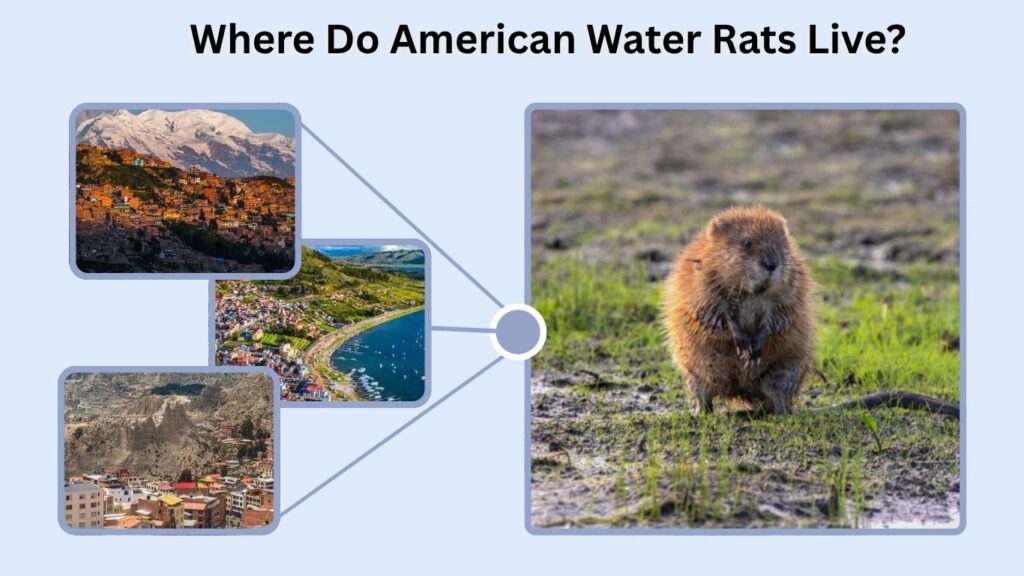
These rodents are strongly associated with water, but each species has a different natural range. Nutria originated in South America, whereas the round-tailed muskrat is native to a limited region of the southeastern United States.
Native South American Habitat
The nutria’s natural range extends through parts of Bolivia, Brazil, Argentina, Chile, Paraguay, and Uruguay. It occupies marshes, riverbanks, lake edges, sluggish streams, reed beds, and other habitats containing permanent water and abundant vegetation.
Nutria generally favor freshwater but can also survive in coastal brackish marshes. They need reliable access to vegetation for food and banks or dense plant growth for shelter.
Nutria in North America
Wild nutria populations in North America developed largely from animals brought over for the fur industry. They have been recorded in numerous states, with established populations concentrated around parts of the Gulf Coast, Atlantic Coast, and Pacific Northwest.
Nutria should therefore not be described as a naturally occurring North American water rat. They are native to South America and introduced north of their original range.
Are Giant South American Water Rats in Florida?
Nutria have been recorded in parts of the southern United States, and sightings of unusually large rat-like animals near Florida water can cause confusion. However, Florida also supports the native round-tailed muskrat, or Florida water rat.
The easiest distinction is size. A large animal with orange teeth, white whiskers, webbed hind feet, and a long round tail is more likely to be nutria. A much smaller animal with a compact body and round tail may be a Florida water rat.
What Do American Water Rats Eat?
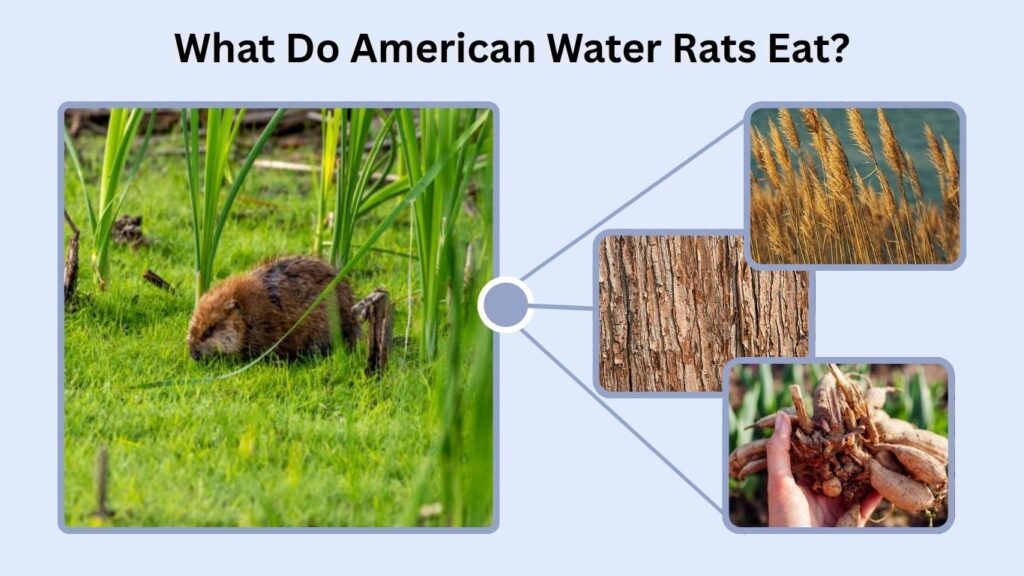
Nutria are primarily herbivores. They spend much of their feeding time consuming aquatic and shoreline plants rather than hunting other animals.
Common Foods
Their diet can include:
- Aquatic plant stems
- Leaves and shoots
- Roots and tubers
- Reeds and marsh grasses
- Tree bark
- Agricultural crops
- Succulent shoreline vegetation
Nutria often pull up entire plants to reach the roots and underground portions. They may also use logs, floating vegetation, or small platforms as places to sit while feeding.
Florida water rats also feed mainly on vegetation, especially aquatic grasses growing in warm marshes, swamps, and other wet environments.
Behavior and Burrows
Nutria are strong swimmers and spend significant time feeding, swimming, and grooming. They are most active at night, although they may appear during daylight where populations are dense or disturbance is low. They can remain underwater for extended periods when swimming or avoiding danger.
Where They Sleep
Nutria may construct simple bank burrows or complicated tunnel systems containing chambers and plant-lined resting areas. Some tunnel systems extend many meters into a bank. They also create flattened trails through wetland vegetation and feeding platforms made from gathered plants.
Their burrows can be mistaken for those of muskrats, beavers, or other bank-dwelling mammals. Nutria holes are especially concerning around levees, irrigation channels, dams, and artificial pond banks.
Social Behavior
Nutria can live in social groups containing related females, their offspring, and an adult male. Young males may leave their family groups and live alone while searching for new territory.
Reproduction and Life Cycle
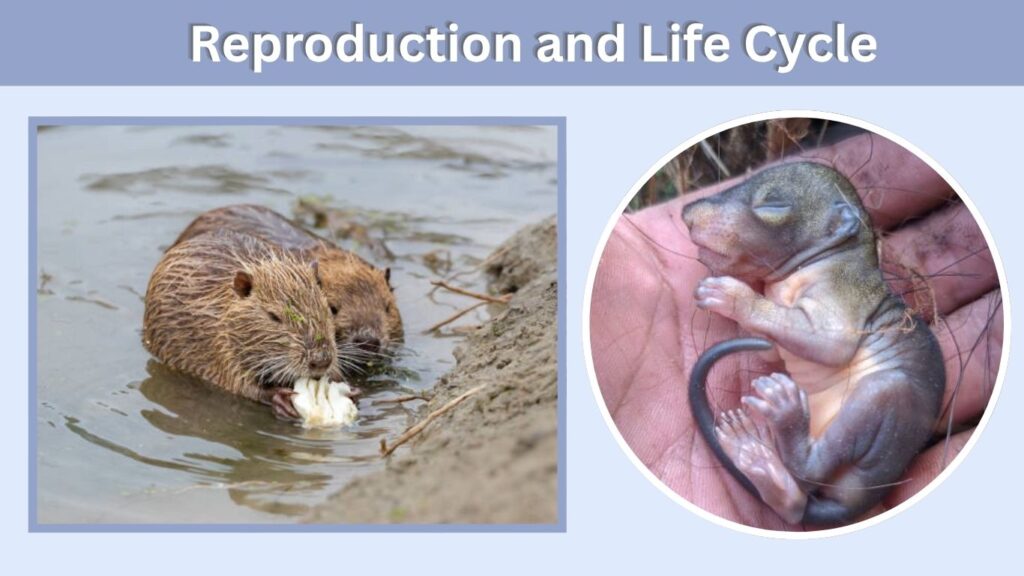
Nutria can reproduce rapidly under favorable conditions. Females may breed throughout the year, and young animals can reach reproductive maturity at approximately six months old. Pregnancy lasts around four months, and a litter commonly contains several fully furred young with open eyes.
Their ability to breed repeatedly helps populations grow quickly when food, shelter, and permanent water are available. California wildlife authorities report that females may produce as many as three litters per year, although reproductive success varies with climate and nutrition.
Why Are Nutria Considered Invasive?
Nutria can remove large amounts of wetland vegetation by eating both the visible plants and their roots. When roots are destroyed, plants may not regrow, leaving exposed mud and open water where dense marsh vegetation previously existed.
Their burrows can weaken riverbanks, levees, irrigation structures, and pond edges. They may also enter agricultural areas and damage crops such as rice. For these reasons, nutria control programs focus on protecting wetlands and preventing the animals from spreading into new watersheds.
People should not capture, transport, release, or feed a suspected nutria without checking local wildlife regulations. A sighting in an area where the animal is uncommon should be reported to the appropriate state wildlife or invasive-species agency.
FAQs
Are American water rats real rats?
The name is informal. Nutria resemble giant rats but are not members of the same group as common brown or black rats. The Florida water rat is actually a round-tailed muskrat related to voles and lemmings.
How big does a South American water rat get?
A nutria commonly has a body around two feet long and may weigh approximately 15 to 20 pounds. Its long tail can add another one to one-and-a-half feet to its total length.
What is the giant water rat with orange teeth?
A large aquatic rodent with bright orange teeth, white whiskers, webbed hind feet, and a long rounded tail is probably a nutria or coypu.
Are nutria and muskrats the same animal?
No. Nutria are larger, with white whiskers, orange incisors, partially webbed hind feet, and round tails. Muskrats are smaller and have vertically flattened tails that help them swim.
Are American water rats dangerous?
They usually avoid direct contact with people, but any cornered wild rodent may defend itself. The greater concern is typically ecological and structural damage caused by feeding, digging, and burrowing rather than deliberate attacks on humans.