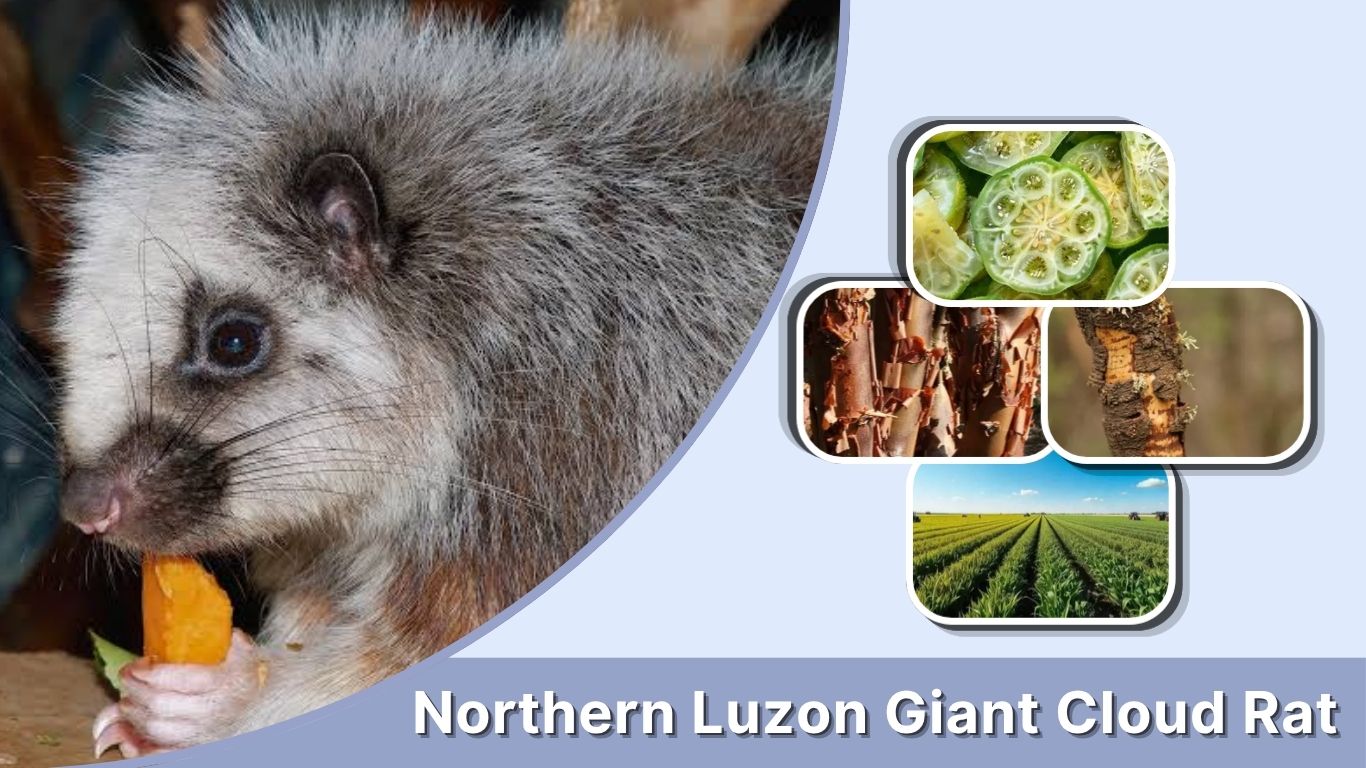
The northern Luzon giant cloud rat is a large, furry rodent found naturally only on Luzon Island in the Philippines. With its thick coat, dark facial markings, long claws, and slow climbing movements, it looks very different from the rats commonly seen around cities and homes. This nocturnal animal spends much of its life in trees, feeding primarily on vegetation. Although its conservation classification is currently Least Concern, habitat destruction, hunting, and illegal wildlife collection remain important threats.
Northern Luzon Giant Cloud Rat Quick Facts
The species’ scientific name is Phloeomys pallidus. It belongs to the Muridae family, which includes many familiar mice and rats, but its large body and tree-dwelling lifestyle make it one of the family’s most unusual members.
| Feature | Information |
| Common name | Northern Luzon giant cloud rat |
| Scientific name | Phloeomys pallidus |
| Animal group | Rodent |
| Native range | Northern and central Luzon, Philippines |
| Diet | Mostly leaves, shoots, buds, fruit and other vegetation |
| Activity | Nocturnal |
| Lifestyle | Mainly arboreal, but sometimes travels on the ground |
| Weight | Approximately 2.2–2.7 kg |
| Total length | Roughly 71–78 cm, including the tail |
| Captive lifespan | Up to 13 years |
| Conservation status | Least Concern |
Measurements vary among individuals, but published descriptions report a head-and-body length of approximately 38.7–42.7 cm and a tail measuring about 32–34.9 cm.
What Is a Northern Luzon Giant Cloud Rat?
The northern Luzon giant cloud rat is an endemic Philippine mammal, meaning its natural population occurs nowhere else in the world. It is also called the northern Luzon slender-tailed cloud rat and is sometimes known locally as bu-ot.
Physical Appearance
Its coat is long, rough and dense. Most individuals are pale gray, cream or nearly white with dark brown or black patches. A dark mask around the eyes and a dark collar across the shoulders are common, although coat patterns can vary considerably.
The animal has small rounded ears, long whiskers, strong hind feet and curved claws. Its tail is covered with fur but is not as bushy as the tail of some other Philippine cloud-rat species.
Climbing Adaptations
Large feet and long claws allow the cloud rat to grip bark and move securely through branches. Unlike fast-moving squirrels, it usually climbs slowly and carefully. It may descend to the forest floor when searching for food, but trees provide important feeding, resting and nesting sites.
Northern Luzon Giant Cloud Rat Size
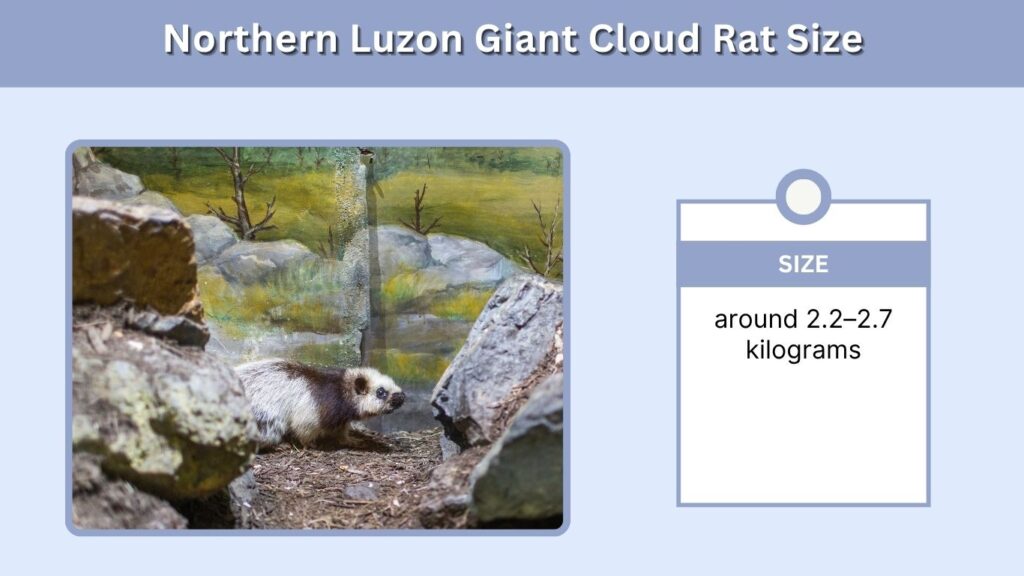
This species is considered one of the largest living members of the mouse-and-rat family. An adult can weigh around 2.2–2.7 kilograms, making it several times heavier than an ordinary urban rat.
| Comparison | Relative size |
| Human hand | Its head-and-body length is far longer than an adult hand |
| Common city rat | Much heavier, bulkier and more thickly furred |
| Domestic guinea pig | Usually longer and often heavier |
| Small house cat | May approach a small cat in total length, although much of that length is tail |
A northern Luzon cloud rat compared with a normal rat looks less slender and considerably more robust. Its thick fur also makes it appear even larger. Despite searches calling it the “biggest rat,” it is safer to describe it as one of the world’s largest true rats or murid rodents, because several unrelated rodents are also commonly called giant rats.
Where Do Northern Luzon Giant Cloud Rats Live?
Northern Luzon giant cloud rats live in the northern and central regions of Luzon Island. They occupy forests and scrubland and may also tolerate some disturbed habitats where trees and suitable food remain available.
They are predominantly tree-dwelling and can occur from low elevations to mountainous areas. During daylight hours, they may shelter in hollow trees, fallen logs or protected ground cavities. Their dependence on wooded habitats makes forest protection important even though the species remains relatively widespread.
Diet and Nocturnal Behavior
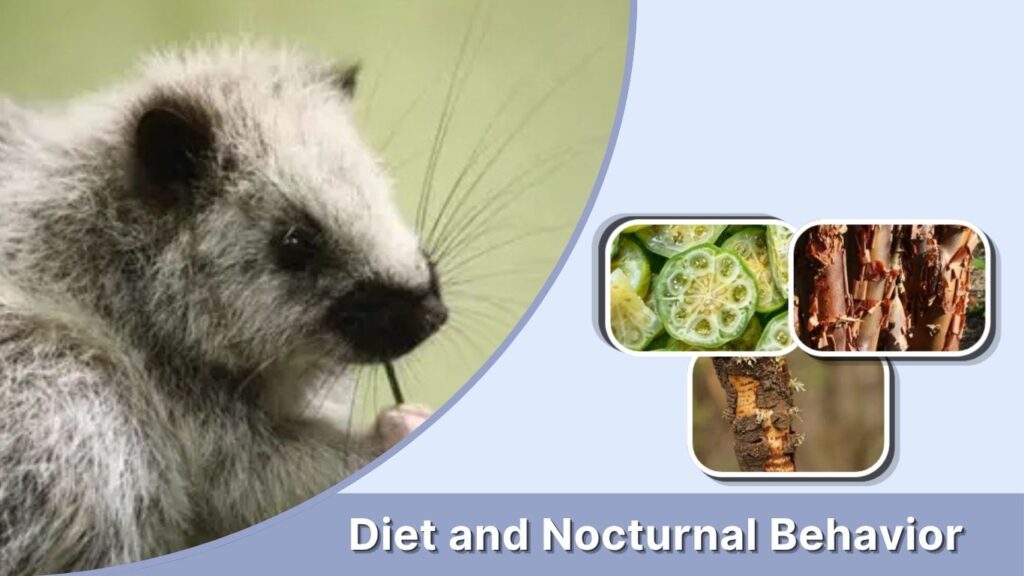
The northern Luzon giant cloud rat is primarily herbivorous. Its natural diet is not completely documented, but observations indicate that it consumes plant materials rather than hunting other animals.
What Does It Eat?
Common foods include:
- Young leaves and plant shoots
- Buds, bark and tender stems
- Fruit and seeds
- Agricultural crops when available
Animals maintained in zoos may receive vegetables, leafy greens, nuts and specially formulated rodent foods. Cloud rats occasionally enter cultivated areas, which can bring them into conflict with farmers.
When Is It Active?
The species is nocturnal, resting during the day and becoming active after dark. Its large eyes, whiskers and careful climbing style help it navigate branches at night. Individuals may live alone, in pairs or in small family groups, although much of their wild social behavior remains insufficiently studied.
Northern Luzon Giant Cloud Rat Predators
Reliable information about the animal’s natural predators is limited. Its large size, nocturnal habits and tree-dwelling lifestyle probably reduce the number of animals capable of catching a healthy adult.
The Philippine eagle has been reported taking northern Luzon giant cloud rats on Luzon. Young or vulnerable animals may face additional dangers, but detailed species-specific predation studies are scarce. Humans remain a more clearly documented source of mortality because cloud rats are hunted for food in some regions.
When threatened, a cloud rat may retreat into dense vegetation, tree cavities or high branches. Its coat can also make it difficult to see among pale bark, shadows and foliage.
Lifespan and Reproduction
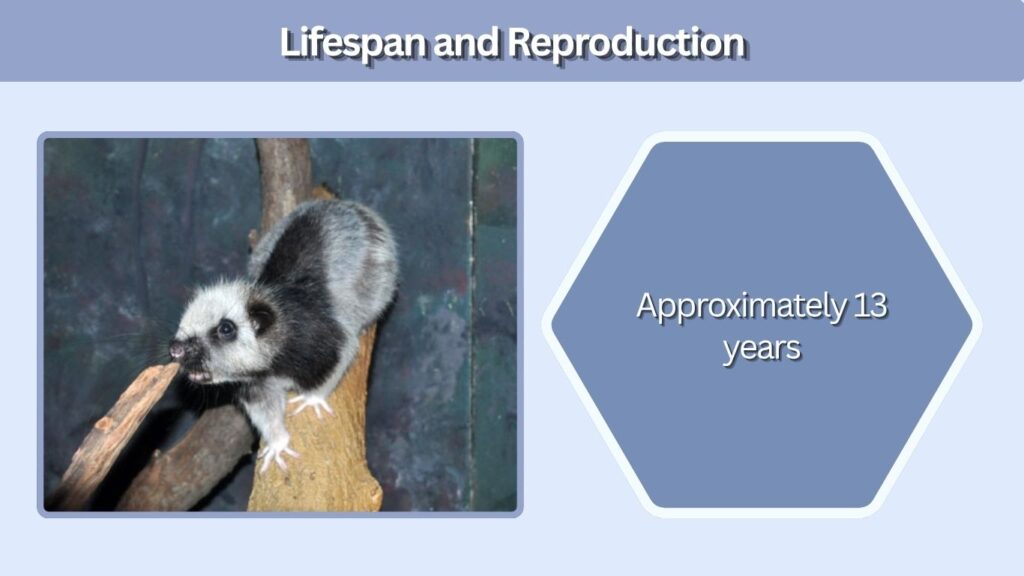
The exact lifespan of wild northern Luzon giant cloud rats is unknown. The oldest recorded individual in human care reached approximately 13 years, suggesting that the species can be relatively long-lived under protected conditions.
Females normally produce only one offspring at a time and may give birth approximately once per year. Young can be born inside hollow trees or ground cavities. A newborn remains firmly attached to one of its mother’s nipples while being carried, an unusual but useful adaptation for an arboreal rodent.
This slow reproductive rate means local populations may take time to recover when heavy hunting or habitat destruction removes many adults.
Can a Northern Luzon Giant Cloud Rat Be a Pet?
A northern Luzon giant cloud rat is not a suitable conventional pet. It is a wild, nocturnal animal requiring a large climbing enclosure, specialized nutrition, suitable social management and veterinary professionals experienced with exotic mammals.
Possessing, collecting, transporting or selling native wildlife in the Philippines is controlled by the Wildlife Resources Conservation and Protection Act. Permits are required for authorized wildlife collection, breeding and related activities. Therefore, advertisements offering a northern Luzon giant cloud rat for sale should not be treated like ordinary pet listings.
Anyone who finds an injured or displaced cloud rat should contact the Department of Environment and Natural Resources or a qualified wildlife rescue organization rather than attempting to keep it.
Conservation Status and Threats
The northern Luzon giant cloud rat is currently classified as Least Concern. It remains fairly widespread compared with several rarer Philippine cloud-rat species. However, Least Concern does not mean that it faces no danger.
Its major pressures include:
- Deforestation and forest fragmentation
- Hunting for food
- Conflict with farmers over damaged crops
- Illegal capture or wildlife trade
- Loss of nesting trees and natural vegetation
Protected forests, habitat monitoring and enforcement against illegal hunting help maintain healthy populations. The species occurs in national parks and other protected areas on Luzon.
FAQs
Is the northern Luzon giant cloud rat the biggest rat?
It is among the largest living rodents in the Muridae family and can weigh approximately 2.2–2.7 kilograms. However, calling it the world’s biggest rat can be misleading because “giant rat” is also used for several unrelated rodent species.
How big is a northern Luzon giant cloud rat?
An adult’s head and body measure roughly 39–43 cm, while the tail adds around 32–35 cm. Its total length can therefore approach 78 cm, and its thick coat makes the animal look especially large.
Where does the northern Luzon giant cloud rat live?
It lives only on Luzon Island in the Philippines, particularly in northern and central areas. The species occupies forests, scrubland and some modified habitats, spending much of its time climbing and feeding in trees.
What predators eat northern Luzon giant cloud rats?
Confirmed predator information is limited, but the Philippine eagle has been documented preying on the species. Humans also hunt cloud rats in some locations. Additional predators may target young animals, although detailed field evidence remains scarce.
Can you buy a northern Luzon giant cloud rat?
It should not be purchased as an ordinary exotic pet. The animal is native Philippine wildlife, and its possession, collection, transport and trade are regulated. Legitimate captive animals are generally managed by licensed zoos, conservation programs or authorized facilities.