
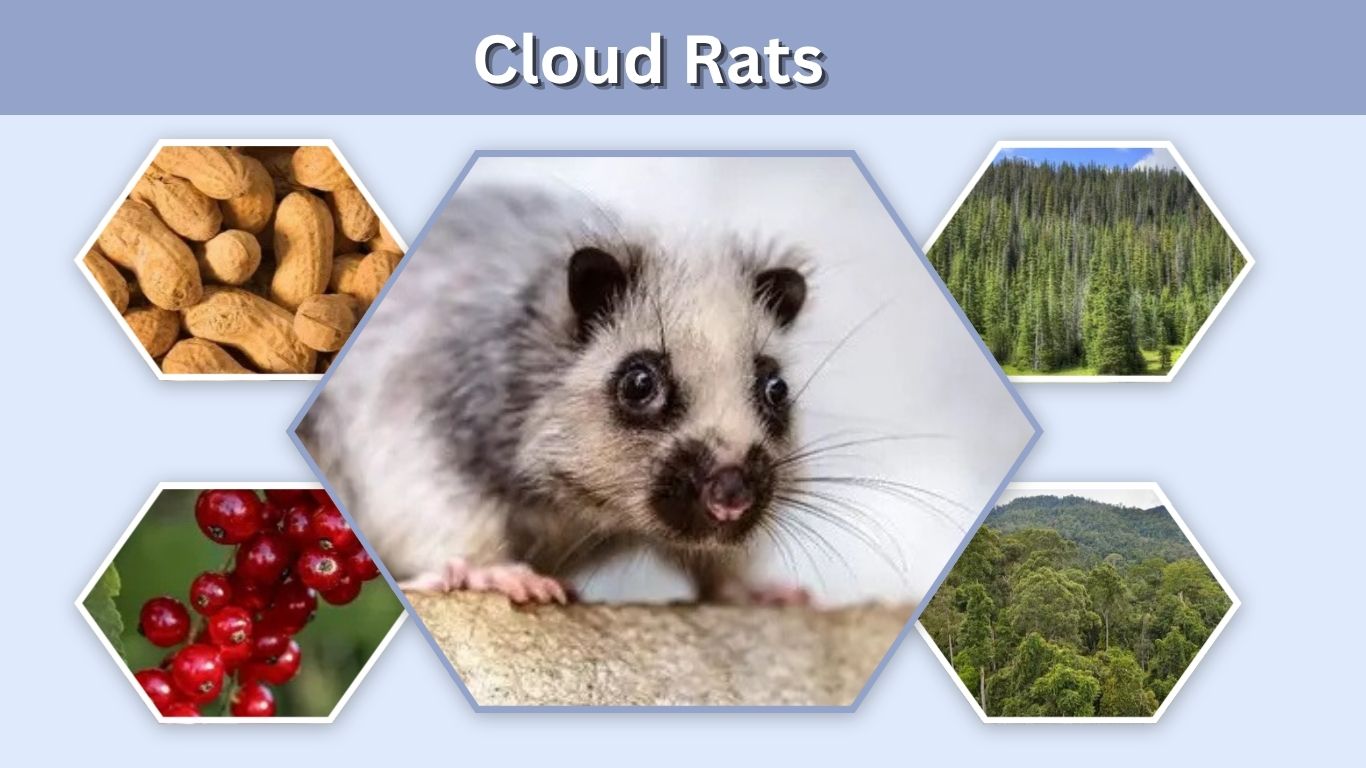
Cloud rats are large, furry rodents native to the Philippines. Despite their name and unusually large size, they are very different from the common rats that live around houses and cities. Most cloud rats are slow-moving, nocturnal animals adapted for climbing trees and feeding on plants. Some species remain fairly widespread, while others face serious threats from hunting and forest destruction. Their unusual appearance, limited distribution and important ecological role make Philippine cloud rats some of the world’s most remarkable rodents.
What Are Cloud Rats?
Cloud rats are a group of rodents belonging to the mouse-and-rat family, Muridae. They are native to the Philippines, and many species occur nowhere else in the world. Their name refers partly to the high, misty forests inhabited by several species.
Unlike common brown or black rats, cloud rats usually have thick fur, furry tails, large feet and strong claws. These features help them move through trees. Their slow movements, rounded bodies and long coats can make them look more like squirrels or small tree-dwelling mammals than ordinary rats.
Why Are They Called Giant Cloud Rats?
The largest species are known as giant cloud rats because they are much bigger than typical rats. Northern Luzon giant cloud rats may reach a total body-and-tail length of approximately 69–76 centimetres and have large hind feet designed for climbing. Some can weigh more than two kilograms.
Cloud rats are sometimes divided informally into slender-tailed and bushy-tailed groups. Examples include:
- Northern Luzon giant cloud rat
- Southern Luzon giant cloud rat
- Giant bushy-tailed cloud rat
- Panay bushy-tailed cloud rat
- Dinagat bushy-tailed cloud rat
Where Do Cloud Rats Live?
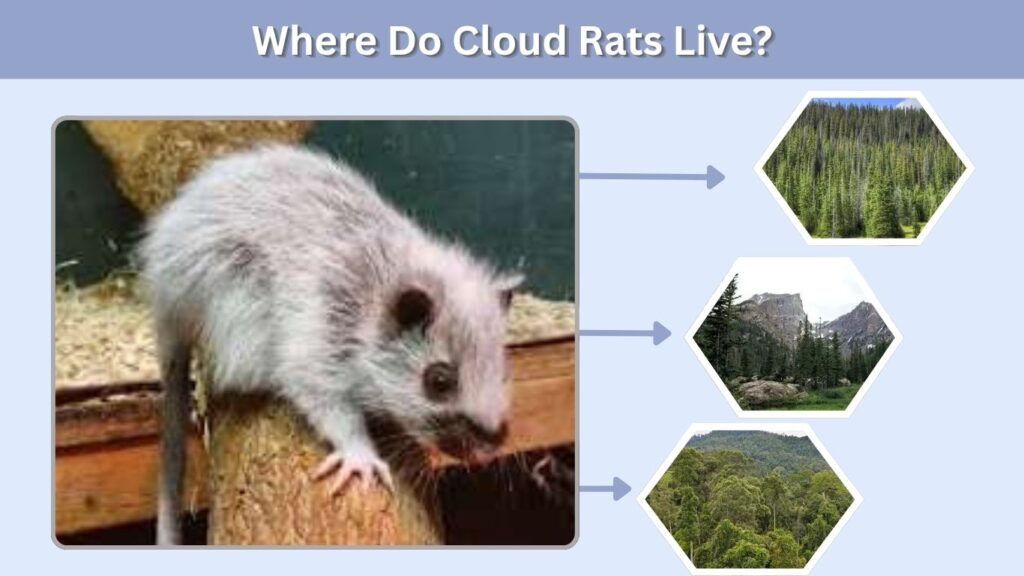
Cloud rats live naturally only in the Philippines. Different species are restricted to particular islands, mountain ranges or forest types. This limited distribution makes them especially vulnerable when their habitat is cleared or degraded.
Most cloud rats inhabit tropical forests, including lowland rainforest, montane forest, pine forest and high-elevation mossy forest. Some northern Luzon giant cloud rats also enter shrubland and agricultural areas near forests.
Northern and Central Luzon
The northern Luzon giant cloud rat, scientifically named Phloeomys pallidus, occurs in northern and central parts of Luzon. It spends much of its time in trees but may occasionally travel along the forest floor while searching for food.
Other Philippine Islands
Bushy-tailed cloud rats have smaller and more fragmented ranges. The Panay species is restricted to Panay, while the Dinagat cloud rat is found only on Dinagat Island. Such narrow ranges mean that the loss of forest on one island can affect a large proportion of an entire species’ population.
What Do Cloud Rats Eat?
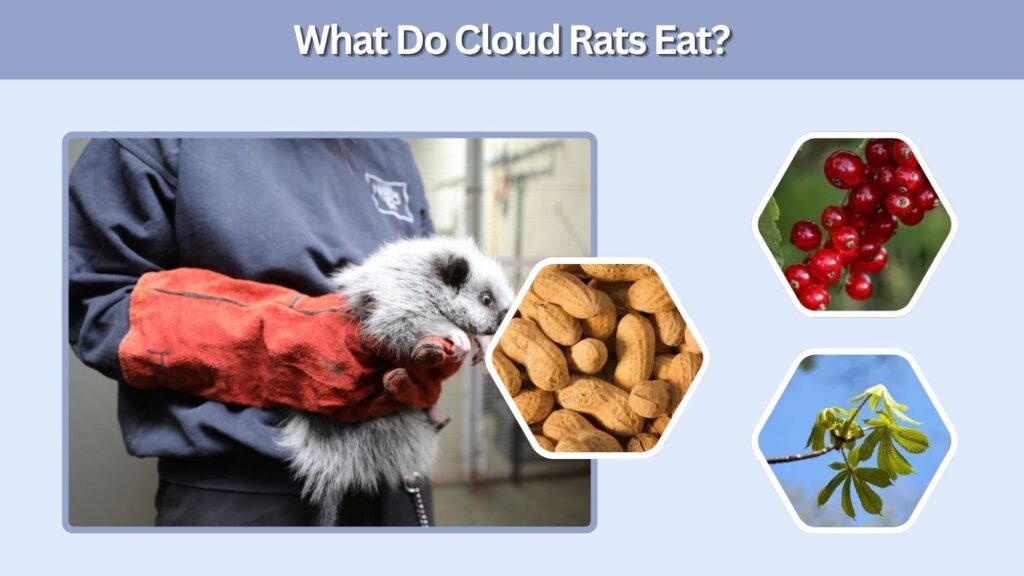
Cloud rats are primarily herbivorous. Their exact diet varies among species and remains incompletely studied because these animals are nocturnal and difficult to observe in dense forests.
Natural Foods
Their diet may include:
- Tender young leaves
- Shoots and other vegetation
- Fruits
- Seeds and nuts
- Farm crops found near forests
The northern Luzon giant cloud rat is believed to eat young leaves, fruit and crops. Cloud rats in human care may receive vegetables, leafy greens, nuts and specially prepared rodent food.
Cloud rats have relatively large digestive systems that help them process plant material. They often move slowly and spend considerable time resting and digesting leaves. Their feeding habits allow them to occupy an ecological role similar to that of large tree squirrels in regions where those squirrels are absent.
Cloud Rat Behavior and Lifestyle
Most cloud rats are nocturnal, meaning that they become active after sunset. During daylight hours, they may rest inside hollow trees, fallen logs or protected ground cavities.
Their strong claws and large feet make them capable climbers. Although some species regularly descend to the ground, many spend much of their lives in trees. Northern Luzon giant cloud rats are generally described as timid and slow-moving rather than aggressive.
Cloud rats may live alone, in pairs or in small family groups. Female giant cloud rats generally produce only one young at a time. The baby may remain attached to one of its mother’s nipples while being carried, an unusual reproductive behavior among large rodents.
Are Cloud Rats Dangerous?
Cloud rats are not generally considered dangerous to humans. They are shy forest animals and do not normally approach or attack people. They are also not typical household pests and should not be confused with invasive rats that commonly inhabit buildings, sewers and farms.
However, any wild rodent may defend itself when trapped, frightened or handled. A cloud rat has strong teeth and claws, so direct contact should always be avoided. People who encounter one should observe it from a distance and allow it to escape.
Cloud rats should not be captured or kept as pets. Many are legally protected native animals, and removing them from the wild can harm already vulnerable populations. Hunting is also an important threat in some parts of their range.
Are Cloud Rats Endangered?
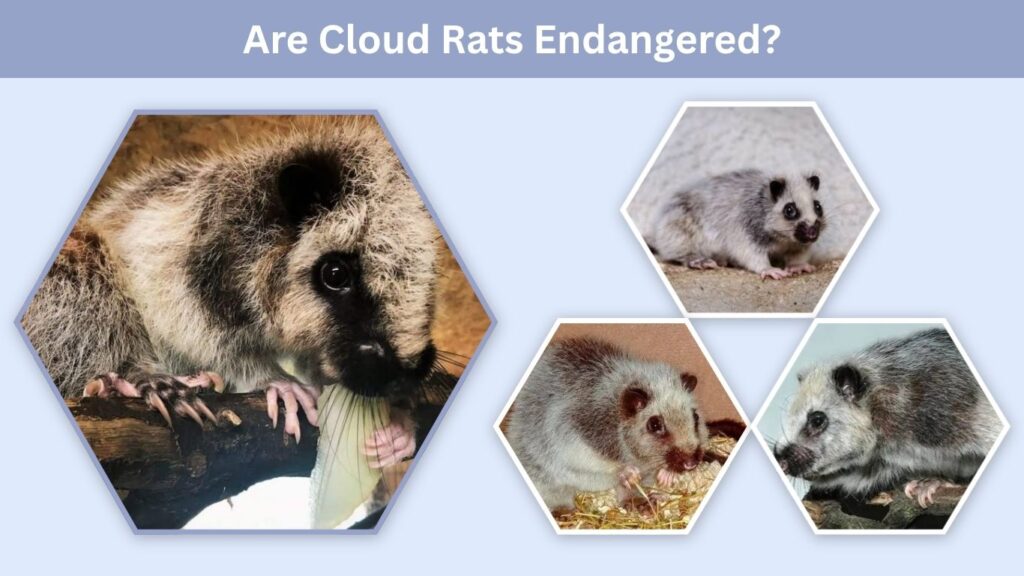
Not every cloud rat has the same conservation status. Some remain relatively widespread, while others have small, declining populations.
| Cloud rat | General conservation position |
| Northern Luzon giant cloud rat | Listed as Least Concern |
| Giant bushy-tailed cloud rat | Listed as Endangered |
| Panay bushy-tailed cloud rat | Listed as Endangered |
| Dinagat bushy-tailed cloud rat | Rare and threatened by habitat loss |
The northern Luzon giant cloud rat is currently classified as Least Concern, but its populations still face hunting and forest destruction. The giant bushy-tailed cloud rat and Panay cloud rat have more restricted habitats and are considered endangered.
Main Threats to Cloud Rats
Habitat destruction is the most serious long-term concern. Logging, mining, agricultural expansion and development can eliminate the trees cloud rats use for food, shelter and reproduction.
Hunting is another threat because larger species may be targeted for meat. Their slow reproductive rate makes heavy hunting especially damaging. A population cannot recover quickly when females generally produce only one offspring at a time.
Are Cloud Rats Extinct?
Cloud rats as a group are not extinct. Several living species still survive in the Philippines, including the northern and southern Luzon giant cloud rats.
However, scientists have discovered fossils belonging to extinct cloud-rat species. Fossils from caves in northern Luzon revealed three previously unknown giant cloud rats that lived alongside ancient humans. Some survived until only a few thousand years ago before disappearing.
Certain living species have also gone for decades without confirmed sightings. The Dinagat bushy-tailed cloud rat, for example, was known from a specimen collected in 1975 and was not confirmed alive again until researchers rediscovered it in 2012.
Northern Luzon Giant Cloud Rats
The northern Luzon giant cloud rat is the species most people picture when searching for giant cloud rats. It has long, rough fur that may be white, pale gray or brown with dark markings around the face, body and tail.
Its scientific name is Phloeomys pallidus. It is endemic to Luzon and is one of the world’s largest rat species. Unlike rapidly breeding pest rats, it usually produces only one baby and has a much slower life history.
The oldest documented cloud rat in human care lived for about 13 years, although lifespan in the wild is less certain.
Cloud Rats at Edinburgh Zoo
Edinburgh Zoo has featured northern Luzon giant cloud rats among the small mammals in its Magic Forest area. Zoo populations give visitors an opportunity to learn about an animal that is secretive, nocturnal and difficult to observe in the wild.
Exhibits and animal collections may change, so visitors planning specifically to see Edinburgh Zoo’s cloud rats should confirm their current availability before travelling.
FAQs
Are cloud rats real rats?
Yes. Cloud rats are members of the rodent family Muridae, which also contains many familiar mice and rats. However, they belong to distinctive Philippine lineages and differ greatly from invasive urban rats in appearance, habitat, diet, behavior and reproduction.
How big is a giant cloud rat?
A northern Luzon giant cloud rat may measure around 69–76 centimetres when its body and tail are combined. Large individuals can weigh more than two kilograms, making them significantly heavier and longer than the common rats normally encountered around human settlements.
Do cloud rats live in clouds?
No. They do not live inside clouds. The name is connected to their association with forested mountains and misty cloud forests. Some species inhabit high elevations, while others live in lowland forests, secondary vegetation or agricultural landscapes near remaining woodland.
Can cloud rats be kept as pets?
Cloud rats are unsuitable as pets. They are specialized wild animals with particular dietary, climbing and housing requirements. Capturing one may also violate wildlife laws. Their slow reproduction means that illegal collection can have a serious effect on local populations.
Why are cloud rats important?
Cloud rats form part of the Philippines’ unique forest food web. They consume leaves, fruit and other vegetation and may serve as prey for native predators. Protecting them also helps preserve forests supporting many other endemic mammals, birds, reptiles and plants.