
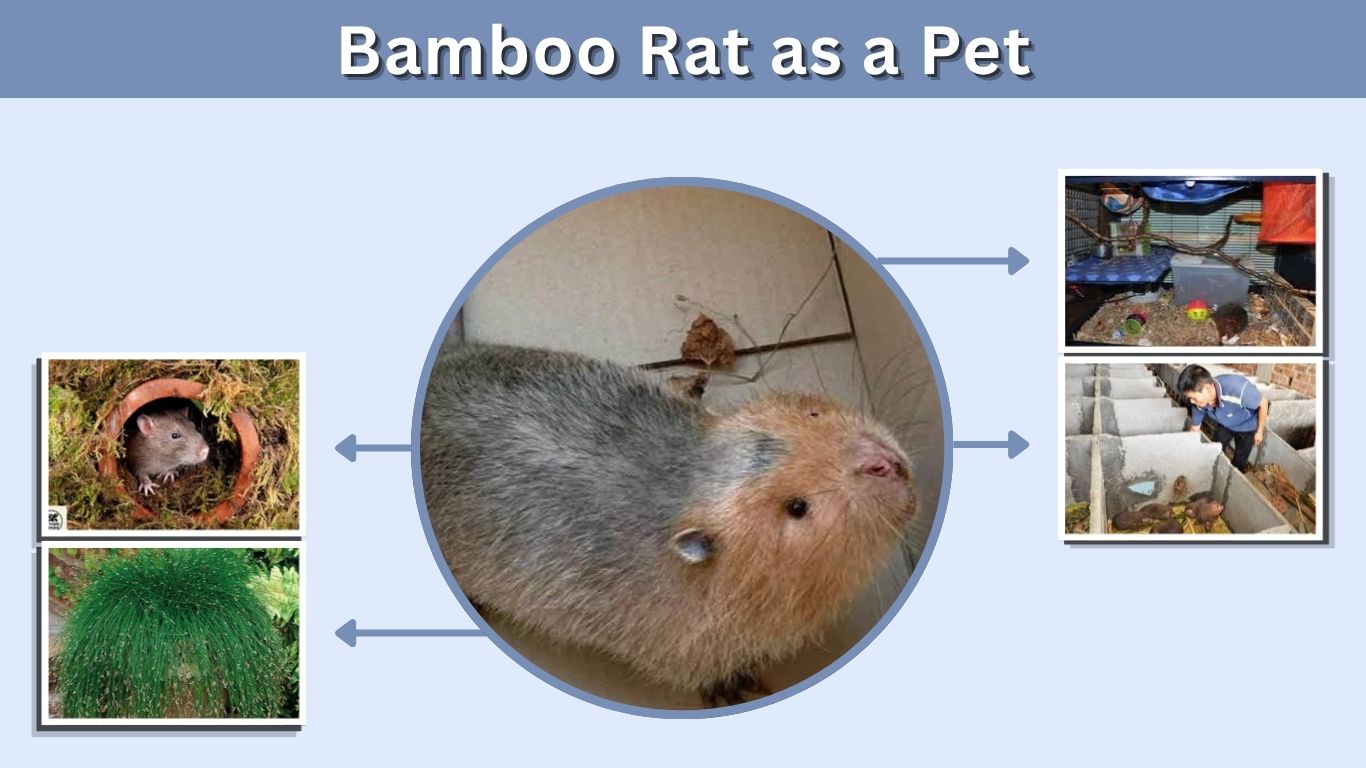
Keeping a bamboo rat as a pet may sound appealing because of the animal’s round body, small ears, soft coat, and unusual appearance. However, bamboo rats are specialized burrowing rodents rather than domesticated companion animals. They need secure housing, a carefully planned plant-based diet, opportunities to dig, and access to an exotic-animal veterinarian. They can also deliver serious bites when frightened. Before searching for a pet bamboo rat, prospective owners should understand its behavior, legal status, health risks, and demanding care requirements.
Can You Keep a Bamboo Rat as a Pet?
Bamboo rats are kept in captivity in parts of Asia, but most are raised for farming, research, or local wildlife programs rather than as household companions. Their natural behavior and physical strength make them considerably more difficult to manage than domesticated rats.
Whether private ownership is permitted depends on local wildlife, exotic-animal, importation, and agricultural regulations. Prospective owners should contact their national wildlife authority and local government before buying or transporting one.
Bamboo Rats Are Not Domesticated Rats
Bamboo rats belong to the family Spalacidae. They are different from the domesticated brown rats commonly sold as pets. Their bodies are adapted for underground life, with powerful legs, strong digging claws, broad heads, and large incisors capable of cutting roots and compact soil.
A captive-bred animal may become accustomed to a familiar keeper, but that does not make it fully domesticated. Its natural reactions can include hiding, defending its space, charging when cornered, and biting.
Chinese and Sumatran Bamboo Rats as Pets
The Chinese bamboo rat, Rhizomys sinensis, occurs naturally in China, Vietnam, Myanmar, and possibly Laos. The Sumatran or large bamboo rat, Rhizomys sumatrensis, is a larger species that can reach approximately three kilograms.
Both species require specialized care. A Sumatran bamboo rat pet may be especially difficult to handle because its greater size gives it more strength and more powerful jaws.
Are Bamboo Rats Good Pets?
For most households, bamboo rats are not good pets. They are best suited to experienced exotic-mammal keepers who can provide appropriate housing, veterinary care, enrichment, and safe handling.
| Consideration | What owners should expect |
| Temperament | Solitary, territorial and potentially defensive |
| Activity | Most active at night, dawn or dusk |
| Handling | May resist restraint and bite when frightened |
| Housing | Strong, escape-resistant enclosure with digging space |
| Diet | Fibrous vegetation, bamboo and other suitable plants |
| Veterinary care | Requires an experienced exotic-animal veterinarian |
| Suitability | Generally poor for children and beginners |
Temperament and Social Behavior
Bamboo rats are generally solitary and territorial. In nature, they spend much of their time alone in burrows containing nesting chambers, feeding tunnels, and escape holes. They are usually nocturnal or crepuscular, meaning their activity is greatest at night or around sunrise and sunset.
Housing unfamiliar adults together can create a risk of territorial fighting. Separate accommodation is normally safer unless pairing occurs under expert supervision for a legitimate breeding program.
Handling and Biting
A bamboo rat should not be treated like a calm domestic rat that enjoys frequent handling. Although individual temperaments differ, these rodents possess large incisors and can rush or bite when they feel trapped.
Handling should be limited, calm, and purposeful. Chasing the animal around its enclosure or grabbing it from above can increase fear. Thick gloves may offer limited protection but can also reduce control, so professional handling instruction is recommended.
Housing a Pet Bamboo Rat
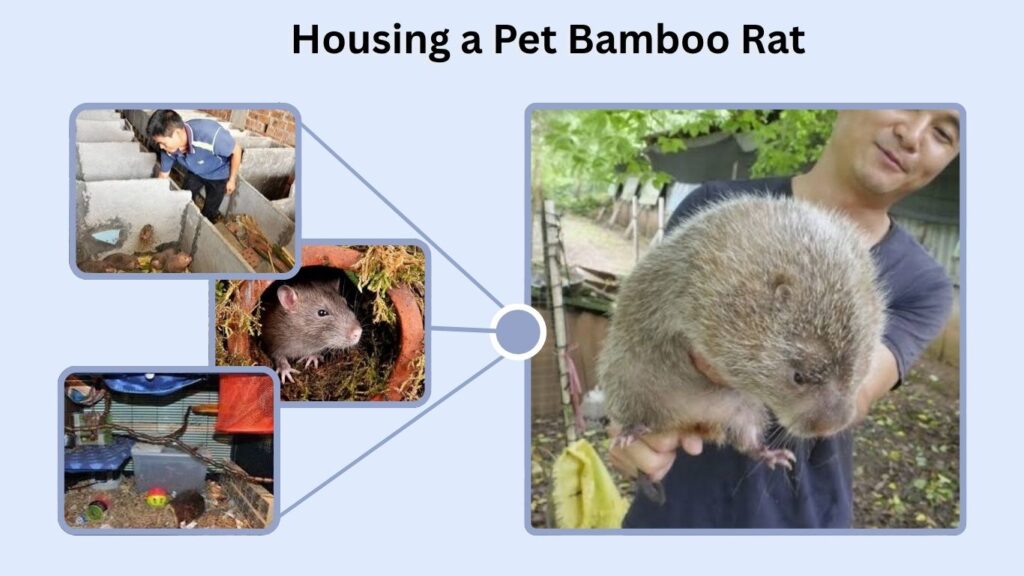
A suitable bamboo rat enclosure must prevent escape while supporting the animal’s natural need to burrow, chew, hide, and forage. Standard hamster cages and lightweight plastic containers are unlikely to remain secure.
Captive farming research from Vietnam describes bamboo rats being kept individually in sturdy ceramic-brick compartments. Although farm pens should not automatically be copied as pet housing, the study illustrates the strength, space management, and separation these animals require.
Enclosure Requirements
A pet enclosure should include:
- Strong, chew-resistant walls and secure doors
- Deep, safe substrate for digging
- A dark nesting chamber or enclosed hide
- Good ventilation without cold drafts
- Heavy food and water containers
- Natural branches or safe materials for chewing
- Enough floor space for movement and exploration
The enclosure should be placed in a quiet area away from direct sunlight, cooking fumes, loud televisions, and constant human traffic.
Substrate and Enrichment
Deep layers of soil-based or other veterinarian-approved digging material allow the animal to express natural burrowing behavior. The substrate must be free from pesticides, fertilizer, mold, sharp objects, and toxic plants.
Enrichment can include tunnels, hidden food, untreated branches, bamboo pieces, and rotating natural materials. Because bamboo rats cache food underground, owners must inspect hidden areas regularly and remove spoiled food. Their natural food-storage behavior is documented in wild bamboo rats.
What Does a Pet Bamboo Rat Eat?
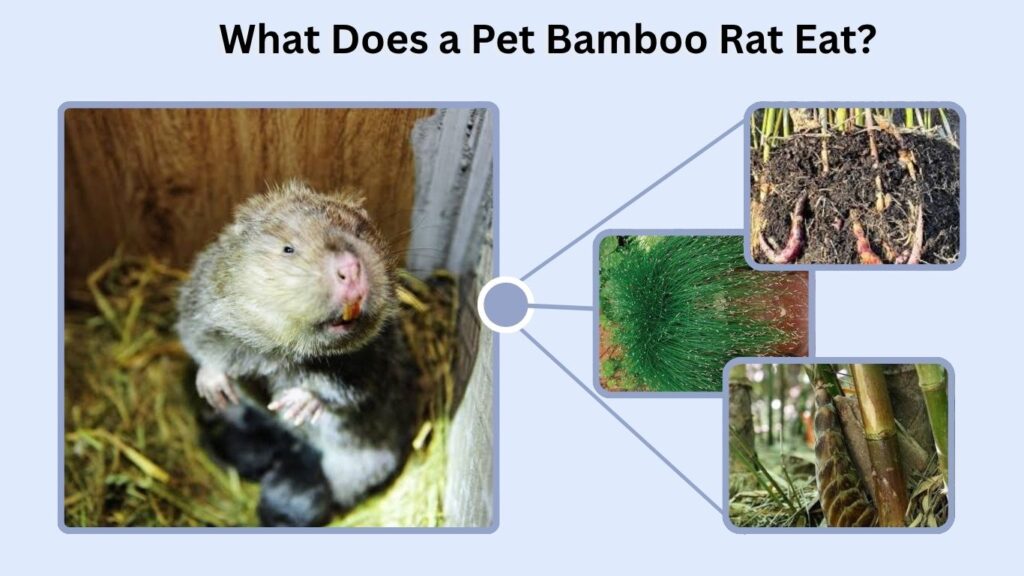
Bamboo rats are herbivores. Wild individuals primarily consume bamboo roots and shoots, along with grasses, shrubs, roots, seeds, and fruits.
Captive farms may use bamboo, sugarcane, cane, and bran, but a farm diet intended for growth is not necessarily a complete long-term pet diet. An exotic-animal veterinarian or qualified zoo nutritionist should design the feeding plan.
Suitable Foods
Depending on veterinary recommendations, the diet may contain:
- Fresh, pesticide-free bamboo
- Bamboo shoots and suitable roots
- Fibrous grasses
- Approved leafy vegetation
- Small quantities of appropriate vegetables
- Limited seeds or fruit
- Fresh drinking water
Food should be introduced gradually because sudden dietary changes can disturb digestion.
Foods and Materials to Avoid
Do not offer unidentified wild plants, moldy bamboo, chemically treated wood, sugary processed foods, salty snacks, or foods intended for dogs and cats. Bamboo collected outdoors may contain pesticide residue, parasites, fungal growth, or traffic pollution.
Owners must also identify the bamboo species carefully. “Bamboo-like” ornamental plants are not necessarily true bamboo and may be unsafe.
Health and Veterinary Care
Finding veterinary care may be one of the greatest challenges of keeping bamboo rats as pets. Many general veterinarians have little experience with Rhizomys or Cannomys species.
Arrange an examination with an exotic-mammal veterinarian before acquiring the animal. Routine monitoring should include body weight, appetite, droppings, teeth, feet, skin, breathing, and activity.
Signs of Illness
Seek veterinary help for:
- Refusing food or water
- Weight loss
- Overgrown or broken teeth
- Diarrhea or unusually small droppings
- Nasal or eye discharge
- Labored breathing
- Swollen feet or wounds
- Excessive scratching or hair loss
- Sudden aggression or weakness
Because rodents often hide illness, apparently minor behavioral changes can deserve prompt attention.
Hygiene and Human Health
Rodents and their enclosures can carry germs even when the animals appear healthy. Wash your hands after touching the animal, its food, bedding, bowls, or enclosure. Pet supplies should be kept away from kitchens and cleaned outside living or food-preparation areas whenever possible.
A bamboo rat is a particularly poor choice for households with very young children, people with weakened immune systems, or anyone unable to follow strict hygiene and handling procedures.
Bamboo Rat Lifespan and Long-Term Commitment
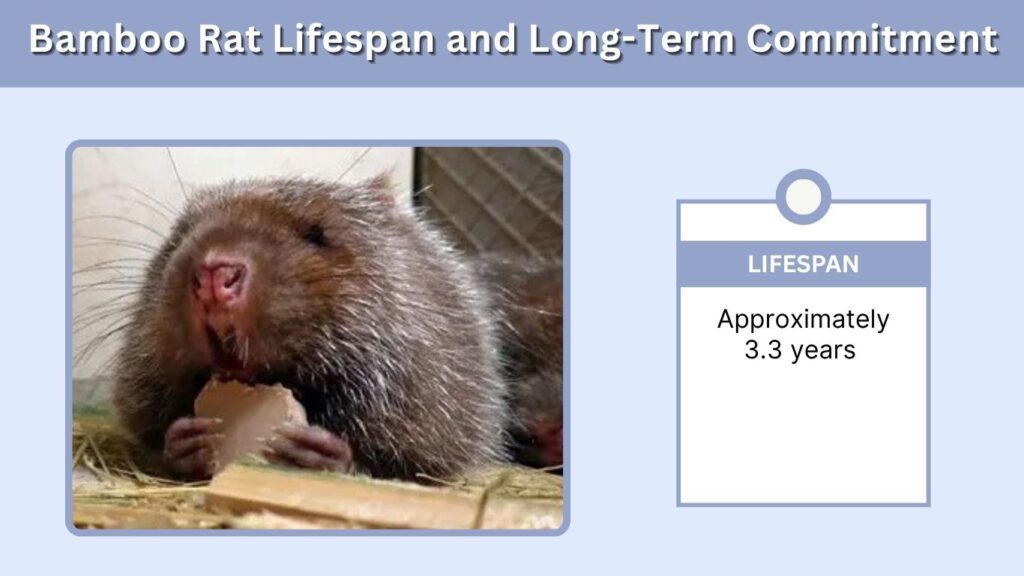
Available longevity information is limited. Animal Diversity Web reports an average captive lifespan of approximately 3.3 years for the lesser bamboo rat, while a recorded wild-born large bamboo rat lived to about four years in captivity. These figures should not be treated as guaranteed limits because husbandry and species differences can affect lifespan.
Prospective owners must plan for veterinary expenses, specialized food, enclosure repairs, emergency care, and arrangements for the animal during travel.
FAQs
Is it legal to keep a bamboo rat as a pet?
Legality depends on the country, state, province, and municipality. Bamboo rats may be regulated as wildlife, exotic mammals, agricultural animals, or imported species. Check with local wildlife and veterinary authorities before purchasing one, even when an online seller claims that ownership is permitted.
Are bamboo rats friendly to humans?
Some captive individuals may tolerate familiar keepers, particularly when raised around people. However, bamboo rats are not domesticated companion rodents. They are naturally solitary, territorial animals and may defend themselves with powerful bites when frightened, cornered, restrained, or disturbed inside their enclosure.
What does a pet bamboo rat eat?
A bamboo rat primarily eats fibrous plant material, including bamboo roots, shoots, grasses, and other vegetation. Small amounts of appropriate seeds and fruit may also be consumed. A veterinarian should develop the captive diet because feeding only bamboo or sugarcane may not provide balanced nutrition.
Can bamboo rats live with other bamboo rats?
Adults are generally solitary and territorial, so permanently housing unfamiliar bamboo rats together may lead to stress or fighting. Breeding pairs and mothers with young require carefully managed arrangements. Separate enclosures are usually safer for animals kept outside a professionally supervised breeding program.
Is a bamboo rat suitable for beginners?
A bamboo rat is not a suitable beginner pet. Its strong teeth, defensive behavior, burrowing requirements, uncommon diet, legal restrictions, and limited veterinary support make its care challenging. Domesticated rats, guinea pigs, or other established companion species are usually more manageable alternatives.