
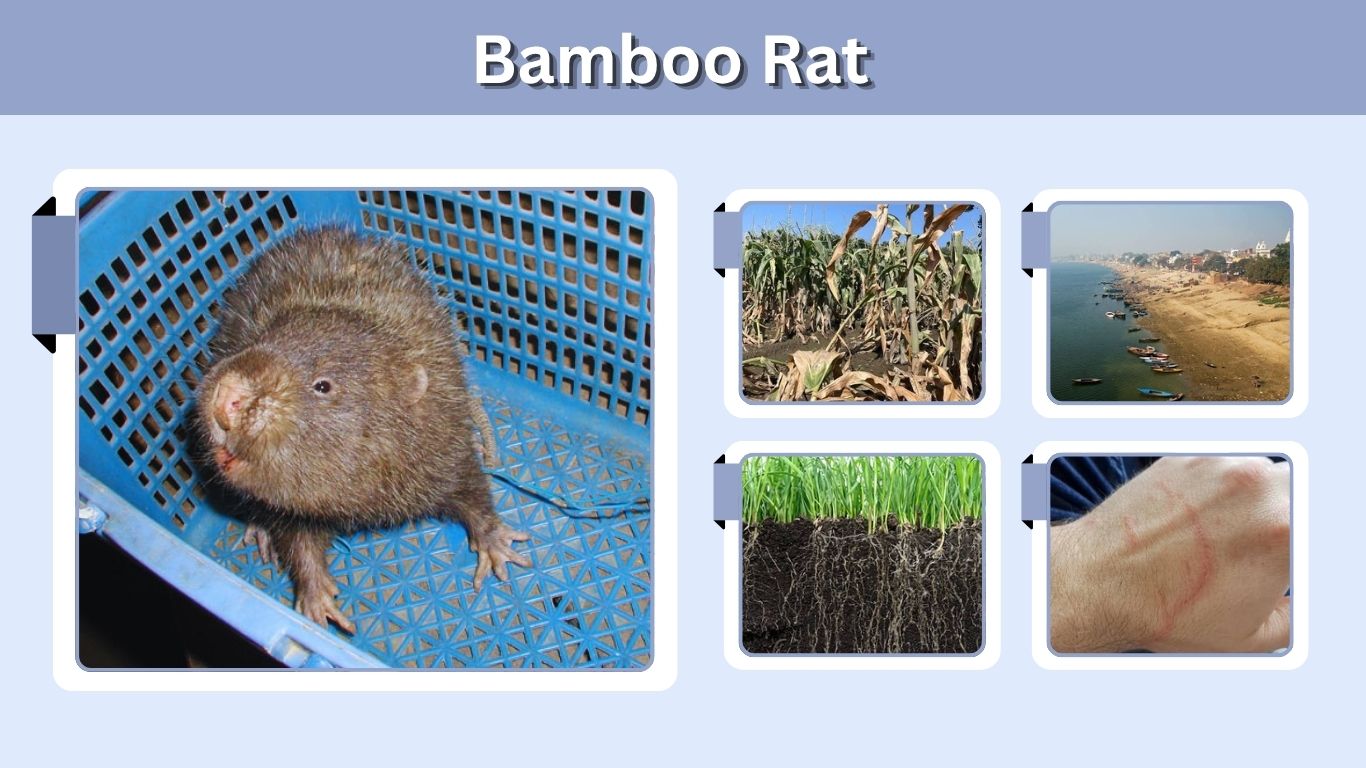
The bamboo rat is a sturdy, underground-dwelling rodent native to parts of South, Southeast, and East Asia. Despite its name, it is not closely related to the common brown rat found around buildings. Bamboo rats have compact bodies, powerful digging claws, short tails, and large front teeth designed for cutting roots and stems. They spend most of their lives in burrows beneath bamboo forests, grasslands, plantations, and mountain slopes, where they feed primarily on underground vegetation.
What Is a Bamboo Rat?
Bamboo rats belong to the rodent family Spalacidae and the tribe Rhizomyini. The name refers to four recognized Asian species divided between the genera Rhizomys and Cannomys. They are specialized burrowers with physical features similar to those of pocket gophers and mole rats.
Unlike ordinary rats, bamboo rats have:
- Thick, cylindrical bodies
- Broad heads and strong jaws
- Small eyes and ears
- Short, powerful legs
- Long digging claws
- Short, sparsely haired tails
- Large orange or yellowish incisors
These characteristics allow them to dig through hard soil and cut bamboo roots underground.
Bamboo Rat Size and Appearance
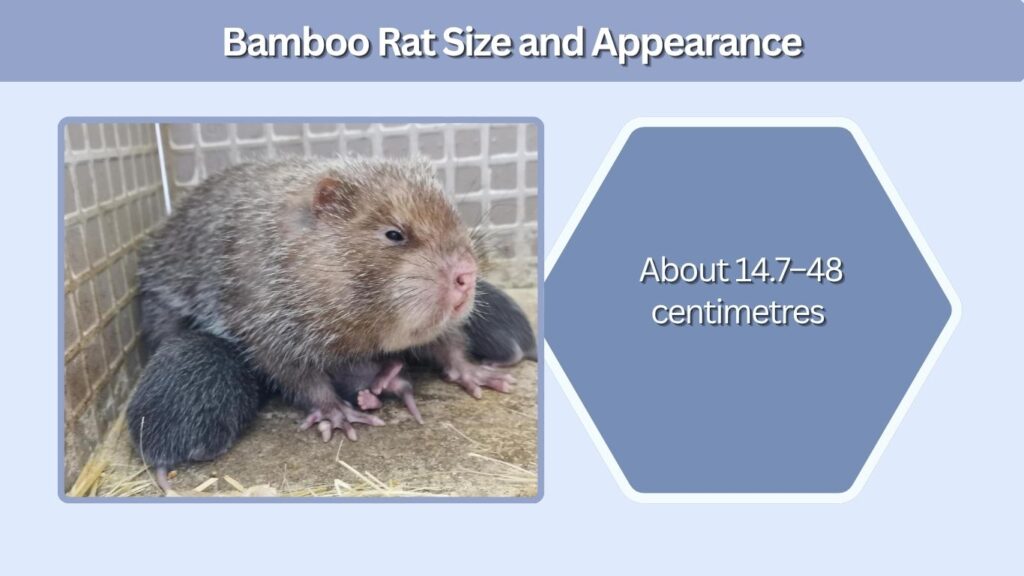
Bamboo rat size varies considerably among species. Members of the bamboo-rat group generally measure about 14.7–48 centimetres in head-and-body length, with tails measuring approximately 5–20 centimetres. Adults may weigh anywhere from around 500 grams to 4 kilograms, making the largest species much heavier than common house rats.
Their fur may be grey, brown, reddish-brown, cinnamon, or nearly black. The body is round and heavy, while the eyes and ears are unusually small. The lesser bamboo rat can measure roughly 16–46 centimetres long and may weigh between 500 grams and 4 kilograms, although size differs greatly among individuals and populations.
Types of Bamboo Rats
Four main species are commonly called bamboo rats.
| Common name | Scientific name | General distribution |
| Chinese bamboo rat | Rhizomys sinensis | China, Vietnam, Myanmar and possibly Laos |
| Hoary bamboo rat | Rhizomys pruinosus | India through mainland Southeast Asia and southern China |
| Large bamboo rat | Rhizomys sumatrensis | Southern China, Southeast Asia, Malaysia and Indonesia |
| Lesser bamboo rat | Cannomys badius | Nepal, India, Bangladesh, China and mainland Southeast Asia |
Chinese Bamboo Rat
The Chinese bamboo rat is a heavy-bodied species found primarily in southern China and neighbouring parts of Myanmar and Vietnam. It usually inhabits bamboo stands, pine forests, plantations, and mountainous areas. The species is currently listed as Least Concern.
Hoary Bamboo Rat
The hoary bamboo rat has coarse grey-brown fur, often with pale-tipped hairs that create a frosted appearance. It occurs across India, Myanmar, China, Thailand, Laos, Cambodia, Vietnam, and Malaysia. The Mammal Diversity Database lists it as Least Concern.
Large or Sumatran Bamboo Rat
The large bamboo rat is the biggest member of the group. Its range includes China, Myanmar, Thailand, Laos, Vietnam, Cambodia, Malaysia, and Indonesia. It is also known as the Indomalayan or Sumatran bamboo rat and is classified as Least Concern.
Lesser Bamboo Rat
The lesser bamboo rat belongs to a separate genus, Cannomys. It lives in bamboo forests, wooded hills, grasslands, gardens, and tea-growing areas from Nepal and northeastern India to Bangladesh and Southeast Asia.
Bamboo Rat Habitat and Distribution
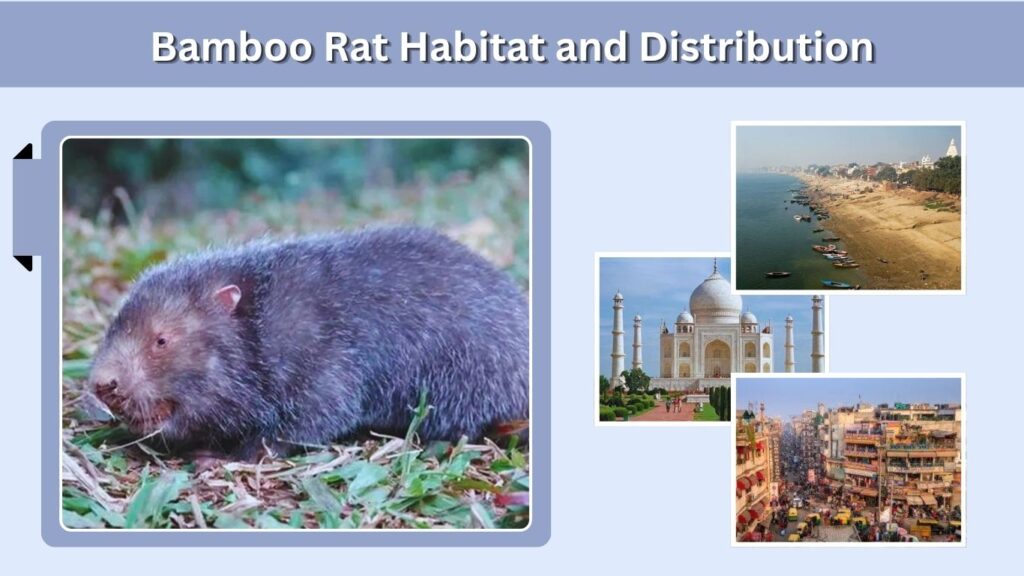
Bamboo rats live primarily in regions where soil is suitable for digging and underground plant food is plentiful. Common habitats include bamboo thickets, secondary forests, mountain slopes, grasslands, plantations, gardens, and woodland edges.
Most spend nearly their entire lives in tunnels. A burrow may contain feeding passages, emergency exits, food-storage spaces, and a nesting chamber lined with dry vegetation. The lesser bamboo rat may construct several burrows but normally occupies only one at a time.
Bamboo rats are found naturally in countries including:
- China
- India
- Bangladesh
- Nepal
- Bhutan
- Myanmar
- Thailand
- Laos
- Cambodia
- Vietnam
- Malaysia
- Indonesia
What Do Bamboo Rats Eat?
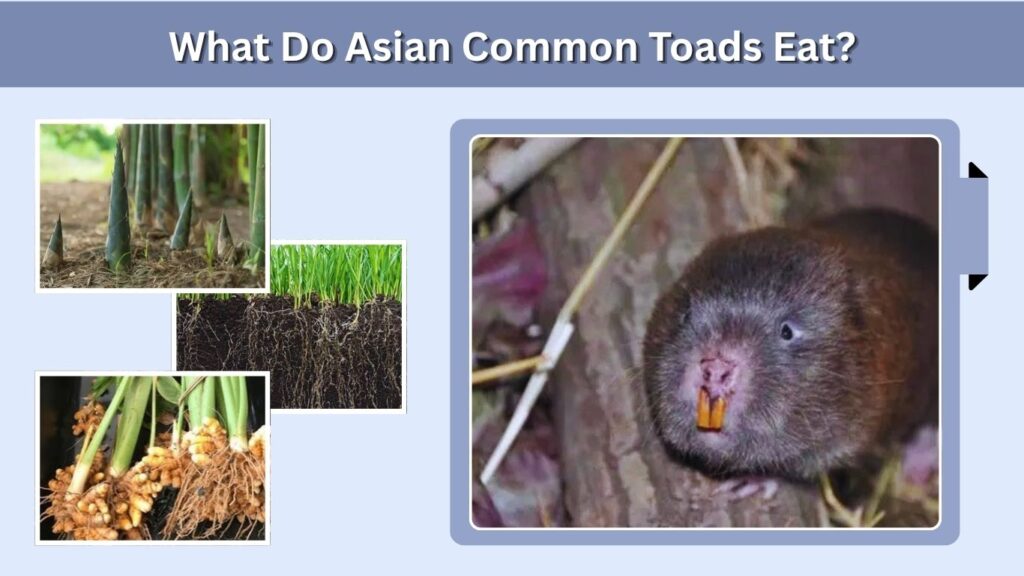
Bamboo rats are primarily herbivorous. As their name suggests, bamboo forms an important part of the diet, especially for species living in dense bamboo stands.
Their natural foods include:
- Bamboo roots
- Bamboo shoots
- Underground stems
- Grass shoots
- Tubers and other roots
- Seeds and fruits
- Shrubs and young plants
The lesser bamboo rat consumes bamboo roots and shoots but also eats grasses, fruits, seeds, and other vegetation. Large bamboo rats may feed on tapioca and sugarcane when their burrows are close to farms.
Their feeding can damage tea bushes, sugarcane, cassava, and other cultivated plants. Consequently, farmers may regard them as agricultural pests.
Behavior and Burrowing Habits
Bamboo rats are secretive animals that are most active during the evening, nighttime, or early morning. They move relatively slowly above ground but are highly effective diggers.
They loosen soil using their strong front claws and may also use their incisors to cut through compact earth and tough roots. Their small eyes suggest that vision is less important than touch, smell, and vibrations while navigating dark tunnels.
Bamboo rats are often solitary outside the breeding period. When threatened, they may retreat underground or defend themselves with their powerful teeth. The lesser bamboo rat usually gives birth to one to five young after a gestation period of approximately six to seven weeks. Its recorded average captive lifespan is about 3.3 years, although longevity can vary by species and conditions.
Can You Keep a Bamboo Rat as a Pet?
Although searches for “bamboo rat as a pet” are common, bamboo rats are generally not suitable household pets. They are wild, burrowing rodents with demanding environmental and behavioural needs.
A proper enclosure would need deep, escape-resistant substrate, strong barriers, suitable vegetation, controlled temperature, and opportunities to dig. Their incisors can damage ordinary cages, woodwork, plastic containers, and household objects.
Ownership may also be restricted by wildlife, importation, agriculture, or exotic-pet regulations. Anyone considering one must check local laws and consult an experienced exotic-animal veterinarian before acquiring the animal.
Small mammals can carry germs even when they appear healthy. The CDC advises washing hands after handling rodents or their habitats, keeping cages away from food-preparation areas, and avoiding bites, scratches, urine, saliva, and droppings.
Are Bamboo Rats Dangerous?
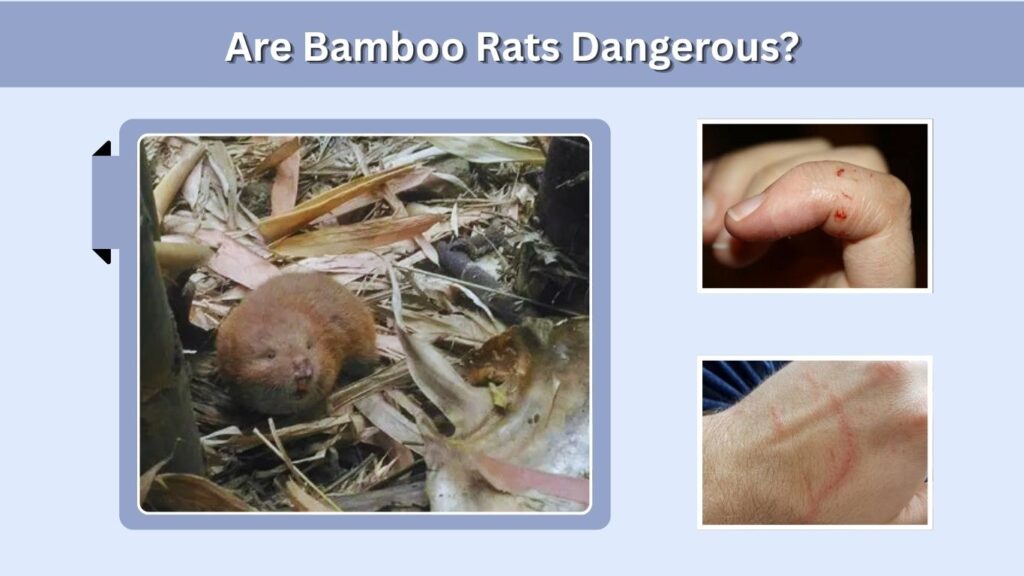
Bamboo rats do not normally hunt or attack people. However, their large incisors can cause a painful bite if the animal is frightened, trapped, mishandled, or protecting its burrow.
Wild or poorly managed rodents can also expose people to germs through bites, scratches, urine, saliva, contaminated bedding, or droppings. Children under five, older adults, pregnant people, and individuals with weakened immune systems face greater risks from diseases associated with small mammals.
A wild bamboo rat should never be captured or handled without trained wildlife assistance.
Bamboo Rats as Food and Farm Animals
Bamboo rats are hunted and consumed in some parts of Asia. They have also been raised on farms, particularly in China and Vietnam.
A survey of Vietnamese farms documented captive hoary and large bamboo rats, with bamboo, sugarcane, cane, and bran used as major foods. Research on Chinese bamboo rats has also documented large-scale farming for human consumption.
Laws governing wildlife farming, transport, sale, and consumption vary significantly between countries and may change following disease outbreaks or conservation concerns. Wild animals should only be obtained, farmed, or sold through legal and properly inspected systems.
Are Bamboo Rats Endangered?
The Chinese, hoary, large, and lesser bamboo rats are currently recorded as Least Concern. Their relatively wide distributions help protect them from immediate extinction risk.
However, local populations may still be affected by excessive hunting, habitat conversion, unregulated trade, pesticide use, and loss of bamboo habitat. A Least Concern classification does not mean that every regional population is stable or free from threats.
FAQs
What is the scientific name of a bamboo rat?
“Bamboo rat” refers to four species. Three belong to the genus Rhizomys: R. sinensis, R. pruinosus, and R. sumatrensis. The lesser bamboo rat is scientifically named Cannomys badius. All four belong to the family Spalacidae and tribe Rhizomyini.
How big does a bamboo rat get?
Depending on the species, a bamboo rat may measure approximately 15–48 centimetres in head-and-body length. Larger individuals can weigh up to about four kilograms. The large or Sumatran bamboo rat is generally the biggest species, while the lesser bamboo rat is usually smaller.
Do bamboo rats eat only bamboo?
Bamboo roots, shoots, and underground stems are major foods, but bamboo rats do not eat bamboo exclusively. They may also consume grass shoots, shrubs, roots, tubers, fruits, and seeds. Animals living near farms sometimes feed on sugarcane, cassava, tea plants, and other crops.
Are bamboo rats good pets?
Bamboo rats are usually unsuitable for ordinary homes. They require specialized burrowing enclosures, strong barriers, an appropriate plant-based diet, and veterinary care. They may bite when frightened, and keeping them may be illegal without wildlife permits or exotic-animal licences in some locations.
Is a bamboo rat the same as a bamboo rat snake?
No. A bamboo rat is a burrowing mammal, while a bamboo rat snake is a completely different animal and belongs to the reptile group. Similar common names can create confusion, so searches about bamboo rat snake care, size, or venom do not relate to bamboo-rat rodents.