
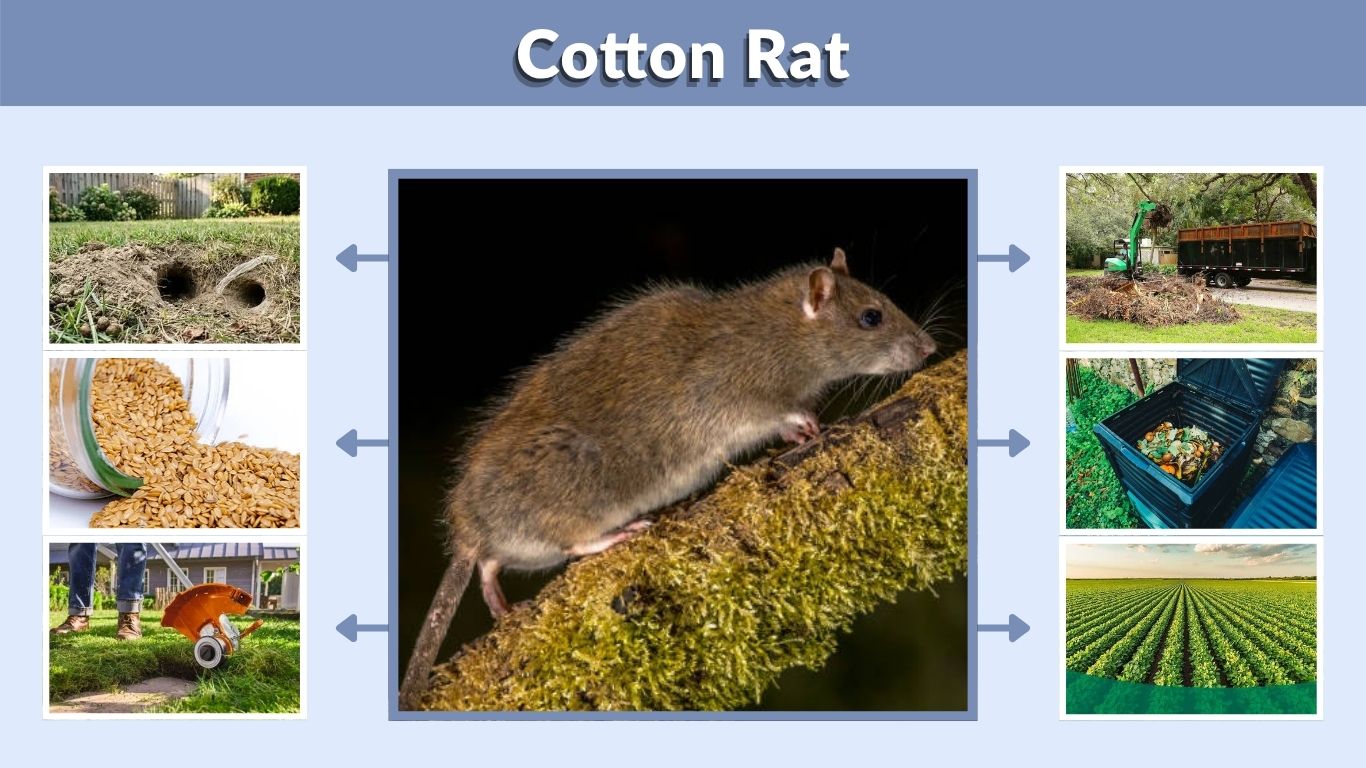
The cotton rat is a stocky, grassland-loving rodent often found in fields, marsh edges, roadsides, and overgrown areas. The best-known species is the hispid cotton rat, scientifically called Sigmodon hispidus. Although it may look like a common house rat at first glance, it has different habits, habitat preferences, and ecological roles. This guide explains how to identify cotton rats, where they live, what they eat, and what to do if they appear around your property.
What Is a Cotton Rat?
Cotton rats are small to medium-sized rodents in the genus Sigmodon. They are not the same as Norway rats or roof rats, although people sometimes confuse them. The name “cotton rat” comes from their association with grassy fields, agricultural areas, and plant-rich habitats, including places where cotton and other crops may grow.
The hispid cotton rat is the most widely recognized cotton rat in the United States. It has coarse fur, a compact body, and a shorter-looking tail compared with many familiar pest rats. These rodents are important prey for snakes, hawks, owls, foxes, bobcats, and other predators. They also help shape grassland ecosystems by feeding on vegetation and seeds.
Cotton rats are also known in scientific research. The hispid cotton rat has been used as an animal model in studies of respiratory viruses, especially respiratory syncytial virus, because its responses can be useful for understanding human respiratory disease.
Cotton Rat Identification
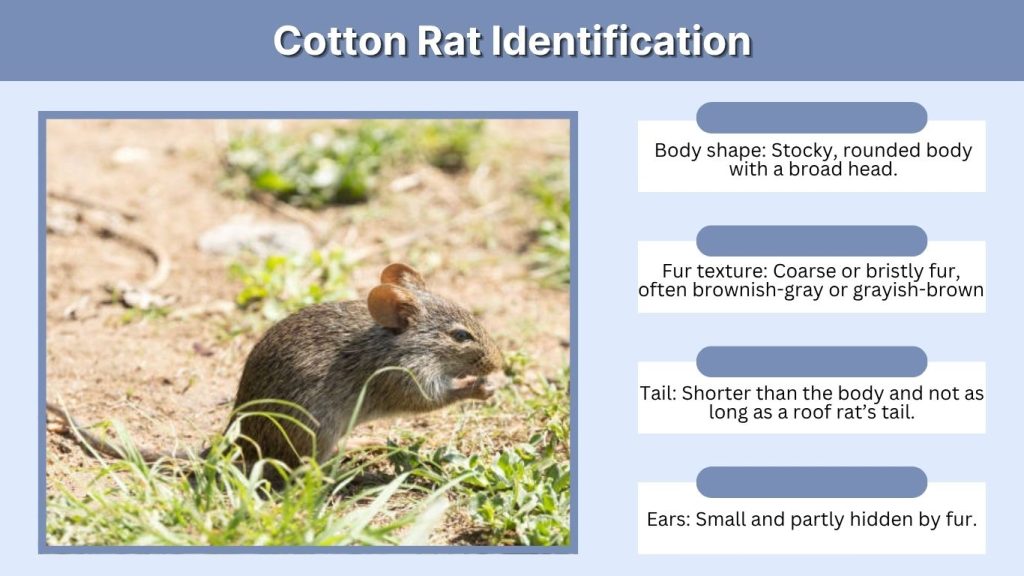
Cotton rats have a rugged, wild appearance. Their bodies are compact, their fur is rough, and their ears are relatively small compared with some other rats. They are usually seen in dense grass or low vegetation rather than climbing inside buildings.
Key Features
- Body shape: Stocky, rounded body with a broad head
- Fur texture: Coarse or bristly fur, often brownish-gray or grayish-brown
- Tail: Shorter than the body and not as long as a roof rat’s tail
- Ears: Small and partly hidden by fur
- Movement: Quick, low movement through grass and ground cover
- Habitat clue: Usually linked to fields, marshes, grassy edges, and brushy areas
- Scientific name: The hispid cotton rat is Sigmodon hispidus
Adult cotton rats are generally smaller and more compact than Norway rats. Their rough fur is one of the easiest clues. They do not have the sleek look of roof rats, and they are less likely to be found climbing in attics or upper building spaces.
Cotton Rat Size and Appearance
Cotton rats are not tiny like house mice, but they are usually not as large as big urban rats. Their size can vary by species, age, food supply, and location. A mature hispid cotton rat often looks heavy-bodied for its length, with a blunt face and a tail that does not look especially long.
| Feature | Cotton Rat | Norway Rat | Roof Rat |
| Body build | Stocky and compact | Large and heavy | Slender |
| Fur | Coarse, rough, brownish-gray | Coarse brown or gray | Smoother, dark gray to black |
| Tail length | Usually shorter than body | Shorter than body | Often as long as or longer than body |
| Common habitat | Grasslands, fields, marsh edges | Sewers, buildings, burrows | Trees, roofs, attics |
| Climbing habit | Mostly ground-based | Mostly ground-based | Strong climber |
A cotton rat’s rough, shaggy coat is a useful field mark. In bright light, the fur may look mixed with dark and pale hairs. The belly is usually lighter than the back, but the contrast is not always sharp.
Cotton Rat Habitat and Range
Cotton rats prefer areas with thick ground cover. They are strongly associated with grassy habitats, especially places where vegetation provides food, nesting material, and protection from predators. You may find them in old fields, pastures, marshy edges, roadsides, weedy lots, ditch banks, and agricultural borders.
In the United States, the hispid cotton rat is most common in southern and southeastern regions, though its range has expanded in some areas. It may occur around warm, open habitats where dense grass remains available through much of the year.
Common Places Cotton Rats Live
- Tall grass around fields and farms
- Marsh edges and wet meadows
- Roadside ditches and fence lines
- Overgrown yards or vacant lots
- Crop-field borders
- Brushy grassland and savanna edges
- Areas with low, dense plant cover
Cotton rats build nests close to the ground. These nests are often made from dry grass and plant fibers. They may also create small runways through vegetation, similar to trails made by meadow voles.
Cotton Rat Diet
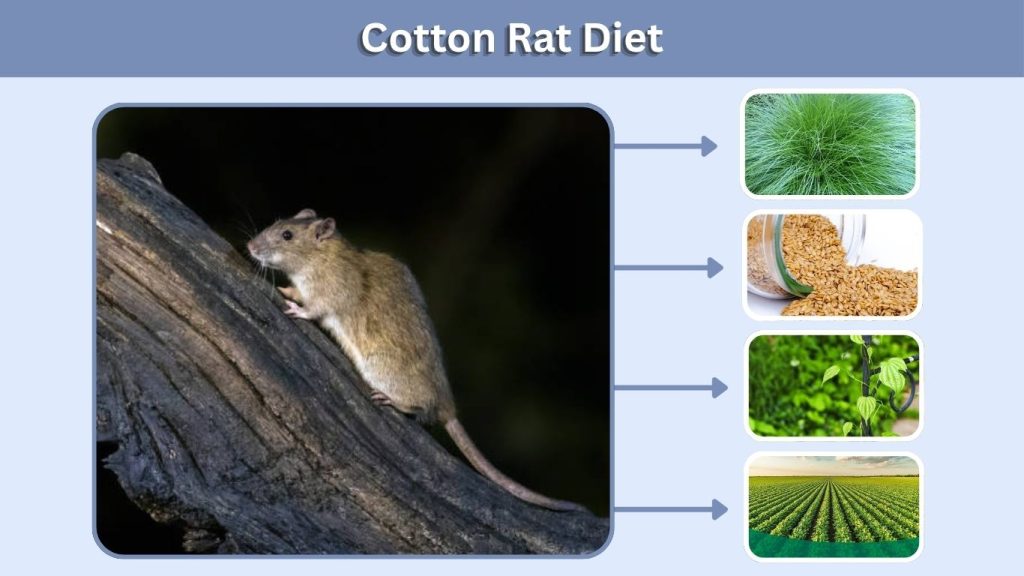
Cotton rats are mostly herbivorous, meaning they feed heavily on plant material. Their diet includes grasses, stems, leaves, seeds, roots, and crop plants when available. They may occasionally eat insects or other small items, but green vegetation and seeds make up much of their food.
In natural areas, cotton rats feed on grasses and herbaceous plants. Around farms, they may nibble crop seedlings or damage low-growing vegetation. In gardens, they can feed on tender plants, seeds, and ground-level produce if the habitat around the garden gives them shelter.
Foods Cotton Rats May Eat
- Fresh grass and sedges
- Seeds and grain
- Leaves and stems
- Roots and shoots
- Agricultural crops
- Garden plants
- Occasional insects or small invertebrates
Because they depend on vegetation, cotton rats are more common where plant cover is thick. Removing dense weeds and unmanaged grass near buildings can make an area less attractive to them.
Cotton Rat Behavior and Daily Activity
Cotton rats spend much of their time near the ground. They move through vegetation, using cover to avoid predators. Their activity may occur during the day or night, depending on weather, season, predator pressure, and habitat conditions.
They do not usually behave like indoor pest rats. A Norway rat may enter basements, crawl spaces, garages, and food-storage areas. A cotton rat is more strongly tied to outdoor ground cover. However, if grass and brush grow right up against a structure, cotton rats may approach sheds, barns, or foundation edges.
Cotton rats can reproduce quickly when food and cover are abundant. This makes them important prey animals in the ecosystem, but it also means local numbers can rise in favorable habitats.
Cotton Rat Life Cycle and Reproduction
Cotton rats have a fast life cycle, which helps their populations recover from predation and seasonal losses. Breeding can occur during warm periods, and in mild climates reproduction may continue for much of the year. Females can produce multiple litters when conditions are good.
Young cotton rats develop quickly compared with many larger mammals. This rapid development allows populations to increase in grassy habitats with plenty of food. However, many cotton rats do not live long in the wild because they are hunted by birds of prey, snakes, carnivorous mammals, and other predators.
Their short lifespan and high reproductive rate are common traits among small rodents. This pattern helps maintain their role as a steady food source in grassland and wetland-edge food webs.
Cotton Rat Droppings and Signs
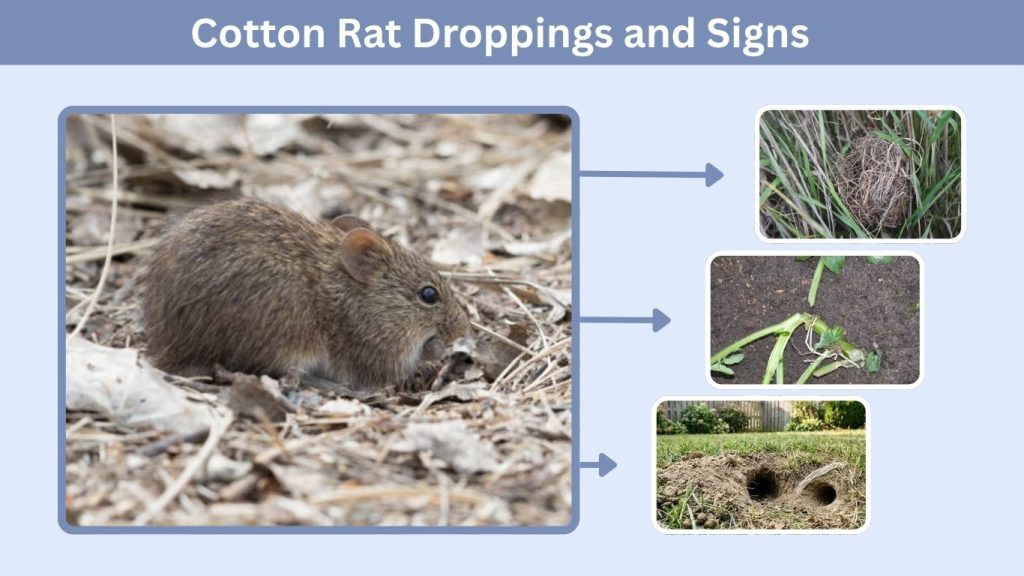
Cotton rats are not always easy to spot because they hide in vegetation. Instead, people often notice signs of activity. These signs may appear in grassy areas, garden edges, sheds, or field borders.
Signs of Cotton Rat Activity
- Narrow runways through grass
- Small nests made from dry grass
- Chewed stems or clipped vegetation
- Small rodent droppings near feeding areas
- Burrow-like openings or ground-level hiding spots
- Rustling movement in dense grass
- Increased predator activity, such as snakes or hawks nearby
Cotton rat droppings can resemble other rodent droppings, so droppings alone are not enough for perfect identification. Habitat and other signs matter. If the signs are inside a house, garage, attic, or pantry, Norway rats, roof rats, or house mice may be more likely than cotton rats.
Cotton Rat vs Norway Rat
Cotton rats and Norway rats can both look brownish and stocky, but they are different animals with different habits. Norway rats are common urban pests. They often live around buildings, sewers, trash areas, livestock feed, and stored food. Cotton rats are more connected to natural or semi-natural ground cover.
A cotton rat usually has a rougher, more bristly appearance and prefers dense grass. A Norway rat is larger, more powerful-looking, and more likely to dig burrows near buildings or enter structures for food.
If you see rodent activity indoors, do not assume it is a cotton rat. Indoor infestations are more often caused by house mice, Norway rats, or roof rats. Correct identification matters because control methods depend on the species and location.
Are Cotton Rats Dangerous?
Cotton rats are wild rodents, so they should not be handled. Like other rodents, they can bite if trapped or cornered. They may also carry parasites such as fleas, ticks, or mites. Their droppings and urine should be treated carefully, especially in enclosed spaces.
For most homeowners, the main concern is not direct aggression. The bigger concerns are vegetation damage, rodent signs near structures, and the possibility of attracting predators. In farms or gardens, cotton rats may damage seedlings or low vegetation when numbers are high.
Safety Tips
- Do not pick up live cotton rats by hand
- Wear gloves when cleaning rodent-contaminated areas
- Avoid sweeping dry droppings into the air
- Seal gaps around sheds and outbuildings
- Keep grass short near foundations
- Remove brush piles and unmanaged vegetation near living spaces
If you find many rodents around a home, barn, or business, professional inspection can help identify the exact species.
Cotton Rat Control Around Homes and Yards
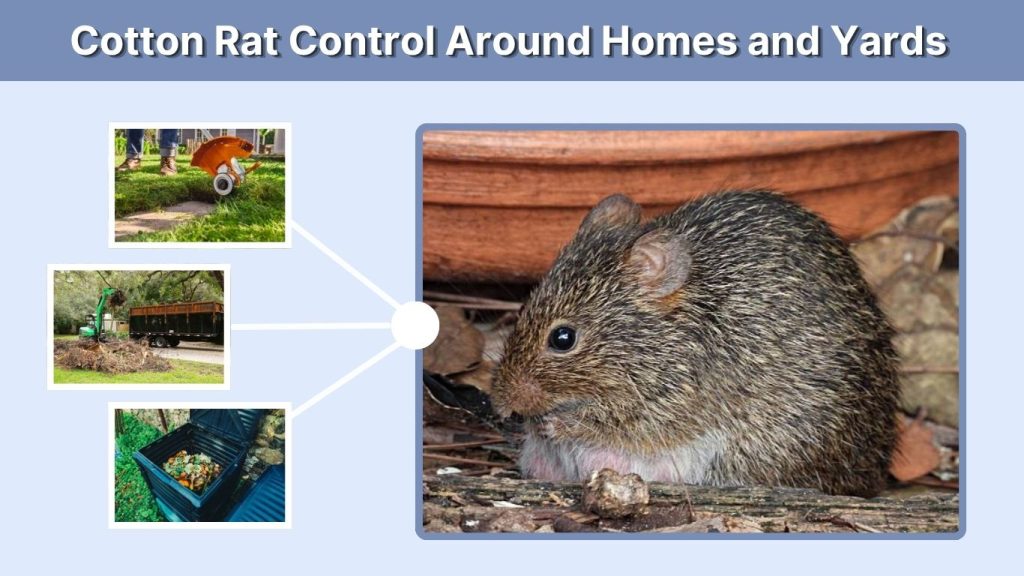
Cotton rat control begins with habitat management. Because they depend on dense grass and cover, reducing shelter is often more effective than focusing only on traps or bait. The goal is to make the area less comfortable for cotton rats while also preventing other rodents from moving in.
Start by mowing tall grass near buildings. Remove weed patches, brush piles, stacked debris, and unused materials that create hiding places. Keep firewood, boards, and stored items elevated if possible. Around gardens, clear a buffer zone so rodents have less cover while approaching plants.
Practical Control Steps
- Mow grass regularly around buildings
- Trim weeds along fences and ditches
- Remove brush, leaf piles, and unused debris
- Store animal feed in sealed containers
- Keep compost managed and covered
- Seal openings around sheds, barns, and crawl spaces
- Use traps carefully where rodent paths are active
- Contact a pest professional for large or repeated infestations
Avoid using poison casually, especially outdoors. Rodenticides can harm pets, wildlife, and predators that eat poisoned rodents. In many situations, habitat cleanup and exclusion are safer first steps.
Cotton Rats in Florida, Texas, and Other States
Cotton rats are often discussed in southern states such as Florida and Texas because warm climates and grassy habitats can support active populations. Florida cotton rats may be found around marshes, fields, and overgrown edges. Texas also has many suitable grassland and agricultural habitats.
In North Carolina, Kansas, Arizona, and other states near the range edge, local distribution may depend on habitat, climate, and species boundaries. Because cotton rat taxonomy has changed over time, some older references may include populations that are now treated differently.
For homeowners, the exact state matters less than the habitat. If a property has tall grass, brushy edges, crop fields, or wetland borders, cotton rats may be possible.
Cotton Rats in Research
Cotton rats are not only wild rodents; they are also important in laboratory research. The hispid cotton rat has been used in studies of respiratory infections because it can respond to some viruses in ways that are useful for testing vaccines, antivirals, and immune responses.
This research role does not mean wild cotton rats should be handled or kept as pets. Laboratory animals are bred and managed under controlled conditions. Wild cotton rats may carry parasites or pathogens and are best observed from a distance.
FAQs
Are cotton rats the same as regular rats?
No, cotton rats are different from common urban pest rats such as Norway rats and roof rats. Cotton rats belong to the genus Sigmodon and are more strongly associated with grassy fields, marsh edges, and dense ground cover. Regular pest rats are more likely to live around buildings, trash, sewers, and stored food.
What does a cotton rat eat?
A cotton rat mainly eats plant material. Its diet includes grasses, leaves, stems, seeds, roots, and crop plants. It may occasionally eat insects or other small items, but vegetation is the main food source. This is why cotton rats are often found in thick grass, fields, and overgrown edges.
Where do cotton rats live?
Cotton rats usually live in dense ground cover, including tall grass, old fields, marsh edges, roadsides, crop borders, and brushy open areas. They build nests from dry grass and plant fibers. They are more common outdoors than inside homes, although they may approach structures when vegetation grows close to buildings.
How can I tell a cotton rat from a Norway rat?
A cotton rat is usually smaller, rougher-looking, and more tied to grassland habitat. A Norway rat is larger, heavier, and more likely to live around buildings, burrows, trash, and stored food. Tail length, body shape, habitat, and behavior all help with identification.
How do you get rid of cotton rats?
The best first step is habitat cleanup. Mow tall grass, remove brush piles, manage weeds, seal openings around sheds, and store feed securely. Trapping may help in specific areas, but poison should be used carefully because it can harm pets and wildlife. For large problems, call a pest-control professional.