
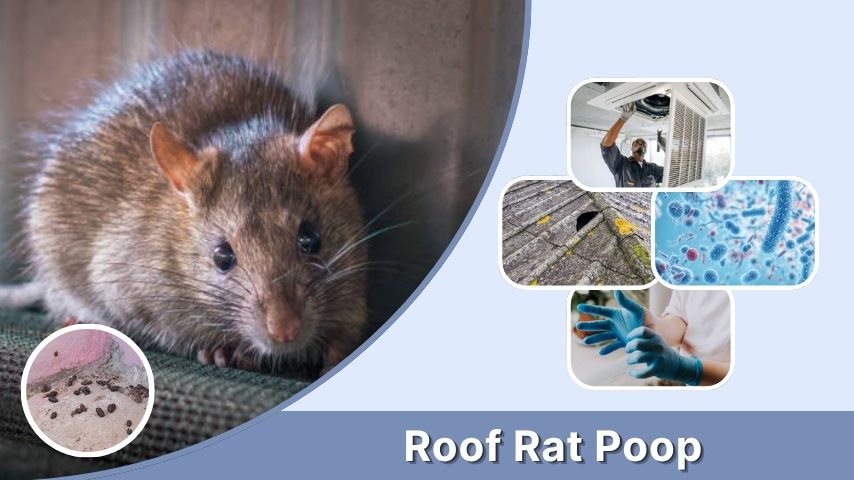
Roof rat poop is one of the most common signs of a rodent infestation inside homes, attics, garages, and storage areas. These droppings can help homeowners identify the type of rodent present and determine how serious the infestation may be. Roof rat droppings are often found near food sources, nesting sites, and travel paths where rats move regularly during nighttime activity. Because rodent droppings may carry harmful bacteria and disease organisms, proper identification and safe cleanup are extremely important for protecting health and preventing contamination.
Many people confuse roof rat poop with mouse or squirrel droppings because the shapes can appear similar at first glance. Learning the differences in size, shape, texture, and location can help identify roof rat activity more accurately and support effective pest control efforts.
What Does Roof Rat Poop Look Like?
Roof rat poop usually appears as dark capsule-shaped pellets with pointed ends. Fresh droppings are often shiny and moist, while older droppings become dry, faded, and brittle over time. The appearance of droppings can provide clues about whether rodent activity is recent or ongoing.
Roof Rat Poop Appearance
- Dark brown or black color
- Capsule-shaped pellets
- Pointed ends on both sides
- Smooth shiny surface when fresh
- Firm texture
Roof Rat Poop Size
Roof rat droppings are usually about half an inch long, making them larger than mouse droppings but smaller than some squirrel droppings. Size may vary slightly depending on the age and diet of the rat.
Fresh vs Old Roof Rat Poop
Fresh roof rat droppings appear dark, soft, and moist. Older droppings become lighter in color, dry out, and may crumble easily when disturbed. Strong odors are also more noticeable around fresh infestations.
Roof Rat Poop vs Mouse Poop
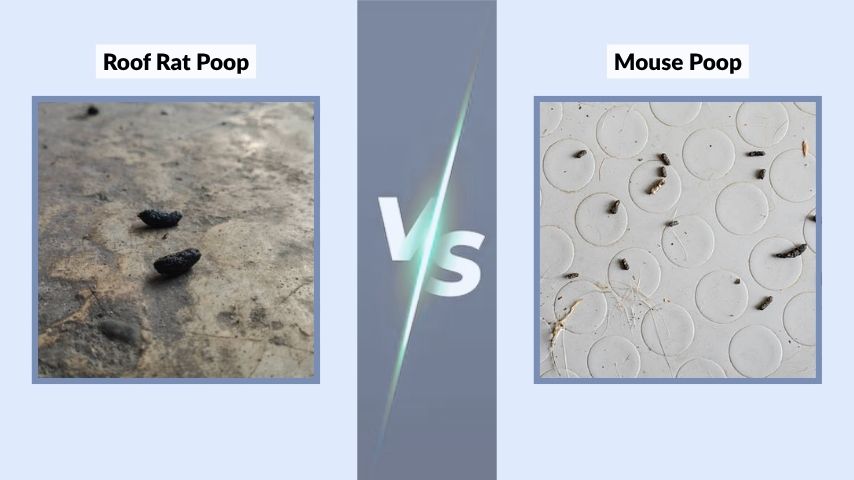
Roof rat droppings are commonly mistaken for mouse droppings because both rodents leave dark pellet-shaped waste. However, roof rat poop is generally larger and more elongated, while mouse droppings are much smaller and resemble grains of rice.
Size Differences
- Roof rat poop is larger
- Mouse droppings are tiny
- Rat pellets are thicker
- Mouse pellets appear more delicate
- Rat droppings are easier to notice
Shape and Texture Comparison
Roof rat droppings usually have pointed ends and a thicker capsule shape. Mouse droppings are smaller, smoother, and more rice-like in appearance. Texture differences become easier to notice when comparing fresh droppings side by side.
Why Identification Matters
Correctly identifying rodent droppings helps determine the proper pest control strategy. Roof rats and house mice use different nesting locations, entry points, and feeding habits, so treatment methods often vary significantly.
Roof Rat Poop vs Squirrel Poop
Squirrel droppings are another common source of confusion during rodent inspections. Because both roof rats and squirrels often occupy attics and trees, their droppings may sometimes appear in similar areas around a property.
Roof Rat Droppings
- Smaller capsule-shaped pellets
- Dark black or brown color
- Pointed pellet ends
- Common in attics and rafters
- Often found near rodent pathways
Squirrel Droppings
Squirrel droppings are usually larger and more rounded than roof rat droppings. They often appear slightly thicker and may be found near roof entry points, tree branches, and attic nesting areas where squirrels remain active during daytime hours.
Nesting and Activity Clues
Roof rats are mainly nocturnal and often create scratching sounds at night. Squirrels are more active during daytime hours and commonly move across roofs and trees in visible outdoor areas.
Where Roof Rat Poop Is Commonly Found
Roof rat droppings are often discovered near nesting areas, food sources, and travel routes used by rodents. Their climbing ability allows them to infest elevated spaces that many other rodents avoid.
Attics and Roof Spaces
- Insulation and rafters
- Storage boxes
- Ceiling corners
- Ventilation spaces
- Hidden attic pathways
Kitchens and Food Storage Areas
Roof rats may leave droppings near pantries, cabinets, pet food containers, and behind appliances while searching for food during nighttime activity. Food contamination is common in heavily infested areas.
Outdoor Locations
Roof rat droppings may also appear near trees, fences, garages, sheds, and outdoor storage spaces. Areas with fruit trees, garbage, and pet food can attract roof rats regularly.
Health Risks of Roof Rat Poop
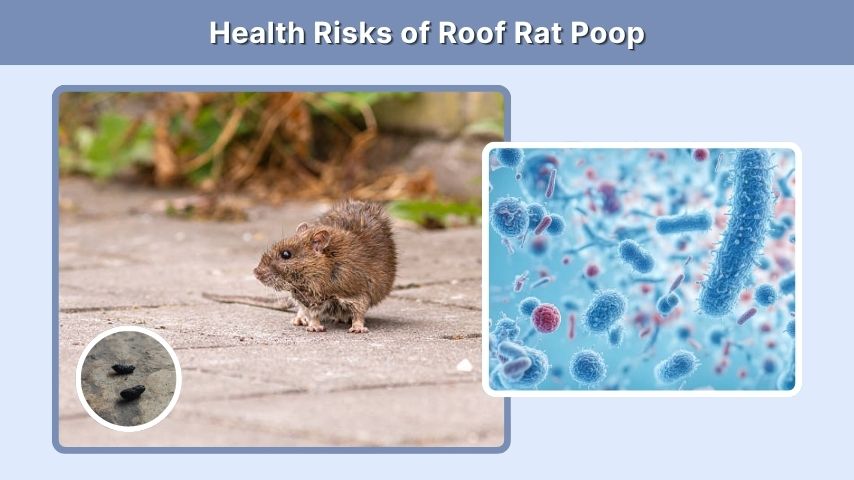
Roof rat droppings can contain bacteria, parasites, and harmful organisms that create health risks for humans and pets. Disturbing droppings improperly may release contaminated dust particles into the air.
Diseases Linked to Rodent Droppings
- Salmonella contamination
- Leptospirosis risks
- Hantavirus concerns
- Parasite transmission
- Bacterial infections
Airborne Contamination Risks
When dry droppings are swept or vacuumed, tiny contaminated particles may become airborne and enter the lungs. This is why health experts recommend using safe cleaning methods rather than dry sweeping rodent waste.
Risks to Pets and Children
Pets and young children may accidentally touch contaminated surfaces or areas where roof rat droppings are present. Outdoor play areas, garages, and attics can become unsafe if infestations are not cleaned properly.
Signs of a Roof Rat Infestation
Roof rat poop is only one sign of rodent activity. Rats often leave additional clues that can help homeowners identify infestations and locate nesting or feeding areas inside buildings.
Noises in Attics and Walls
- Scratching sounds at night
- Running noises in ceilings
- Gnawing sounds in walls
- Movement near roof spaces
- Squeaking noises from nests
Gnaw Marks and Damage
Roof rats constantly chew on wood, plastic, wires, and insulation to keep their teeth worn down. Chewed electrical wiring is especially dangerous because it can increase the risk of house fires.
Grease Marks and Odors
Roof rats often leave dark grease marks along walls and travel routes because oils from their fur rub against surfaces repeatedly. Strong musky odors may also develop around nesting and feeding locations.
How to Clean Roof Rat Poop Safely
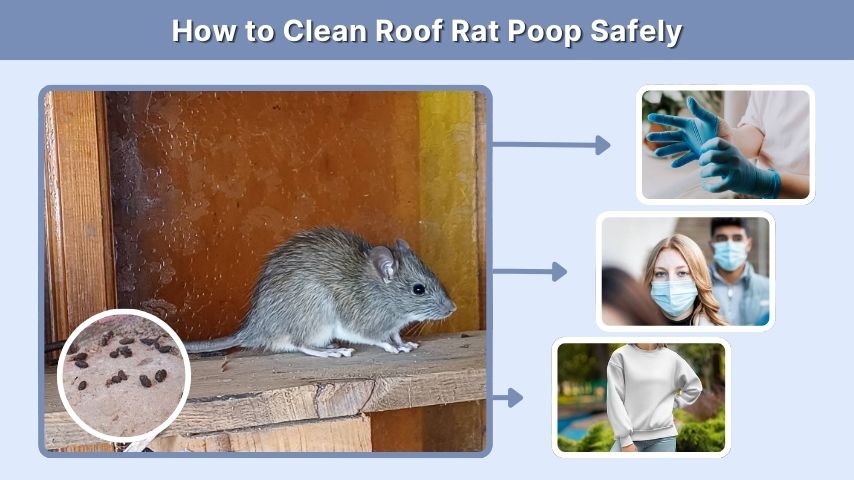
Cleaning rodent droppings improperly can increase exposure to bacteria and airborne contaminants. Safe cleanup procedures help reduce health risks and prevent contaminated particles from spreading through indoor air.
Protective Equipment
- Disposable gloves
- Face masks or respirators
- Safety goggles
- Long-sleeved clothing
- Closed shoes
Safe Cleaning Methods
Droppings should first be sprayed with disinfectant or a bleach solution before removal. Damp cleaning methods are safer because they reduce the chance of contaminated dust becoming airborne during cleanup.
Disposal and Sanitization
Used paper towels, gloves, and droppings should be sealed inside strong trash bags before disposal. Surfaces should then be disinfected thoroughly, and rooms should remain ventilated during and after cleanup.
How to Prevent Roof Rat Infestations
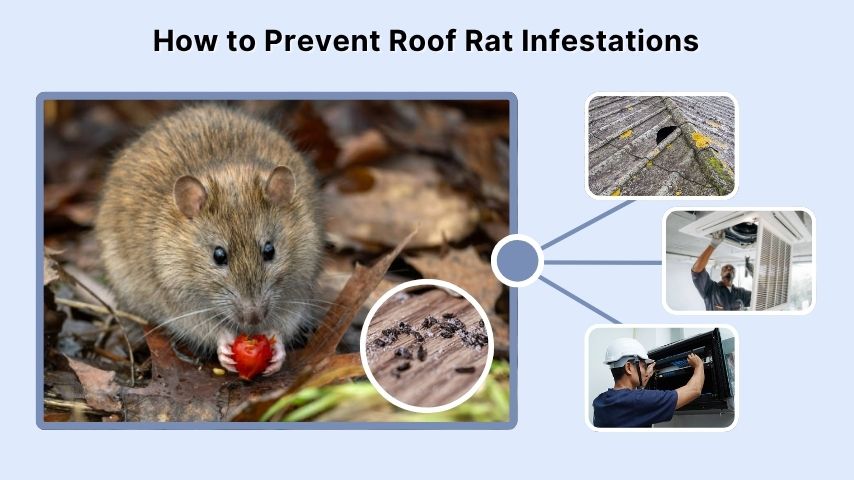
Preventing roof rats from entering homes is the best way to avoid droppings, contamination, and property damage. Rodent prevention focuses on eliminating food, water, shelter, and access points around buildings.
Sealing Entry Points
- Close roof gaps and holes
- Repair damaged vents
- Seal utility openings
- Install metal screening
- Inspect attic access points
Removing Food Sources
Roof rats are attracted to pet food, fallen fruit, garbage, bird seed, and accessible pantry foods. Proper food storage and outdoor cleanup help reduce rodent activity around homes.
Tree and Yard Maintenance
Tree branches touching roofs can provide easy access for climbing roof rats. Trimming branches, removing outdoor clutter, and maintaining fences help reduce nesting opportunities near buildings.
Common Myths About Roof Rat Poop
Many misconceptions about rodent droppings make infestations harder to identify and manage correctly. Understanding the facts helps homeowners respond safely and effectively when rodent activity appears.
Myth: Small Droppings Always Mean Mice
Young roof rats may leave smaller droppings that resemble mouse pellets. Size alone is not always enough for identification because juvenile rats can create confusion during inspections.
Myth: Old Rat Poop Is Harmless
Old roof rat droppings may still contain bacteria and harmful particles long after drying out. Disturbing old droppings without protection can still create airborne contamination risks.
Myth: Roof Rats Only Live Outdoors
Roof rats commonly invade attics, garages, walls, and storage areas inside homes. Their strong climbing ability allows them to access buildings through trees, fences, and roof openings easily.
FAQs
What does roof rat poop look like?
Roof rat poop usually appears as dark capsule-shaped pellets with pointed ends. Fresh droppings are shiny and moist, while older droppings become dry and faded. They are larger than mouse droppings and commonly found in attics and roof spaces.
How big is roof rat poop?
Roof rat droppings are generally about half an inch long. They are noticeably larger and thicker than house mouse droppings but smaller than some squirrel droppings. Size can vary slightly depending on the rat’s age and diet.
What is the difference between roof rat poop and mouse poop?
Roof rat poop is larger, thicker, and more elongated than mouse poop. Mouse droppings are smaller and resemble grains of rice. Roof rat droppings also commonly appear in attics and elevated areas due to their climbing behavior.
Is roof rat poop dangerous?
Yes, roof rat droppings can contain harmful bacteria and disease organisms. Improper cleanup may release contaminated particles into the air, increasing health risks for humans and pets through inhalation or surface contamination.
Do roof rats leave droppings in attics?
Yes, roof rats commonly leave droppings in attics, roof spaces, rafters, insulation, and storage areas. Because they are strong climbers, attics are one of the most common nesting and travel locations for roof rat infestations.