
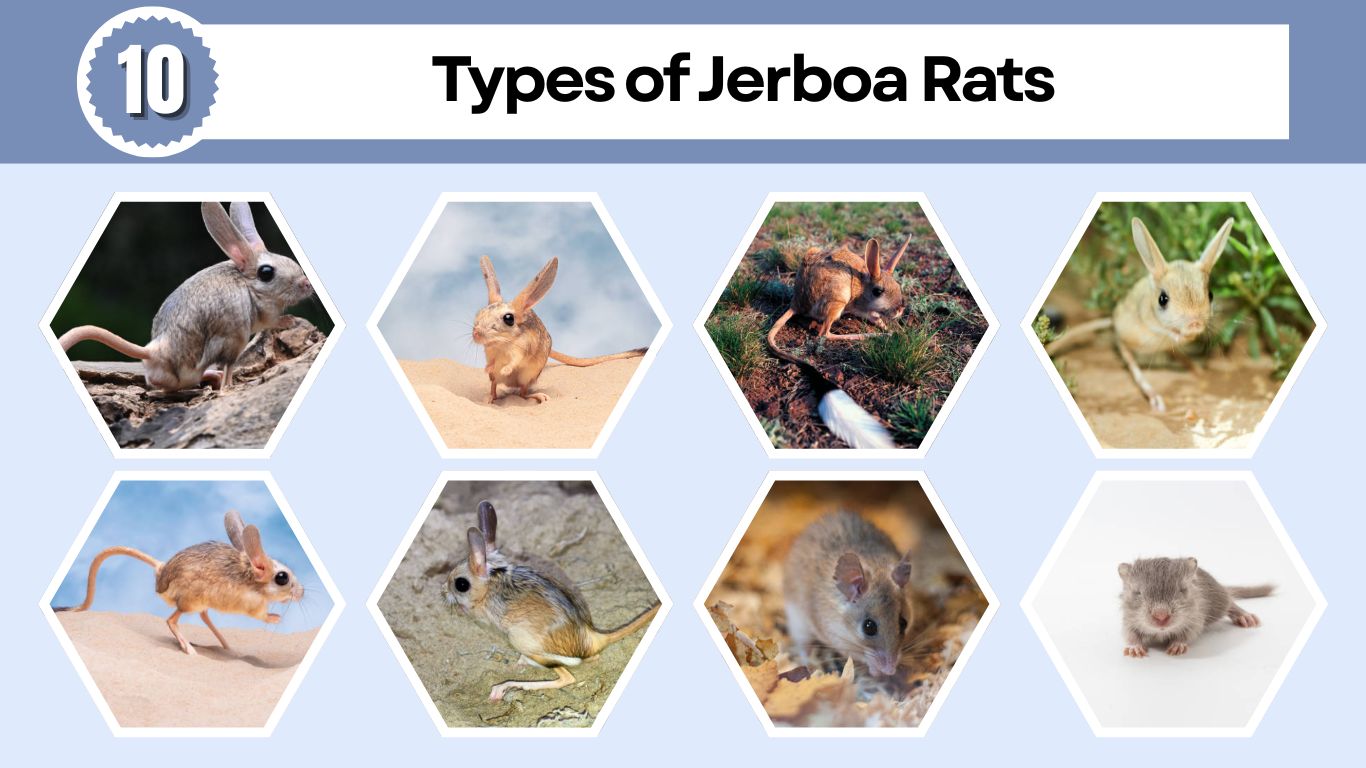
Jerboas are small, desert-adapted rodents known for their long hind legs, hopping locomotion, and large ears, which help them survive extreme arid environments. Found across North Africa, the Middle East, and Central Asia, these nocturnal creatures play a vital role in desert ecosystems by dispersing seeds and serving as prey for owls, snakes, and small carnivores. This guide explores 10 notable jerboa species, detailing their identification, habitat, behavior, diet, and lifespan, offering a comprehensive overview of these remarkable desert dwellers and their unique adaptations.
1. Greater Egyptian Jerboa
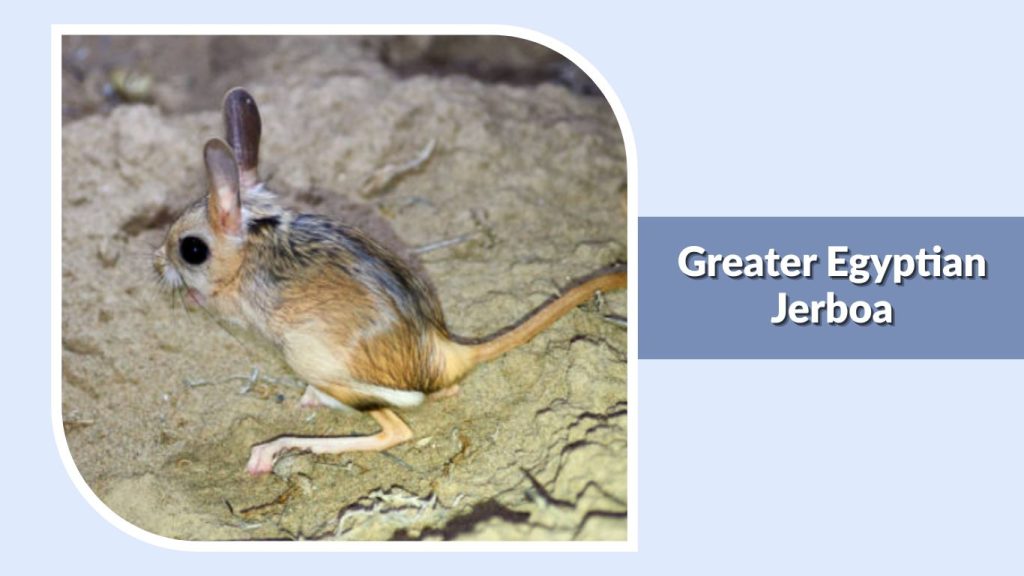
The Greater Egyptian Jerboa is a small rodent well-adapted to the harsh desert environments of North Africa and the Middle East. Its most distinctive feature is its long hind legs, which allow it to hop swiftly across sandy terrain, similar to a miniature kangaroo. This jerboa is primarily nocturnal, avoiding the extreme daytime heat by staying in its burrow. It plays a vital ecological role in desert ecosystems, acting as both a seed disperser and a food source for predators such as owls, snakes, and small carnivores. Its behavior and physical adaptations make it a fascinating example of desert survival strategies.
Identification
- Sandy or light brown fur to blend with the desert environment
- Long, powerful hind legs for hopping and jumping distances of up to 3 meters
- Large ears to help with thermoregulation and detecting predators
- Long tail with a tuft at the end for balance while moving quickly
- Small forelimbs used for digging and handling food
Habitat and Distribution
The Greater Egyptian Jerboa inhabits sandy deserts, semi-arid plains, and rocky desert edges in Egypt, Libya, Sudan, and parts of Israel. It favors loose sand and sparsely vegetated areas, which allow it to dig burrows for shelter. These burrows provide protection from extreme daytime temperatures and predators. Typically, a single jerboa maintains several burrow entrances within its territory, using them for resting, storing food, and hiding from threats.
Behavior and Diet
This species is strictly nocturnal, emerging after sunset to forage for seeds, plant material, and occasionally small insects. The jerboa digs burrows up to a meter deep to escape daytime heat and predation. Its hopping movement allows quick travel across open terrain. They are generally solitary animals, only coming together briefly for mating. Food is often stored in small caches within their burrows to survive periods of scarcity. Their agility and alertness make them challenging prey, despite their small size.
Lifespan
In the wild, the Greater Egyptian Jerboa typically lives 2–4 years, though predation and food availability heavily influence survival rates. Captive individuals may live slightly longer due to reduced threats and consistent food supplies. Mortality in the wild is largely caused by owls, snakes, and small desert carnivores, while extreme temperatures and scarcity of food during droughts can also affect population numbers.
2. Lesser Egyptian Jerboa
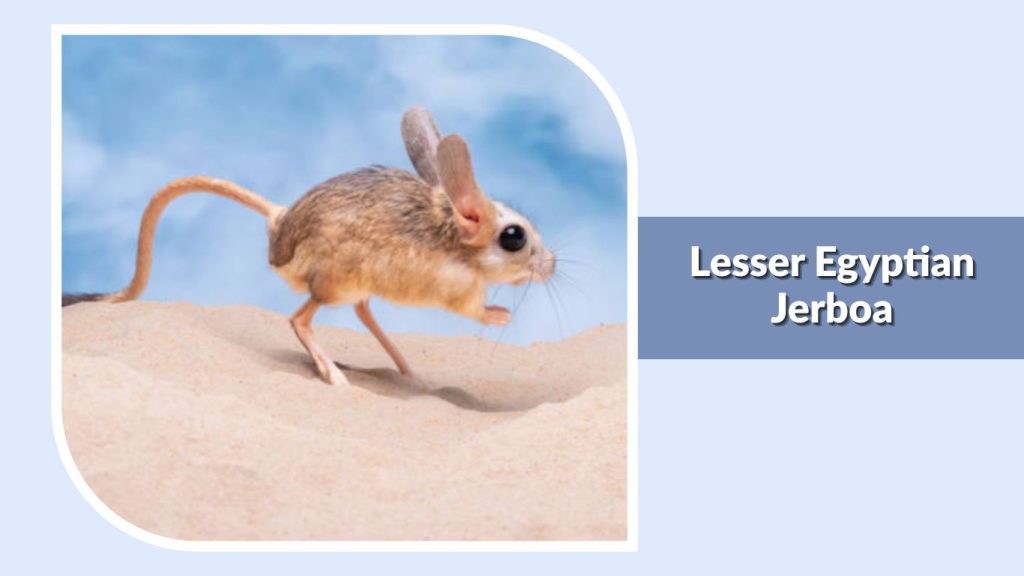
The Lesser Egyptian Jerboa is a small desert-adapted rodent found throughout North Africa, particularly in sandy and semi-arid regions. Slightly smaller than its greater counterpart, it is highly agile and uses its long hind legs to hop across loose sand, helping it escape predators quickly. Nocturnal by nature, it spends the day in burrows dug into the sand to avoid the intense desert heat. This species contributes to desert ecosystems by dispersing seeds and serving as prey for snakes, owls, and small carnivores.
Identification
- Fur: pale sandy-brown, blending with desert sands
- Long, slender hind legs for hopping and leaping up to 2 meters
- Large, rounded ears for detecting predators and regulating body heat
- Thin, elongated tail with a tuft at the end for balance
- Small forelimbs for digging and handling food
Habitat and Distribution
Lesser Egyptian Jerboas are distributed across Egypt, Libya, and parts of the Middle East, thriving in sandy deserts, dunes, and sparsely vegetated plains. They prefer loose sand for digging burrows, which serve as protection from predators and extreme daytime temperatures. These jerboas often maintain multiple burrow entrances, allowing quick escape if threatened.
Behavior and Diet
This species is nocturnal and solitary. It emerges after sunset to forage for seeds, grasses, and occasionally insects. Burrows are used for resting, storing food, and hiding from predators. Its hopping locomotion enables rapid movement across open sand, and it can change direction quickly to evade capture. Food caching within burrows ensures survival during periods of scarcity.
Lifespan
In the wild, Lesser Egyptian Jerboas live 1.5–3 years. Predation, food availability, and extreme temperatures influence survival. In captivity, with controlled conditions and fewer threats, they may live slightly longer, providing insight into their full lifespan potential.
3. Long-eared Jerboa
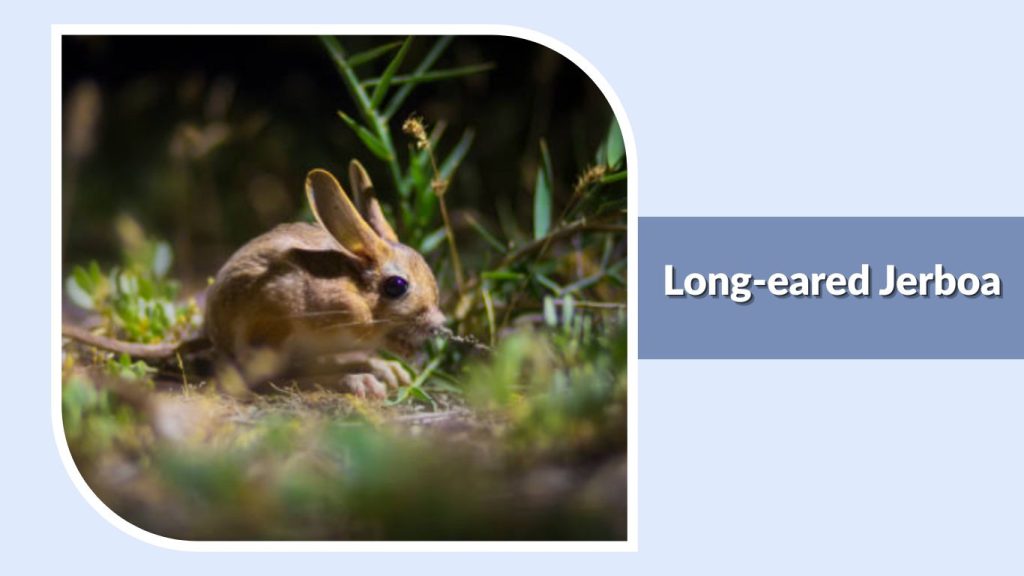
The Long-eared Jerboa is a small, desert-dwelling rodent native to the deserts of Central Asia, including parts of Mongolia and northern China. It is instantly recognizable due to its exceptionally large ears, which aid in detecting predators and dissipating heat in arid environments. This nocturnal species is an expert jumper, using its long hind legs to hop across sandy and rocky terrain. It plays a crucial role in its ecosystem by dispersing seeds and serving as prey for owls, foxes, and snakes.
Identification
- Fur: light sandy-brown, blending with desert terrain
- Extremely long hind legs for hopping and leaping distances up to 3 meters
- Exceptionally large, upright ears for thermoregulation and predator detection
- Long, thin tail with a small tuft for balance
- Small forelimbs for digging and manipulating food
Habitat and Distribution
Long-eared Jerboas inhabit arid deserts, semi-deserts, and rocky plains of Central Asia, favoring loose sandy soil for burrow construction. Burrows provide shelter from extreme daytime heat and protection from predators. The species is highly adapted to sparse vegetation, where it can forage safely under cover of night.
Behavior and Diet
Primarily nocturnal, it feeds on seeds, grasses, and insects. Its remarkable jumping ability allows it to escape predators and navigate uneven terrain. Generally solitary, the Long-eared Jerboa uses its burrow both as a refuge and a storage site for food. Caching behavior ensures survival during periods of food scarcity.
Lifespan
In the wild, Long-eared Jerboas typically live 2–3 years. Predation, extreme weather, and food availability affect survival rates. Captive individuals may live slightly longer due to reduced threats and consistent nutrition.
4. Baluchistan Pygmy Jerboa
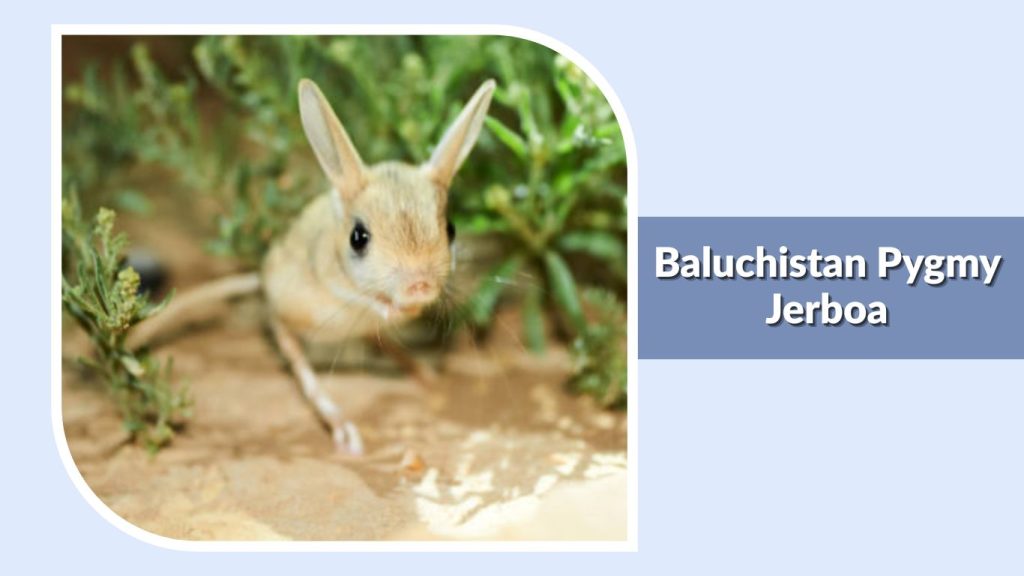
The Baluchistan Pygmy Jerboa is one of the smallest jerboa species, native to the arid deserts of Baluchistan in Pakistan and eastern Iran. It is highly adapted to extreme desert conditions, using its long hind legs to hop quickly across sandy terrain and avoid predators. Despite its tiny size, it plays an important role in the ecosystem by dispersing seeds and serving as prey for owls, foxes, and snakes. Its nocturnal habits help it survive the harsh daytime heat.
Identification
- Fur: pale sandy or light brown for desert camouflage
- Extremely small body size, one of the tiniest jerboas
- Long hind legs for hopping and jumping up to 1.5 meters
- Large ears for detecting predators and regulating body temperature
- Long, thin tail with a tuft for balance
Habitat and Distribution
Baluchistan Pygmy Jerboas inhabit sandy deserts, semi-arid plains, and sparsely vegetated dunes. They prefer loose sand for digging burrows, which provide protection from predators and extreme daytime temperatures. Multiple burrow entrances are maintained for quick escape.
Behavior and Diet
Nocturnal and mostly solitary, they feed on seeds, grasses, and occasionally small insects. Burrows are used for shelter, storing food, and evading predators. Their hopping locomotion allows them to traverse open sand efficiently, and food caching ensures survival during scarce periods.
Lifespan
In the wild, Baluchistan Pygmy Jerboas typically live 1–2 years. Predation, food availability, and extreme environmental conditions influence survival. In captivity, they may live slightly longer under controlled conditions.
5. Gobi Jerboa
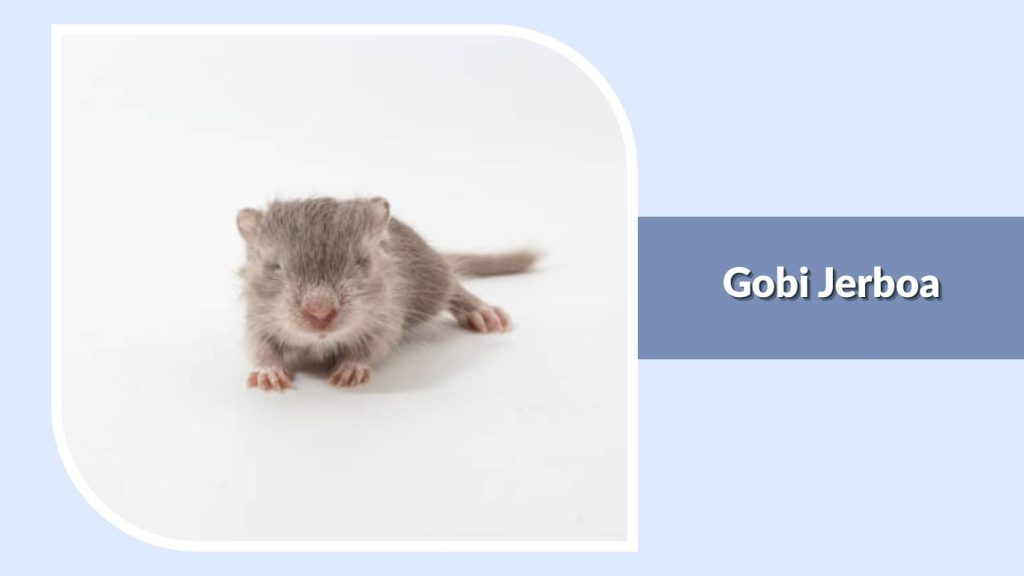
The Gobi Jerboa is a desert-adapted rodent native to the Gobi Desert of Mongolia and northern China. It is highly specialized for life in arid, sandy environments, using its long hind legs to hop efficiently across dunes and rocky terrain. This nocturnal species is an important part of the desert ecosystem, dispersing seeds and serving as prey for owls, foxes, and snakes. Its burrowing behavior helps it survive extreme daytime temperatures.
Identification
- Fur: pale sandy-brown to blend with desert sands
- Long, powerful hind legs for hopping and leaping long distances
- Large, rounded ears for predator detection and thermoregulation
- Long tail with a tuft at the end for balance
- Small forelimbs for digging burrows and handling food
Habitat and Distribution
Gobi Jerboas inhabit sandy and semi-arid deserts, dunes, and rocky plains in Mongolia and northern China. They prefer areas with loose sand and sparse vegetation, which allows them to dig burrows for shelter and avoid predators.
Behavior and Diet
This species is nocturnal and solitary. It feeds on seeds, grasses, and small insects. Burrows serve as shelter during the day and storage for food. Its hopping locomotion allows rapid movement across open terrain, and it can quickly change direction to evade predators.
Lifespan
In the wild, Gobi Jerboas typically live 2–3 years. Survival is influenced by predation, extreme temperatures, and food availability, while captive individuals may live slightly longer under controlled conditions.
6. Egyptian Jerboa
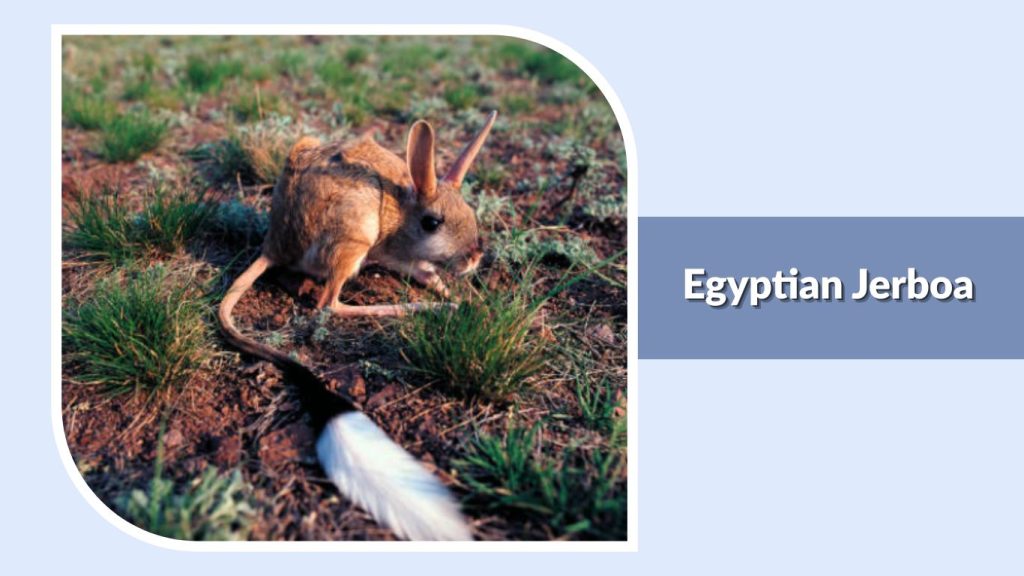
The Egyptian Jerboa is a small desert rodent found throughout the deserts of Egypt and parts of northern Africa. It is highly adapted to arid environments, using its long hind legs to hop across sandy and rocky terrain. Nocturnal by nature, it avoids daytime heat by staying in burrows. This species contributes to its ecosystem by dispersing seeds and serving as prey for owls, snakes, and small carnivores.
Identification
- Fur: sandy or light brown for camouflage
- Long hind legs for hopping and leaping distances up to 2–3 meters
- Large ears for predator detection and thermoregulation
- Long tail with a tuft for balance
- Small forelimbs for digging and manipulating food
Habitat and Distribution
Egyptian Jerboas inhabit sandy deserts, dunes, and rocky plains across Egypt, Libya, and Sudan. They prefer loose sand and sparse vegetation for burrow construction, which provides protection from predators and extreme temperatures. Multiple burrow entrances allow for quick escapes.
Behavior and Diet
Nocturnal and mostly solitary, Egyptian Jerboas feed on seeds, grasses, and small insects. Burrows are used for shelter, storing food, and evading predators. Their hopping movement allows rapid travel across open terrain, and they often cache food for periods of scarcity.
Lifespan
In the wild, Egyptian Jerboas typically live 2–3 years. Predation, food availability, and extreme desert conditions influence survival, while captive individuals may live slightly longer under controlled conditions.
7. Siberian Jerboa
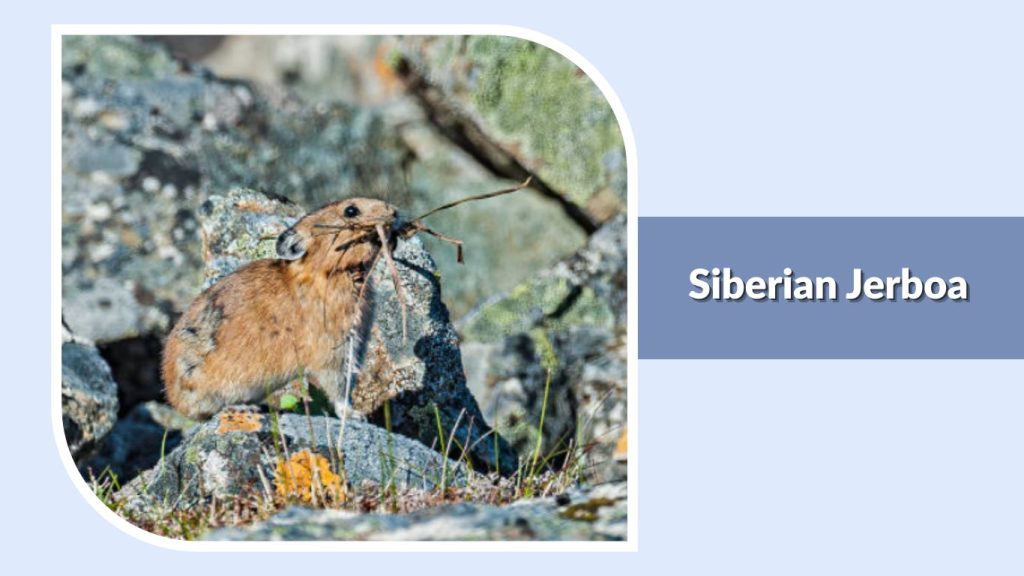
The Siberian Jerboa is a small rodent native to the arid and semi-arid regions of Siberia and Central Asia. Adapted to extreme temperature fluctuations, it uses its long hind legs to hop efficiently across sandy, rocky, and steppe terrain. Nocturnal and elusive, it plays an important ecological role by dispersing seeds and serving as prey for owls, foxes, and snakes. Its burrowing behavior helps it survive harsh winters and the intense heat of summer.
Identification
- Fur: light sandy-brown to gray, blending with steppe and desert terrain
- Long hind legs for hopping and leaping up to 2 meters
- Large, rounded ears for thermoregulation and predator detection
- Long tail with a tuft for balance
- Small forelimbs for digging burrows and manipulating food
Habitat and Distribution
Siberian Jerboas inhabit arid deserts, semi-deserts, and steppe regions of Siberia, Mongolia, and northern China. They prefer loose soil for digging burrows that provide protection from extreme temperatures and predators. Multiple burrow entrances are maintained for safety.
Behavior and Diet
This species is nocturnal and primarily solitary. It feeds on seeds, grasses, and small insects. Burrows serve as daytime shelters and food storage sites. Its hopping locomotion allows rapid movement across open terrain and quick evasion from predators.
Lifespan
In the wild, Siberian Jerboas typically live 2–3 years. Survival is influenced by predation, extreme weather, and food availability, while captive individuals may live slightly longer under controlled conditions.
8. Lesser Egyptian Pygmy Jerboa
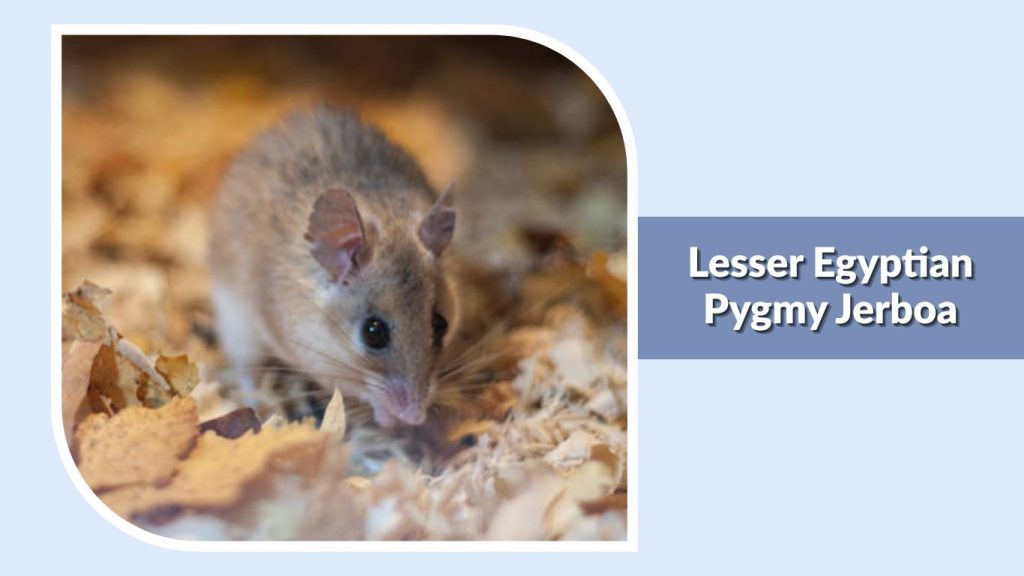
The Lesser Egyptian Pygmy Jerboa is a tiny desert rodent native to the sandy deserts of North Africa. It is one of the smallest jerboa species and is highly specialized for survival in arid conditions. Its long hind legs allow it to hop efficiently across sand dunes and open desert terrain. Despite its small size, it plays a vital role in the ecosystem by dispersing seeds and serving as prey for owls, snakes, and small carnivores.
Identification
- Fur: pale sandy or light brown for camouflage
- Extremely small body size, among the tiniest jerboas
- Long hind legs for hopping and leaping short distances
- Large, rounded ears for detecting predators and regulating body temperature
- Long, thin tail with a small tuft for balance
Habitat and Distribution
Lesser Egyptian Pygmy Jerboas inhabit deserts, semi-arid plains, and sand dunes across Egypt, Libya, and Sudan. They prefer loose sand for digging burrows, which provide shelter from predators and extreme daytime heat. Multiple burrow entrances allow quick escape if threatened.
Behavior and Diet
Nocturnal and mostly solitary, they feed on seeds, grasses, and occasionally insects. Burrows serve as refuge from heat and predators, and as storage for food caches during periods of scarcity. Their hopping ability allows quick movement across open desert terrain.
Lifespan
In the wild, Lesser Egyptian Pygmy Jerboas typically live 1–2 years. Predation and harsh environmental conditions affect survival, while captive individuals may live slightly longer.
9. Ashy Jerboa

The Ashy Jerboa is a desert-adapted rodent native to arid regions of Central Asia. It is recognized for its grayish fur, which provides excellent camouflage against sandy and rocky terrain. Highly nocturnal, it uses its long hind legs to hop quickly across open desert areas, avoiding predators. The Ashy Jerboa plays a crucial ecological role by dispersing seeds and serving as prey for owls, snakes, and small carnivores.
Identification
- Fur: ashy gray, blending with desert sands and rocks
- Long, powerful hind legs for hopping and leaping
- Large ears for predator detection and thermoregulation
- Long tail with a tuft for balance
- Small forelimbs used for digging and handling food
Habitat and Distribution
Ashy Jerboas inhabit deserts, semi-deserts, and rocky plains in Central Asia, including parts of Kazakhstan and Mongolia. They prefer loose sand and sparse vegetation for burrowing and foraging. Burrows provide shelter from extreme daytime temperatures and predators.
Behavior and Diet
Primarily nocturnal and solitary, they feed on seeds, grasses, and insects. Burrows are used for shelter, storing food, and evading predators. Their hopping locomotion allows rapid travel across open terrain, and they often change direction quickly to avoid capture.
Lifespan
In the wild, Ashy Jerboas typically live 2–3 years. Survival depends on predation, extreme weather, and food availability. Captive individuals may live slightly longer under controlled conditions.
10. Embertail Jerboa
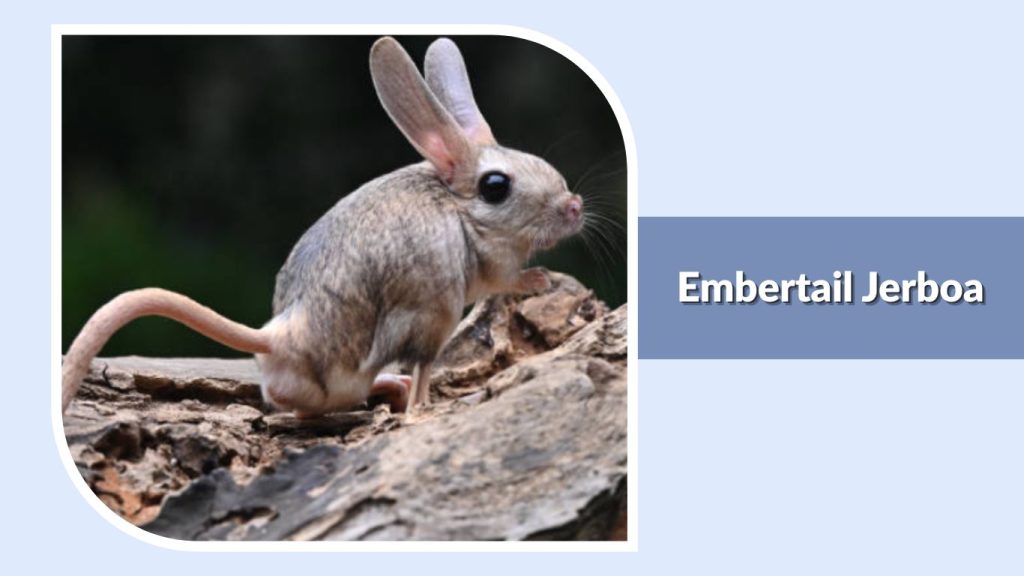
The Embertail Jerboa is a small, desert-dwelling rodent native to the arid regions of Central Asia. It is named for its distinctive short, tufted tail and is highly adapted to sandy and rocky deserts. This nocturnal species uses its long hind legs to hop efficiently across open terrain, escaping predators and extreme daytime heat. It plays an important ecological role by dispersing seeds and serving as prey for owls, snakes, and small carnivores.
Identification
- Fur: sandy to light brown for desert camouflage
- Short, tufted tail for balance
- Long, powerful hind legs for hopping and leaping
- Large ears for predator detection and heat regulation
- Small forelimbs for digging and manipulating food
Habitat and Distribution
Embertail Jerboas inhabit deserts, semi-arid plains, and rocky terrain in Central Asia, including Mongolia, Kazakhstan, and parts of northern China. They prefer loose sand or soft soil for digging burrows, which provide shelter and protection from predators.
Behavior and Diet
Nocturnal and mostly solitary, they feed on seeds, grasses, and small insects. Burrows serve as daytime refuges, storage for food caches, and protection from predators. Their hopping locomotion allows rapid movement across open terrain and quick evasion from threats.
Lifespan
In the wild, Embertail Jerboas typically live 2–3 years. Predation, extreme environmental conditions, and food availability influence survival, while captive individuals may live slightly longer under controlled conditions.
FAQs
What is the primary habitat of jerboas?
Jerboas primarily inhabit arid deserts, semi-deserts, and sandy plains. They prefer areas with loose sand or soft soil for digging burrows, which provide shelter from extreme heat and predators.
Are jerboas nocturnal or diurnal?
Most jerboa species are nocturnal. They are active at night to forage for seeds, grasses, and insects, avoiding the extreme daytime heat of desert environments.
What do jerboas eat?
Jerboas are omnivorous, feeding mainly on seeds, grains, grasses, and small insects. Many species store food in burrows for periods of scarcity to survive harsh desert conditions.
How long do jerboas live?
In the wild, jerboas typically live 1.5–4 years, depending on the species. Predation, food availability, and extreme weather influence survival. Captive individuals may live slightly longer under controlled conditions.
How do jerboas move across deserts?
Jerboas use their long hind legs to hop and leap across sand and rocky terrain. This hopping locomotion allows them to cover large distances quickly, evade predators, and navigate uneven desert surfaces efficiently.