
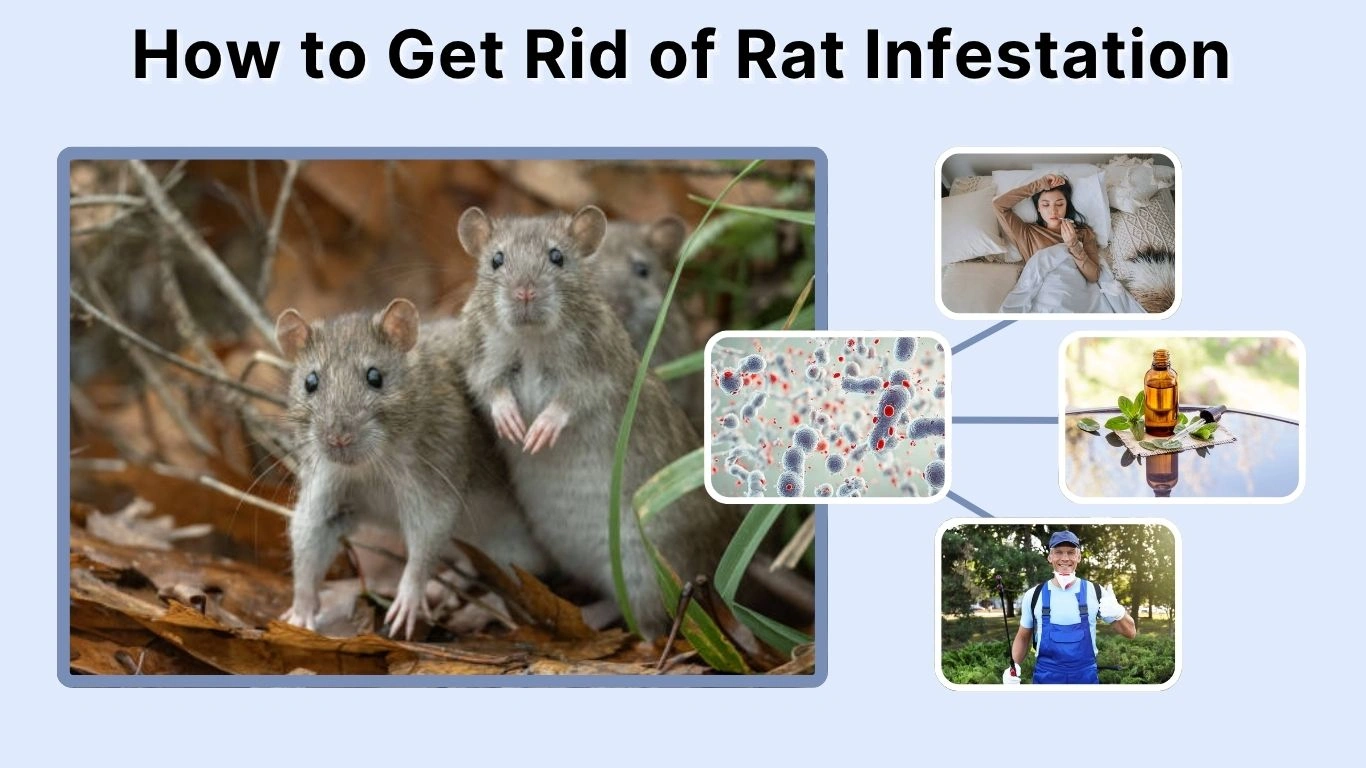
A rat infestation can quickly become a serious problem for homeowners, farms, and businesses. Rats contaminate food, damage property, chew electrical wires, and spread harmful diseases. Because rats reproduce rapidly, even a small problem can grow into a large infestation within weeks. Acting fast is important to protect your home and health. The most effective rat control strategy combines sanitation, trapping, sealing entry points, and long-term prevention. Understanding the signs of infestation and using the right removal methods can help eliminate rats permanently.
Signs You Have a Rat Infestation
Many homeowners notice warning signs before they actually see a rat. Identifying these signs early can help prevent the infestation from becoming more severe.
Rat Droppings
Rat droppings are one of the most common indicators of infestation. These small dark pellets are often found:
- Near food storage areas
- Inside cabinets
- Along walls
- In attics or basements
Fresh droppings are usually dark and moist, while older droppings become dry and gray.
Scratching Noises
Rats are usually active at night. You may hear scratching, squeaking, or movement inside:
- Walls
- Ceilings
- Attics
- Crawl spaces
These sounds often become louder after dark when rats begin searching for food.
Gnaw Marks and Damage
Rats constantly chew to keep their teeth from overgrowing. They may damage:
- Wood
- Plastic pipes
- Food packaging
- Furniture
- Electrical wires
Chewed wires are especially dangerous because they can create fire hazards.
Why Rat Infestations Are Dangerous
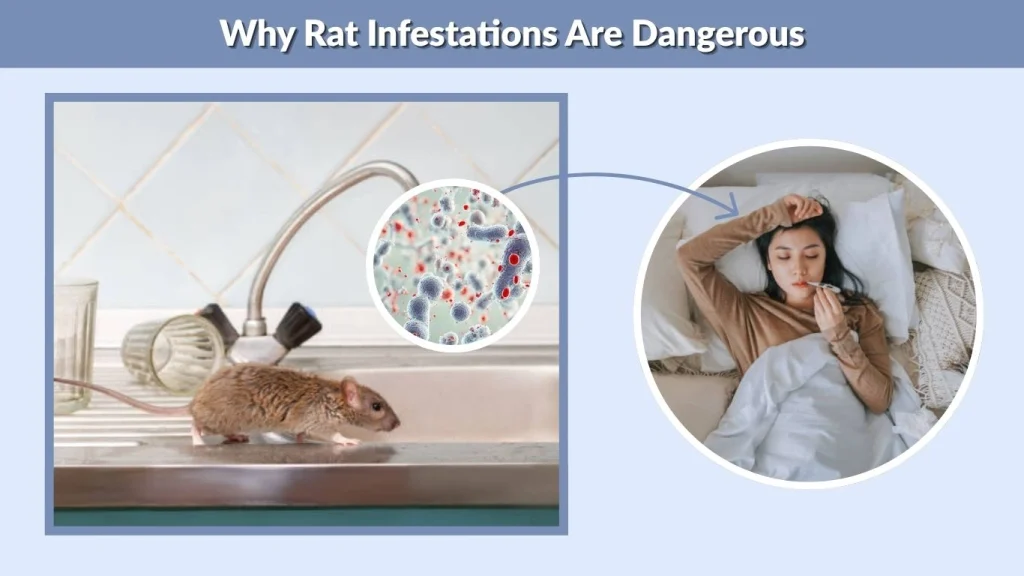
Rat infestations create serious health and safety concerns. Rats contaminate surfaces with urine, droppings, and bacteria while also damaging property throughout the home.
Health Risks From Rats
Rats can spread diseases directly and indirectly through contamination. Their droppings and urine may contain harmful bacteria and viruses that affect both humans and pets.
People exposed to heavy infestations may experience respiratory irritation, especially when dried droppings become airborne during cleaning.
Property Damage Caused by Rats
Rats can destroy insulation, chew drywall, and damage furniture. Electrical wiring is one of the biggest concerns because exposed wires increase the risk of short circuits and house fires.
In severe infestations, rats may also damage stored food, clothing, and structural materials inside walls or attics.
How to Get Rid of Rat Infestation Fast
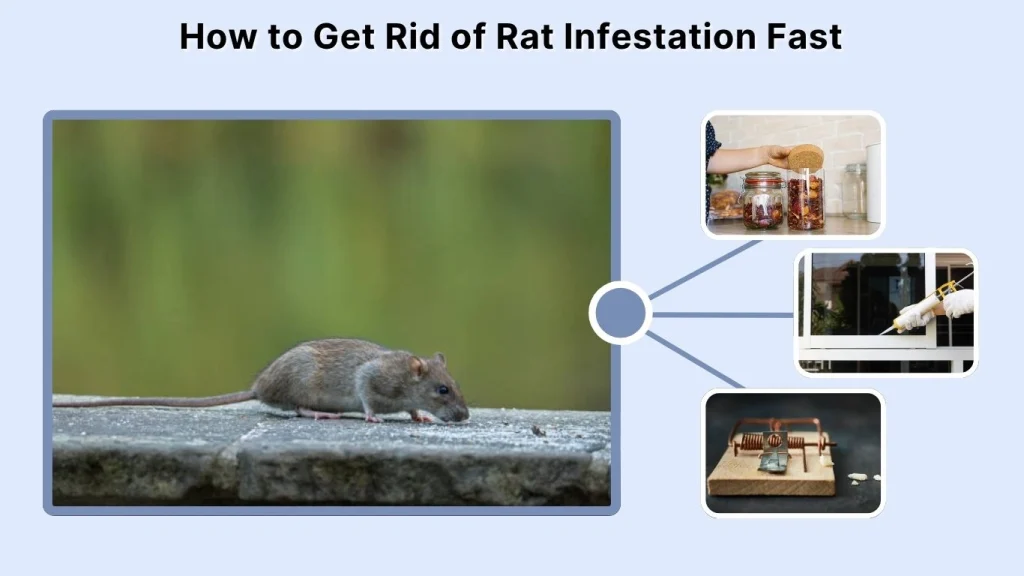
Removing rats successfully requires more than simply setting traps. The best approach combines several methods to eliminate existing rats and prevent new ones from entering.
Remove Food and Water Sources
Rats stay where food and water are easily available. Limiting these resources makes your property less attractive to rodents.
Important Prevention Steps
- Store food in sealed containers
- Clean crumbs and spills immediately
- Secure garbage bins tightly
- Avoid leaving pet food exposed overnight
Reducing access to food can force rats to search elsewhere for survival.
Seal Entry Points
Rats can squeeze through surprisingly small openings. Even gaps around pipes or vents may allow rodents to enter the home.
Common Rat Entry Areas
- Roof gaps
- Cracks in foundations
- Open vents
- Spaces around utility pipes
- Broken doors or windows
Steel wool, metal mesh, and sealants are commonly used to block openings because rats can chew through softer materials.
Use Rat Traps Effectively
Traps remain one of the fastest and most reliable ways to reduce rat populations indoors.
Best Places to Set Traps
- Along walls
- Behind appliances
- Near droppings
- Inside attics
- Close to nesting areas
Rats usually travel along edges rather than open spaces, so trap placement is extremely important.
Best Rat Trap Methods for Large Infestations
Different types of traps work better depending on infestation size and location. Using multiple trap styles often improves results.
Snap Traps
Snap traps are widely used because they kill rats quickly and are inexpensive. They work best when placed directly along rat travel routes.
Electronic Traps
Electronic traps deliver a high-voltage shock that kills rats instantly. Many homeowners prefer them because they are cleaner and easier to dispose of safely.
Bait Stations
Bait stations contain poison bait inside tamper-resistant containers. These systems are often used outdoors or during severe infestations.
However, bait stations should be used carefully around:
- Children
- Pets
- Wildlife
Improper use of rodenticides may create additional safety hazards.
How to Get Rid of Rat Infestation Naturally
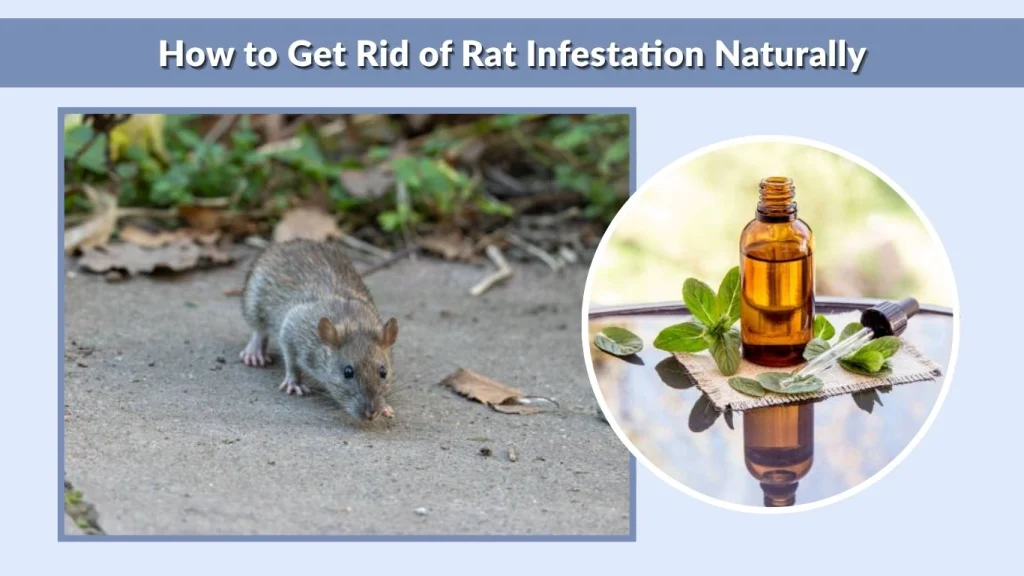
Some homeowners prefer natural methods before using poisons or professional extermination. Natural solutions may help with smaller infestations or prevention efforts.
Peppermint Oil
Peppermint oil is commonly used as a natural rat repellent because rats dislike strong odors. Cotton balls soaked in peppermint oil are often placed near entry points or nesting areas.
Although peppermint oil may discourage rats temporarily, it usually does not eliminate large infestations on its own.
Remove Clutter and Nesting Materials
Rats prefer dark, hidden spaces where they can safely build nests. Removing clutter makes your property less attractive for nesting.
Areas that should stay clean include:
- Storage rooms
- Garages
- Attics
- Wood piles
- Barn corners
Keeping these spaces organized can reduce hiding opportunities for rodents.
How to Get Rid of Rat Infestation in Attics
Attics are one of the most common places for rats to nest because they provide warmth, shelter, and protection from predators.
Why Rats Enter Attics
Roof rats especially prefer elevated nesting areas. Small roof openings or overhanging tree branches often allow easy attic access.
Once inside, rats may damage insulation, chew wires, and leave droppings throughout the space.
Best Ways to Remove Rats From Attics
Successful attic rat removal usually involves trapping, sealing access points, and cleaning contaminated materials. In severe infestations, damaged insulation may need replacement to remove odors and bacteria completely.
How to Get Rid of Rat Infestation Under a House
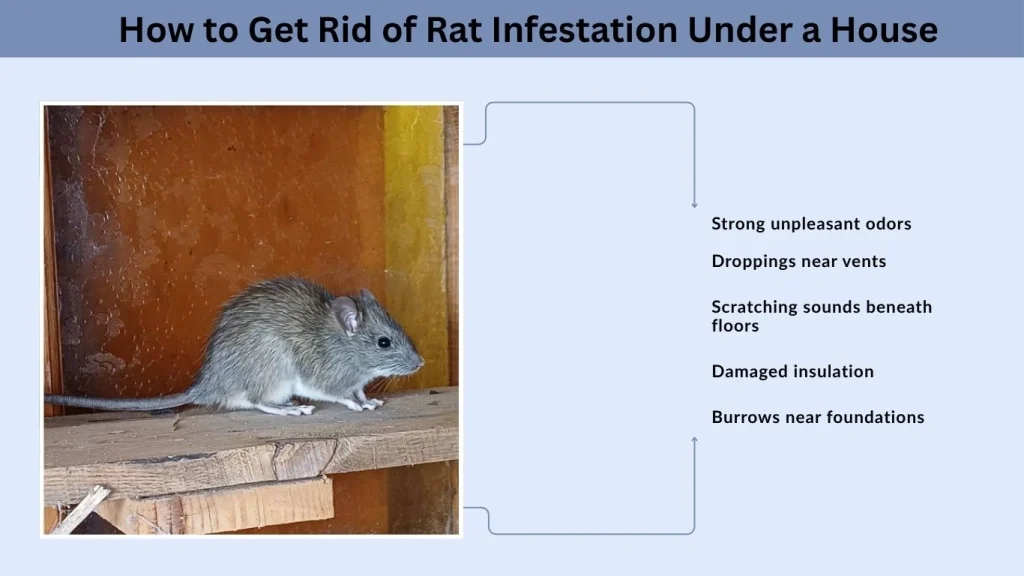
Rats often hide beneath homes because crawl spaces provide darkness, warmth, and protection from weather. Moisture and poor ventilation can also attract rodents to these areas.
Common Signs of Rats Under a House
Rats living beneath a home may leave several warning signs behind.
Typical Warning Signs
- Strong unpleasant odors
- Droppings near vents
- Scratching sounds beneath floors
- Damaged insulation
- Burrows near foundations
Ignoring these signs can allow the infestation to spread into walls and living spaces.
Best Removal Methods
Removing rats from crawl spaces requires both elimination and prevention. Traps are usually placed near nesting areas and along travel routes.
After removal, sealing foundation gaps and improving ventilation can help stop rats from returning.
How to Get Rid of Rat Infestation in Gardens and Farms
Outdoor infestations often begin in gardens, barns, compost areas, or animal feeding locations. Rats stay where food, water, and shelter are easy to access.
What Attracts Rats Outdoors
Gardens and farms naturally provide many food sources for rodents.
Common Outdoor Attractions
- Fallen fruit
- Bird seed
- Compost piles
- Animal feed
- Standing water
Removing these attractants can significantly reduce rat activity around the property.
Long-Term Outdoor Rat Prevention
Outdoor rat control requires regular maintenance and sanitation. Farms and gardens with poor storage practices are especially vulnerable to recurring infestations.
Prevention Tips for Outdoor Areas
- Store feed in sealed metal containers
- Remove debris and junk piles
- Trim overgrown vegetation
- Keep compost bins covered
- Clean outdoor eating areas regularly
Consistent prevention is often more effective than repeated extermination efforts.
How to Get Rid of Roof Rat Infestation
Roof rats are excellent climbers that commonly invade attics, roofs, and upper levels of buildings. Unlike Norway rats, roof rats prefer elevated nesting areas.
Signs of Roof Rats
Roof rats are usually active at night and may remain hidden during the day.
Common Roof Rat Signs
- Noises in ceilings or attics
- Droppings near roof spaces
- Chewed fruit in gardens
- Damage around roof vents
- Grease marks along beams
Roof rats can spread quickly through neighborhoods by traveling along fences, power lines, and tree branches.
Best Roof Rat Control Methods
Removing roof rats often requires targeting both the home and surrounding outdoor areas. Trimming tree branches away from the roof can reduce access points significantly.
Sealing roof openings and installing traps in attic spaces are also important for successful removal.
How Long Does It Take to Get Rid of a Rat Infestation?
The time required to eliminate rats depends on infestation size, property conditions, and treatment methods. Small infestations may be resolved within days, while severe infestations can take weeks or months.
Factors That Affect Removal Time
Several factors influence how quickly rat control methods work.
Infestation Size
Larger infestations naturally require more trapping and monitoring.
Access to Food
Rats remain active longer when food sources are still available.
Entry Point Control
If rats continue entering the building, removal efforts become less effective.
Property Condition
Cluttered homes and storage areas provide more hiding spaces for rodents.
Professional exterminators often combine multiple treatments to speed up the removal process.
How Much Does Rat Infestation Removal Cost?

Rat removal costs vary depending on infestation severity, property size, and treatment type. DIY solutions are usually cheaper for small infestations, while severe problems may require professional services.
DIY Rat Control Costs
Basic rat control products are relatively affordable for homeowners.
Common DIY Expenses
- Snap traps
- Electronic traps
- Sealants
- Cleaning supplies
- Protective equipment
However, DIY methods may not fully solve large infestations if entry points remain open.
Professional Extermination Costs
Professional pest control companies typically charge more but provide inspections, treatment plans, and follow-up services.
Costs may increase for:
- Severe infestations
- Large homes
- Attic contamination
- Multiple treatment visits
Professional help is often necessary when infestations continue returning despite repeated efforts.
When Should You Call a Professional Exterminator?
Some rat infestations become too large or difficult to handle without expert assistance. Professional exterminators have specialized equipment and experience locating hidden nests and entry points.
Situations That Need Professional Help
Severe Infestations
Large infestations involving multiple nesting areas usually require advanced treatment methods.
Rats Inside Walls
Rats trapped inside walls or ceilings can be difficult to remove safely without professional tools.
Health Concerns
Heavy contamination from urine and droppings may require professional cleaning and sanitation.
Repeated Infestations
If rats continue returning after treatment, hidden access points may still exist somewhere on the property.
How to Prevent Rats From Coming Back
Preventing future infestations is just as important as removing existing rats. Without long-term prevention, rodents often return to the same location.
Keep Your Home Clean
Clean homes are less attractive to rats because food and nesting materials are harder to find.
Seal New Openings
Regularly inspecting the home for cracks, holes, or roof damage can stop rats from re-entering.
Store Food Properly
Pet food, bird seed, and pantry items should always stay in sealed containers.
Maintain Outdoor Areas
Removing trash, clutter, and standing water reduces outdoor hiding places and food sources for rodents.
FAQs
Do rats bite humans while sleeping?
Rat bites are rare but possible, especially during severe infestations where food is limited. Children and infants are at higher risk because they sleep more deeply and may have food residue nearby.
What attracts rats into a house?
Rats are attracted by easy access to food, water, warmth, and shelter. Open garbage, pet food, clutter, leaks, and small entry holes can all invite rats indoors.
Can rats climb walls and ceilings?
Yes. Roof rats are excellent climbers and can scale walls, pipes, trees, and wires to enter attics and upper floors of buildings.
Is it safe to clean rat droppings yourself?
Yes, but protective measures are important. Wear gloves and a mask, avoid sweeping dry droppings, and disinfect the area properly to reduce exposure to harmful bacteria and viruses.
What time are rats most active?
Rats are mainly nocturnal, meaning they are most active during the night. Hearing scratching or movement after dark is often one of the earliest signs of infestation.