
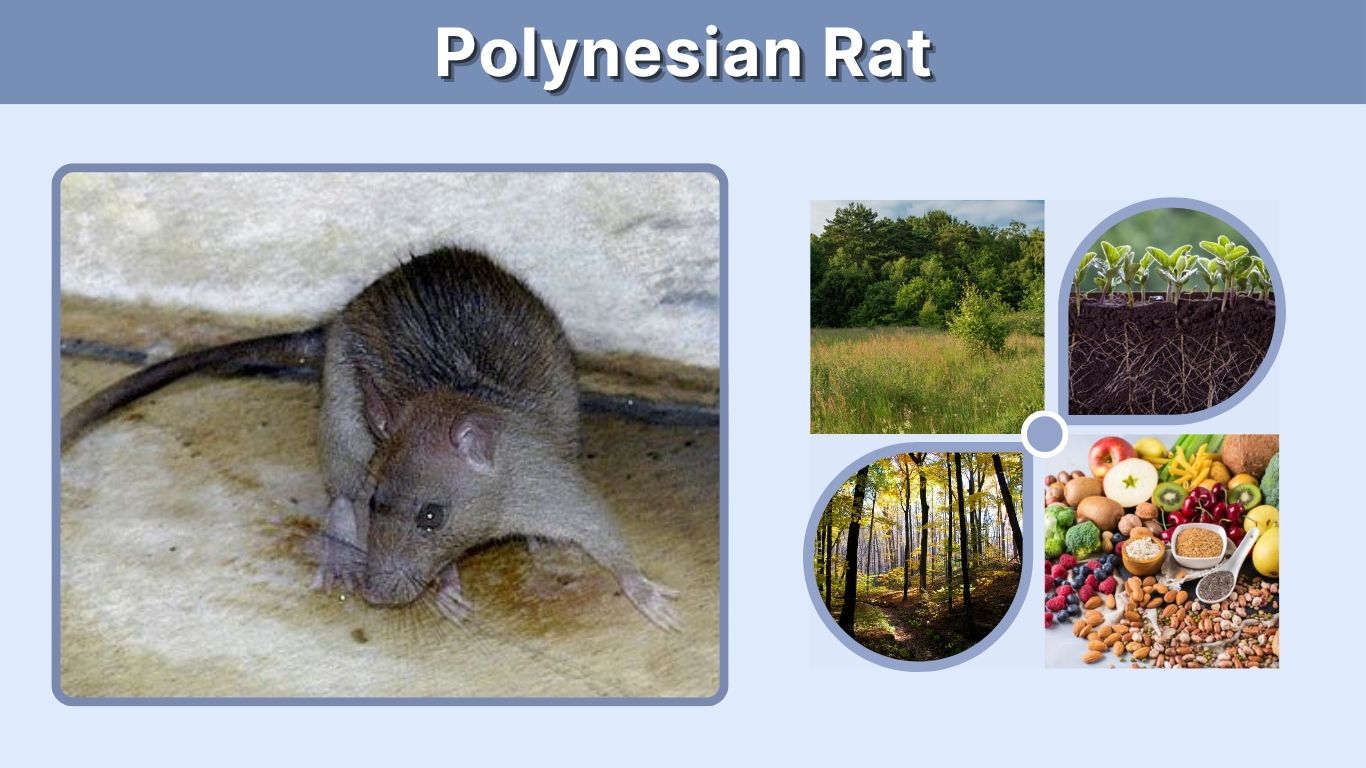
The Polynesian rat is one of the most widespread small mammals across the Pacific islands. Known scientifically as Rattus exulans, this species traveled with early human settlers and became established in many remote regions. Despite its small size, it has played a significant role in both ecosystems and human history. From Hawaii to Easter Island, the Polynesian rat has influenced environments, cultures, and biodiversity. In this guide, you’ll learn about its size, habitat, diet, and unique characteristics.
What Is a Polynesian Rat?
The Polynesian rat, also called the kiore, is a small rodent species that spread across the Pacific islands with early human migration. It is one of the most common rat species found in island ecosystems.
Scientific Name and Classification
The scientific name of the Polynesian rat is Rattus exulans. It belongs to the Muridae family, which includes many species of rats and mice.
Compared to other rats, it is smaller and more adapted to island environments. Its ability to survive in a variety of conditions has made it highly successful in spreading across regions.
It is considered one of the earliest animals transported by humans during ocean voyages, making it closely linked to human settlement patterns.
What Is “Kiore”?
“Kiore” is the traditional Polynesian name for the Polynesian rat. This name is still used in many Pacific cultures.
In some regions, the kiore was an important part of daily life. It was sometimes used as a food source and held cultural significance.
The relationship between humans and the Polynesian rat is unique, as the species spread largely due to human travel.
Polynesian Rat Size and Physical Features
The Polynesian rat is smaller than many other rat species, which makes it easier to distinguish once you know what to look for.
Size and Weight
The body length of a Polynesian rat is usually around 4 to 6 inches. Its tail is often about the same length as its body, giving it a balanced appearance.
It weighs much less than larger rats, typically making it lightweight and agile. This smaller size allows it to move quickly and adapt to different environments.
Appearance and Hair
Polynesian rats usually have brown or gray fur with a smooth texture. Their coat is not as rough as some larger rat species.
Their tail is thin and relatively long, often covered with fine scales rather than thick fur. This is one of the key features used to identify them.
They also have small ears and a pointed snout, which give them a typical rodent appearance.
Where Do Polynesian Rats Live?
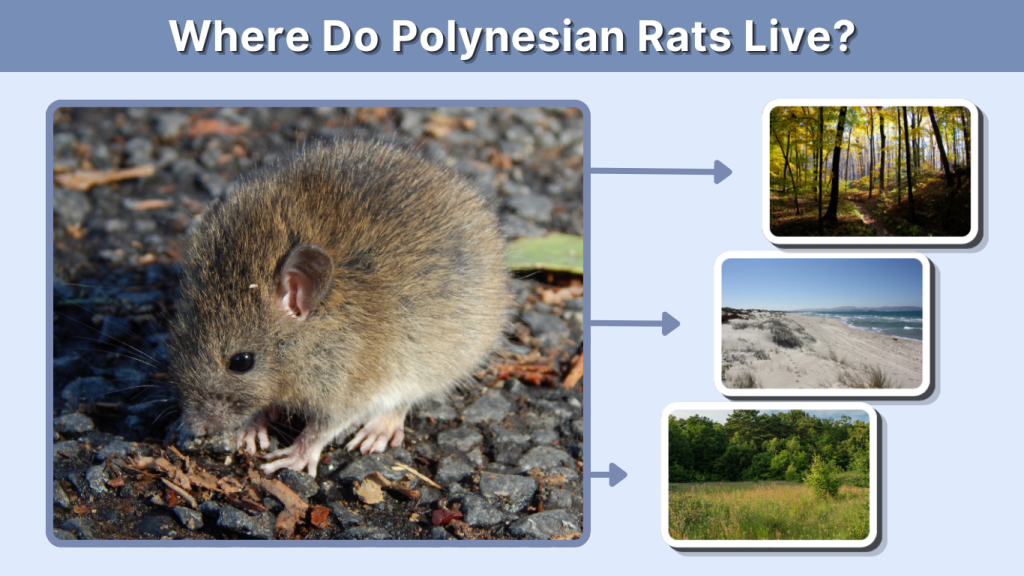
Polynesian rats are widely distributed across Pacific islands and have adapted to many types of environments.
Polynesian Rat in Hawaii
The Polynesian rat was introduced to Hawaii by early Polynesian settlers. It became one of the first mammals to inhabit the islands alongside humans.
In Hawaii, the species has had a noticeable impact on native plants and animals. It feeds on seeds and small organisms, which can affect local ecosystems.
Polynesian Rat on Easter Island
On Easter Island, the Polynesian rat is believed to have played a role in environmental changes. Some theories suggest that it contributed to deforestation by feeding on seeds.
Its presence on the island is closely linked to human settlement and agricultural practices.
Habitat Types
Polynesian rats can live in a variety of habitats, including:
- Forests
- Coastal areas
- Grasslands
- Human settlements
Their adaptability allows them to survive in both natural and human-modified environments. This is one reason why they have spread so successfully.
Polynesian Rat Diet
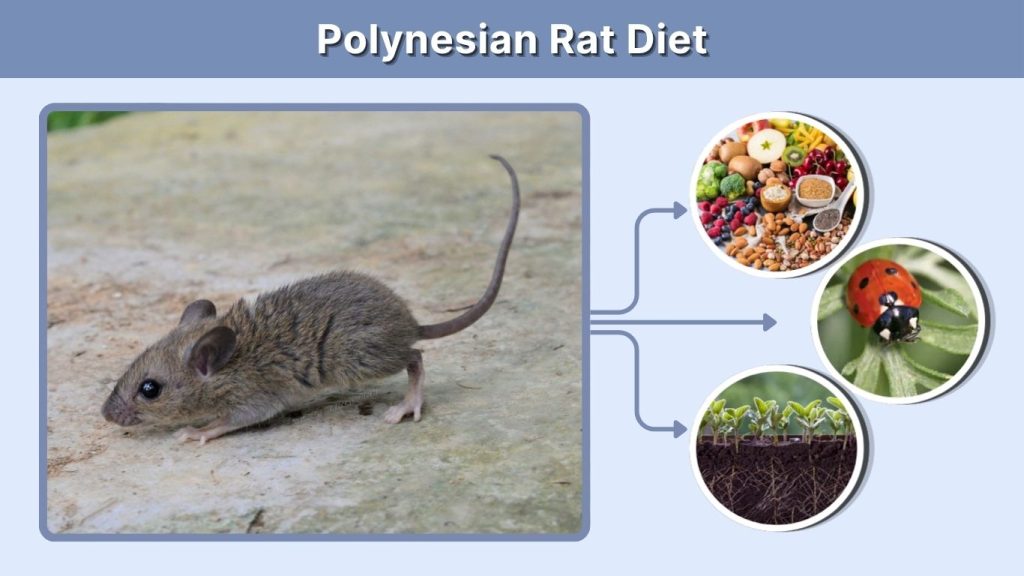
The Polynesian rat has a highly flexible diet, which helps it survive in different ecosystems.
- Seeds and fruits
- Insects
- Small animals
- Plants and roots
- Human food sources
This varied diet allows the rat to adapt quickly to new environments. It can switch food sources depending on availability, which increases its chances of survival.
Because it feeds on seeds and plants, it can influence vegetation growth and ecosystem balance. In some areas, this has led to environmental concerns.
Polynesian Rat Predators
Despite their adaptability, Polynesian rats face threats from a variety of predators.
- Birds of prey
- Snakes
- Larger mammals
- Introduced animals like cats and dogs
- Humans
Predators play an important role in controlling rat populations. In areas where predators are limited, the population of Polynesian rats can increase rapidly.
Introduced predators, such as cats, have had a major impact on rat populations in some regions. However, these predators can also affect native species.
Is the Polynesian Rat Extinct or Endangered?
There is often confusion about whether the Polynesian rat is extinct or endangered.
Is It Extinct?
The Polynesian rat is not extinct. It is still found in many Pacific islands and continues to exist in various environments.
However, its population may have declined in some areas due to environmental changes and competition with other species.
Conservation Status
The species is not considered globally endangered. However, local populations may be affected by habitat loss and ecological changes.
In some regions, conservation efforts focus on protecting native species from the impact of introduced rats, including the Polynesian rat.
Polynesian Rat Behavior and Lifestyle
Polynesian rats display several behaviors that help them survive and thrive in different environments. Their adaptability is one of their strongest traits.
- Active mainly at night (nocturnal)
- Fast reproduction rate
- Skilled climbers
- Build nests in hidden areas
- Highly adaptable to surroundings
These rats are mostly active during nighttime, which helps them avoid predators. During the day, they stay hidden in nests or sheltered areas.
They are also known for reproducing quickly, which allows their populations to grow rapidly when conditions are favorable.
Their climbing ability helps them access food sources such as fruits and seeds in trees. This also allows them to escape predators more easily.
Polynesian Rat and Human History
The Polynesian rat has a close connection with human migration and culture, especially in the Pacific region.
Role in Polynesian Expansion
The Polynesian rat traveled with early settlers as they moved across the Pacific Ocean. It was unintentionally introduced to many islands through canoes and trade routes.
Because of this, the rat became one of the first mammals to inhabit many remote islands.
Its presence is often used by researchers to trace ancient human migration patterns across the Pacific.
Polynesian Dog and Rat Connection
In some cultures, the Polynesian rat was used as a food source, along with animals like the Polynesian dog.
This shows how closely humans and animals were connected in early island societies. The rat was not just a pest but also part of survival and daily life.
Polynesian Rat vs Other Rats
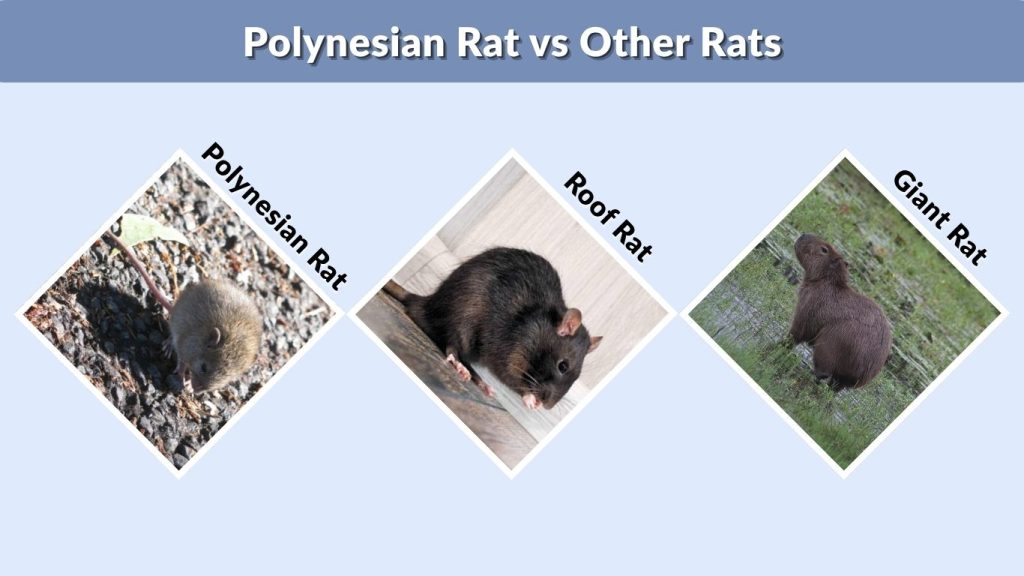
Polynesian rats are often confused with other rat species, but there are clear differences in size, behavior, and habitat.
Comparison Table
| Feature | Polynesian Rat | Roof Rat | Giant Rat |
| Size | Small | Medium | Large |
| Habitat | Islands | Urban areas | Forest regions |
| Behavior | Adaptable | Climber | Rare and less adaptable |
This comparison helps highlight how the Polynesian rat differs from more commonly known species like the roof rat.
Tree Rat vs Polynesian Rat
Tree rats are typically larger and more specialized for living in trees. Polynesian rats, while capable climbers, are more general in their habitat use.
They can live both on the ground and in trees, which makes them more adaptable than many other species.
Interesting Facts About Polynesian Rats
Polynesian rats have several unique traits that make them important both scientifically and historically.
- Spread across islands through human migration
- Known as “kiore” in Polynesian cultures
- One of the earliest introduced species in the Pacific
- Highly adaptable to different environments
- Can impact ecosystems by affecting plant growth
One interesting fact is their role in environmental change. In some regions, their feeding habits have affected plant regeneration by consuming seeds. They also play a role in scientific studies related to ecology and human history.
FAQs
What is the scientific name of the Polynesian rat?
The scientific name of the Polynesian rat is Rattus exulans. It is part of the Muridae family, which includes many species of rats and mice.
How big is a Polynesian rat?
A Polynesian rat typically measures about 4 to 6 inches in body length, with a tail of similar size. It is smaller and lighter than most common rat species.
Where are Polynesian rats found?
They are mainly found across Pacific islands, including Hawaii and Easter Island. They were introduced by early human settlers and adapted to many environments.
Is the Polynesian rat endangered?
The Polynesian rat is not globally endangered, but some local populations may be affected by environmental changes and competition with other species.
What do Polynesian rats eat?
They have a varied diet that includes seeds, fruits, insects, plants, and human food sources, allowing them to survive in different habitats.