
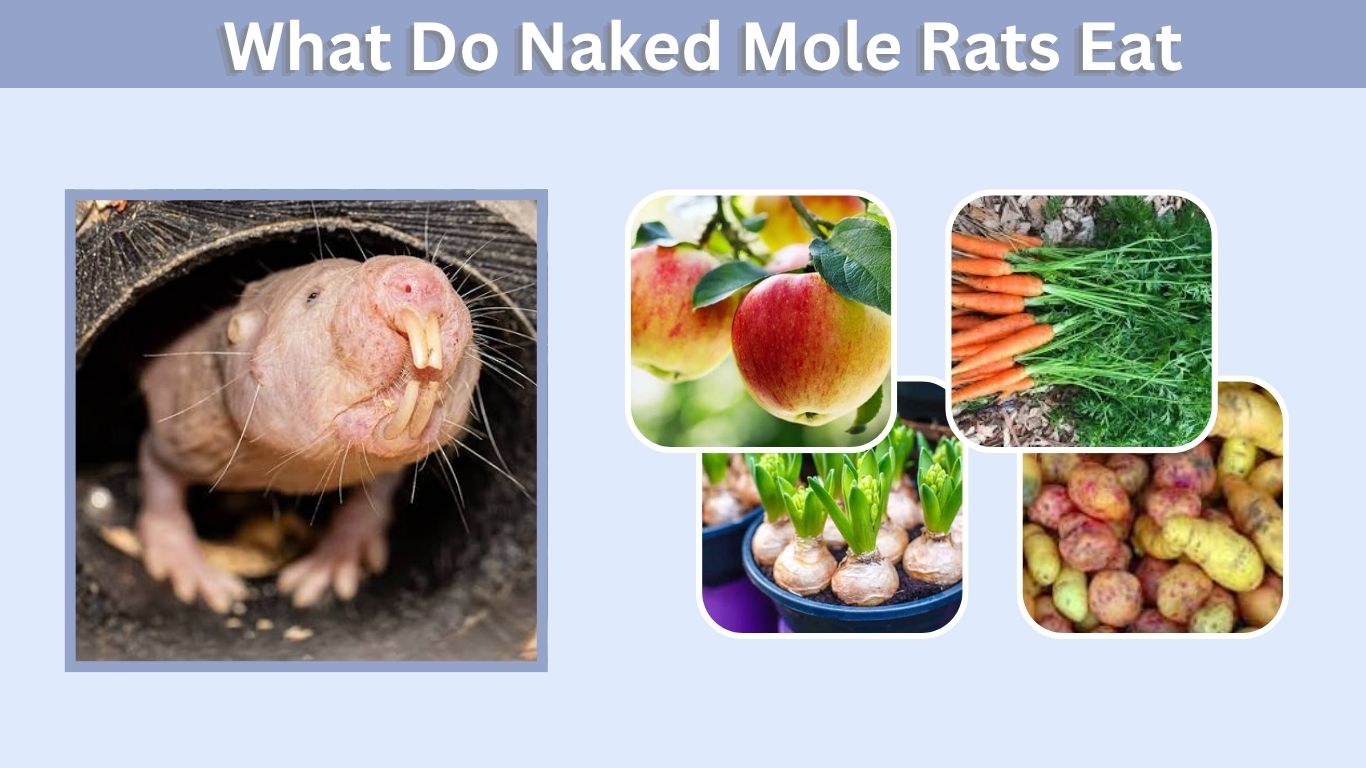
Naked mole rats eat mostly underground plant parts, especially roots and tubers. In the wild, they dig through tunnel systems until they find large food stores beneath the soil. In zoos, their diet often includes root vegetables, leafy greens, corn, apples, and special biscuits. Although they look strange, naked mole rats are herbivores with a very practical diet built around survival underground.
What Do Naked Mole Rats Eat?
Naked mole rats are herbivores. Their natural diet is based on the underground parts of plants, especially large roots and tubers. These foods are important because naked mole rats spend almost their entire lives below ground and rarely come to the surface.
In the wild, naked mole rats dig long tunnels through dry East African habitats in search of food. Zoo Atlanta notes that they search for nutritious roots and tubers produced by plants in arid areas. They also get all the water they need from food instead of drinking from pools of water.
The Smithsonian National Zoo also explains that naked mole rats eat underground plant parts and often consume only part of a root or tuber, leaving enough behind for the plant to survive and provide food again later.
10 Foods Naked Mole Rats Eat
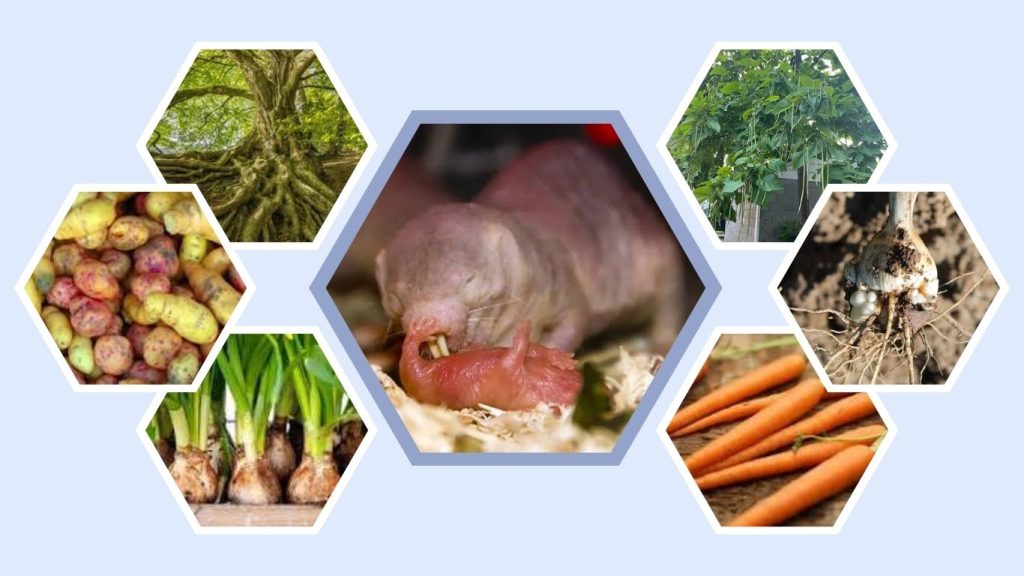
This list includes both natural wild foods and common zoo foods. In the wild, they do not usually eat grocery-store vegetables like carrots or apples. Those are mostly used in managed care because they are safe, moist, and nutritionally useful.
| No. | Food | Wild or Captive Diet? | Why It Matters |
| 1 | Roots | Wild | Main natural food source |
| 2 | Tubers | Wild | High-energy underground food |
| 3 | Bulbs | Wild | Underground plant storage food |
| 4 | Corms | Wild | Starchy plant structure |
| 5 | Sweet potatoes | Captive | Moist, energy-rich root vegetable |
| 6 | Carrots | Captive | Moist vegetable used in zoo diets |
| 7 | Corn | Captive | Provides carbohydrates |
| 8 | Green beans | Captive | Adds plant fiber and nutrients |
| 9 | Kale or leafy greens | Captive | Adds vitamins and roughage |
| 10 | Apples | Captive | Moisture-rich fruit in managed diets |
The Smithsonian National Zoo lists apples, carrots, corn, green beans, kale, sweet potatoes, and primate biscuits as part of the diet given to naked mole rats in human care. The Oregon Zoo also reports feeding foods such as corn, jicama, carrots, yams, broccoli, turnips, parsnips, and romaine lettuce.
1. Roots
Roots are one of the most important foods for naked mole rats. Since they live underground, roots are easy for them to access without exposing themselves to predators.
Roots provide fiber, moisture, and plant energy. Naked mole rats use their large front teeth to dig and reach these hidden food sources.
2. Tubers
Tubers are a major part of the naked mole rat diet. These underground plant storage organs can be large and full of starch, making them valuable for a whole colony.
The Smithsonian National Zoo explains that when a colony finds a large tuber, the animals may eat the inside while leaving the outer layer intact. This may allow the plant to keep growing and act like a long-term food supply.
3. Bulbs
Bulbs are another type of underground plant food. They store nutrients for plants, which makes them useful for animals that forage below the soil.
Naked mole rats are adapted to eating tough plant material. Their digestive system relies on gut microbes that help break down fibrous foods.
4. Corms
Corms are similar to bulbs and tubers because they store energy underground. Scientific sources describe naked mole rats as strictly herbivorous animals that feed on roots, bulbs, corms, and tubers.
These foods match their lifestyle perfectly because they can be found while digging tunnels.
5. Sweet Potatoes
Sweet potatoes are commonly used in captive naked mole rat diets. They are soft enough to chew, rich in moisture, and provide carbohydrates.
Sweet potatoes are not necessarily a normal wild food, but they work well in zoos because they are similar to the starchy underground foods naked mole rats naturally eat.
6. Carrots
Carrots are another common zoo food for naked mole rats. They provide moisture and plant fiber.
San Diego Zoo notes that naked mole rats eat roots and tubers that are hard to digest, and their gut microbes help process these tough foods. Carrots fit well into a captive diet because they are root vegetables with water and fiber.
7. Corn
Corn is used in some zoo diets for naked mole rats. It provides carbohydrates and variety.
The Smithsonian National Zoo includes corn in its managed diet for naked mole rats. In captivity, variety helps keep animals interested in food while allowing keepers to balance nutrition.
8. Green Beans
Green beans are another captive food used for naked mole rats. They add plant-based nutrients and fiber.
They are not the same as wild tubers, but they are useful in a managed diet because naked mole rats naturally eat plant material.
9. Kale or Leafy Greens
Kale and other leafy greens may be used in zoo diets. The Smithsonian National Zoo lists kale among the foods given to naked mole rats in care.
Leafy greens add vitamins and roughage. However, in the wild, naked mole rats are much more focused on underground plant parts than above-ground leaves.
10. Apples
Apples are sometimes used in captivity because they provide moisture. Naked mole rats do not drink standing water in the usual way, so moist foods are especially important.
The Smithsonian notes that naked mole rats get all the water they need from food and do not drink. That is why juicy foods like apples can be useful in a zoo diet.
How Naked Mole Rats Find Food Underground
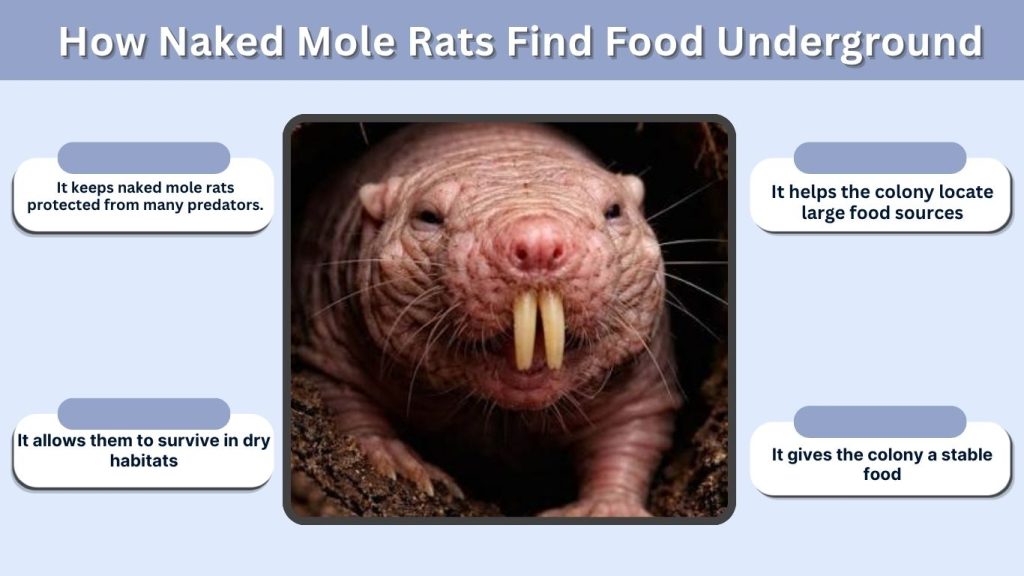
Naked mole rats do not hunt above ground like many other rodents. Instead, their colonies dig long tunnel systems through dry soil. As they dig, they eventually run into roots, tubers, and other underground plant parts.
Their teeth are perfectly suited for this job. Their large incisors sit outside their lips, which helps them dig without filling their mouths with dirt. Once food is found, colony members can feed from it and may also carry pieces back through the tunnel system.
This feeding style has two big advantages:
- It keeps naked mole rats protected from many predators.
- It helps the colony locate large food sources that may last a long time.
- It allows them to survive in dry habitats where surface food may be limited.
- It gives the colony a stable food supply without needing to travel above ground.
Do Naked Mole Rats Drink Water?
Naked mole rats usually do not drink free-standing water. Instead, they get hydration from the plants they eat.
This is one of their most interesting survival adaptations. They live in dry underground environments, so relying on puddles or open water would not be practical. The Smithsonian National Zoo states that naked mole rats get all the water they need through their food.
This is also why moist foods are important in captivity. Foods like sweet potatoes, carrots, apples, yams, and leafy greens help provide both nutrition and hydration.
Why Do Naked Mole Rats Eat Their Own Poop?
This may sound strange, but naked mole rats practice coprophagy, which means they eat feces. This behavior helps them get more nutrition from difficult-to-digest plant foods.
Roots and tubers can be high in fiber and tough plant material. San Diego Zoo explains that naked mole rats eat their own feces because their roots and tubers are hard to digest, and reingesting feces helps them absorb more nutrients.
Zoo Atlanta also notes that this behavior helps keep important gut microbes in balance. For naked mole rats, this is not dirty or unusual. It is part of how their digestive system works.
Wild Diet vs Captive Diet

The wild diet of a naked mole rat is much simpler than the food list seen in zoos. In nature, they mostly eat underground plant parts. In captivity, keepers give them a wider variety of vegetables, fruits, and specially prepared foods.
Wild Diet
In the wild, naked mole rats mainly eat:
- Roots
- Tubers
- Bulbs
- Corms
- Other underground plant parts
These foods are available below the soil, where naked mole rats spend most of their lives.
Captive Diet
In zoos, naked mole rats may eat:
- Sweet potatoes
- Carrots
- Corn
- Green beans
- Kale
- Apples
- Yams
- Turnips
- Parsnips
- Romaine lettuce
- Special biscuits
Captive diets are designed by animal care teams. They are not random vegetable scraps. Keepers choose foods that provide moisture, fiber, energy, and balanced nutrition.
Foods Naked Mole Rats Should Not Eat
Naked mole rats are not normal pet rodents, and their diet should not be copied without expert care. They are specialized animals with unusual digestive needs.
They should not be fed junk food, salty food, processed snacks, meat, dairy, chocolate, candy, or random human leftovers. Their natural diet is plant-based, and their digestive system is built around fibrous underground vegetation.
In managed care, their diet should be planned by zoo nutritionists or animal care professionals. Even healthy vegetables need to be balanced correctly because too much of one food can cause nutritional problems.
FAQs
What do naked mole rats eat in the wild?
In the wild, naked mole rats eat underground plant parts such as roots, tubers, bulbs, and corms. These foods provide energy, fiber, and moisture.
Do naked mole rats eat meat?
No, naked mole rats are herbivores. Their diet is based on plant material, especially underground roots and tubers.
Do naked mole rats eat carrots?
Yes, naked mole rats may eat carrots in captivity. Zoos often feed them root vegetables such as carrots, sweet potatoes, yams, and turnips.
Do naked mole rats drink water?
Naked mole rats usually do not drink standing water. They get the water they need from moist plant foods such as roots, tubers, fruits, and vegetables.
Why do naked mole rats eat poop?
Naked mole rats eat feces to help digest tough plant foods and absorb more nutrients. This also helps maintain important gut microbes.