
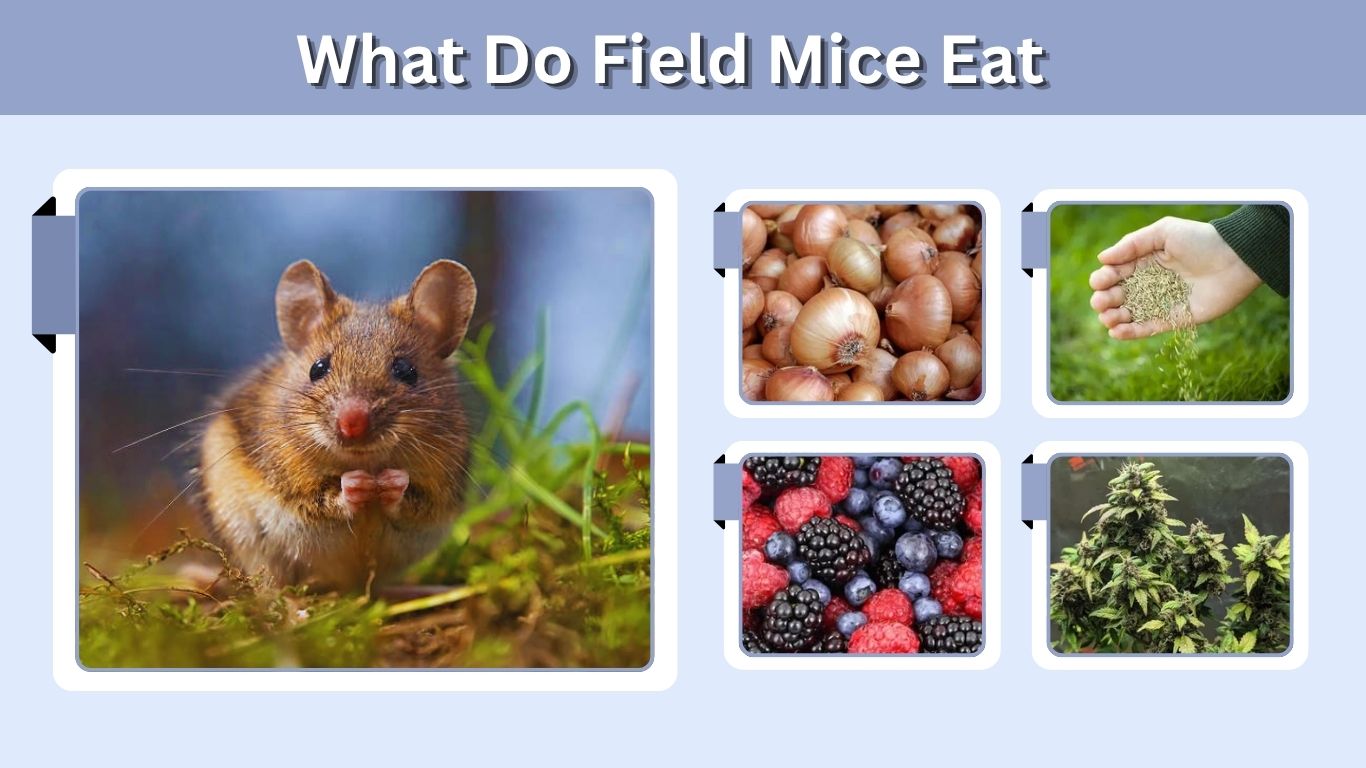
Field mice are adaptable foragers that eat whatever is naturally available in fields, gardens, woodland edges, barns, and nearby buildings. Their menu commonly includes seeds, grains, fruit, insects, nuts, and green vegetation. However, “field mouse” is an informal name used for several small rodents, so the exact diet varies by species. Deer mice and wood mice are omnivores, while meadow voles eat more grasses, roots, and other plant material.
Field Mouse Diet Overview
Field mice usually feed at night and may carry extra food back to a hidden nest or storage location. Seeds are especially important, but these rodents change their diet according to the season and local food supply. Deer mice, for example, eat seeds, fruit, insects, leaves, and fungi.
| Food category | Examples |
| Seeds | Grass, weed, sunflower, and wildflower seeds |
| Grains | Corn, wheat, oats, and barley |
| Fruit | Berries, apples, grapes, and fallen fruit |
| Nuts | Acorns and other tree nuts |
| Invertebrates | Beetles, caterpillars, spiders, and larvae |
| Green plants | Grass, leaves, shoots, and stems |
| Underground plants | Roots, bulbs, and tubers |
| Fungi | Mushrooms and other fungi |
| Animal foods | Eggs, carrion, and tiny animals |
| Human foods | Pet food, crumbs, cereals, and birdseed |
10 Foods Field Mice Eat
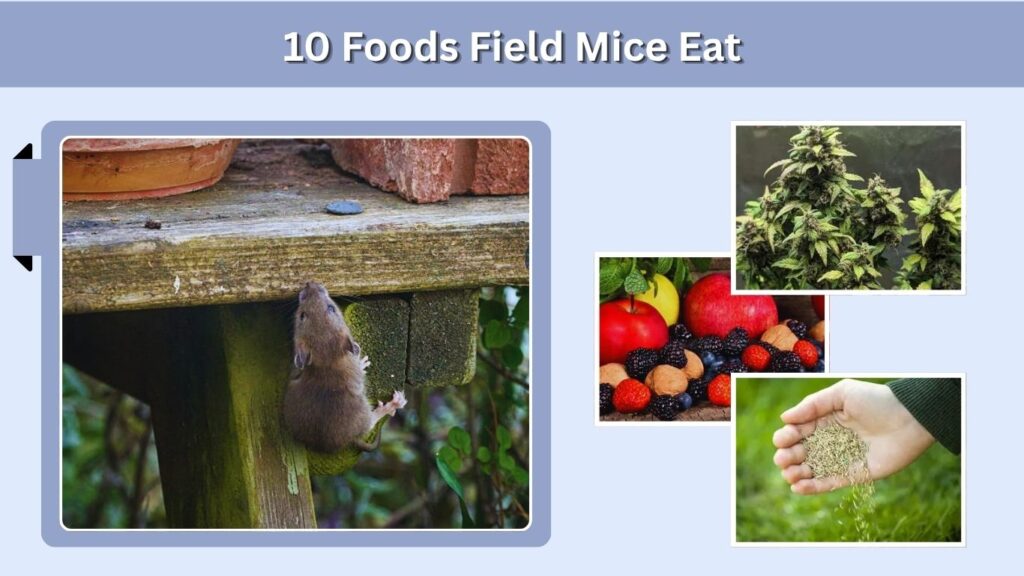
Field mice are opportunistic feeders that adjust their diet according to season, habitat, and food availability. Seeds and grains make up a large part of their diet, but they also eat fruit, nuts, insects, fungi, and fresh vegetation. When living near farms, gardens, barns, or homes, they may consume crops, birdseed, pet food, and kitchen scraps. The following ten foods are among the most common items eaten by field mice.
1. Grass and Weed Seeds
Seeds are among the most important foods for many field-dwelling mice. They collect seeds from grasses, weeds, flowers, shrubs, and other plants growing around fields and woodland edges.
Their small front paws allow them to hold and open seeds while eating. Some mice also carry seeds to sheltered locations and create food caches for periods when fresh food is scarce. Deer mice commonly store seeds, grasses, and other plant foods.
2. Agricultural Grains
Field mice readily eat corn, wheat, oats, barley, millet, and other grains. They may consume recently planted seed, developing grain heads, spilled grain, or crops stored in barns and sheds.
Farms provide an abundant food supply, particularly after planting and harvesting. Grain that falls from machinery or remains around storage areas may attract mice and support larger local populations.
3. Berries and Other Fruit
Berries provide field mice with sugar, moisture, vitamins, and energy. Common choices include blackberries, raspberries, blueberries, strawberries, and wild fruits.
Mice may also eat fallen apples, pears, grapes, cherries, and other soft fruit. They usually prefer ripe or damaged pieces that are easy to reach from the ground. Fruit becomes especially important during summer and early fall when it is naturally abundant.
4. Nuts and Acorns
Field mice eat acorns, hazelnuts, beechnuts, and other available tree nuts. These foods contain fat and energy, making them valuable before winter.
A mouse may eat a nut where it finds it or carry it into a burrow, wall cavity, woodpile, or hidden nest. Small piles of opened shells can sometimes reveal a regular feeding location. Deer mice are known to forage for both nuts and seeds.
5. Insects and Spiders
Many true mice are omnivores rather than strict plant eaters. They capture beetles, caterpillars, crickets, grasshoppers, insect larvae, and spiders.
Insects provide protein needed for growth, reproduction, and survival. They may become particularly important during warmer months when arthropods are plentiful. Deer mice commonly leave their shelters at night to forage for insects and spiders.
6. Grass, Leaves and Young Shoots
Fresh green vegetation is another common food, especially for voles and other rodents sometimes called field mice. They nibble grass blades, clover, leafy plants, seedlings, and tender shoots.
Meadow voles are primarily herbivorous and feed heavily on grasses and other ground vegetation. Regular feeding can create narrow runways through grass and clipped vegetation around burrow entrances.
7. Roots, Bulbs and Tubers
Some field rodents dig for roots, bulbs, and tubers or feed on plant material close to the soil surface. Gardens containing flower bulbs, potatoes, carrots, and other underground crops may provide easy meals.
Voles are more likely than deer mice to damage roots and plant stems. Their feeding can injure garden plants, seedlings, orchard ground cover, and young vegetation.
8. Mushrooms and Fungi
Field mice occasionally eat mushrooms and other fungi growing in damp grasslands or woodlands. Fungi can supplement their diet when seeds, insects, and fruit are less available.
Deer mice have been documented eating fungi in addition to seeds, leaves, fruit, and arthropods. They may consume small mushrooms directly or nibble parts growing near logs, leaf litter, and tree roots.
9. Eggs and Other Animal Foods
Opportunistic mice may eat bird eggs, tiny nestlings, carrion, or other animal material when they can obtain it. This behavior is less common than feeding on seeds but demonstrates how adaptable their diet can be.
Island deer mice, for example, have been recorded eating insects, seeds, small birds, and bird eggs. The availability of these foods depends heavily on habitat and season.
10. Human and Pet Food
When field mice enter barns, garages, sheds, or homes, they may eat cereal, bread, rice, flour, nuts, sweets, birdseed, livestock feed, and dry pet food.
They are usually attracted by accessible food rather than a desire to live near people. Open packages, spilled seed, crumbs, and poorly sealed storage containers can support indoor activity. Rodents commonly exploit birdseed, pet food, and snacks left within reach.
What Do Field Mice Eat During Winter?
Winter diets depend on what remains available. Mice may rely on stored seeds, grain, nuts, dried fruit, plant stems, roots, and food found in barns or buildings.
Species that cache food collect seeds during warmer months and hide them in burrows or other protected sites. Field mice may also move closer to homes during cold weather because buildings offer shelter and dependable food.
How Much Does a Field Mouse Eat?
A field mouse eats small quantities at many different times rather than consuming one large meal. Its high activity level requires regular access to food.
The amount varies with body size, species, temperature, age, reproductive condition, and food quality. A mouse may collect more food than it immediately needs and store the remainder near its nest.
Do Field Mice Eat Garden Plants?

Field mice and voles may eat newly planted seeds, seedlings, berries, vegetables, bulbs, roots, and fallen fruit. They may also chew bark near the base of young trees, particularly when other winter foods are limited.
Garden damage does not always come from true field mice. Voles are more strongly associated with clipped grass, shallow runways, root damage, and gnawed tree bark.
FAQs
Do field mice eat cheese?
Field mice can nibble cheese, but it is not a major part of their natural diet. Seeds, grains, fruit, nuts, insects, and vegetation are more typical. A mouse entering a home may sample cheese when it is accessible, along with many other human foods.
Do field mice eat meat?
Some field mice eat animal material, including insects, spiders, eggs, carrion, and occasionally tiny vertebrates. They are opportunistic omnivores, although plant foods usually make up a substantial part of their diet. Voles are more strongly herbivorous than deer mice.
Do field mice eat other mice?
Cannibalism or predation on another mouse is possible under unusual conditions, but it is not a normal primary food source. Most field mice obtain their nutrition from seeds, plants, fruit, insects, fungi, nuts, and accessible stored foods.
What attracts field mice to a house?
Accessible birdseed, pet food, grain, crumbs, rubbish, and poorly sealed food packages can attract mice. Warmth, nesting material, and small openings also encourage entry. Store dry foods in durable sealed containers and clean spills promptly.
Do field mice drink water?
Field mice drink water when it is available, but they also obtain moisture from fruit, insects, leaves, and other fresh foods. Indoor mice may drink from leaking pipes, pet bowls, condensation, sinks, or other small water sources.