
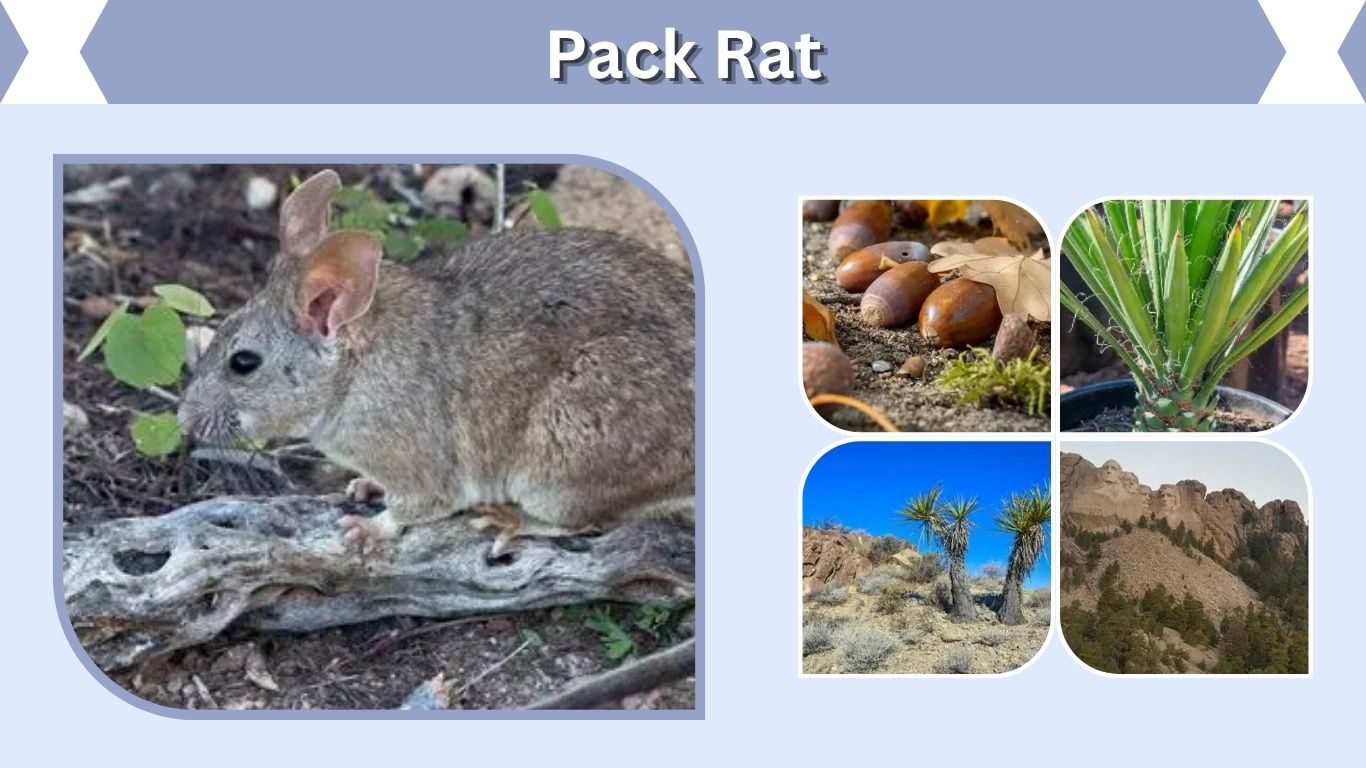
A pack rat is a wild rodent also known as a woodrat or trade rat. Pack rats belong to the genus Neotoma and are best known for collecting sticks, bones, shiny objects, and other materials for their nests. They are not the same as common city rats. Pack rats usually have large ears, dark eyes, long whiskers, and hairy tails, while city rats often have more naked, scaly-looking tails.
What Is a Pack Rat?
A pack rat is a native North American rodent that lives in rocky areas, deserts, forests, grasslands, and sometimes near homes. The name “pack rat” comes from its habit of carrying, collecting, and storing objects in or near its nest. Montana Fish, Wildlife & Parks notes that woodrats are commonly called pack rats or trade rats because they collect different objects and materials for nest building.
Common Names
- Pack rat
- Woodrat
- Trade rat
- Bush rat
- Cave rat
Some people also use “pack rat” to describe a person who keeps too many things. But in wildlife terms, it refers to woodrats in the genus Neotoma.
Pack Rat Quick Facts
| Feature | Details |
| Animal group | Rodent |
| Genus | Neotoma |
| Common names | Pack rat, woodrat, trade rat |
| Main range | North and Central America |
| Activity | Mostly nocturnal |
| Diet | Seeds, fruits, leaves, twigs, cactus, nuts |
| Nest type | Stick nest, den, or midden |
| Common issue | Chewing wires, nesting in attics, cars, sheds |
What Does a Pack Rat Look Like?
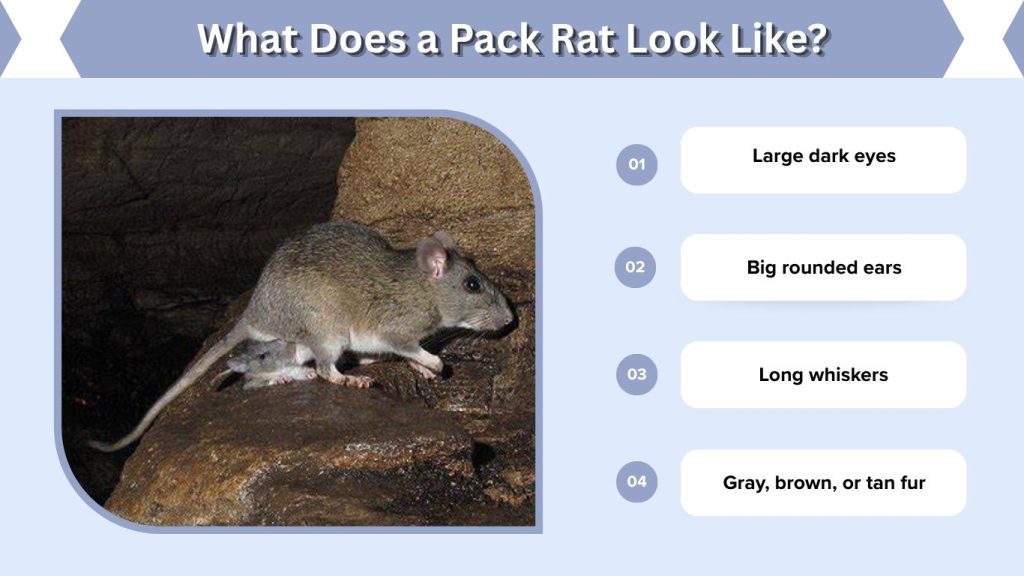
Pack rats look similar to rats, but they have a softer, more wild-rodent appearance. They often have large rounded ears, big black eyes, long whiskers, grayish-brown fur, a lighter belly, and a hairy tail. The San Diego Natural History Museum describes packrats as having large ears, long tails, large black eyes, and tails that are not naked and scaly like city rats.
Identification Features
- Large dark eyes
- Big rounded ears
- Long whiskers
- Gray, brown, or tan fur
- Light-colored throat, chest, or belly
- Hairy tail, not a naked scaly tail
- Strong climbing ability
- Nest made of sticks, plant parts, and collected objects
Where Do Pack Rats Live?
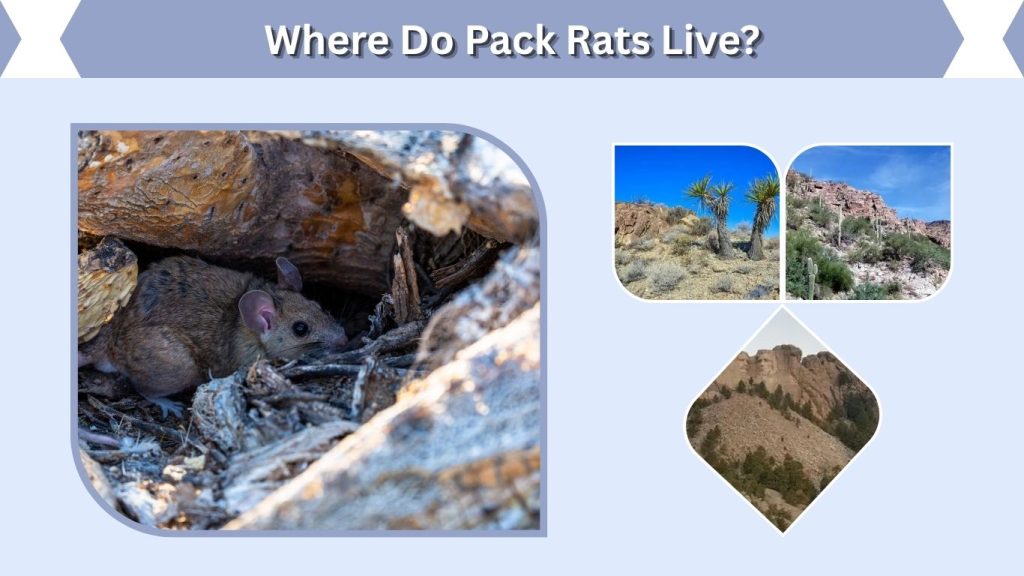
Pack rats live in many habitats, depending on the species. Some prefer deserts, rocky slopes, caves, and cliffs, while others live in forests, brushy areas, grasslands, or woodlands. Bushy-tailed woodrats, for example, use rocky habitats and are good climbers with sharp claws.
Common Habitat Areas
- Rocky cliffs and slopes
- Desert scrub
- Cactus and yucca areas
- Forest edges
- Brush piles
- Woodpiles
- Abandoned buildings
- Attics, garages, sheds, and parked vehicles
Pack rats may move close to homes when they find shelter, food, and nesting material. They are especially attracted to quiet, cluttered areas where they can build hidden nests.
What Do Pack Rats Eat?

Pack rats are mostly herbivores, but their diet can change based on location and season. They eat seeds, fruits, nuts, leaves, twigs, cactus pads, flowers, and other plant material. Some woodrats also store food in their nests. The dusky-footed woodrat feeds on many plant species and uses plants for both nutrients and moisture.
Common Foods
- Seeds
- Nuts
- Berries
- Fruits
- Leaves
- Twigs
- Cactus pads
- Yucca
- Acorns
- Garden vegetables
- Flowers
Around homes, pack rats may damage gardens by cutting flowers, taking fruit, or carrying vegetables to hidden places.
Pack Rat Nest: What Is a Midden?
A pack rat nest is often called a den or midden. It may be made from sticks, cactus pieces, leaves, bones, stones, trash, and shiny objects. Some nests are built under rocks, in cactus bases, inside woodpiles, or in walls and attics. Pack rats are famous for collecting bright or unusual objects such as metal pieces, bottle caps, and small household items.
Signs of a Pack Rat Nest
- Large pile of sticks or debris
- Droppings near the nest
- Stored seeds, nuts, or plant pieces
- Shredded insulation or fabric
- Chewed wires or plastic
- Scratching sounds at night
- Strong urine or rodent odor
A midden can become large over time because pack rats keep adding material to it.
Pack Rat Behavior
Pack rats are mostly nocturnal, meaning they are most active at night. Mexican woodrats are described as solitary, territorial, and active year-round, usually at night. They collect sticks, feathers, bones, and other objects, which helps explain the name “packrat.”
Why Do Pack Rats Collect Things?
Pack rats collect items for nest building, shelter, food storage, and protection. They may also pick up shiny objects simply because they are curious. This habit is why they are sometimes called “trade rats.” In some cases, they may drop one item and carry away another.
Pack Rat Damage Around Homes
Pack rats can become a nuisance when they nest in buildings, sheds, garages, or vehicles. They may chew wiring, insulation, plastic, stored materials, and garden plants. The University of Arizona Cooperative Extension notes that woodrats are known for chewing wiring in cars and appliances.
| Problem | What It Looks Like |
| Chewed wires | Damage in cars, appliances, or attics |
| Nesting debris | Sticks, leaves, trash, and objects piled together |
| Garden damage | Cut flowers, missing fruit, damaged vegetables |
| Odor | Urine smell near nests |
| Noise | Scratching or moving sounds at night |
How to Get Rid of Pack Rats
The best way to manage pack rats is to remove entry points, reduce shelter, and make the area less attractive. Exclusion is often the most effective long-term method because it keeps pack rats from entering buildings. Wildlife damage guidance from ICWDM also states that exclusion is the most effective method when nuisance problems happen around buildings.
Pack Rat Prevention Tips
- Seal holes, cracks, and gaps around buildings
- Cover attic vents and openings with strong wire mesh
- Remove brush piles, unused lumber, and clutter
- Keep firewood away from walls
- Store pet food and birdseed in sealed containers
- Clean up fallen fruit and garden waste
- Check parked vehicles if pack rats are common nearby
- Use traps carefully where legal and safe
Before using poisons or large-scale control, check local wildlife laws. Some woodrats may be protected in certain places, and rules can vary by state or region.
Pack Rat vs Common Rat
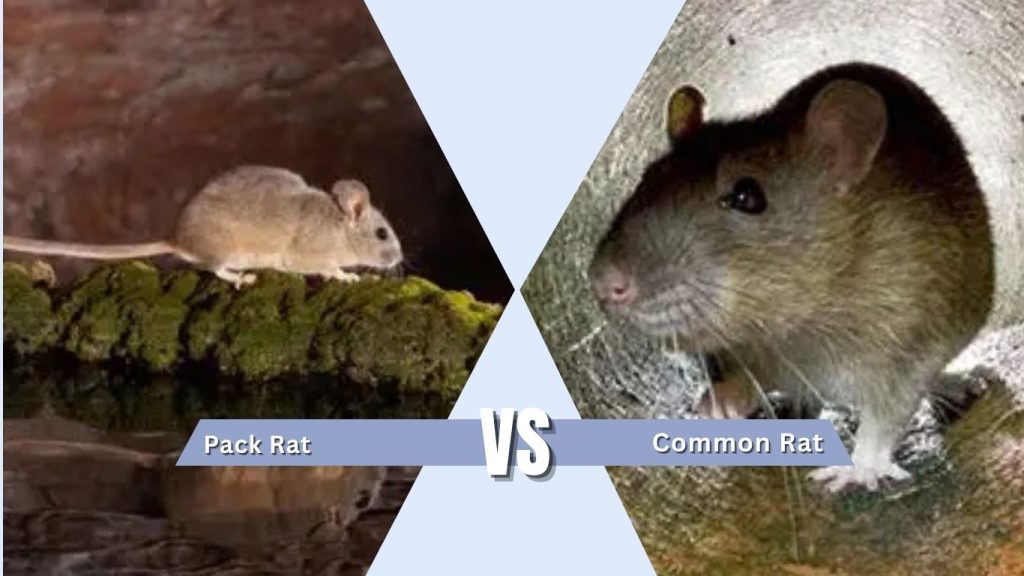
Pack rats and common rats may look similar, but they are different animals.
| Feature | Pack Rat | Common Rat |
| Other name | Woodrat, trade rat | Norway rat, roof rat |
| Tail | Usually hairy | Often scaly and less hairy |
| Nest habit | Builds stick/debris middens | Nests in burrows, walls, sewers |
| Behavior | Collects objects | Mostly searches for food and shelter |
| Habitat | Wild areas, rocky places, brush, homes | Cities, farms, sewers, buildings |
| Main issue | Nest debris and wire chewing | Food contamination and structural damage |
FAQs
Are pack rats dangerous?
Pack rats are not aggressive toward people, but they are wild rodents and should not be handled. Like other rodents, they may carry fleas, ticks, or other health risks. Avoid touching live, dead, or sick pack rats and clean nesting areas carefully.
Why are they called pack rats?
They are called pack rats because they collect and “pack” objects into their nests. They may carry sticks, bones, cactus pieces, trash, bottle caps, metal pieces, and other small items. This collecting habit also gives them the nickname “trade rats.”
Do pack rats enter houses?
Yes, pack rats may enter houses, sheds, garages, attics, or vehicles when they find shelter and nesting material. They are good climbers, so openings near roofs, vents, eaves, and attic areas should be sealed properly.
What smell keeps pack rats away?
Strong smells alone are not a reliable solution. The better method is exclusion, cleanup, and habitat reduction. Seal entry points, remove clutter, store food securely, and reduce brush or debris near buildings.
What is the best way to prevent pack rats?
The best prevention method is to seal entry holes, remove hiding places, and keep food sources unavailable. Use wire mesh, metal flashing, and rodent-proof storage. Also keep yards clean and check vehicles if pack rats are common in your area.