
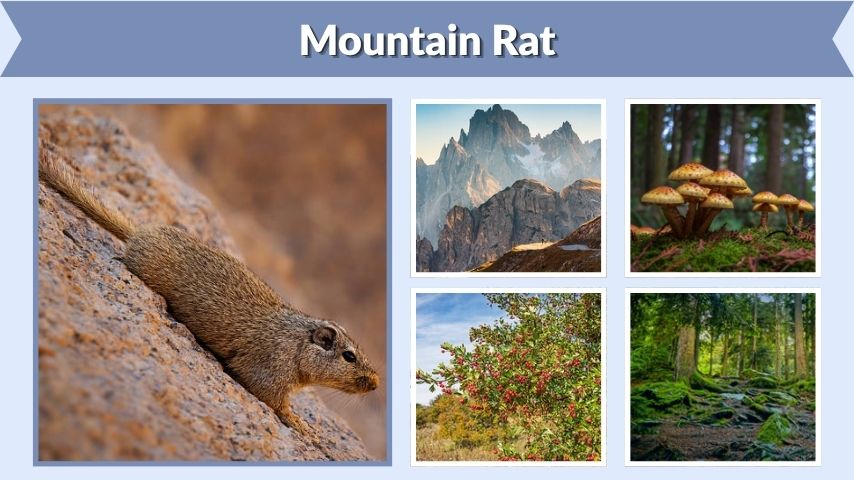
The mountain rat is a wild rodent often linked with rocky slopes, forests, and highland habitats. The name can describe different rodents depending on the region, including the bushy-tailed woodrat in North America and other mountain-dwelling rats in Asia. Many people search for this animal to learn what it looks like, where it lives, what it eats, and whether it is dangerous. This guide explains mountain rat identification, habitat, diet, behavior, and key facts in simple detail.
What Is a Mountain Rat?
A mountain rat is not always one single species. It is a common name used for wild rodents that live in mountain areas, rocky places, forests, or high-elevation habitats. In some cases, the name refers to the bushy-tailed woodrat, while in other regions it may describe different rats adapted to rugged natural environments.
Common Meaning of Mountain Rat
The term mountain rat usually means a rodent that lives away from cities and is adapted to natural mountain habitats. It may shelter in rocks, logs, shrubs, or forest edges. Unlike common house rats, mountain rats are usually more connected with wild landscapes than human buildings.
Scientific Names Connected With Mountain Rat
Several rodents may be connected with the name mountain rat. The exact species depends on location and source. Some important examples include:
- Bushy-tailed woodrat: Neotoma cinerea
- Long-tailed mountain rat: Niviventer rapit
- Other regional highland rodents
- Wild rats living in rocky mountain habitats
Why the Name Can Be Confusing
The name can be confusing because “rat” is used for many rodents. A mountain rat may not be the same as the brown rat or black rat found near cities. It may belong to a different group, live in a different habitat, and behave more like a wild woodland rodent.
What Does a Mountain Rat Look Like?
A mountain rat usually has a small to medium-sized body, thick fur, rounded ears, whiskers, sharp front teeth, and a long or bushy tail. Its exact appearance depends on the species. Some mountain rats look similar to common rats, while others look more like woodrats with softer fur and better camouflage.
Body Size and Shape
Most mountain rats have compact bodies that help them move through rocks, roots, shrubs, and narrow spaces. Their legs are built for quick movement, climbing, and hiding. They may look heavier or furrier than city rats because they live in cooler and rougher habitats.
Fur Color
Mountain rats often have brown, gray, dark brown, or mixed fur. This coloring helps them blend into soil, tree bark, rocks, and dry leaves. Some species may have lighter fur on the belly and darker fur on the back.
Tail and Ears
The tail is an important feature for identification. Some mountain rats have long, thin tails, while the bushy-tailed woodrat has a more noticeable furry tail. Their ears are usually rounded and alert, helping them detect predators in quiet mountain environments.
Mountain Rat Habitat
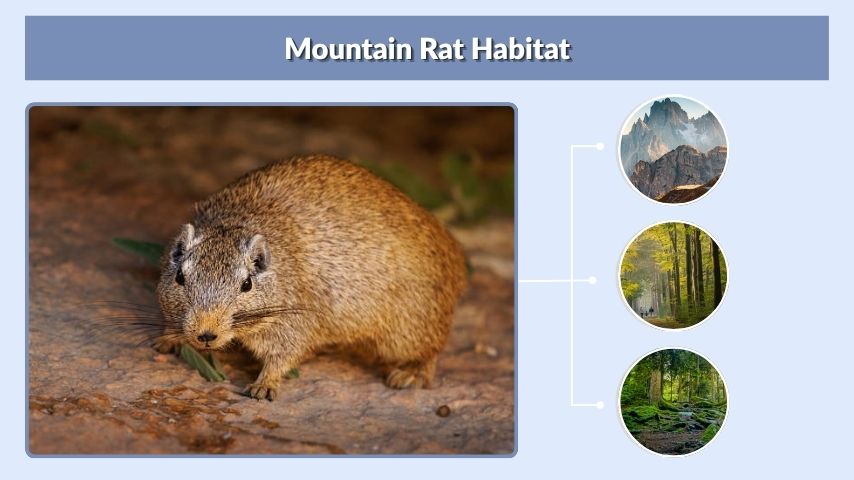
Mountain rats are usually found in natural places where they can hide, nest, and find food. They may live in rocky slopes, forest floors, cliffs, brushy hillsides, highland valleys, or woodland edges. Their habitat depends on the species, climate, and available shelter. Many prefer places with cover from predators and harsh weather.
Rocky Mountain Areas
Rocky areas are useful because they provide cracks, holes, and sheltered spaces. A mountain rat can hide between stones or under ledges when predators are nearby. Rocks also help protect nests from wind, rain, and temperature changes.
Forest and Woodland Habitat
Some mountain rats live in forests or woodland edges. They may use fallen logs, roots, shrubs, leaf litter, and tree cover for shelter. These areas also provide seeds, fruits, bark, and other foods.
High-Elevation Regions
Many animals called mountain rats are linked with cooler highland areas. At higher elevations, food can change by season. Mountain rats must search carefully, store food when possible, and use protected nesting spots to survive colder weather.
What Does a Mountain Rat Eat?
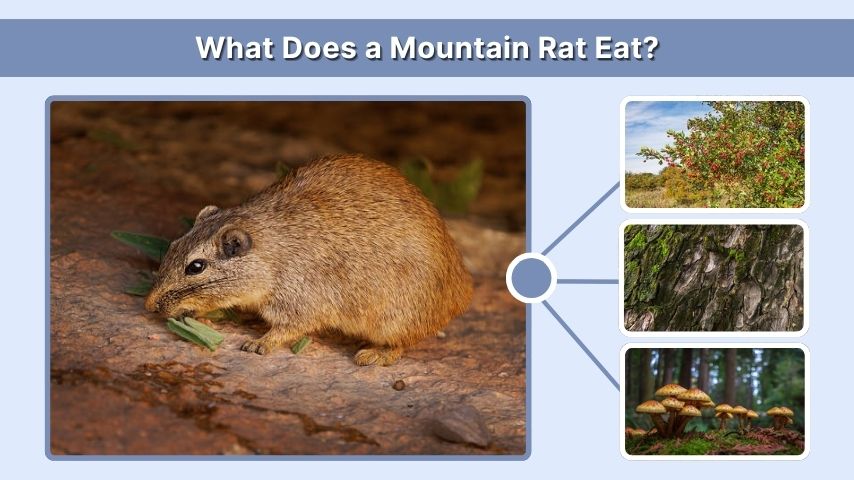
Mountain rats usually eat a mixed diet based on what is available in their habitat. Many feed mostly on plant material, but some may also eat small insects or other natural foods. Their diet changes with the season, especially in mountain areas where winter and dry periods can reduce food supply.
Common Foods
A mountain rat may eat many natural foods, including:
- Seeds
- Berries
- Fruits
- Leaves
- Bark
- Roots
- Grasses
- Fungi
- Small insects
Seasonal Feeding
In warmer months, mountain rats may find fresh leaves, fruits, seeds, and insects more easily. In colder months, they may depend on stored food, bark, roots, dried plant material, or protected feeding areas. This flexible diet helps them survive in changing mountain conditions.
Do Mountain Rats Eat Human Food?
Mountain rats may eat human food if they live near cabins, campsites, farms, or storage sheds. This does not mean they are tame. Human food can attract rodents and create problems, so food should be sealed tightly and waste should be removed properly.
Mountain Rat Behavior
Mountain rats are usually shy animals that try to avoid people. They spend much of their time searching for food, building nests, hiding from predators, and moving through protected places. Many are active at night or during quiet hours, which helps them stay safe from birds, snakes, foxes, and other predators.
Night Activity
Many mountain rats are nocturnal or most active in low light. Night activity helps them avoid daytime predators and move around when the environment is quieter. This is one reason people may rarely see them even if they live nearby.
Nesting Behavior
Mountain rats may build nests using sticks, leaves, grass, bark, and other plant material. These nests are often hidden in rocks, logs, roots, or sheltered corners. A good nest protects the animal from weather and predators.
Defense and Survival
A mountain rat protects itself by hiding, running through narrow spaces, climbing, and staying alert. Its fur color helps it blend into natural surroundings. When threatened, it usually escapes rather than fights.
Mountain Rat vs Common Rat
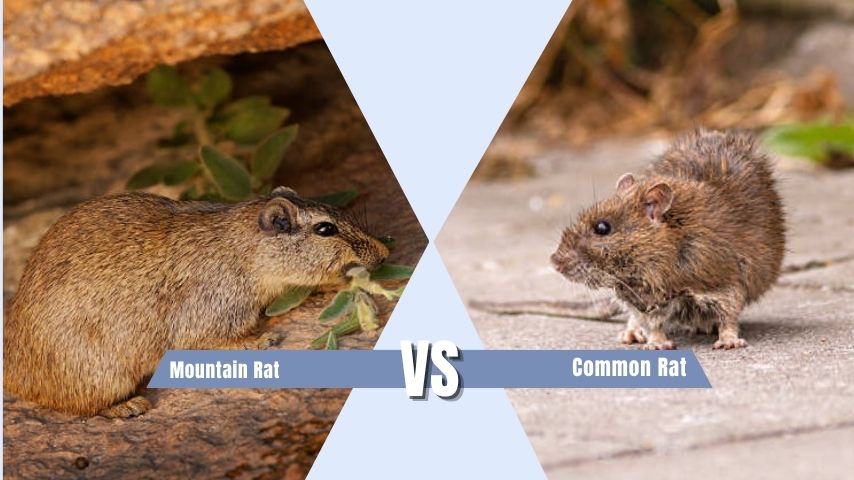
A mountain rat and a common city rat may look similar at first, but they are not always the same type of animal. Mountain rats are usually connected with wild habitats, while common rats often live close to humans. Understanding the difference helps people identify the animal correctly and avoid unnecessary fear or confusion.
Habitat Difference
Mountain rats usually live in forests, rocky slopes, cliffs, hillsides, and highland areas. Common rats often live around homes, markets, drains, farms, garbage areas, and food storage places. A mountain rat depends more on natural shelter, while a city rat depends more on human environments.
Appearance Difference
A mountain rat may have thicker fur, softer coloring, rounded ears, and a tail suited to its species. Some mountain rats, such as woodrats, may look less like the common brown rat. Common rats usually have smoother coats, long bare tails, and bodies adapted to urban survival.
Behavior Difference
Mountain rats are usually shy and avoid people. They hide in rocks, shrubs, logs, or forest cover. Common rats are often bolder around human food sources. They may enter buildings, chew materials, and live near waste areas if food and shelter are available.
Are Mountain Rats Dangerous?
Mountain rats are not usually aggressive toward humans. However, they are wild rodents and should not be touched or handled. Like other wild animals, they may bite if trapped or frightened. They may also carry parasites, germs, or contaminated droppings, so safe distance and careful cleanup are important.
Can a Mountain Rat Bite?
A mountain rat can bite if it feels threatened, but it does not normally attack people. Biting is usually a defense response when the animal is cornered, trapped, or handled. It is best to avoid picking up any wild rodent.
Do Mountain Rats Carry Disease?
Wild rodents can carry parasites, bacteria, or viruses. This does not mean every mountain rat is diseased, but direct contact with droppings, urine, nests, or dead animals should be avoided. Wear gloves and use safe cleaning methods if rodent signs appear near a home.
What to Do If You Find One Near Your Home
If a mountain rat appears near your home, do not panic. Remove easy food sources and block entry points. Keep trash sealed, store pet food indoors, and check sheds, cabins, and garages for gaps. If one enters your home, contact a local pest or wildlife expert.
Bushy-Tailed Woodrat as a Mountain Rat
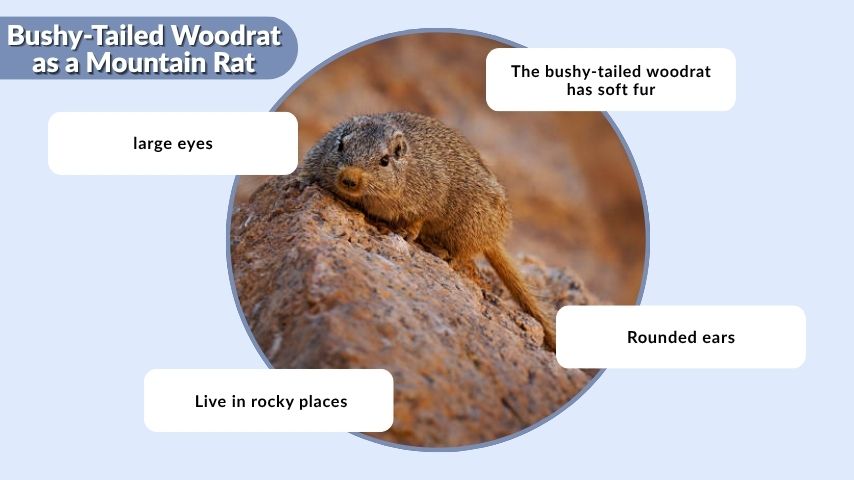
In some sources, the name mountain rat is linked with the bushy-tailed woodrat. This rodent is found in parts of western North America and is different from the common city rat. It is known for its furry tail, wild habitat, and habit of building nests from natural materials.
Identification
The bushy-tailed woodrat has soft fur, rounded ears, large eyes, and a noticeable furry tail. It may look more like a wild woodland rodent than a typical sewer rat. Its color is usually grayish or brownish, helping it blend into rocks and forest areas.
Habitat
This animal may live in rocky places, cliffs, forests, caves, and sheltered mountain areas. It uses cracks, ledges, logs, and natural cover for nesting and protection. Its habitat gives it safety from predators and harsh weather.
Difference From City Rats
The bushy-tailed woodrat is a wild rodent, not a common urban pest rat. It may sometimes enter cabins or sheds, but it is mainly adapted to natural environments. Its behavior, appearance, and nesting habits can be different from brown rats or black rats.
Long-Tailed Mountain Rat
The long-tailed mountain rat is another animal connected with the mountain rat name. It is a specific rodent species found in parts of Borneo. This shows why the term mountain rat can be confusing. In different countries, it may refer to different animals that live in highland or forest habitats.
Where It Lives
The long-tailed mountain rat is associated with Borneo, including areas in Indonesia and Malaysia. It is linked with mountain and forest environments rather than city streets or buildings.
Habitat Type
This species is connected with highland forests, scrubland, and natural mountain habitats. These areas provide shelter, nesting places, and natural foods. Like many wild rodents, it depends on cover to avoid predators.
Why It Matters
Mountain rats are part of natural ecosystems. They may help move seeds, serve as prey for larger animals, and support forest food webs. Even small rodents can play an important role in healthy mountain habitats.
Mountain Rat Facts
Mountain rats are interesting because the name can describe more than one kind of rodent. Some live in North American mountains, while others are found in Asian highlands. They are usually shy, adaptable, and important to the places where they live.
Quick Facts About Mountain Rats
- “Mountain rat” can refer to different rodent species.
- Some mountain rats live in rocky slopes and forests.
- The bushy-tailed woodrat is often linked with this name.
- The long-tailed mountain rat is found in parts of Borneo.
- Mountain rats usually avoid people.
- They may eat seeds, fruits, leaves, bark, fungi, and roots.
- Wild mountain rats should not be handled.
FAQs
What is a mountain rat?
A mountain rat is a common name for certain wild rodents that live in mountain, rocky, forest, or highland habitats. It may refer to different species depending on the region.
Is a mountain rat a real animal?
Yes, mountain rat is a real common name, but it does not always mean one single species. In some places, it refers to the bushy-tailed woodrat. In others, it may describe highland rats.
What does a mountain rat eat?
A mountain rat may eat seeds, fruits, berries, leaves, bark, roots, grasses, fungi, and sometimes small insects. Its diet depends on species, habitat, and season.
Are mountain rats dangerous?
Mountain rats are not usually aggressive, but they are wild rodents. They should not be handled because they can bite if frightened and may carry parasites or germs.
Where do mountain rats live?
Mountain rats may live in rocky slopes, forests, cliffs, caves, brushland, highland valleys, and other sheltered mountain habitats.