
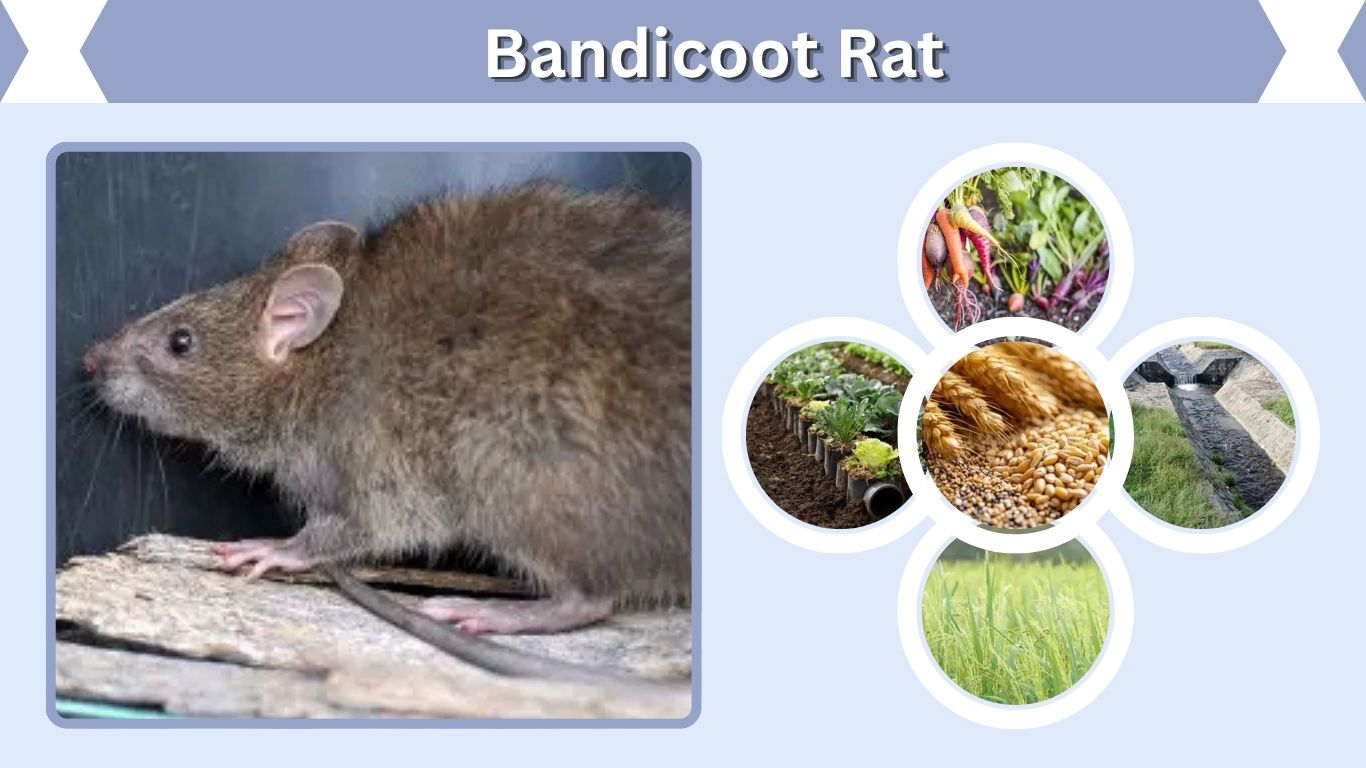
Bandicoot rats are large, burrowing rodents found across South and Southeast Asia. Many people search for them after seeing a big rat near gardens, rice fields, drains, poultry areas, or garbage spots. They are not Australian bandicoots, and they are not ideal pets. This guide explains what a bandicoot rat is, how to identify it, how it differs from regular rats, and what to do if you have one around your home or farm.
What Is a Bandicoot Rat?
A bandicoot rat is a rodent from the genus Bandicota. The best-known species include the greater bandicoot rat, lesser bandicoot rat, and Savile’s bandicoot rat. These animals belong to the family Muridae, the same broad family that includes many Old World rats and mice.
Basic Identification
Bandicoot rats usually look heavier, rougher, and more powerful than common house rats. They have coarse fur, a strong body, a blunt or slightly pointed snout, small rounded ears, and a thick tail. Their body may look hunched when they move.
Common signs include:
- Large burrow holes in soil, banks, gardens, or field edges
- Coarse dark brown or grayish-brown fur
- Strong digging behavior
- Activity mostly at night
- Damage around crops, stored food, poultry feed, or garbage areas
Are Bandicoot Rats Real Rats?
Yes, bandicoot rats are real rodents, but they are not the same as the common black rat or brown rat. The word “bandicoot” can confuse readers because Australian bandicoots are marsupials, while bandicoot rats are Asian rodents. Australian bandicoots are unrelated animals from the Australia–New Guinea region, while bandicoot rats belong to the rodent genus Bandicota.
Greater Bandicoot Rat vs Lesser Bandicoot Rat
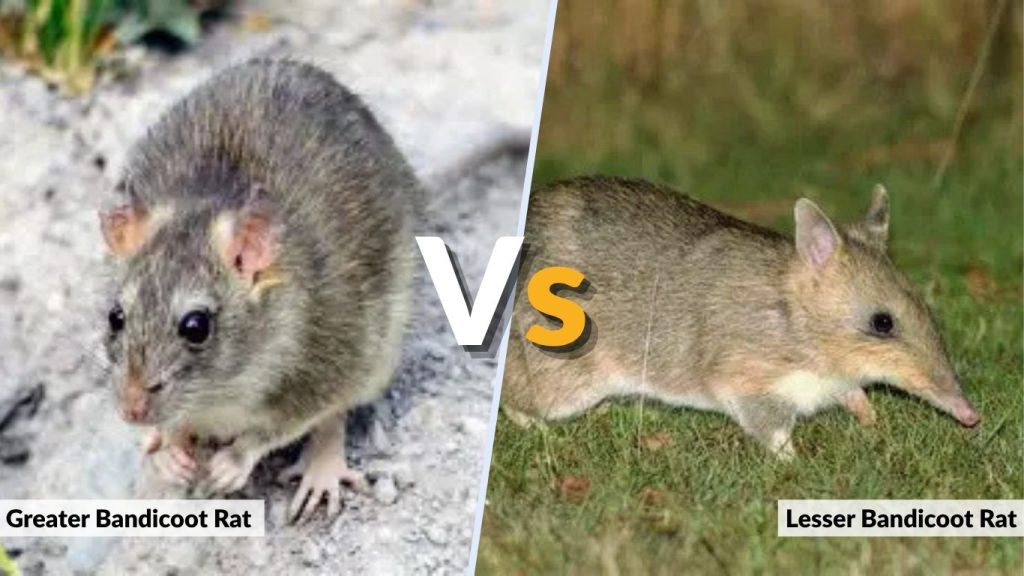
Two of the most searched species are the greater bandicoot rat and the lesser bandicoot rat. Both are burrowing rodents, but they differ in size, range, and habitat preference.
| Feature | Greater Bandicoot Rat | Lesser Bandicoot Rat |
| Scientific name | Bandicota indica | Bandicota bengalensis |
| Common names | Indian bandicoot rat, large bandicoot rat | Indian mole-rat, Sind rice rat |
| Size | Usually larger and heavier | Smaller than greater bandicoot rat |
| Habitat | Fields, rice paddies, gardens, urban edges | Fields, villages, storage areas, crop lands |
| Conservation status | Least Concern | Least Concern |
Greater Bandicoot Rat
The greater bandicoot rat, or Indian bandicoot rat, is found in countries such as India, Bangladesh, Sri Lanka, Nepal, Myanmar, Thailand, Laos, Cambodia, Vietnam, and China. It commonly lives in swampy places, fields, rice paddies, gardens, and near human settlements.
This species is known for its large burrows and strong digging. In some places, it can damage ground surfaces, garden beds, field edges, and stored food areas. It is also an omnivore, feeding on grains, vegetables, insects, mollusks, crabs, and household refuse.
Lesser Bandicoot Rat
The lesser bandicoot rat is common in South Asia. Its natural range includes Pakistan, India, Nepal, Bangladesh, Sri Lanka, and Myanmar, with introductions recorded in some other regions.
This species is especially important in agricultural areas because it damages cereal crops and may store food underground. It is often linked with rice, wheat, and grain storage problems.
Savile’s Bandicoot Rat
Savile’s bandicoot rat is another species in the genus Bandicota. It is found in parts of Myanmar, Thailand, Cambodia, Vietnam, and possibly Laos. Like the other two, it is listed as Least Concern by the Mammal Diversity Database.
Bandicoot Rat Size, Lifespan, and Appearance
Bandicoot rats are often noticed because they look bigger than normal rats. Their large body and digging habits make people search terms like “giant bandicoot rat,” “big bandicoot rat,” and “bandicoot vs rat size.”
Size
The greater bandicoot rat is the largest common type and may look thick-bodied compared with a black rat. It has a heavy head, coarse hair, and a strong body. The lesser bandicoot rat is smaller but still robust and powerful for its size.
Lifespan
In the wild, many bandicoot rats live short lives because of predators, disease, accidents, and pest control. Their populations can still grow quickly because they reproduce early and may have multiple young in a litter. Greater bandicoot rat young can become reproductively mature in about 50–60 days, according to Animalia’s species summary.
Poop and Burrow Signs
Bandicoot rat poop is usually found near feeding areas, burrow entrances, storage places, or corners where rodents move. However, droppings alone are not always enough to identify the species. The CDC notes that rodent droppings and gnaw marks are common signs of rodent activity.
Bandicoot Rat vs Rat: Key Differences
Many people ask “is a bandicoot a rat?” or “bandicoot rat vs rat.” The answer depends on what you mean by bandicoot.
A bandicoot rat is a rodent. An Australian bandicoot is a marsupial. A common rat usually refers to species such as the black rat or brown rat.
| Comparison | Bandicoot Rat | Common Rat | Australian Bandicoot |
| Animal group | Rodent | Rodent | Marsupial |
| Region | Asia | Worldwide | Australia–New Guinea region |
| Body shape | Heavy, burrowing body | Slimmer or medium body | Small mammal with long snout |
| Pest status | Often agricultural/urban pest | Common urban pest | Wildlife, not a rat |
| Pet suitability | Not recommended | Fancy rats may be pets | Wildlife, not a pet |
Simple Difference
A bandicoot rat is usually larger, more aggressive-looking, and more strongly linked with burrows than a common house rat. A true bandicoot from Australia is not a rat at all.
Where Do Bandicoot Rats Live?
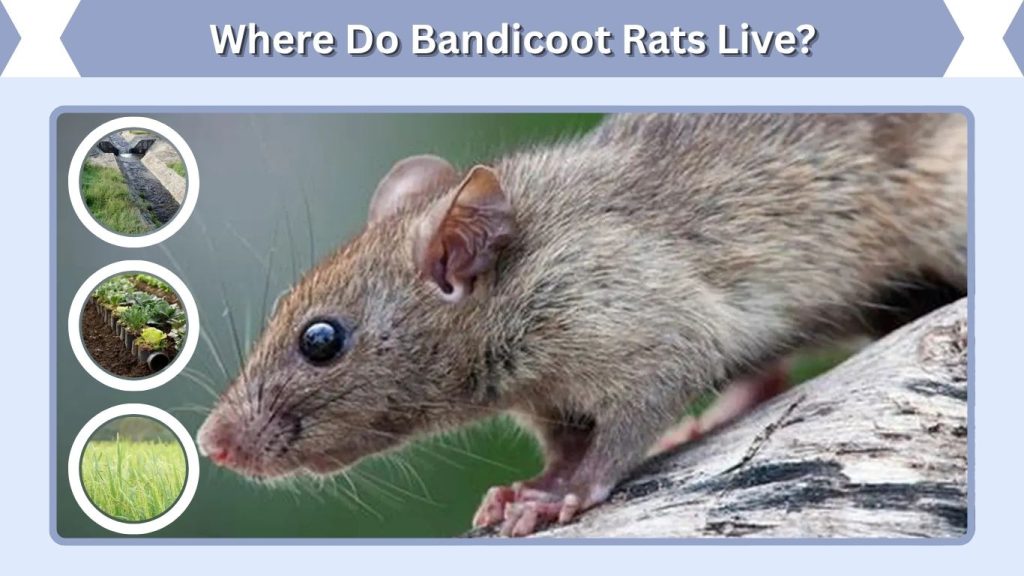
Bandicoot rats are common in warm Asian regions, especially where food, water, and shelter are available. They adapt well to farms, villages, drains, markets, poultry sheds, gardens, and crop fields.
Common Habitats
They may live in:
- Rice fields and wheat fields
- Garden beds and compost areas
- Drainage banks and canals
- Garbage collection points
- Poultry farms and feed storage areas
- Soil under walls, sheds, or field borders
The greater bandicoot rat is especially associated with swampy places, rice paddies, fields, gardens, and the edges of human dwellings.
Bandicoot Rat in India and Bangladesh
Searches like “bandicoot rat India,” “Indian bandicoot rat,” and “bandicoot rat Bangalore” are common because these rodents are familiar in South Asian cities and farms. Bangladesh also has important agricultural issues with bandicoot rats, especially in rice and wheat systems. One Bangladesh report identifies Bandicota species as major pests of rice and wheat.
Are Bandicoot Rats Dangerous?
Bandicoot rats are not dangerous in the way venomous animals are, but they can be risky around homes, food, livestock, and children. The biggest concerns are bites, contamination, burrow damage, and disease exposure.
Bandicoot Rat Bite
A bandicoot rat bite should be treated seriously. Wash the wound with soap and clean running water, apply an antiseptic, and seek medical advice, especially if the bite is deep, bleeding, swollen, or from a wild rodent. Rodents can spread diseases through bites, urine, saliva, and droppings.
Disease and Contamination Risk
Rodents can spread diseases directly through handling, bites, droppings, urine, and saliva. The CDC also notes that rodent waste can contaminate air or food and that rodents may carry fleas, ticks, or mites.
Are Bandicoot Rats Good Pets?
A bandicoot rat is not a good pet. It is a wild rodent, often defensive, and may carry parasites or pathogens. People searching “bandicoot rat pet” or “greater bandicoot rat pet” should choose safe domestic pet species instead, such as properly bred fancy rats from responsible breeders.
What Do Bandicoot Rats Eat?
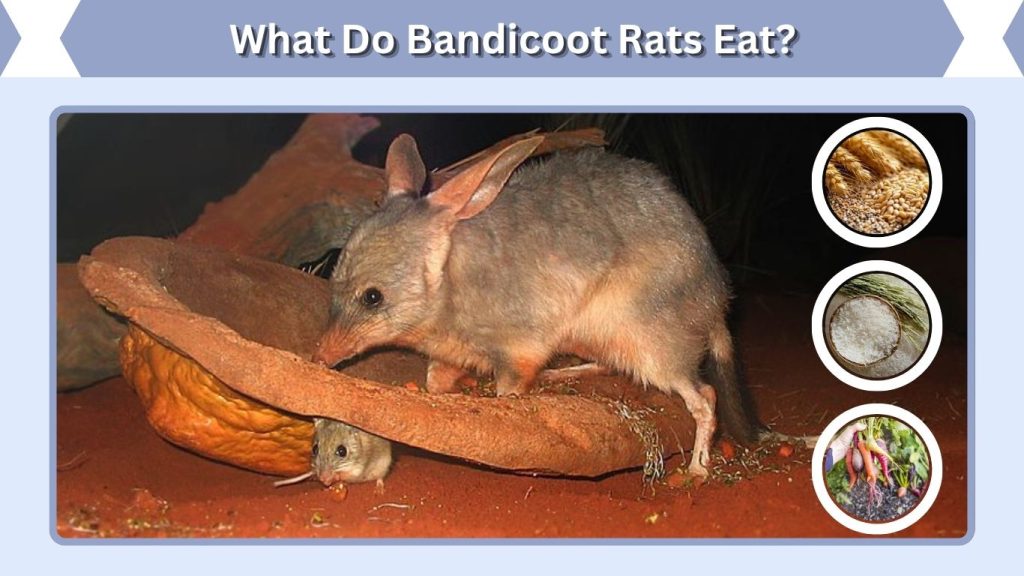
Bandicoot rats are flexible feeders. They eat plant and animal matter, which helps them survive around farms and settlements.
Their diet may include:
- Rice, wheat, and other grains
- Vegetables and roots
- Seeds and stored food
- Insects and small invertebrates
- Kitchen waste and household refuse
- Poultry feed or livestock feed
The greater bandicoot rat is described as an omnivore and is known to eat grain, vegetables, mollusks, crabs, insects, and household refuse.
How to Get Rid of Bandicoot Rats Safely
Bandicoot rat control works best when you remove food, block shelter, and use safe trapping or professional pest management. Killing one rat rarely solves the problem if food and burrows remain.
Prevention Steps
Start with habitat control:
- Store grain, rice, and animal feed in sealed containers
- Remove garbage daily and keep bins covered
- Clear thick weeds and clutter near walls
- Repair broken drains and water leaks
- Seal gaps around sheds and storage rooms
- Keep poultry feed off the ground at night
The CDC recommends removing food sources, water, and shelter to prevent rodent infestations.
Traps and Professional Control
For homes, farms, and poultry sheds, strong snap traps or cage traps may help, but bandicoot rats can be powerful and cautious. Place traps near active runs or burrows, but keep them away from children, pets, and non-target wildlife.
For large infestations, call a licensed pest control expert. Avoid unsafe poison use, especially around pets, livestock, children, and food storage. Local rules may also limit what rodenticides can be used.
Repellents
Most repellents are unreliable if food and shelter are still available. Smells, powders, or home remedies may move rats briefly, but they do not usually remove an established burrow system. Sanitation, exclusion, trapping, and professional control are more dependable.
Bandicoot Rat Names in Local Languages
People search for “bandicoot rat in Hindi,” “bandicoot rat in Tamil,” “Malayalam,” “Marathi,” and “Telugu” because this rodent has many local names. Names vary by region, so use the scientific name if you need accurate identification.
Common English names include:
- Greater bandicoot rat
- Indian bandicoot rat
- Lesser bandicoot rat
- Short-tailed bandicoot rat
- Savile’s bandicoot rat
The genus name Bandicota is linked to South Asian language roots, and the common name has historically been connected with the idea of a “pig-rat.”
FAQs
Is a bandicoot rat the same as a normal rat?
No. A bandicoot rat is a rodent, but it is not the same as common city rats like black rats or brown rats. It usually has a heavier body, strong digging habits, and large burrows. It also belongs to the genus Bandicota.
Are bandicoot rats found in India?
Yes. Bandicoot rats are found in India and several nearby countries. The greater bandicoot rat and lesser bandicoot rat are both known from South Asia, including India, Bangladesh, Nepal, Sri Lanka, Pakistan, and Myanmar depending on the species.
Can a bandicoot rat bite humans?
Yes. A bandicoot rat may bite if trapped, cornered, handled, or threatened. Any wild rodent bite should be cleaned quickly and checked by a medical professional. Rodents may spread disease through bites, saliva, urine, and droppings.
How do I know if I have bandicoot rats?
Look for large burrow holes, soil digging, gnaw marks, droppings, damaged crops, missing grain, and nighttime activity. Bandicoot rats often live around fields, drains, poultry feed, gardens, and garbage areas.
What is the best way to control bandicoot rats?
The best control method is integrated: remove food, seal storage areas, reduce hiding places, block entry points, and use safe traps or licensed pest control. Avoid relying only on repellents or poison because they may not fix the source of the infestation.