
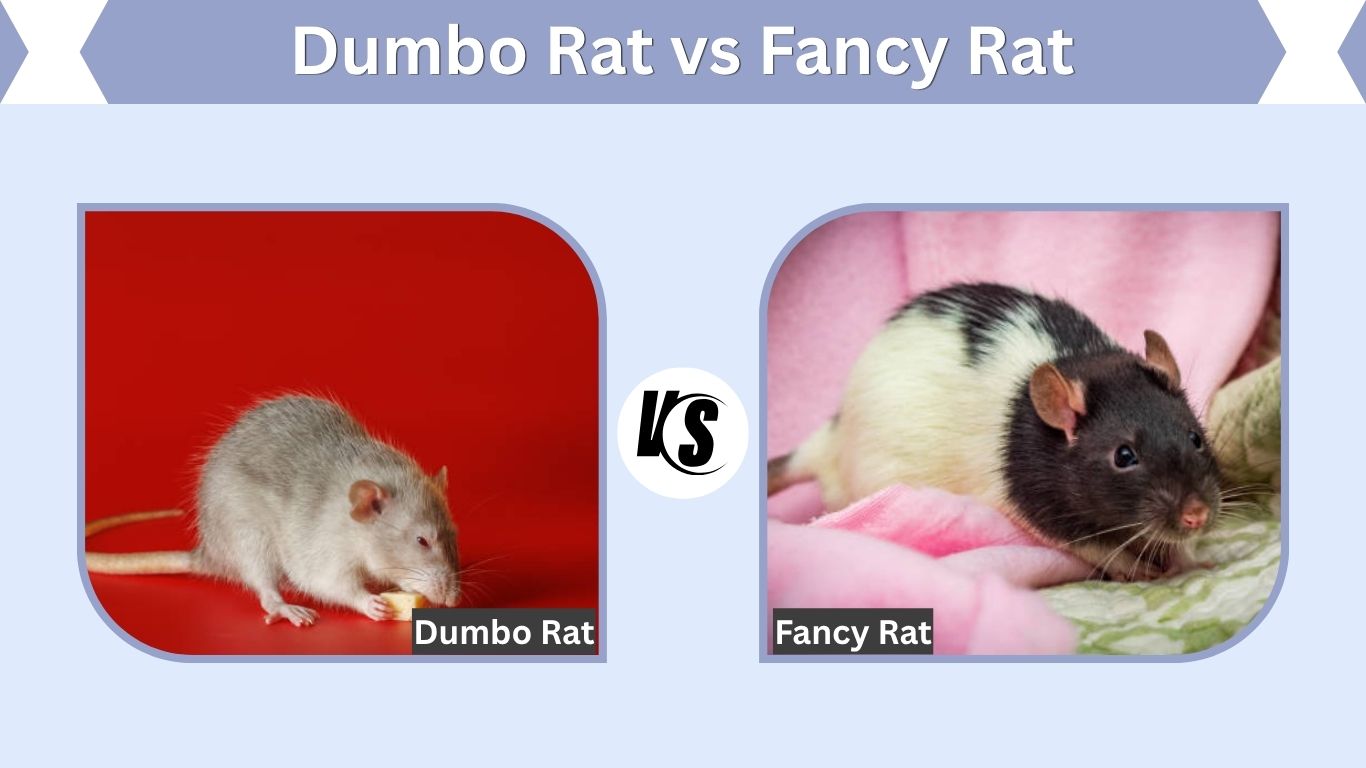
Choosing between a Dumbo rat and a fancy rat can be confusing because the names make them sound like completely different kinds of rats. In reality, the distinction is much simpler. A Dumbo rat is a type of domesticated fancy rat distinguished mainly by its unusually low-set, rounded ears. Their general care, size, intelligence, diet, and social needs are very similar. This guide compares Dumbo rats vs fancy rats in appearance, temperament, size, lifespan, care, and suitability as pets.
Dumbo Rat vs Fancy Rat: What Is the Main Difference?
The biggest difference between a Dumbo rat and a standard-eared fancy rat is ear placement. “Fancy rat” is a broad term for domesticated pet rats, while Dumbo describes a recognized ear variety. Therefore, a Dumbo can also be correctly called a fancy rat.
The American Fancy Rat and Mouse Association classifies rats by varieties rather than conventional dog-like breeds. Dumbo rats are distinguished by large, rounded ears positioned low on the sides of the head.
Quick Comparison
| Feature | Dumbo Rat | Standard Fancy Rat |
| Type | Fancy rat variety | Domestic pet rat |
| Ears | Large, round, low-set | Higher-set standard ears |
| Body size | Generally similar | Generally similar |
| Temperament | Social and intelligent | Social and intelligent |
| Lifespan | About 2–3 years | About 2–3 years |
| Care requirements | Essentially the same | Essentially the same |
| Colors | Many colors/patterns | Many colors/patterns |
| Best known for | Distinctive ears and head appearance | Wide variety of coats and markings |
The important takeaway is that you are not comparing two separate species.
What Is a Fancy Rat?
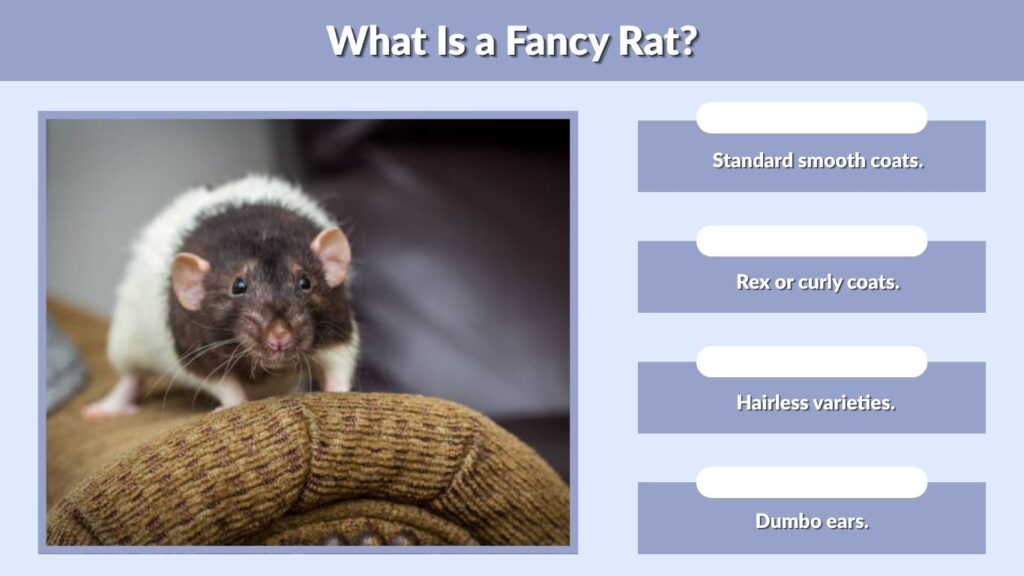
A fancy rat is essentially a domesticated rat selectively kept and bred as a companion or exhibition animal. Pet rats are available in numerous colors, patterns, coat types, and physical varieties, which explains why two fancy rats may look dramatically different despite belonging to the same domestic rat population.
Fancy Rat Appearance
Fancy rats can display considerable variation in appearance. Depending on genetics and variety, you may see:
- Standard smooth coats
- Rex or curly coats
- Hairless varieties
- Dumbo ears
- Hooded markings
- Solid colors
- Variegated patterns
- Different eye colors
For example, a hooded rat vs fancy rat is not really a comparison between separate types of animal. Hooded describes a marking pattern that can occur in fancy rats. Similarly, terms such as Rex and Dumbo describe characteristics within domesticated fancy rats. AFRMA recognizes numerous markings as well as several coat and body varieties.
What Is a Dumbo Rat?
A Dumbo rat is a fancy rat whose ears are positioned noticeably lower on its head. The ears are generally large and rounded and extend outward from the sides rather than sitting higher on top of the head.
This feature gives Dumbo rats a broad-faced appearance that many pet owners find especially distinctive.
Dumbo Rat Ears
Ear position is the easiest way to distinguish Dumbo rat vs fancy rat ears.
According to the AFRMA standard, Dumbo ears should be large, round, and low on the sides of the head. The Dumbo trait is genetically recessive, meaning an animal needs the relevant genetic contribution from both parents for the characteristic Dumbo appearance to be expressed.
Standard-eared fancy rats have ears positioned higher and closer to the top of the head.
Because of this difference, the face of a Dumbo may appear shorter, broader, or rounder even when its overall body dimensions are comparable to another fancy rat.
Dumbo Rat vs Fancy Rat Size
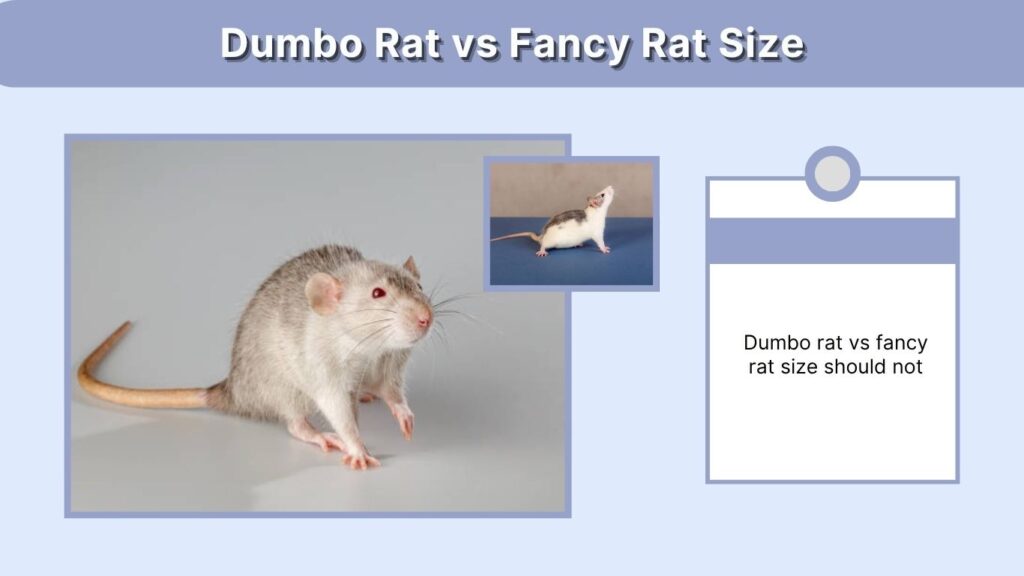
A common misconception is that Dumbo rats are automatically larger than ordinary fancy rats. Ear size can make the head appear bigger, but Dumbo does not inherently mean “giant rat.”
Sex, genetics, diet, age, and individual breeding lines can influence adult size more than ear type.
Veterinary references put typical pet-rat weights in the several-hundred-gram range, with adult males generally becoming larger than females.
Does a Dumbo Rat Grow Bigger?
Not necessarily. Two rats from different genetic lines can differ substantially in size regardless of whether one has Dumbo ears.
For example, a large standard-eared male may easily outweigh a smaller Dumbo female. Consequently, searching for Dumbo rat vs fancy rat size should not be interpreted as comparing a naturally large breed with a naturally small breed.
Feeding an excessive amount of food in an attempt to produce a larger rat is also inappropriate. Healthy body condition matters far more than achieving a particular weight.
Temperament and Personality
There is no reliable rule that every Dumbo rat has a calmer or friendlier personality simply because of its ears. Both Dumbo and standard fancy rats can become highly interactive companion animals.
Pet rats are intelligent, active, and social. With patient handling, many learn to recognize familiar people, explore confidently, participate in games, and respond positively to training.
Which Is Friendlier?
Temperament depends considerably on:
- Genetics and breeding
- Early socialization
- Previous handling
- Individual personality
- Housing conditions
- Health
- Stress level
A well-socialized standard fancy rat may be considerably more confident than an inadequately handled Dumbo rat, and vice versa.
When choosing a pet, health and temperament are therefore more important considerations than ear shape.
Dumbo Rat vs Fancy Rat Lifespan

Dumbo and standard fancy rats have essentially the same expected lifespan because Dumbo ears do not turn the animal into a separate species with a different life cycle.
Pet rats commonly live approximately two to three years, although individual animals may live somewhat shorter or longer lives.
Factors Affecting Lifespan
Several factors can influence longevity:
- Genetics
- Quality of diet
- Veterinary care
- Maintaining healthy body condition
- Clean housing
- Appropriate temperature
- Stress management
- Early detection of illness
Selecting a rat solely because it is a Dumbo is therefore unlikely to provide a lifespan advantage.
Care Requirements: Are They Different?
Dumbo rats and other fancy rats need essentially the same care. Their cages, diets, companionship requirements, exercise, enrichment, and veterinary needs do not change simply because their ears are positioned differently.
Housing and Companionship
Rats are highly social animals and generally benefit from compatible rat companions. Welfare organizations commonly recommend keeping them in pairs or suitable groups rather than isolating them unnecessarily.
They also require enough space to explore, climb, hide, rest, and play.
Provide environmental enrichment such as tunnels, shelters, hammocks, climbing opportunities, nesting materials, chewable objects, and supervised exploration outside the enclosure where appropriate.
Diet
A balanced rat-specific diet should form the nutritional foundation rather than relying heavily on seeds, sugary treats, or human snack foods.
Treats can be useful for training and bonding, but high-fat or high-sugar foods should remain occasional additions rather than everyday staples.
Clean drinking water should always be available.
Fancy Rat vs Wild Rat: Are They the Same?
The distinction becomes much greater when comparing a fancy rat vs wild rat.
Fancy rats are domesticated animals raised over generations around people. A wild rat has grown up responding to completely different survival pressures and normally has not experienced intentional human socialization.
Major Differences
Pet fancy rats typically become accustomed to human interaction when socialized properly. Wild rats, by contrast, are generally cautious around people and are not equivalent to domestically bred companion rats.
Wild rats may also be exposed to parasites, infectious organisms, toxins, predators, food shortages, and environmental hazards that indoor companion animals are protected from.
This is why terms such as street rat vs fancy rat, normal rat vs fancy rat, or wild rat vs fancy rat should not be treated simply as comparisons of coat color.
Domestic rats receive predictable food, housing, veterinary attention, and protection from predators, all of which can contribute to differences in their lives compared with wild populations.
Fancy Rat vs Mouse, Hamster, and Gerbil
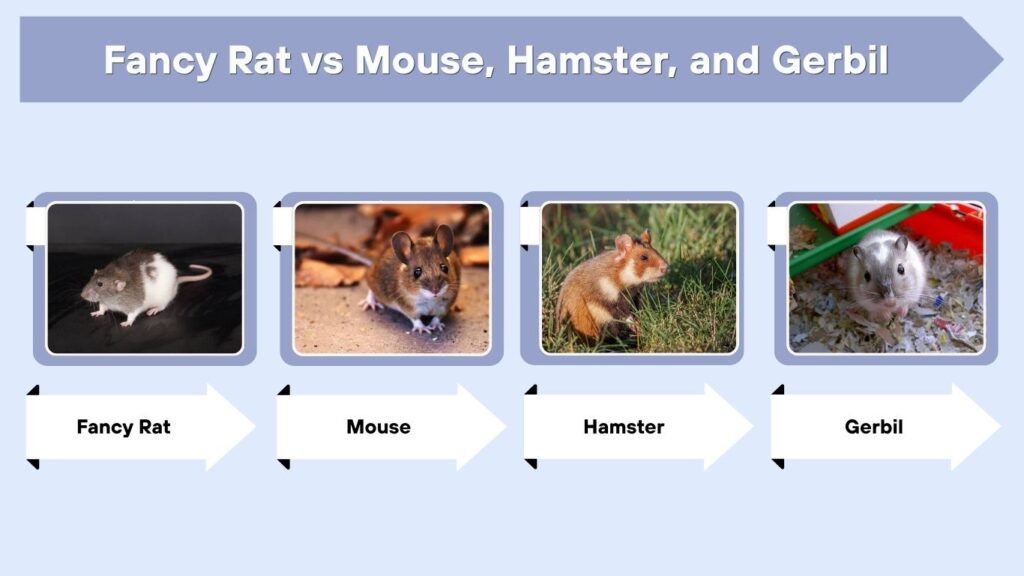
People choosing a small pet also commonly compare fancy rats with mice, hamsters, and gerbils. Although all are rodents, their size and husbandry differ significantly.
Fancy Rat vs Mouse
An adult fancy rat is considerably larger than a domestic mouse. Veterinary biological data place adult pet mice at only a few dozen grams, while rats commonly weigh several hundred grams.
Rats therefore require more cage space and generally feel substantially larger during handling.
Fancy Rat vs Hamster
Rats are strongly social and usually benefit from living with compatible rats. Hamster social requirements depend on species and should not simply be copied from rat husbandry.
For someone primarily interested in interactive handling and training, the highly social nature of domesticated rats is one reason they are popular companion rodents.
Fancy Rat vs Gerbil
Gerbils are much smaller and have noticeably different body proportions, tails, burrowing behavior, and enclosure requirements. Choosing between them should depend on the type of pet experience and habitat you can provide rather than appearance alone.
Dumbo Rat or Fancy Rat: Which Is Better?
There is no universal winner because a Dumbo rat already is a type of fancy rat.
If you particularly enjoy the large, rounded, low-set ears and broad-looking face, a Dumbo may appeal to you visually. If ear placement is not important, a healthy standard-eared fancy rat can provide essentially the same rewarding companion experience.
Focus primarily on health, temperament, socialization, and responsible sourcing or adoption.
Final Verdict
The Dumbo rat vs fancy rat comparison is much simpler than the terminology suggests. Fancy rat is the broad category of domesticated pet rat, while Dumbo describes a distinctive low-set ear variety within that category. Their typical size, lifespan, intelligence, social needs, diet, housing, and everyday care are essentially alike.
Choose a Dumbo if you love its distinctive rounded ears, but do not assume it will automatically be larger, calmer, or healthier. For either type, good socialization, proper companionship, suitable housing, balanced nutrition, and attentive care matter far more than ear shape.