
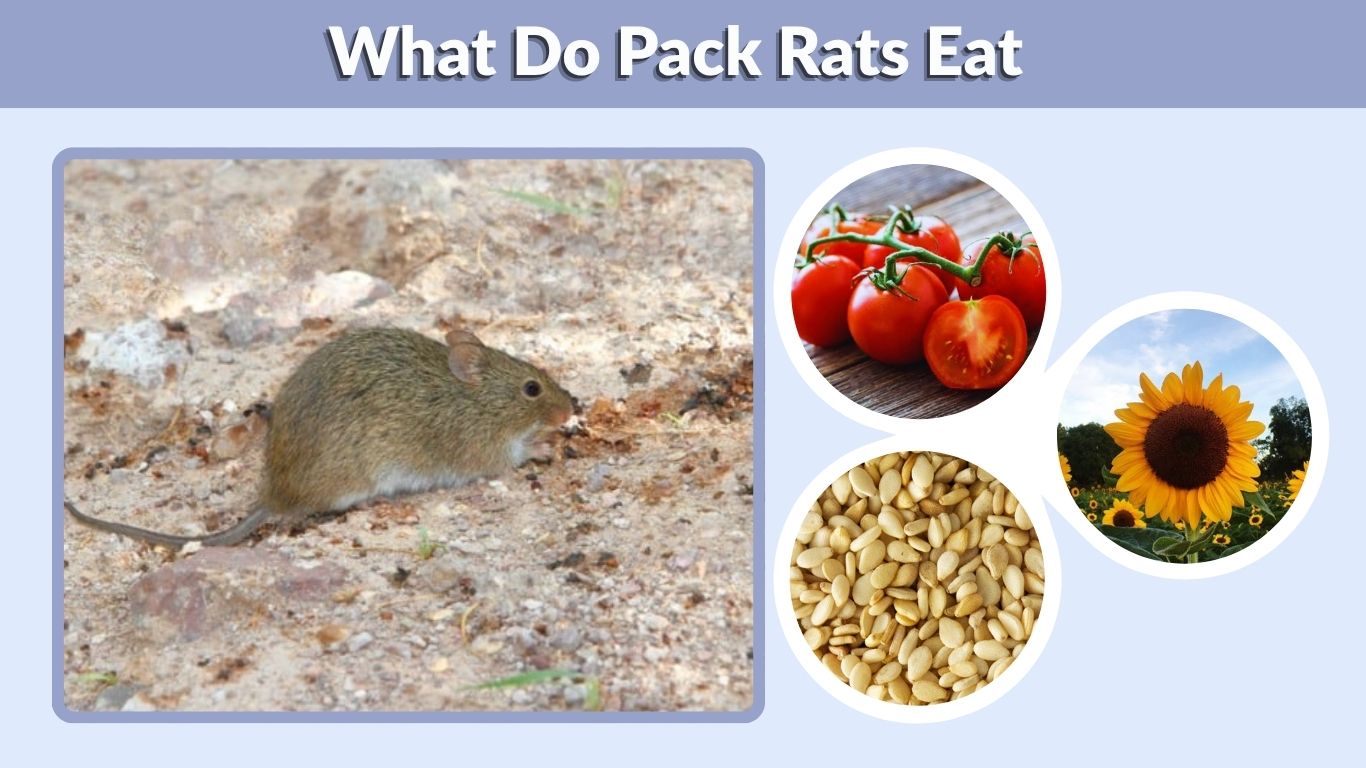
Pack rats, also called woodrats, mainly eat plant material such as cactus, seeds, leaves, flowers, fruits, berries, and tender shoots. Their exact diet changes depending on the species and habitat. Desert pack rats often depend heavily on prickly pear, cholla, mesquite, and other moisture-rich plants, while woodland species may consume nuts, berries, bark, and fungi. Although they are primarily herbivorous, some pack rats occasionally eat insects or other small animals. Understanding what pack rats eat can also explain why they sometimes invade gardens, collect food around homes, or damage vehicle wiring.
What Do Pack Rats Eat?
Pack rats are mostly herbivores and opportunistic foragers. Instead of relying on one food source, they eat whatever suitable vegetation is available near their den.
Common foods include cactus stems and fruits, seeds, leaves, flowers, buds, bark, berries, vegetables, nuts, and plant shoots. White-throated pack rats in desert environments obtain much of their moisture directly from cactus, allowing them to survive without regularly visiting open water.
Pack rats are also famous for carrying food back to their nests, or middens. They may store seeds, beans, fruits, and other plant material for later consumption.
What Do Pack Rats Like to Eat Most?
Favorite foods vary according to location. In the Sonoran Desert, white-throated woodrats commonly eat prickly pear and cholla cactus, mesquite beans, palo verde seeds, green vegetation, seeds, and fruit.
Desert woodrats in the Mojave region also favor creosote, cholla, and prickly pear. Other populations may depend more heavily on berries, acorns, nuts, bark, leaves, or fungi.
In simple terms, pack rats usually prefer nutritious plants that are abundant close to their shelter.
What Do Pack Rats Eat in the Desert?
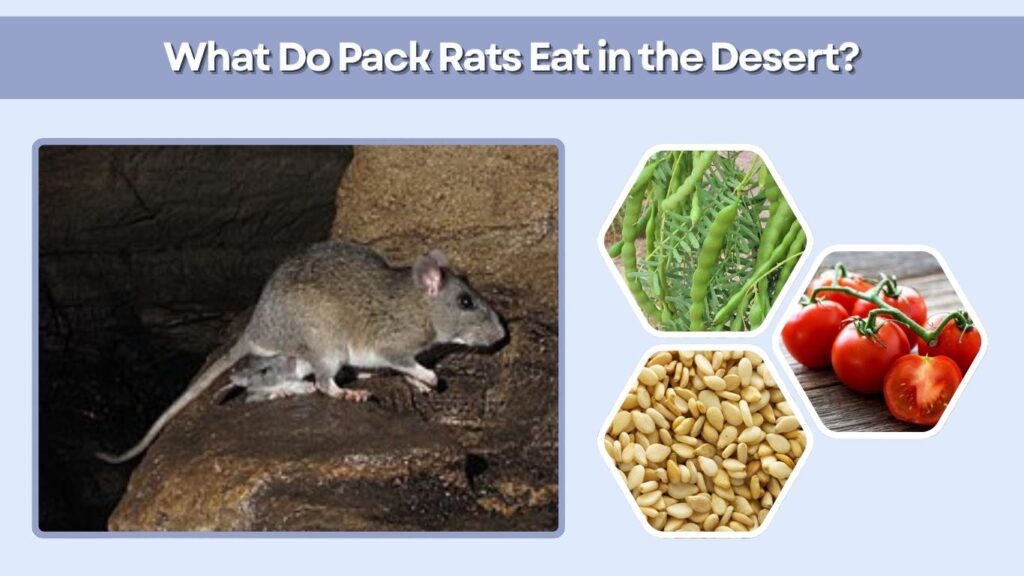
Desert pack rats have adapted remarkably well to dry environments where free-standing water may be scarce.
Cactus is particularly important because it provides both calories and moisture. Prickly pear pads, prickly pear fruit, and cholla are among their best-known desert foods. Pack rats also consume mesquite beans, palo verde seeds, creosote seeds, flowers, leaves, and other desert vegetation.
This moisture-rich diet helps explain how pack rats can survive in extremely arid parts of Arizona, Nevada, California, New Mexico, and northern Mexico.
What Do Arizona Pack Rats Eat?
Pack rats living in Arizona commonly consume cactus, mesquite beans, seeds, flowers, vegetables, fruits, leaves, and plant shoots.
Arizona Cooperative Extension specifically notes that woodrats may enter residential landscapes to eat vegetables and flowers. Reports have included clipped pansy flowers and ripe tomatoes being carried away.
Therefore, gardens can become attractive feeding areas when pack rats live nearby.
Do Pack Rats Eat Plants, Flowers, and Cactus?
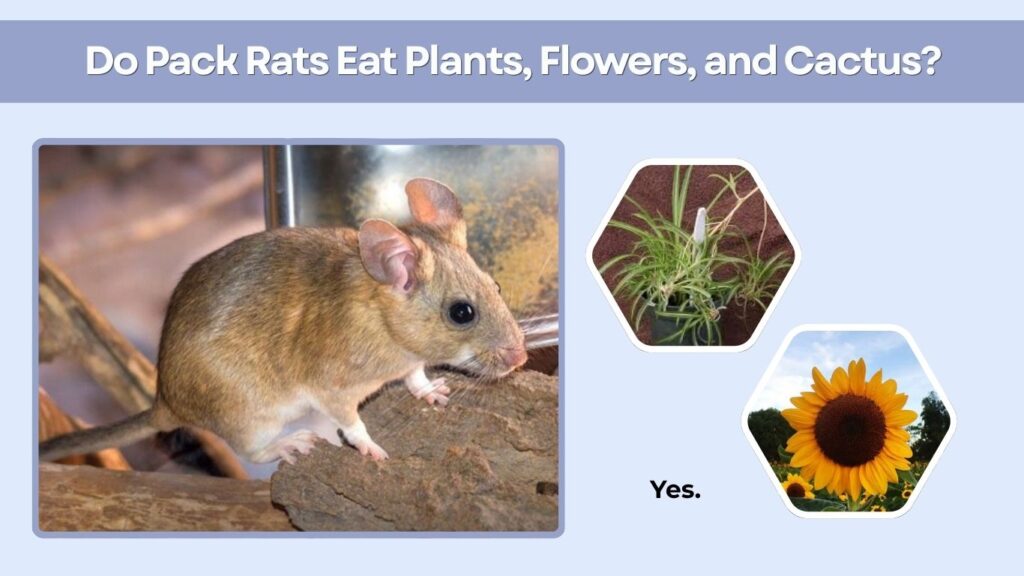
Yes. Plants make up the majority of a pack rat’s natural diet.
Pack rats eat leaves, young shoots, flowers, seeds, bark, fruits, and vegetables. Flowers can be especially vulnerable in landscaped yards because pack rats forage primarily at night when people are unlikely to notice them.
Cactus is one of the most important foods for desert species. White-throated woodrats may rely heavily on prickly pear and cholla, obtaining both nutrition and much of their required water from these plants.
Do Pack Rats Eat Tomatoes?
Yes, they can.
Pack rats are attracted to vegetables and fruits growing around homes, and Arizona Cooperative Extension has documented reports of ripe tomatoes being carried away by woodrats.
A partially eaten tomato does not automatically prove that a pack rat is responsible, because many rodents and other animals eat garden produce. Nearby middens, droppings, gnaw marks, or nighttime activity provide stronger evidence.
Do Pack Rats Eat Meat, Mice, Eggs, or Scorpions?
Pack rats are primarily plant eaters, but some species occasionally consume animal material.
White-throated woodrats have been observed eating insects, small reptiles, and even mice, although such behavior is considered uncommon. Other woodrat species have also been reported consuming insects or other animal foods occasionally.
Therefore, a pack rat may eat meat when an opportunity arises, but it is not primarily a predator.
Mice are possible but unusual prey. Eggs and scorpions are not generally recognized as major pack-rat foods. Scorpion hunting is much more characteristic of species such as grasshopper mice than of typical pack rats.
What Do Baby Pack Rats Eat?
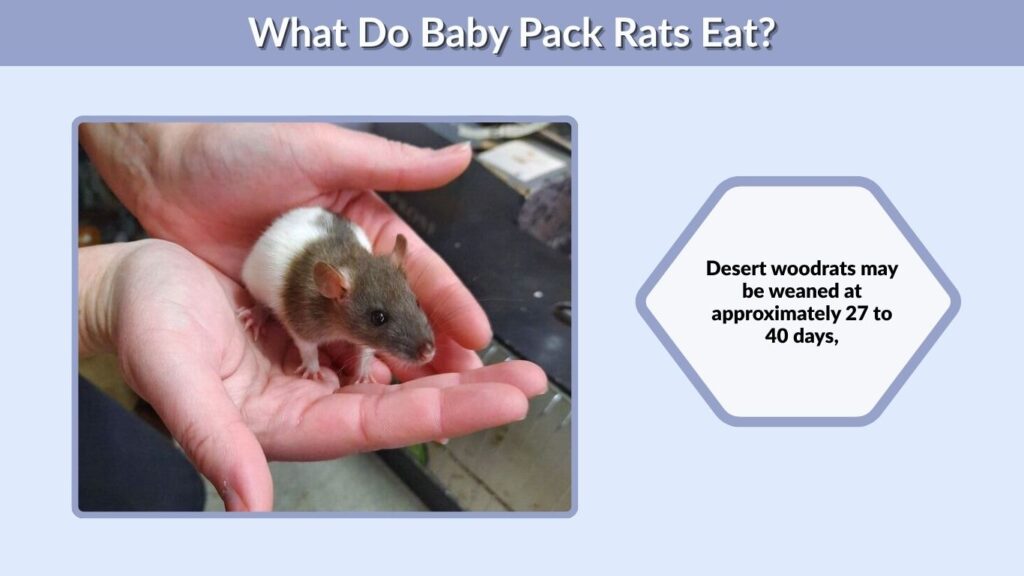
Newborn pack rats depend on their mother’s milk before gradually transitioning to solid foods.
The timing varies among woodrat species. Desert woodrats may be weaned at approximately 27 to 40 days, while white-throated woodrats can nurse considerably longer. Young white-throated woodrats begin eating cactus, berries, and other vegetation before they are completely weaned.
Once independent, juveniles generally eat the same locally available plant foods as adults.
Why Do Pack Rats Chew Car Wires?
Pack rats can cause expensive vehicle damage, but electrical wiring should not be considered a normal food source.
Woodrats commonly build nests inside garages and the engine compartments of vehicles that remain unused for long periods. Arizona Cooperative Extension reports that they readily gnaw vinyl and plastic wire coverings and are notorious for damaging automobile and appliance wiring.
Rodents also have continuously growing incisors, so gnawing hard materials helps wear their teeth. Pack rats may additionally remove pieces of plastic, insulation, or other materials while exploring or constructing nests.
How to Prevent Pack Rats From Eating Car Wires
The most effective strategy is preventing pack rats from establishing a nest around the vehicle in the first place. Remove nearby brush piles, accumulated debris, fallen fruit, pet food, and other attractants. Seal access points in garages and inspect vehicles that sit unused.
Keeping the engine compartment exposed to light when appropriate and regularly moving or inspecting stored vehicles may also discourage nesting. Avoid leaving food or nesting materials close to parking areas.
What Animals Eat Pack Rats?
Pack rats are an important food source for many desert predators.
Great horned owls, barn owls, hawks, coyotes, foxes, bobcats, weasels, and several snakes prey on woodrats. The particular predators depend on the woodrat species and region.
In desert ecosystems, coyotes, owls, hawks, foxes, and rattlesnakes are especially important predators. Pack rats compensate by remaining mostly nocturnal and building dense middens with multiple escape routes.