
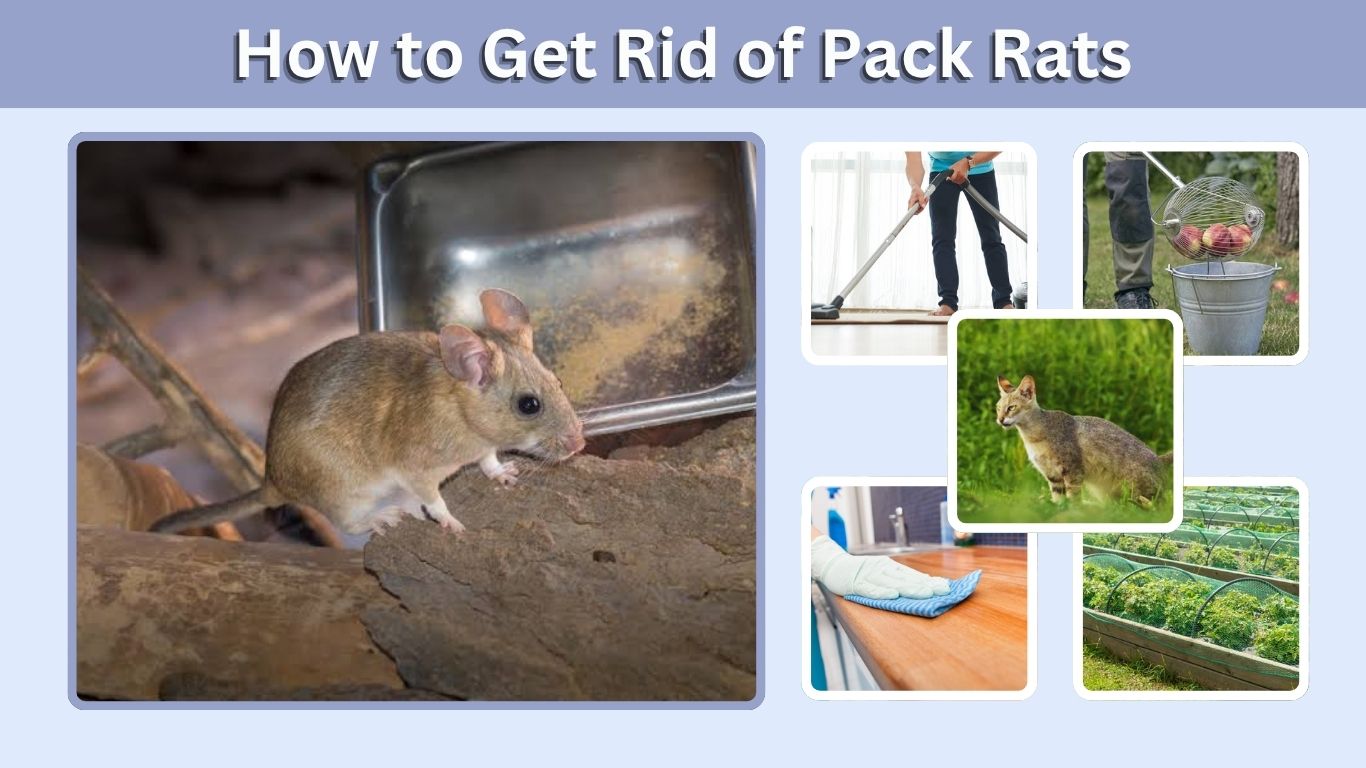
Pack rats, also called woodrats, can become troublesome when they build nests around homes, yards, garages, attics, crawl spaces, or vehicles. They collect food and nesting materials, chew wiring, contaminate areas with droppings, and may repeatedly return when shelter remains available. The best way to get rid of pack rats is to combine trapping with food removal, habitat cleanup, and exclusion. This guide explains practical methods for controlling pack rats indoors and outdoors, including cars, attics, yards, and Arizona properties.
How to Identify a Pack Rat Problem
Before starting control, confirm that pack rats are actually responsible. Pack rats are native North American woodrats in the genus Neotoma. They are generally nocturnal and famous for collecting sticks, plant material, bones, and human-made objects around their nests. Finding their characteristic debris piles, droppings, and gnawing damage can help distinguish them from other rodents.
Common Signs of Pack Rats
Watch for several clues around buildings, vegetation, and stored vehicles:
- Large nests made from sticks, cactus pieces, leaves, and debris
- Rodent droppings around hiding areas
- Chewed electrical wiring, hoses, wood, or insulation
- Food or pet feed disappearing overnight
- Scratching or movement sounds after dark
- Stored objects or small items moved into nests
- Damage beneath vehicle hoods
- Well-used pathways through vegetation
How Big Do Pack Rats Get?
Pack-rat size varies by species. They are generally larger and more robust than house mice, with prominent ears and relatively large eyes. Some species also have furry or distinctly two-colored tails.
Because several Neotoma species occur across western North America, appearance varies considerably. Identification is easier when you combine the animal’s appearance with its nest, habitat, and damage patterns.
Best Way to Get Rid of Pack Rats
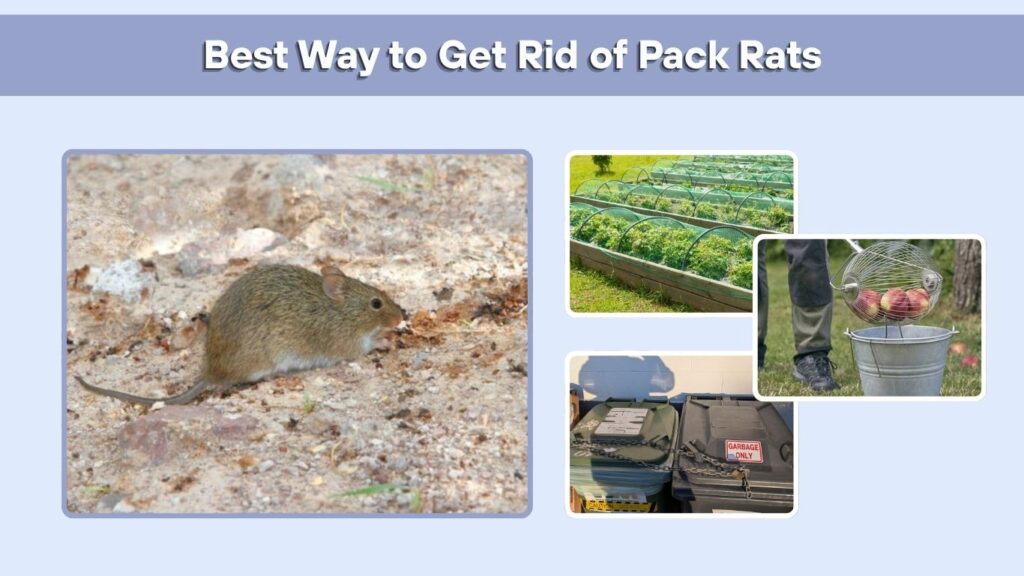
The most reliable control strategy combines removing attractants, trapping existing animals, and preventing new ones from moving in. Trapping by itself may temporarily reduce numbers, but University of Arizona guidance notes that long-term control also requires removing attractants and, where appropriate, dealing with nearby nests.
Remove Food and Nesting Attractions
Make the property less appealing before and during trapping:
- Store pet food and birdseed in rodent-resistant containers.
- Clean fallen fruit, nuts, seeds, and spilled animal feed.
- Keep garbage containers tightly closed.
- Remove unnecessary piles of lumber, cardboard, and debris.
- Thin very dense vegetation immediately around structures.
- Remove abandoned nesting material carefully.
- Avoid leaving food or snacks inside stored vehicles.
Reducing shelter is particularly important because pack rats often establish substantial nests close to reliable food and cover.
Trap Pack Rats Effectively
Rat-sized snap traps are one of the most direct ways to control pack rats around homes. University of Arizona guidance suggests baits such as nuts, peanut butter, oatmeal, raisins, dried fruit, or similar foods. Place traps where rodent travel is evident while keeping them inaccessible to children and pets.
Live trapping is possible, but relocation is not necessarily humane or effective. The University of Arizona notes that relocated woodrats may die because of exposure, predation, or competition in unfamiliar habitat.
Seal Entry Points After Control
Once indoor activity has stopped, focus on exclusion:
- Repair gaps around pipes and utility openings.
- Seal damaged siding and foundation openings.
- Inspect rooflines, vents, crawl-space entrances, and eaves.
- Repair torn screens.
- Install appropriate rodent-resistant screening over vents.
- Check garage-door edges and weather stripping.
- Trim vegetation that gives rodents easy access to structures.
Do not permanently close an active entry until you are confident animals are no longer trapped inside.
Getting Rid of Pack Rats in Specific Places
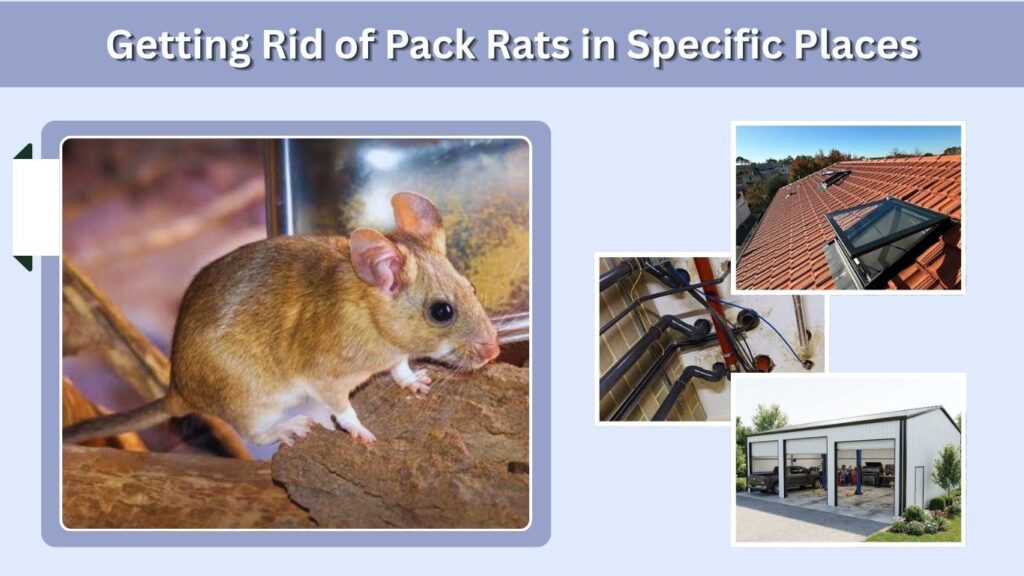
Pack rats behave differently depending on where they establish themselves. An animal living beneath desert vegetation requires a different approach from one nesting inside an attic or vehicle engine compartment. Begin by locating food, shelter, nesting material, and travel routes, then combine trapping with environmental changes suited to that particular location.
Pack Rats in the House, Attic, or Under the House
Inside structures, first identify how the rats are entering. Inspect crawl spaces, plumbing penetrations, roof openings, garages, vents, and damaged construction.
Place appropriately sized snap traps near travel routes and nesting areas. After activity stops, seal openings and remove accessible food. In attics and crawl spaces, contaminated insulation or extensive nesting material may require professional cleanup, particularly when infestation is heavy.
Avoid simply sealing a rat into a wall or attic because the trapped animal may die inside the structure or create another exit.
Pack Rats Outside and in the Yard
Outdoor control works best when the landscape becomes less attractive:
- Remove abandoned nests and debris where appropriate.
- Thin excessive ground-level vegetation near buildings.
- Pick up fallen fruit and seed.
- Store feed securely.
- Move firewood and clutter away from walls.
- Use rat-sized traps where activity is concentrated.
- Protect valuable plants with appropriate physical barriers.
Arizona Extension reports that smooth sheet-metal barriers at least two feet high can help protect individual plants or garden areas in some circumstances.
How to Get Pack Rats Out of a Car or RV
Pack rats may nest under vehicle hoods, particularly when cars, trucks, or RVs remain parked for long periods. They can damage insulation, filters, and wiring.
CDC recommends airing out an affected vehicle before inspection and checking the engine compartment, air intake, filters, trunk, and interior for nests or droppings. Disconnecting the battery before inspecting the engine compartment can reduce electrical risk. Contaminated material should be disinfected before removal rather than vacuumed dry.
After cleanup, remove all food from the vehicle and use traps around the parking area when appropriate.
How to Get Rid of Pack Rats Naturally
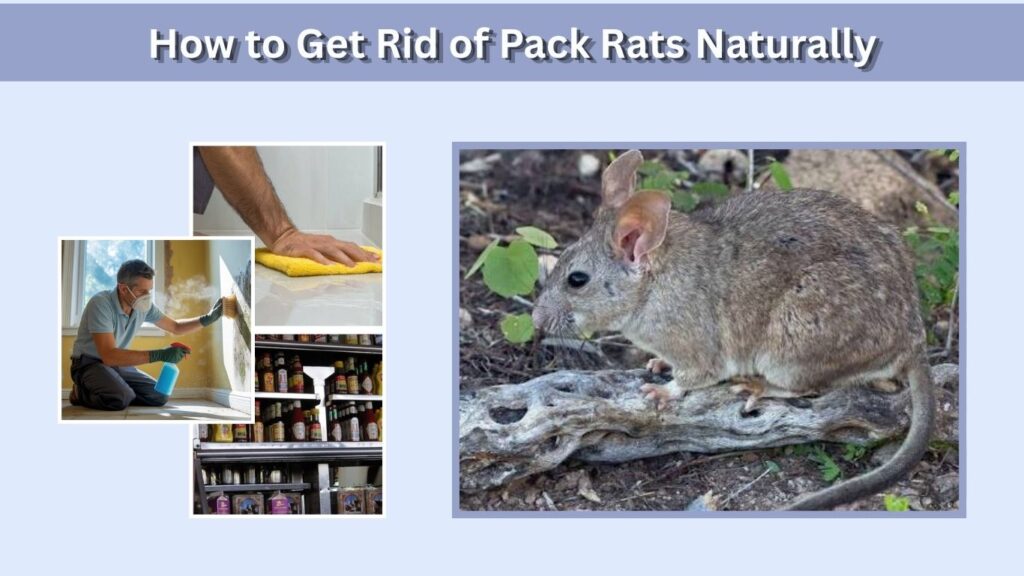
If you prefer to control pack rats without poison, trapping, sanitation, habitat modification, and exclusion provide the most dependable foundation. Natural control should focus less on trying to scare rodents away with odors and more on making the property physically difficult to enter and unattractive for nesting.
Do Home Remedies Work?
Strong-smelling substances are often suggested online, but odor-based remedies alone rarely solve an established infestation. Even when an unfamiliar scent temporarily disturbs an animal, reliable food and shelter can encourage it to return.
A better poison-free approach is to remove food, clean up hiding areas, use mechanical traps, destroy abandoned nests where appropriate, and seal structures after the population has been controlled.
Will Mothballs Get Rid of Pack Rats?
Mothballs should not be treated as a general-purpose pack-rat remedy. They are pesticide products intended for specific labeled uses, and placing them around attics, cars, yards, or living spaces outside those directions may expose people or animals to harmful vapors.
Physical exclusion and trapping are much more practical methods for a persistent pack-rat problem.
Clean Pack Rat Droppings Safely
Rodent-contaminated areas require careful cleaning because rodents and their waste can carry pathogens. CDC specifically warns against sweeping or vacuuming dry rodent urine, droppings, or nesting material because this can send contaminated particles into the air.
Safe Cleanup Method
Wear rubber or plastic gloves and thoroughly wet droppings, urine, or nests with an appropriate disinfectant. CDC recommends allowing the disinfectant to remain wet for about five minutes, or following the product’s label instructions, before wiping contaminated material up with paper towels. Dispose of waste appropriately, disinfect the surrounding surface, and wash hands afterward.
For a heavily infested building, contaminated ventilation system, or extensive nesting area, professional assistance may be safer.
Getting Rid of Pack Rats in Arizona
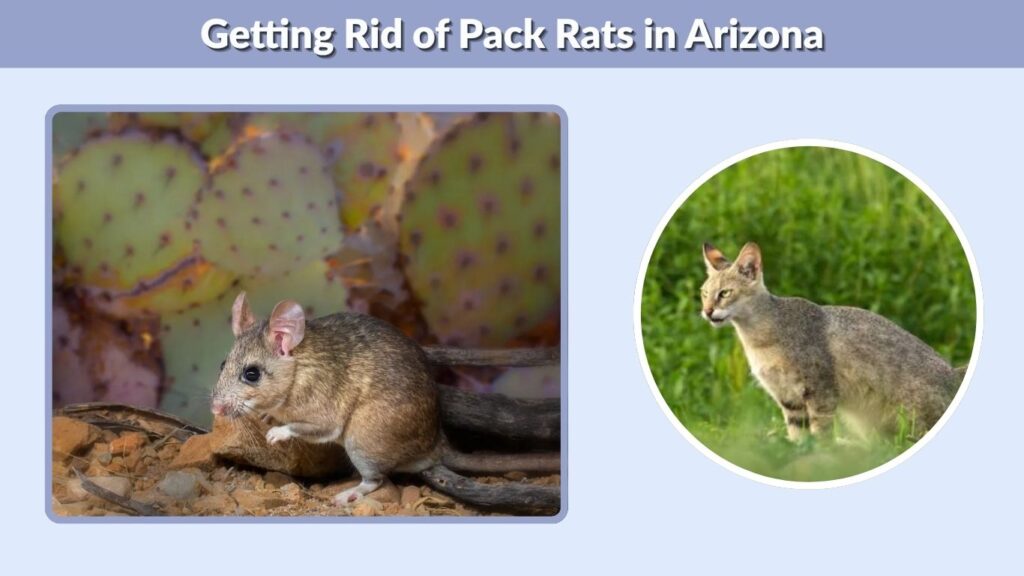
Pack rats are particularly familiar to homeowners in Arizona and other parts of the Southwest, where natural desert habitat can place woodrats close to homes, vehicles, cactus gardens, sheds, and landscaping. Successful Arizona pack-rat control generally requires ongoing prevention rather than a one-time treatment.
Arizona Pack Rat Prevention
Keep vegetation and debris around structures managed, remove readily available food, inspect vehicles that sit unused, and watch for developing stick nests. After trapping active rodents, continue monitoring the property because suitable habitat may attract new individuals.
For persistent activity near buildings or expensive vehicle wiring, a licensed wildlife or pest-management professional can help locate nests and identify entry routes that are easy to overlook.
FAQs
1. What is the fastest way to get rid of pack rats?
Removing food and nesting material while placing rat-sized snap traps near active travel routes is usually one of the quickest practical approaches. Follow trapping with exclusion so new animals cannot simply replace those removed.
2. Can you get hantavirus from pack rats?
Rodents can be associated with diseases transmitted through contaminated urine, droppings, saliva, or nesting material. CDC advises treating rodent waste cautiously and avoiding dry sweeping or vacuuming.
3. How do I get rid of pack rats without poison?
Use snap traps, remove food sources, eliminate accessible nesting materials, reduce protective vegetation near structures, and seal entry points after the rodents are gone. This combination can provide effective control without rodenticides.
4. Why do pack rats keep coming back?
A property may continue attracting pack rats when it provides food, vegetation, protected nesting areas, water, or easy access to buildings and vehicles. Removing individual animals without correcting these conditions often results in recurring problems.
5. When should I call a professional?
Professional help is worthwhile when rats are inside walls or ventilation systems, infestations are extensive, vehicle damage continues, traps are unsuccessful, or contaminated nesting material is widespread. A professional can combine removal with exclusion and habitat recommendations rather than treating only the visible animals.