
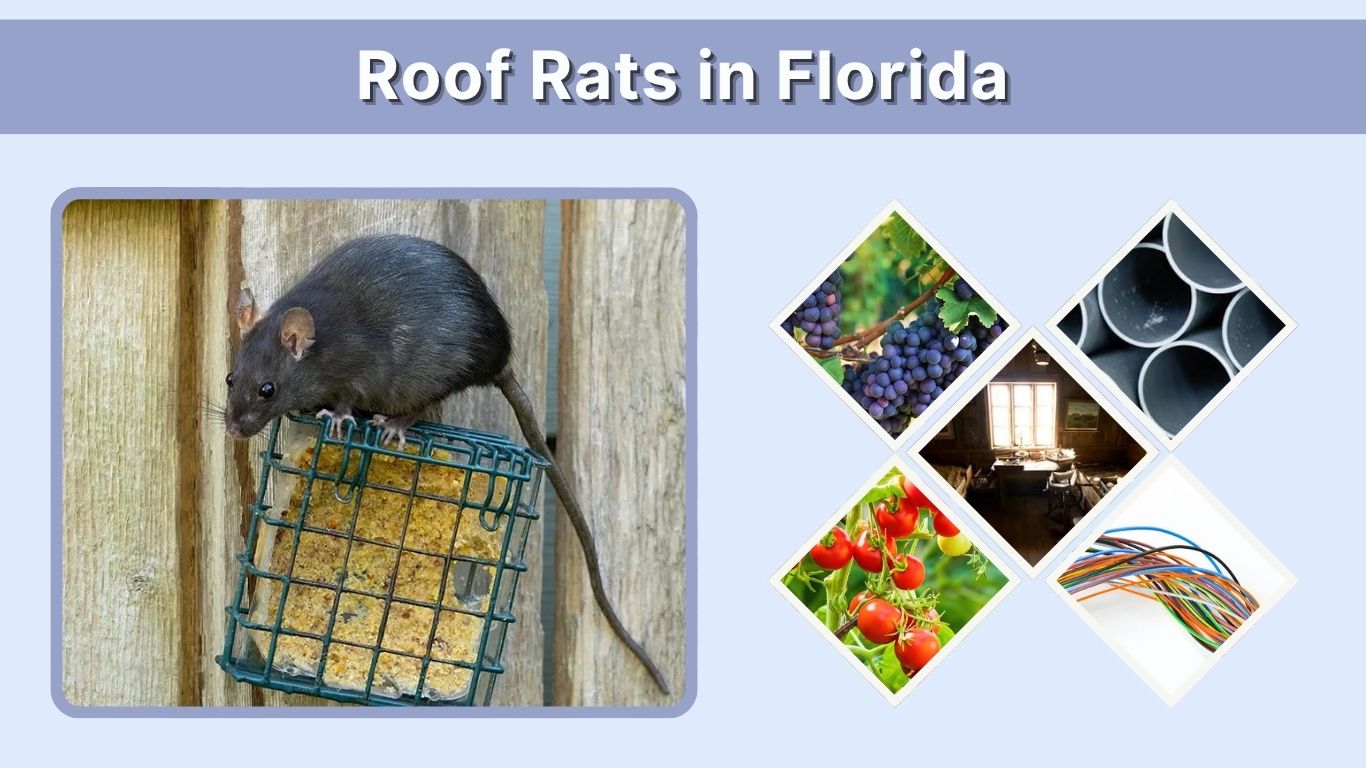
Roof rats in Florida are agile, tree-climbing rodents that frequently live in attics, palm trees, citrus trees, soffits, and dense landscaping. Also called black rats, they are especially well adapted to Florida’s warm climate and can damage fruit, contaminate food, and gnaw electrical wiring inside buildings. Adults are slender, have large ears and eyes, and possess a tail longer than the head and body combined. Knowing how to identify roof rats, recognize their droppings, locate entry points, and remove food and shelter can help prevent a serious infestation.
What Are Roof Rats in Florida?
The Florida roof rat is the species Rattus rattus, a slender rodent well known for climbing trees, wires, vines, walls, and buildings. Unlike Norway rats, which more often burrow near ground level, roof rats prefer elevated nesting sites. UF/IFAS reports that they occur throughout Florida and are particularly associated with attics, roof spaces, palm trees, ornamental vegetation, and fruit trees.
Florida Roof Rat Identification
Common identifying characteristics include:
- Scientific name: Rattus rattus
- Slender, streamlined body
- Large eyes and prominent ears
- Pointed muzzle
- Long, mostly hairless tail
- Tail longer than the head and body combined
- Black, gray, or brownish-gray upper body
- Gray, white, or cream-colored underside
- Excellent climbing ability
Florida roof rats occur in several color forms, so a rat does not need to be completely black to be a roof rat.
Florida Roof Rat Size
Adult Florida roof rats measure approximately 12–14 inches from nose to tail tip and typically weigh around 5–10 ounces.
Their relatively slim bodies help distinguish them from heavier Norway rats. The long tail is particularly useful for identification because it normally extends beyond the combined length of the head and body.
Roof Rat vs. Mouse in Florida
Roof rats are considerably larger than house mice. House mice typically weigh around half an ounce and have proportionally smaller bodies, while adult roof rats can weigh many times more.
Droppings also differ. House mouse droppings are small and rod-shaped, whereas roof-rat droppings are larger, often spindle-shaped and approximately 1/4–1/2 inch long.
Where Do Roof Rats Live in Florida?
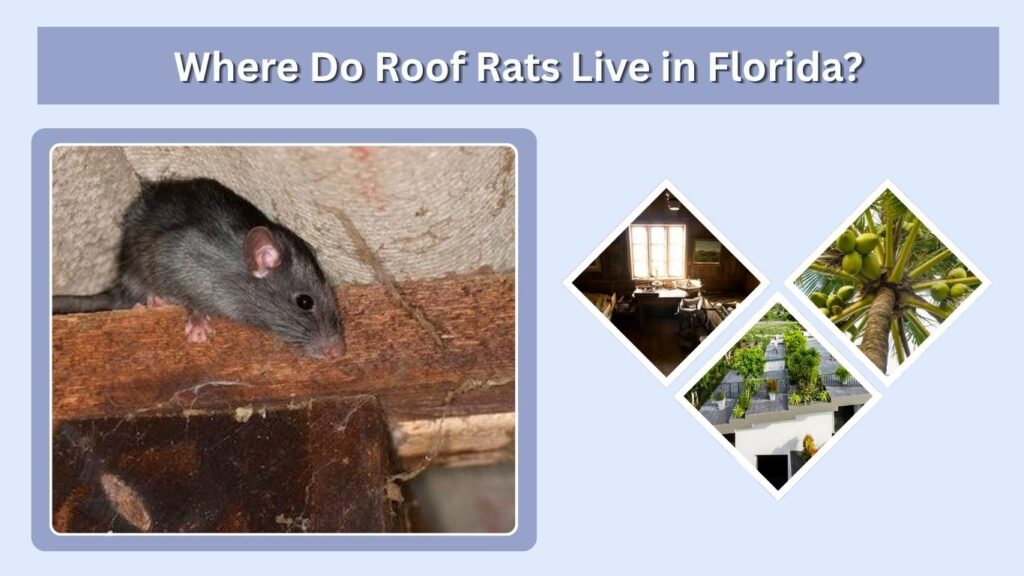
Florida provides roof rats with abundant food, vegetation, and year-round shelter. Their natural climbing ability means they frequently occupy spaces above ground rather than creating obvious burrows. Homes surrounded by palms, fruit trees, vines, dense shrubs, utility lines, or overhanging branches may provide especially convenient routes to roofs and attics.
Common Roof Rat Nesting Areas
Roof rats commonly shelter in:
- Attics
- Roof spaces
- Soffits
- Palm trees
- Hollow trees
- Dense shrubs
- Piles of stored materials
- Old palm-frond skirts
- Tree cavities
- Debris piles
They may also nest closer to ground level when suitable elevated shelter is unavailable.
Roof Rats in South Florida
Roof rats are particularly well suited to South Florida, where warm conditions, tropical vegetation, palms, fruit trees, and dense urban landscaping provide food and shelter.
They can move through trees much like squirrels and may use branches, vines, fences, and utility lines as elevated pathways between feeding sites and buildings.
Roof Rats in Palm and Citrus Trees
Florida homeowners sometimes refer to roof rats as palm rats because they frequently shelter around palms. Old hanging palm fronds can provide protected nesting locations.
Citrus is another important attraction. UF/IFAS notes that roof rats can live in citrus trees and damage fruit, sometimes hollowing oranges while leaving much of the peel behind.
What Do Florida Roof Rats Eat?
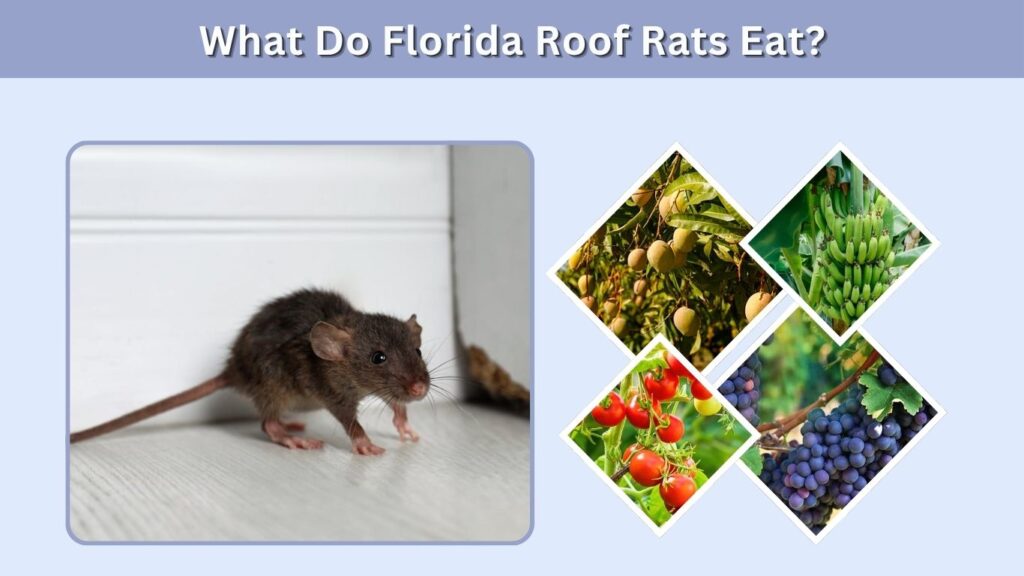
Roof rats are omnivores, although plant foods are particularly important to them. Florida’s fruit trees, backyard bird feeders, pet-food bowls, garbage, gardens, and livestock feed can all provide reliable food. Eliminating these resources is an important part of long-term control because rats routinely travel significant distances between shelter, food, and water.
Common Foods
Florida roof rats may eat:
- Oranges and other citrus
- Bananas
- Mangoes
- Figs
- Grapes
- Berries
- Peaches
- Tomatoes
- Nuts and seeds
- Bird seed
- Pet food
- Livestock feed
- Garbage
UF/IFAS notes that roof rats can damage a wide variety of cultivated fruits and often contaminate more food than they actually consume.
Signs of Feeding Damage
Hollowed citrus fruit is a classic sign around Florida properties. Other fruit may have sections gnawed away or disappear completely.
Gnaw marks around storage containers, pet-food bags, pipes, rafters, or electrical wiring can also indicate rodent activity.
Roof rats continually gnaw because rodent incisors grow throughout life, which is one reason infestations can result in structural and electrical damage.
Signs of a Roof Rat Infestation
Because roof rats are mainly nocturnal, homeowners may notice evidence long before seeing the animals themselves. Scratching sounds above ceilings, nighttime movement, droppings, damaged food, and greasy rub marks are common clues. Finding several signs together—particularly in an attic or roof space—strongly suggests that rats are regularly using the building.
Florida Roof Rat Droppings
Roof rat droppings are generally:
- Dark brown to black
- Approximately 1/4–1/2 inch long
- Narrow or spindle-shaped
- Often pointed at the ends
- Found along travel routes
- Concentrated near feeding or nesting areas
Fresh droppings tend to be darker and softer, while older droppings become dry and dull.
Other Signs Around the House
Watch for scratching or running noises in the attic after dark, gnawed fruit, damaged food packages, chewed wires, nesting material, and dark greasy marks along commonly traveled surfaces.
Roof rats tend to follow repeated routes, so rub marks may develop along rafters, walls, pipes, and other pathways.
Are Florida Roof Rats Dangerous?
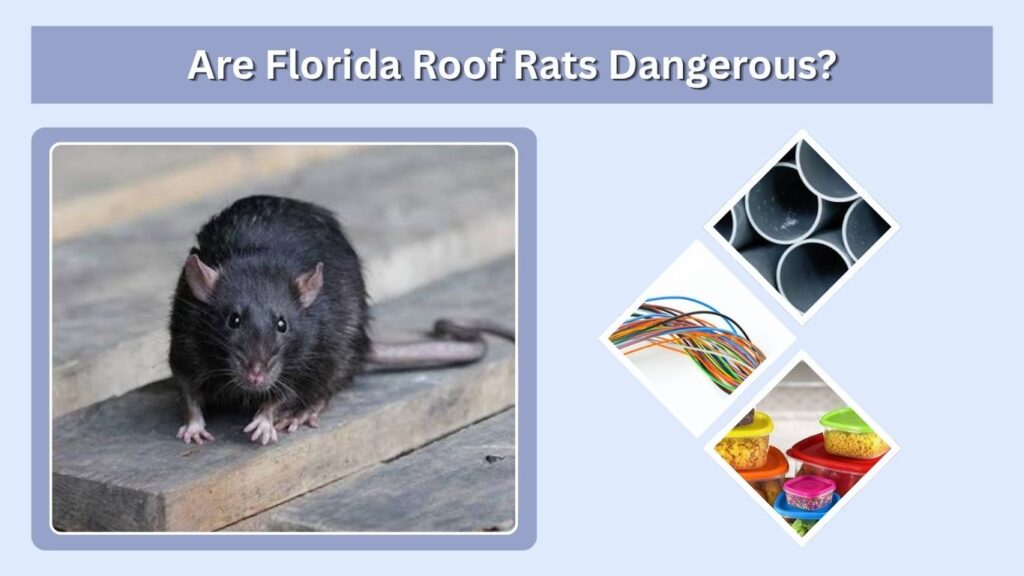
Roof rats can create both sanitation and property problems. Their urine, feces, nesting material, and contaminated food should not be handled casually. They can also damage insulation, wood, pipes, stored belongings, and electrical wires.
The goal should therefore be to remove infestations promptly while preventing rats from returning.
Roof Rat Health Concerns
Avoid direct contact with live rats, carcasses, urine, or droppings. Rodents can carry microorganisms and parasites, and contamination around stored food or food-preparation areas requires careful cleanup.
When cleaning heavily contaminated areas, follow appropriate rodent-cleanup guidance rather than sweeping or vacuuming dry droppings, which can spread contaminated particles.
Property Damage
Roof rats may chew:
- Electrical wiring
- Rafters and wood
- Plastic pipes
- Food containers
- Insulation
- Stored belongings
UF/IFAS specifically notes that roof rats can be destructive in attics because they gnaw electrical wires and rafters.
How to Get Rid of Roof Rats in Florida
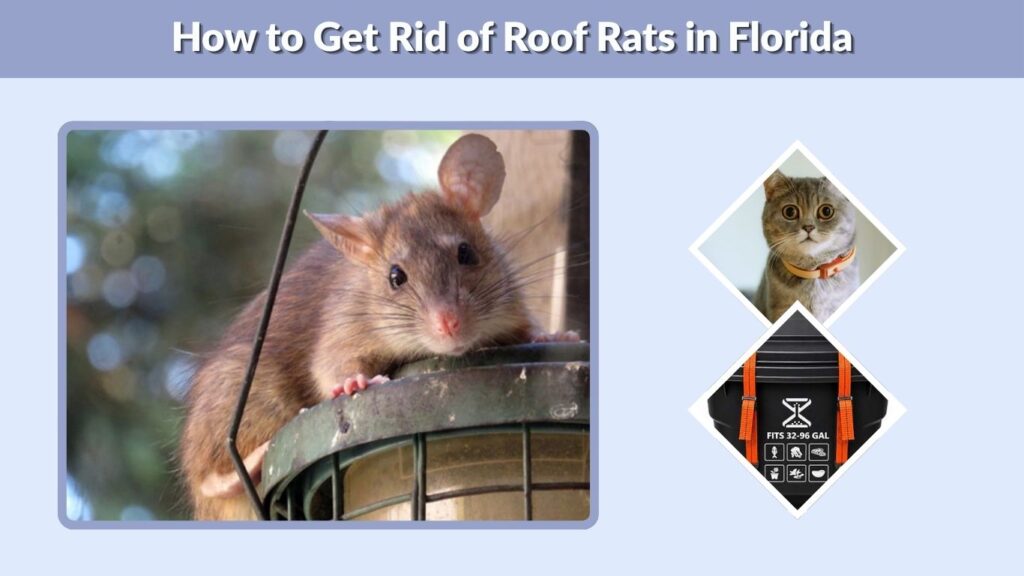
Effective roof rat removal in Florida requires more than killing individual animals. Food sources, entry points, and nesting opportunities must also be addressed. Roof rats are excellent climbers and can use surprisingly narrow routes to access roofs, so inspection should include both ground-level openings and elevated entry points.
Remove Food and Shelter
Start by reducing what attracts them:
- Store pet food in secure containers
- Bring pet bowls indoors overnight
- Clean spilled bird seed
- Pick ripe or fallen fruit promptly
- Keep garbage containers tightly closed
- Remove unnecessary debris
- Trim dense vegetation
- Remove hanging dead palm fronds
Reducing food and shelter makes the property less favorable and improves the effectiveness of other control measures.
Block Entry Points
Inspect roofs, soffits, vents, eaves, plumbing openings, doors, and gaps around utility lines.
Also trim branches that provide direct access to the roof. Because roof rats routinely travel along trees and wires, controlling elevated access is particularly important in Florida landscapes.
Trapping Roof Rats
Traps can be effective when placed along established travel routes rather than randomly in open spaces.
Roof rats often avoid unfamiliar objects initially, so trapping may require patience. Placement in attics or along protected runways can be more effective because rats naturally travel near edges and structural features.
Use traps only where children and pets cannot reach them.
Should You Use Rat Poison?
Rodenticides require particular care. A poisoned rat may die inside a wall, attic, or other inaccessible area, creating odor and cleanup problems. Baits can also pose risks to children, pets, and wildlife when improperly used.
For significant attic infestations or recurring problems, a licensed pest-management professional may be the more practical approach.
How to Prevent Roof Rats in Florida
Prevention is especially important because Florida’s mild climate can support rodent activity for much of the year. Regular inspection of landscaping, fruit trees, rooflines, and food sources can make a property considerably less attractive before rats become established.
Roof Rat Prevention Tips
Keep branches away from the roof, remove unnecessary palm-frond skirts, collect fallen fruit, store bird seed and pet food securely, seal structural gaps, and maintain tight-fitting garbage lids.
Pay particular attention to attics and soffits because roof rats naturally prefer elevated nesting locations.
FAQs
Roof rats are highly adaptable, and Florida provides many of the trees, fruits, structures, and warm conditions they need. Correct identification is important because controlling a roof rat living in an attic requires a different approach from managing a Norway rat burrowing beneath a building.
Are roof rats common in Florida?
Yes. Roof rats occur throughout Florida and are particularly well adapted to trees, palms, citrus groves, attics, and other elevated locations.
How big are Florida roof rats?
Adults are generally about 12–14 inches long including the tail and weigh approximately 5–10 ounces.
What do roof rats eat in Florida?
They particularly favor fruits, seeds, and grains but may also eat bird seed, pet food, livestock feed, nuts, garbage, and other available foods.
What does roof rat poop look like?
Roof rat droppings are typically dark, spindle-shaped, and about 1/4–1/2 inch long. They may accumulate along established runways, feeding sites, and attic areas.
Why are roof rats in my attic?
Attics provide the elevated, protected shelter roof rats naturally prefer. Nearby trees, vines, utility lines, or roof openings can give them access, while pet food, fruit trees, bird feeders, and garbage may provide nearby food.