
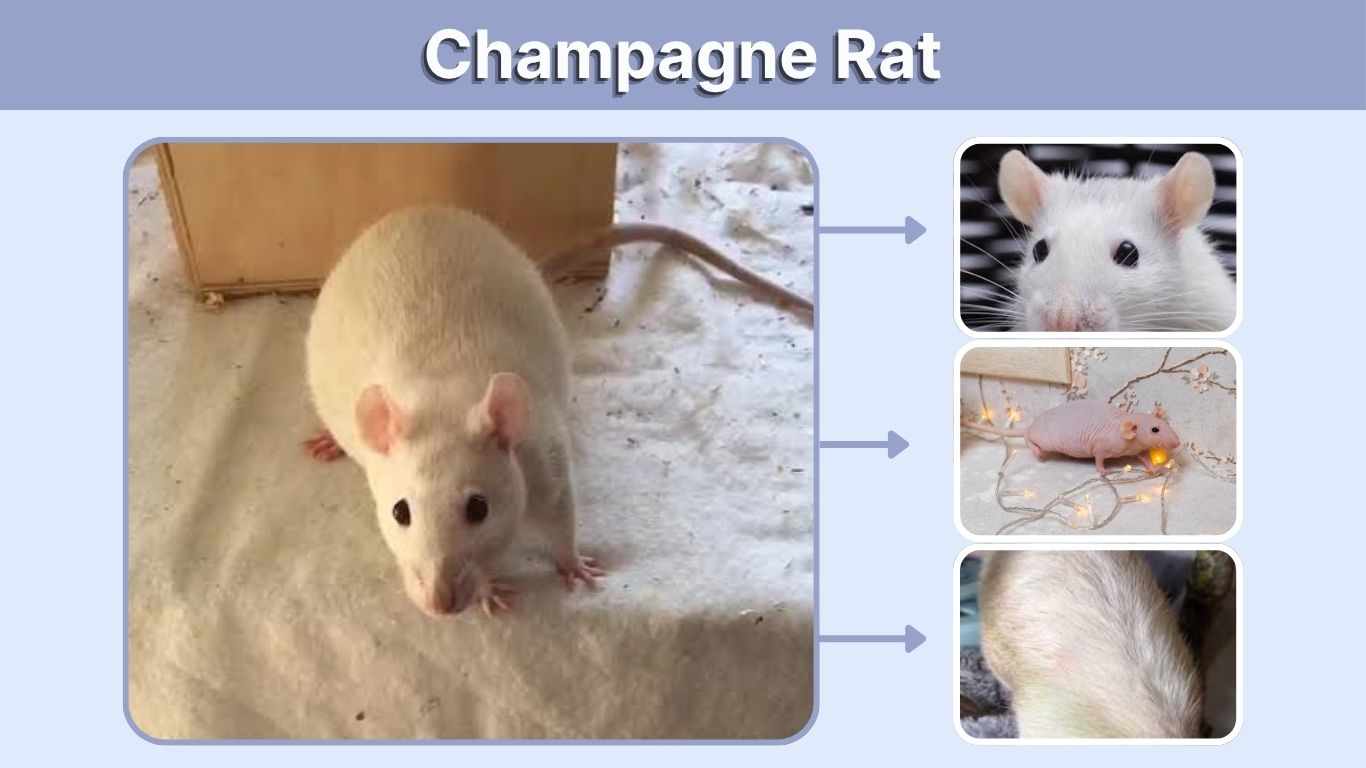
A champagne rat is a fancy rat recognized for its delicate, warm beige coat and red or pinkish-red eyes. Champagne is a color variety rather than a separate breed, and it can appear alongside different ear types, markings, and coat varieties, including Dumbo and Hooded rats. In genetics, the classic Champagne color results from pink-eye dilution acting on a non-agouti, black-based coat. Because the shade is very pale, Champagne rats are sometimes confused with beige, cream, albino, or other diluted colors.
What Is a Champagne Rat?
The Champagne rat is one of the recognized colors found among domesticated fancy rats. AFRMA describes the ideal Champagne as an evenly warm beige without dull or gray tones, while the National Fancy Rat Society describes it as resembling champagne silk. Standard Champagne rats have red eyes.
Champagne has been recognized in organized rat fancy for decades. Historical information from AFRMA notes that Champagne has appeared in NFRS standards since 1976 and AFRMA standards since 1984.
Champagne Rat Identification
Typical characteristics include:
- Light, warm beige coat
- Even coloration from head to body
- Little or no grayish cast
- Red or pinkish-red eyes
- Pink ears and feet
- Pale tail
- Smooth coloration in Self Champagne rats
- Considerably lighter appearance than black, chocolate, or mink rats
Individual rats can differ somewhat in shade depending on genetics, age, coat type, and breeding line.
Is Champagne a Rat Breed?
No. Fancy rats do not have breeds in quite the same sense as dogs. Organizations such as AFRMA classify them by color, markings, coat, body, and ear varieties.
Therefore, a rat might simultaneously be described as:
Champagne + Dumbo + Hooded
In this description, Champagne tells you the color, Dumbo describes the ears, and Hooded describes the markings.
Champagne Rat Color
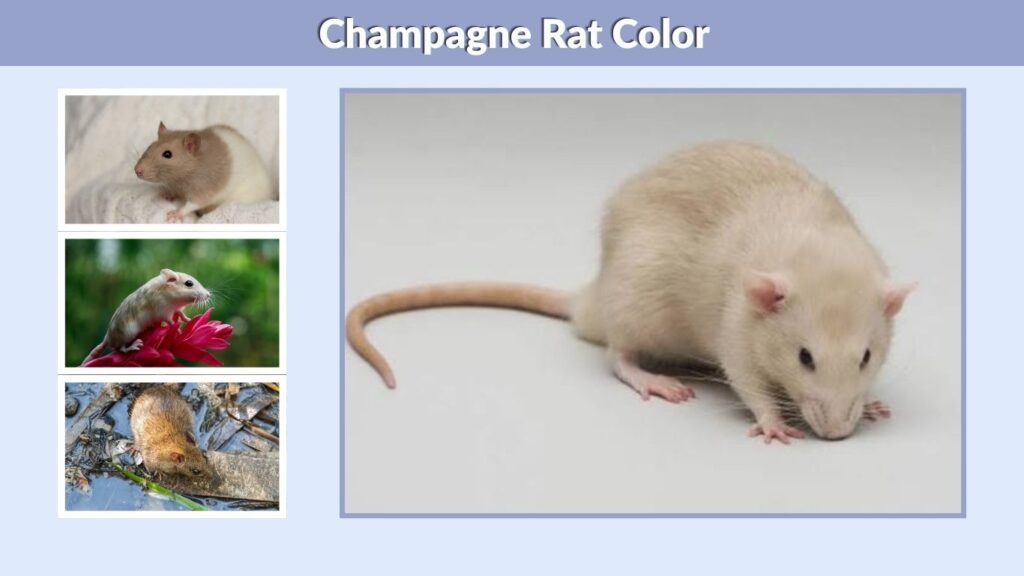
The ideal champagne rat color is a delicate pale beige with a warm appearance.
It should not look noticeably gray, muddy brown, or intensely yellow. The NFRS standard specifically calls for a champagne-silk appearance without dullness or greyness.
Champagne vs. Beige Rat
Champagne and Beige can look similar, but eye color is one useful clue.
Classic Champagne rats have red eyes, whereas Beige rats are associated with a different dilution system and generally have darker ruby-toned eyes.
Genetics also separates them. Champagne is associated with pink-eye dilution, while Beige is produced through another recessive dilution.
Champagne vs. Albino Rat
A very pale Champagne rat can occasionally resemble a pink-eyed white rat at a glance.
However, Champagne still has visible beige pigmentation in its fur. A true pink-eyed white/albino rat lacks that visible coat pigmentation because albinism masks the underlying color.
Good lighting usually makes the distinction easier.
Champagne Rat Genetics
Champagne genetics are especially interesting because the color is produced by diluting a genetically black-based rat.
AFRMA lists classic Champagne as:
aa B– pp
In simplified terms, the rat is non-agouti and carries two copies of the recessive pink-eye dilution allele. This greatly lightens what would otherwise be dark pigmentation.
Pink-Eye Dilution in Champagne Rats
The p/p pink-eye dilution affects both coat and eye pigmentation.
Instead of producing a black-looking animal, the strong dilution changes the coat into a light Champagne shade and produces red eyes.
The NFRS likewise associates Champagne with a/a p/p, with a/a b/b p/p also listed as a possibility.
Pale Champagne Rat
AFRMA distinguishes very pale Champagne associated with a chocolate-based combination:
aa bb pp
This can create an especially light appearance.
That genetic variation helps explain why not every Champagne rat looks exactly the same shade.
Champagne Dumbo Rat
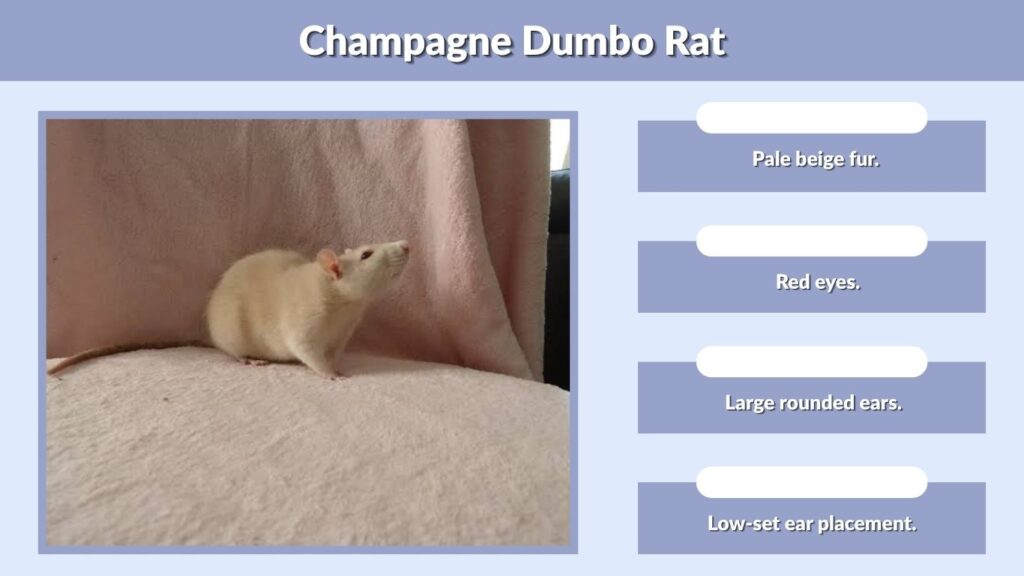
A Champagne Dumbo rat has the Champagne coat color combined with Dumbo ears.
Dumbo rats have larger ears positioned lower on the sides of the head than standard-eared fancy rats. AFRMA treats Dumbo as an ear/body variety rather than a color.
What Does a Champagne Dumbo Rat Look Like?
A typical Champagne Dumbo may have:
- Pale beige fur
- Red eyes
- Large rounded ears
- Low-set ear placement
- Pink feet and tail
- Broad, expressive facial appearance
The Champagne gene does not create Dumbo ears; the two traits are inherited independently.
Champagne Hooded Rat
A Champagne Hooded rat combines Champagne pigmentation with the Hooded marking pattern.
A Hooded rat typically has color covering the head and shoulders, with a colored stripe running along the back over an otherwise white body.
Because marked rats can occur in recognized colors, Champagne can theoretically form the colored portion of a Hooded pattern. AFRMA standards allow marked patterns to occur in recognized colors.
Champagne and White Rat
People searching for a “champagne and white rat” may therefore be looking at a Champagne rat with markings rather than a different color.
Possible patterns can leave substantial white areas while retaining Champagne-colored patches.
The exact pattern should be identified separately from the coat color.
Champagne Self Rat
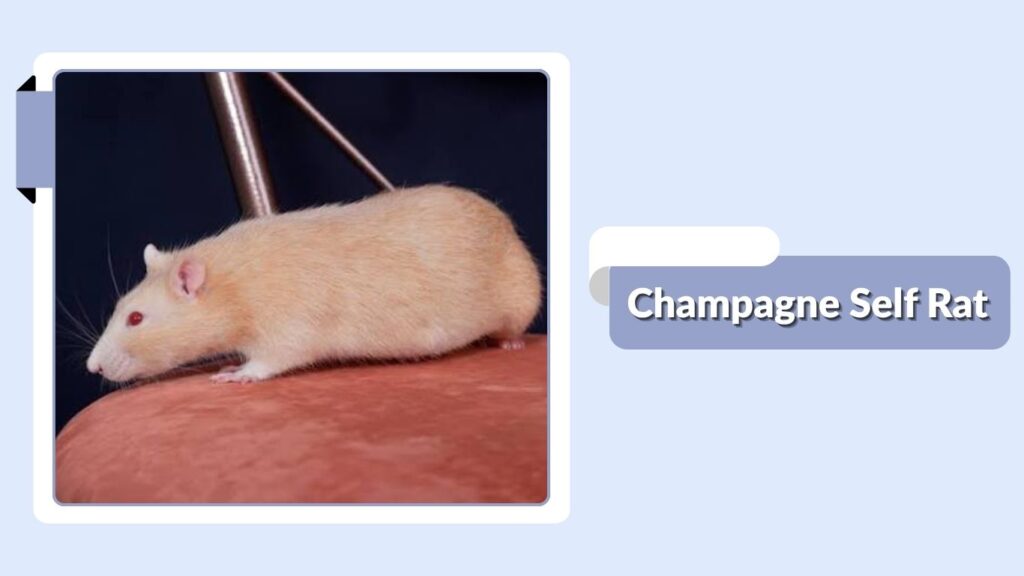
A Champagne Self rat is entirely Champagne colored rather than having white markings.
In show terminology, Self rats should have an even coat color across the body, including an appropriately matching belly.
This is the form most closely associated with the traditional Champagne color standard.
Champagne Self Dumbo Rat
“Champagne Self Dumbo” simply combines three traits:
- Champagne: color
- Self: solid-color pattern
- Dumbo: ear type
It is therefore not a separate species or breed.
Champagne Roan Rat
Roan is another trait that can influence a rat’s appearance.
Roan rats progressively lighten as they molt, sometimes becoming dramatically paler with age. AFRMA notes that the Roan or Husky trait causes color to fade with successive molts until some animals become nearly white.
A Champagne Roan could consequently start with recognizable pale coloration and become increasingly washed out.
Does Champagne Color Change With Age?
A normal Champagne rat should retain its basic Champagne identity, although coat shade can change somewhat with age and molts.
A true Roan rat undergoes much more noticeable fading because fading is part of the Roan trait itself.
Champagne Hairless Rat
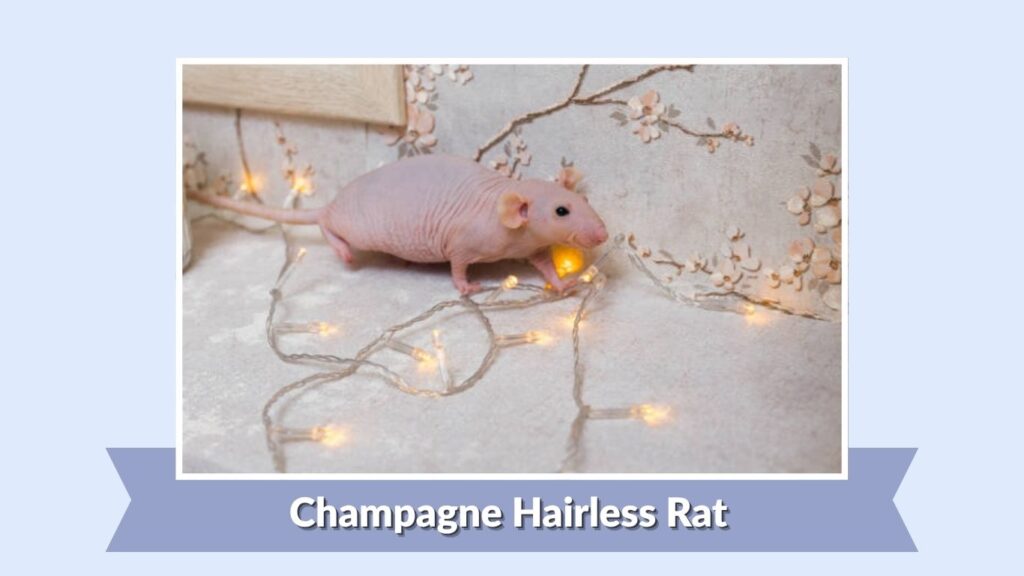
Hairless is a coat variety rather than a color. Hairless rats have little or no normal coat, so describing one as a Champagne Hairless rat primarily refers to its underlying color genetics rather than an obvious Champagne-colored fur coat.
AFRMA recognizes Hairless independently from color and markings.
Without normal fur, Champagne pigmentation may be much less visually apparent.
What Color Eyes Do Champagne Rats Have?
Standard Champagne rats have red eyes. Both AFRMA and NFRS standards specify red eyes for the variety.
Can a Champagne Rat Have Black Eyes?
A conventional show-standard Champagne should not have black eyes.
Fancy-rat genetics references do describe a separate dark-eyed Champagne combination, but it involves different genes and should not be confused with classic pink-eye-dilute Champagne.
Therefore, eye color is useful when determining whether a pale beige rat is truly classic Champagne.
Russian Champagne Rat
“Russian Champagne” can be confusing because Russian Blue dilution and Champagne-type dilution can interact.
AFRMA lists Russian Silver as a pink-eyed Russian Blue-derived color and notes that it was originally called Blue-Champagne.
For accurate identification, it is better to determine the animal’s known genetics and recognized variety rather than assuming every pale Russian-derived rat is ordinary Champagne.
Champagne Fancy Rat as a Pet
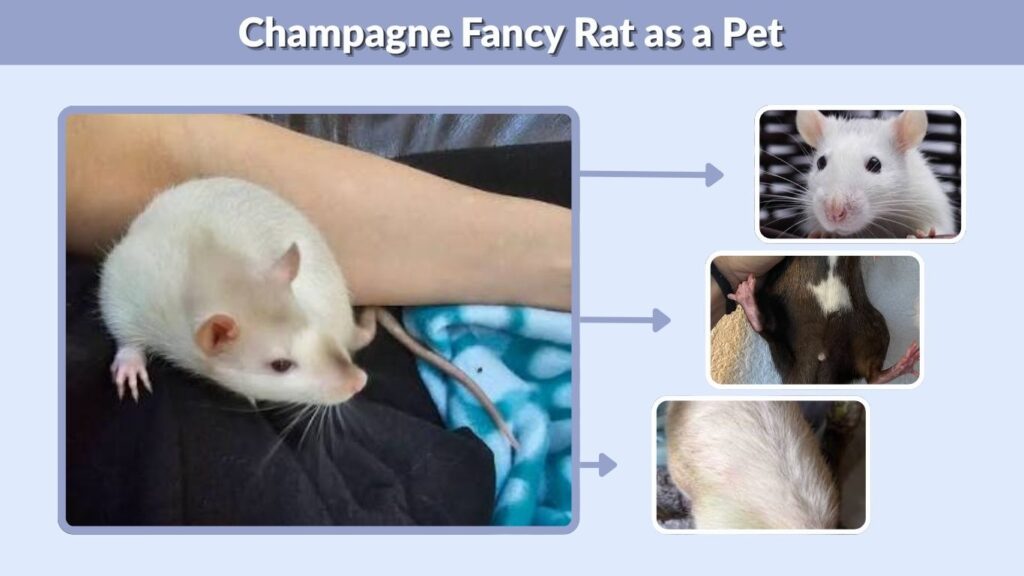
Champagne coloration does not create a fundamentally different pet temperament from other fancy rats. Personality is influenced much more by genetics, socialization, handling, health, and individual variation than by coat color.
Fancy rats are social animals and generally benefit from compatible rat companions rather than living alone.
Choosing a Champagne Rat
When looking for one, pay attention to:
- Bright, alert behavior
- Clear eyes and nose
- Healthy breathing
- Clean coat and skin
- Good body condition
- Proper socialization
- Known age and sex
- Responsible breeding history
Color should be secondary to health and temperament.
Banksy Champagne Rat
The phrase “Banksy Champagne Rat” refers to artwork rather than a fancy-rat color.
During Banksy’s 2018 Paris works, small rat stencils appeared involving rats riding or being propelled by champagne corks. Contemporary reporting described two rats associated with champagne bottles/corks among the Paris pieces.
Therefore, searches for Banksy Champagne Rat Paris have a completely different meaning from searches about Champagne-colored pet rats.
FAQs
What color is a Champagne rat?
A Champagne rat is a light, warm beige or champagne-silk color without strong gray or muddy brown tones.
Do Champagne rats have pink or red eyes?
Classic Champagne rats have red eyes, although they may appear pinkish depending on lighting.
Is a Champagne Dumbo rat a different breed?
No. Champagne describes its color, while Dumbo describes its large, low-set ears.
What genetics create a Champagne rat?
Classic Champagne is generally represented as aa B– pp, meaning a non-agouti black-based animal with two copies of pink-eye dilution.
Are Champagne rats rare?
Availability varies considerably by country and breeder. Champagne is a recognized fancy-rat color, but it may be less commonly available than widespread colors such as black, agouti, or common marked varieties.