
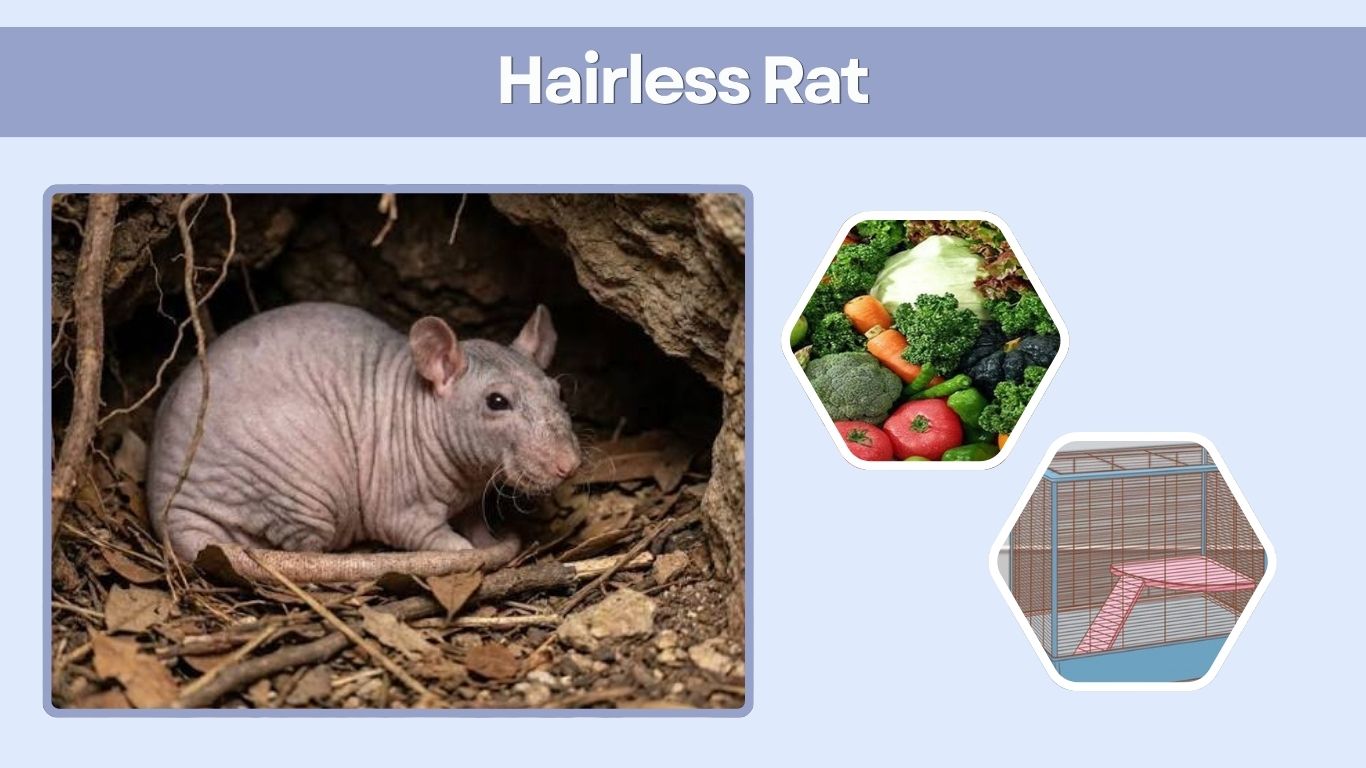
A hairless rat is a domestic pet rat with little or no visible fur. Its exposed skin, prominent ears, and fine wrinkles give it a distinctive appearance, but its basic needs remain those of other rats: companionship, space, enrichment, balanced food, and veterinary care.
However, “hairless” does not describe one uniform genetic background. Understanding that distinction helps owners avoid misleading claims about lifespan, health, and special care requirements.
What Is a Hairless Rat?
Hairless pet rats belong to the same species as other domestic fancy rats, Rattus norvegicus. They are coat varieties, not a separate species.
Their skin may be pink, dark, or patterned, and their eyes can have different colors. Some retain fine fuzz, particularly around the face or feet. Whiskers may be short, curly, or missing.
Several terms appear in listings:
- Hairless: A description of a largely bare coat, sometimes associated with a specific inherited hairlessness trait.
- Double rex: Rats with two copies of the rex coat variant, often producing sparse, patchy, or changing fur coverage.
- Dumbo hairless: A rat combining reduced fur with the dumbo ear variety.
Double rex and other inherited forms of hairlessness are not automatically genetically identical. Appearance alone may not establish the underlying cause.
Are Hairless Rats Good Pets?
They can be rewarding companions for people prepared to meet their needs. Domestic rats are intelligent, curious animals, and many enjoy gentle interaction with familiar people.
However, human attention does not replace rat companionship. Keep compatible rats in pairs or groups, usually of the same sex. Mixed-sex groups require appropriate neutering arrangements to prevent unwanted litters.
Hairless rats can live with compatible furred rats. Introductions should be gradual and supervised, with advice from a knowledgeable rescue or veterinarian when needed.
Provide daily opportunities to explore a rat-proofed area. Protect electrical cables, block escape routes, and supervise interactions with children. Never pick a rat up by its tail.
Choosing a Hairless Rat Cage
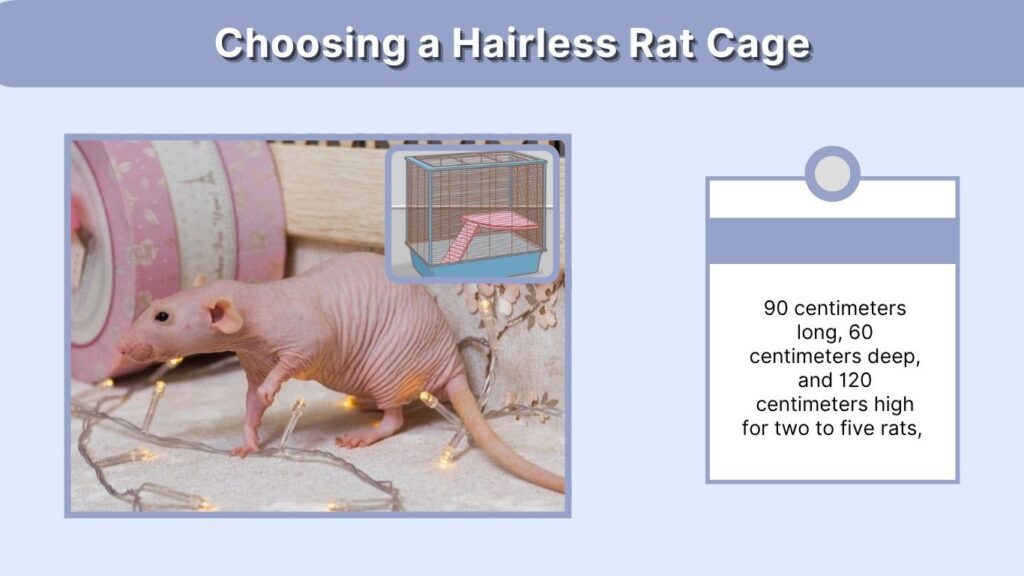
A suitable hairless rat cage should provide ventilation, usable space, safe climbing opportunities, and comfortable resting areas.
As one welfare guideline, Blue Cross recommends at least 90 centimeters long, 60 centimeters deep, and 120 centimeters high for two to five rats, with larger accommodation for bigger groups. This is living space, not a substitute for supervised exercise outside the cage.
Look for:
- Secure doors and bar spacing that prevents escape.
- Solid flooring and comfortable platforms.
- Smooth accessories without sharp edges.
- Sheltered sleeping areas.
- Hammocks and resting points that break up long falls.
- Space for digging, climbing, chewing, and foraging.
Avoid aquarium-style housing with inadequate ventilation. Keeping a hairless rat warm should not mean trapping it in a poorly ventilated enclosure.
Inspect hammocks and fabric accessories frequently. Replace damaged items with loose threads or holes that could catch feet.
Bedding and Temperature
Without a normal coat, a hairless rat has less insulation. Provide a stable indoor environment, away from drafts, direct sunlight, and sudden temperature changes.
Offer generous amounts of suitable nesting material inside sheltered sleeping areas. Unscented shredded paper or tissue allows rats to arrange their own nests.
Avoid dusty bedding, fragranced products, and fluffy cotton-wool-style material that can entangle limbs. Remove damp or soiled material promptly.
The RSPCA gives approximately 19–23°C as a general indoor range for rats. A hairless individual may need additional consideration, so discuss its environment with a rat-experienced veterinarian rather than assuming one temperature suits every animal.
Do not place the cage against a heater or use an improvised heat source that could cause burns.
What Should a Hairless Rat Eat?
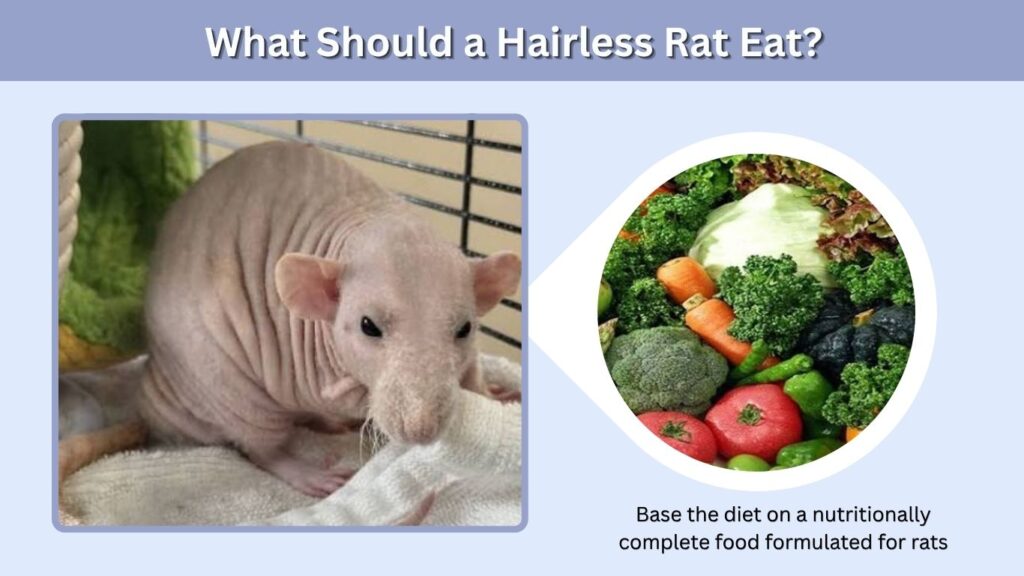
Base the diet on a nutritionally complete food formulated for rats. Add modest portions of suitable vegetables and other appropriate foods for variety, while keeping treats limited.
Fresh drinking water should always be available. Check water bottles daily to ensure they work properly.
Avoid assuming that every hairless rat needs a high-fat or high-protein diet. Food requirements depend on age, body condition, health, and environmental conditions.
Regular weighing helps identify unwanted changes. If a rat is losing weight despite eating, seek veterinary advice rather than simply adding calorie-dense treats. Obesity is also a concern, so a “fat hairless rat” should not be treated as a desirable appearance.
Hairless Rat Skin Care and Bathing
Exposed skin makes scratches and irritation easier to notice. Check regularly for wounds, redness, crusting, swelling, or persistent greasy buildup.
Rats groom themselves, so routine full baths are usually unnecessary. If a small area becomes dirty, gentle spot-cleaning may be sufficient. Avoid excessive washing, which can remove natural oils and dry the skin.
For dry or flaky skin:
- Review bedding, cleanliness, and environmental conditions.
- Check for scratching, scabs, or worsening redness.
- Ask a veterinarian before applying oils, moisturizers, or medicated products.
Not everything that looks like dry skin has the same cause. Do not squeeze lumps, drain suspected abscesses, or use leftover medications.
Persistent skin changes deserve an examination rather than repeated home treatment.
Eye Problems and Other Health Concerns
Check the eyes, nose, breathing, appetite, activity, and body weight—not just the skin.
Seek veterinary advice for:
- Squinting, swollen eyelids, or persistent eye discharge.
- Wounds, painful swellings, or growing lumps.
- Reduced appetite or unexplained weight loss.
- Unusual tiredness or hunched posture.
- Noisy or labored breathing.
Breathing difficulty requires urgent veterinary attention. Arrange routine examinations with a veterinarian experienced in rats, ideally before problems develop.
Reddish-brown staining around the eyes or nose may be porphyrin rather than blood. Persistent or excessive staining can accompany stress or illness and should not be ignored.
Hairless Rat Lifespan
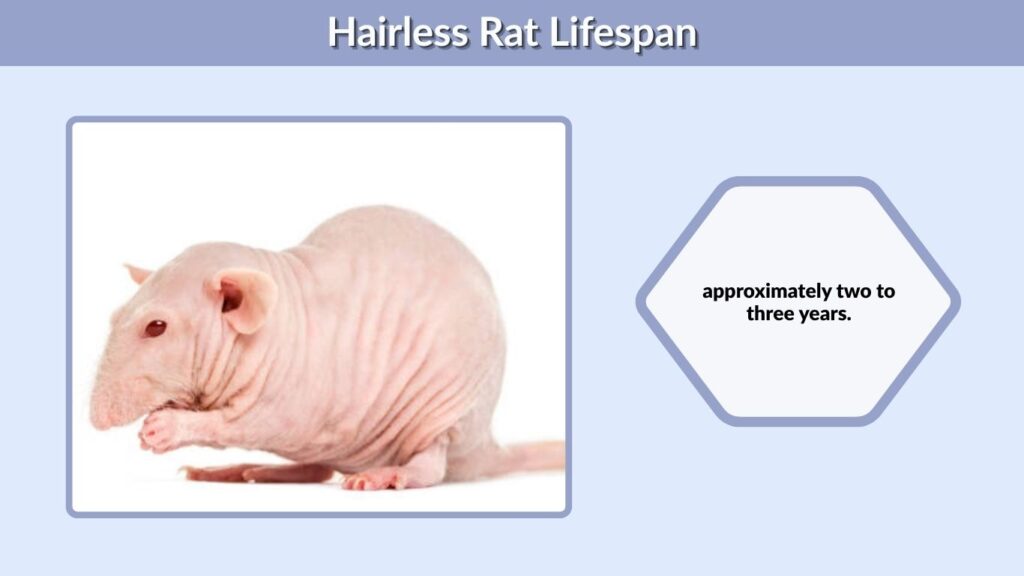
Domestic pet rats generally have a life expectancy of approximately two to three years. However, this general figure is not a reliable prediction for every hairless genetic line or individual.
Ask about the animal’s background, relatives’ health, and any existing conditions. A nearly bare double rex should not automatically be assigned the same prognosis as every other hairless rat.
Good care supports welfare, but it cannot guarantee a particular lifespan or prevent every inherited condition.
Hairless Rat Cost and Adoption
There is no universal hairless rat price. Adoption fees and breeder prices vary by location, availability, and what care is included.
Plan for more than the initial fee. Your budget should cover companions, a suitable enclosure, bedding, food, enrichment, and routine and emergency veterinary care.
Consider reputable rat rescues and shelters first. Before adopting, ask about temperament, existing companions, medical history, and any ongoing skin or eye problems.
If considering a breeder, prioritize health records, welfare, and responsible placement over unusual appearance. Avoid sellers who cannot explain the animals’ background or recommend solitary housing.
FAQs
1. Are hairless rats hypoallergenic?
No. Lack of fur does not eliminate allergens. Rodent allergens can occur in saliva, urine, and skin particles, so hairless rats may still trigger reactions.
2. Can hairless rats live with furry rats?
Yes, provided the animals are compatible and introduced appropriately. Monitor their interactions and check exposed skin for injuries.
3. Do hairless rats need sweaters?
Sweaters are not a substitute for suitable housing. Prioritize a comfortable room, sheltered sleeping areas, and nesting material. Ask a veterinarian about any individual warming needs.
4. Can a hairless rat grow fur?
Some retain fine fuzz, while double rex rats may develop changing patches of fur. Sudden hair loss in a previously normally coated rat needs investigation.
5. Is a hairless rat terrier a rat?
No. The American Hairless Terrier is a dog breed descended from the Rat Terrier. Its care needs are entirely different from those of a pet rodent.