
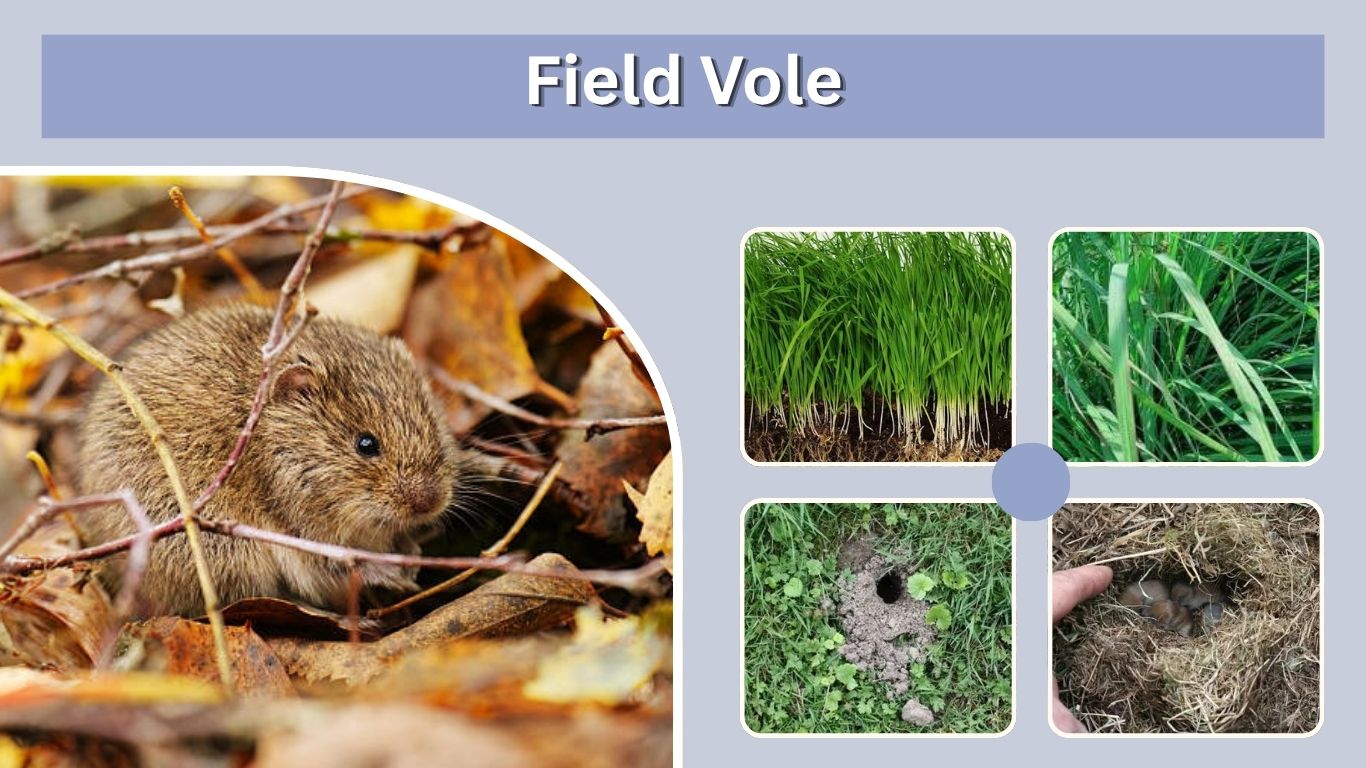
The field vole is a small, stocky rodent commonly found in grasslands, field margins, young woodland, moorland, and overgrown gardens. Also called the short-tailed field vole, it has gray-brown fur, a rounded face, small eyes, and a noticeably short tail. Field voles are rarely seen because they spend much of their time moving through hidden runways beneath long grass. Although they may resemble field mice or bank voles, several physical features make them easier to identify.
Field Vole Facts at a Glance
The field ‘s scientific name is Microtus agrestis. It belongs to the Cricetidae family, which includes voles, hamsters, and several other small rodents.
| Feature | Description |
| Scientific name | Microtus agrestis |
| Other name | Short-tailed field vole |
| Body length | Approximately 9–11.5 cm |
| Weight | Around 20–40 grams |
| Tail | Less than 40% of body length |
| Main diet | Grasses and other vegetation |
| Habitat | Grassland, moorland, gardens, and young woodland |
| Average lifespan | Up to one year |
| Conservation status | Least Concern |
Field voles are widespread across mainland Britain but are absent from Ireland and several offshore islands. They are considered one of Britain’s most numerous mammals and are an essential food source for many predators.
What Does a Field Vole Look Like?
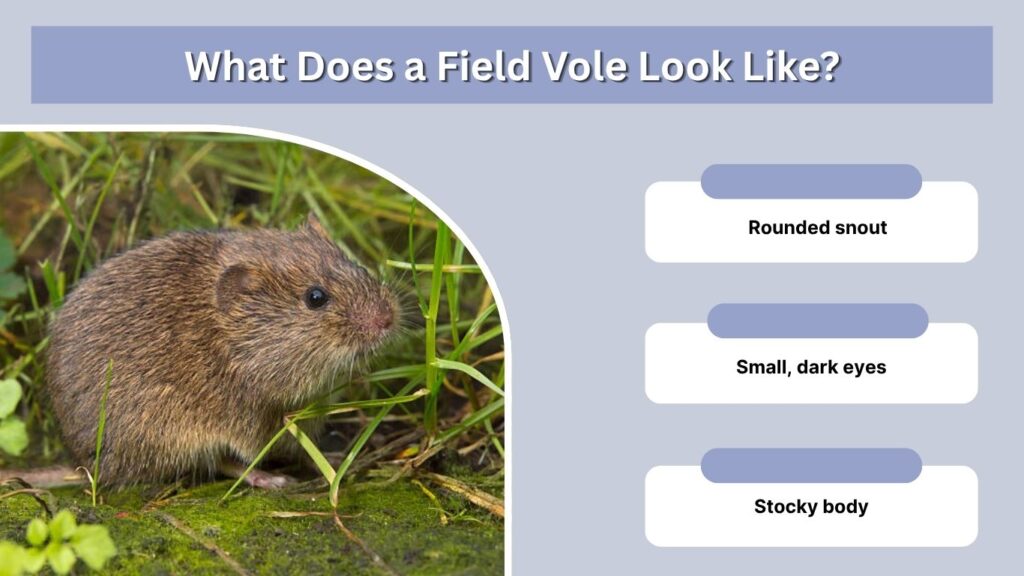
A field vole has a compact body covered in thick, somewhat shaggy fur. Its upper body is generally gray-brown or yellowish brown, while the underside is pale gray or creamy gray.
Field Vole Identification
- Grayish or yellow-brown upper fur
- Pale gray or cream-colored underside
- Rounded snout
- Small, dark eyes
- Short, furry ears often hidden by the coat
- Stocky body
- Short legs
- Tail measuring roughly one-third of the body length
The short tail is one of the most helpful identification features. Mice usually have tails close to or longer than their bodies, while the field vole’s tail is comparatively short. Its eyes and ears are also less prominent than those of most mice.
Field Vole Size
An adult field vole generally has a head-and-body length of approximately 9–11.5 cm. Its tail is usually 2–5 cm long, and adults commonly weigh between 20 and 40 grams.
The animal’s compact proportions can make it appear heavier than a similarly sized mouse. Males and females look alike, so determining sex from appearance alone is difficult.
Field Vole Habitat and Range
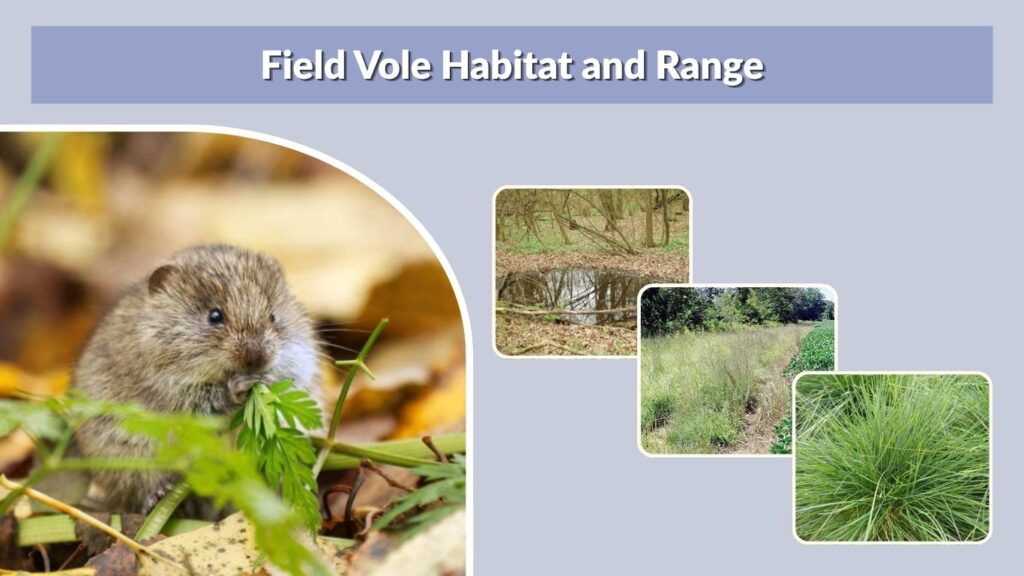
Field voles prefer open habitats where long grass provides both food and protection. They usually avoid heavily grazed or regularly mown areas because short vegetation leaves them exposed to predators.
Where Do Field Voles Live?
Common habitats include:
- Rough grasslands
- Meadows and pastures
- Field margins
- Roadside verges
- Moorland
- Heathland
- Marsh edges
- Young forestry plantations
- Hedgerows
- Overgrown gardens
Field voles may also occupy woodland where enough grass grows beneath the trees. They are particularly associated with young woodland and recently planted forests because these habitats often contain thick ground vegetation.
Field Voles in Gardens
A field vole may enter a garden when it contains long grass, dense borders, compost areas, ground-covering plants, or undisturbed corners. It normally remains outdoors and is less likely to enter houses than a house mouse.
Voles can benefit garden ecosystems by feeding predators and contributing to natural food webs. However, large numbers may damage seedlings, bulbs, roots, or the bark of young plants.
What Do Field Voles Eat?

Field voles are primarily herbivorous. Their diet is dominated by grasses, although they may eat several other plant materials when available.
Field Vole Diet
Typical foods include:
- Grass leaves
- Grass stems
- Grass roots
- Young shoots
- Seeds
- Herbs
- Moss
- Tree bark
- Plant bulbs
Bents, fescues, and hair grasses are among their preferred grasses. Field voles cut vegetation with their sharp incisors and may create small feeding areas within grass tunnels.
During winter or periods of food shortage, they may eat roots, bark, and underground plant parts. This feeding can occasionally damage young trees in forestry plantations or newly planted garden beds.
Field Vole Behavior
Field voles remain active throughout the year and do not hibernate. They may be active during both daylight and darkness, although activity often increases around dawn and dusk.
They travel through networks of narrow runways hidden beneath long grass. These pathways connect feeding sites, nests, burrows, and sheltered resting places. Remaining under vegetation helps protect them from birds of prey and other predators.
Do Field Voles Make Sounds?
Field voles are generally quiet, but they can produce high-pitched squeaks, especially when frightened, threatened, or communicating at close range. Their movement through dry vegetation may also create soft rustling noises.
Most people detect field voles through signs in the grass rather than hearing their vocalizations.
Field Vole Nests and Holes
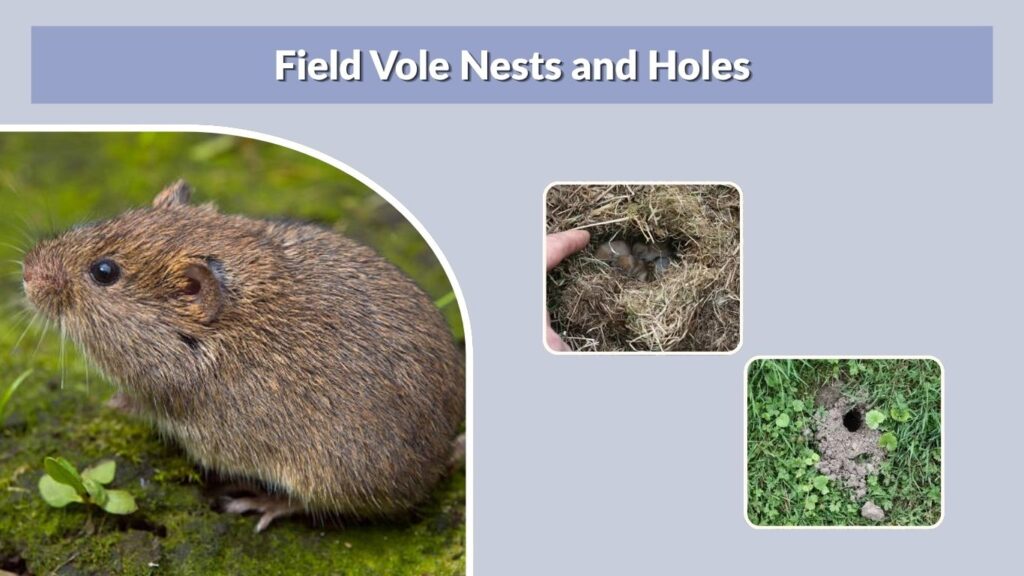
Field voles construct round nests from shredded grass and other soft plant materials. A typical nest may be positioned at the base of a thick grass clump, inside a shallow underground burrow, or beneath another sheltered object.
Signs of a Field Vole
Possible signs include:
- Narrow tunnels through long grass
- Small entrance holes near grass tussocks
- Round nests made from shredded grass
- Cut grass stems
- Feeding damage around roots or seedlings
- Small droppings near active runways
Field vole nests are often around 10 cm wide. Because the tunnels remain hidden beneath vegetation, an active colony may go unnoticed until the grass is lifted or cut.
Reproduction and Young
The field vole breeding season usually begins in March or April and may continue until October, November, or December, depending on weather and food availability.
A female commonly produces five or six litters in one year. A typical litter contains four or five young, although larger litters are possible. The babies are born inside a nest made from finely shredded grass.
Young field voles develop rapidly and may be weaned within two to three weeks. This fast reproduction allows populations to increase dramatically during favorable years.
Field Vole Lifespan
The average field vole lives for no more than about one year. Many die much sooner because they are preyed upon by birds and mammals.
Population numbers may rise and fall in cycles lasting approximately three or four years. During peak years, vole numbers can be many times higher than during low-population periods.
Field Vole Predators
Field voles form a vital part of grassland and woodland food chains. Common predators include:
- Barn owls
- Tawny owls
- Kestrels
- Foxes
- Weasels
- Stoats
- Domestic and feral cats
Owls and kestrels may raise more young during years when field voles are abundant. Their importance as prey means that protecting rough grassland can support many other wildlife species.
Field Vole vs Bank Vole
Field and bank voles are similar in size, but their colors, tails, and habitat preferences provide useful clues.
| Feature | Field Vole | Bank Vole |
| Coat | Gray or yellow-brown | Warmer reddish brown |
| Tail | About one-third of body length | About half of body length |
| Fur | Longer and shaggier | Smoother-looking |
| Ears | Small and hidden by fur | More visible |
| Typical habitat | Long grass and open fields | Woodland, hedgerows, and scrub |
The tail is usually the most reliable visible difference. Field voles have noticeably shorter tails, while bank voles generally have warmer reddish coloring.
Field Vole vs Field Mouse
Field voles and field mice are not the same animal. “Field mouse” is an informal name commonly used for wood mice and other mice living outdoors.
Mice usually have pointed snouts, prominent ears, large eyes, and long tails. Field voles have rounder faces, smaller eyes, less visible ears, and much shorter tails. Mice are also more likely to climb, while field voles mainly travel at ground level beneath vegetation.
How to Manage Field Voles in a Garden
Field voles rarely require control unless they are damaging plants. Habitat changes are usually more practical than attempting to remove individual animals.
Keep grass short around vulnerable beds, remove dense weeds beside young trees, clear unnecessary ground cover, and use guards around newly planted trunks. Avoid leaving piles of seed or bird food on the ground.
Traps, poisons, and other control methods can injure non-target wildlife. Local regulations should be checked before controlling wild mammals, especially when protected predators or other animals may encounter traps or bait.
FAQs
Are field voles nocturnal?
Field voles can be active during both the day and night. Activity may peak around dawn and dusk, but their schedule changes depending on temperature, food availability, predators, and disturbance.
Are field voles protected in the UK?
Field voles are not generally treated as fully protected species, but wildlife laws restrict certain trapping and killing methods. Property owners should use legal, humane control methods and avoid harming other wildlife.
Do field voles enter houses?
They normally live outdoors in grassland and dense vegetation. They may occasionally enter sheds or other outdoor structures, but they are less likely to establish themselves inside homes than house mice.
Are field voles endangered?
No. Field voles are classified as Least Concern and remain widespread across mainland Britain. Nevertheless, the loss of rough grassland can reduce local populations and affect predators that depend on them.
How can you tell whether you have a vole or mouse?
Look at the tail, face, eyes, and ears. A field vole has a short tail, rounded snout, small eyes, and ears partly hidden by fur. A mouse typically has a long tail, pointed face, and more prominent eyes and ears.