
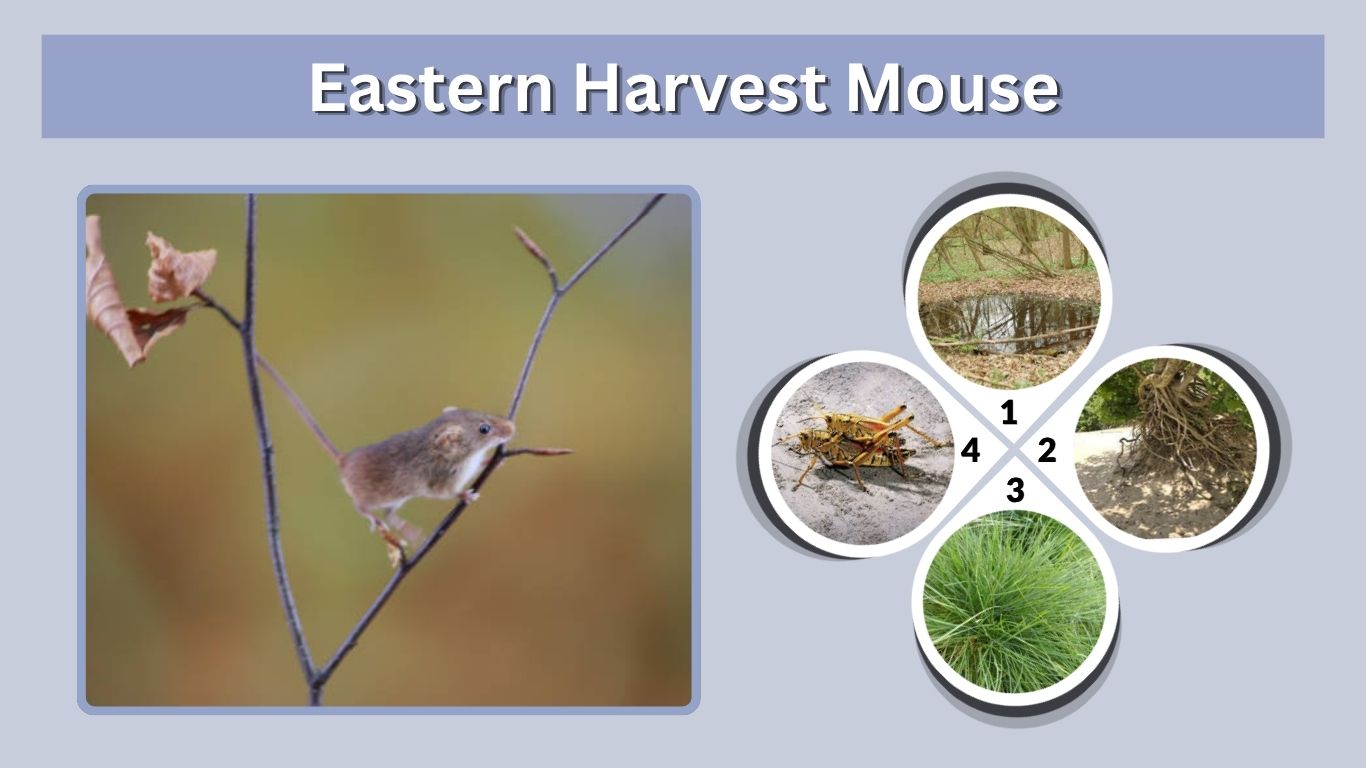
The eastern harvest mouse is a tiny North American rodent found in grassy fields, wet meadows, marshes, roadside vegetation, and briar thickets. Its brownish coat, dark back stripe, pale belly, and two-colored tail provide excellent camouflage among grasses and weeds. Despite its name, this animal does not harvest crops. It spends most of the night searching for seeds, green plant material, and small insects while remaining hidden beneath dense vegetation.
Eastern Harvest Mouse Facts
The scientific name of the eastern harvest mouse is Reithrodontomys humulis. It belongs to the order Rodentia and family Cricetidae, which also includes voles, deer mice, and other native New World rodents.
| Feature | Description |
| Scientific name | Reithrodontomys humulis |
| Class | Mammalia |
| Order | Rodentia |
| Family | Cricetidae |
| Body length | Approximately 4.3–5 inches |
| Weight | About 0.25–0.38 ounces |
| Diet | Seeds, plant shoots, and insects |
| Activity | Mainly nocturnal |
| Habitat | Fields, meadows, marshes, and thickets |
| Typical litter | Three to four young |
The species is native only to the United States. It is closely associated with open habitats containing dense grass and other low-growing plants.
Eastern Harvest Mouse Identification
An eastern harvest mouse has a small, delicate body with a pointed snout, prominent ears, dark eyes, and a slender tail. Its fur may appear deep brown, reddish brown, or grayish brown, depending on the individual, season, and region.
Identifying Features
- Deep brown or gray upper fur
- Dark stripe usually running along the back
- Lighter brown or reddish sides
- Clearly defined grayish belly
- Blackish ears
- Grayish-white feet
- Tail that is dark above and pale underneath
- Grooved upper incisors
The grooves running lengthwise along the upper incisors are characteristic of harvest mice. However, examining teeth or skull features is generally necessary for confirming difficult identifications and should be left to trained wildlife specialists.
The eastern harvest mouse may be difficult to distinguish from a house mouse, young deer mouse, or other small native rodent based only on a brief sighting.
Eastern Harvest Mouse Size
Adults generally measure around 4.3–5 inches from the nose to the tip of the tail. The tail alone is commonly 1.8–2.4 inches long and may be approximately equal to half the animal’s total length.
Adults usually weigh between 0.25 and 0.38 ounces, or approximately 7–11 grams. Measurements from Texas populations give an average total length of about 126 millimeters and a weight range of 10–15 grams.
Eastern Harvest Mouse Habitat
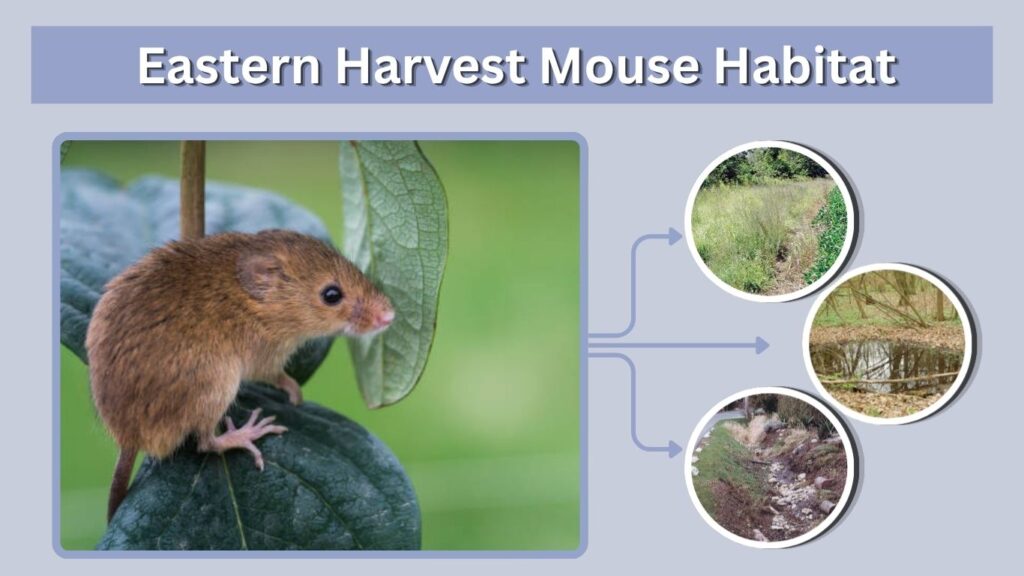
Eastern harvest mice prefer open or brushy environments where dense vegetation provides food, nesting material, and protection from predators. They are rarely associated with mature, closed-canopy forests.
Preferred Habitats
They may live in:
- Old or abandoned fields
- Grasslands and meadows
- Marshes and wet meadows
- Briar thickets
- Weed-filled roadside ditches
- Wet bottomlands
- Field borders
- Overgrown pastures
Tall grasses such as broomsedge are commonly associated with suitable habitat. Dense herbaceous cover allows the mice to travel, feed, and build nests without remaining exposed for long periods.
They may occupy both relatively dry fields and damp areas near wetlands. Habitat structure appears more important than the presence of one particular plant species.
Eastern Harvest Mouse Range
The eastern harvest mouse occurs primarily across the southeastern United States. Its range extends from Maryland and Virginia south through the Carolinas, Georgia, and Florida. It also reaches westward into Tennessee, Ohio, Oklahoma, and eastern Texas.
Its abundance varies considerably across this range. It may be locally common in one suitable field but absent from nearby areas where vegetation is too short, heavily grazed, frequently disturbed, or replaced by forest.
In Florida, eastern harvest mice occur in grassy and wet habitats. In Ohio and Maryland, they are near the northern limits of their distribution and may be uncommon or absent from areas where suitable habitat has disappeared.
What Do Eastern Harvest Mice Eat?
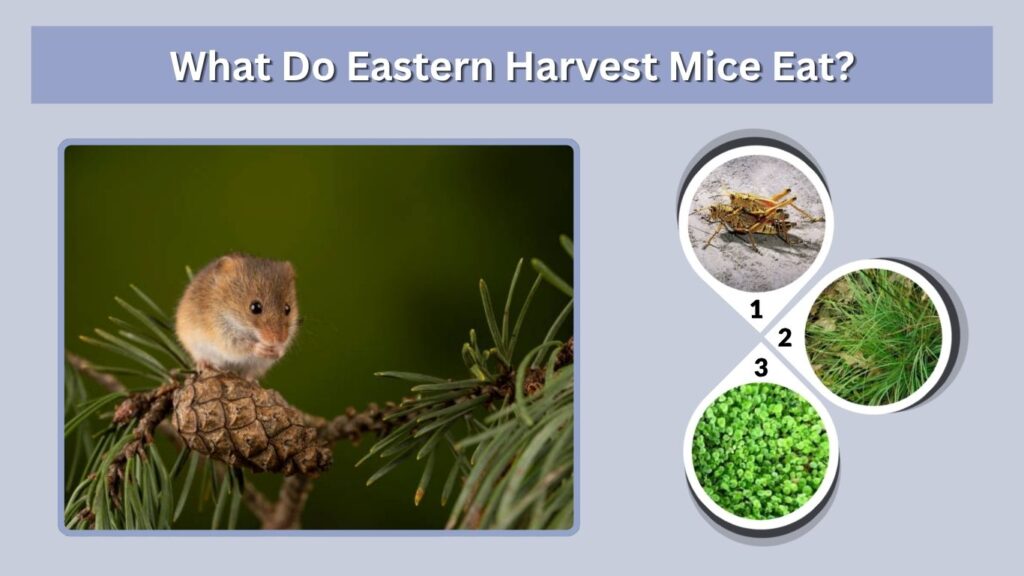
The eastern harvest mouse is primarily a seed eater, although its complete wild diet has not been studied as extensively as that of some other rodents.
Eastern Harvest Mouse Diet
Its food may include:
- Grass seeds
- Weed seeds
- Grain
- Fresh plant shoots
- Leaves of grasses and herbs
- Grasshoppers
- Crickets
- Other small insects
Seeds appear to make up most of its natural diet. Fresh vegetation may provide additional nutrients and moisture, while insects supply protein.
The species can reportedly survive for considerable periods without drinking open water. It receives much of the moisture it needs from food, dew, and fresh plant material.
Behavior and Adaptations
Eastern harvest mice are mainly nocturnal. They usually remain concealed during daylight and emerge at night to search for food. During very cold weather, however, they may forage during the daytime when temperatures are more favorable.
These mice move through runways beneath grass and low vegetation. Their small bodies help them pass through narrow spaces, while their brown coloring makes them difficult for predators to detect.
Cold-Weather Behavior
Eastern harvest mice do not normally hibernate. During cold conditions, several individuals may gather inside the same nest and huddle together to conserve body heat.
Their home ranges may be larger during summer than winter. They are not considered strongly territorial, so the ranges of multiple mice may overlap.
Eastern Harvest Mouse Nesting Habits
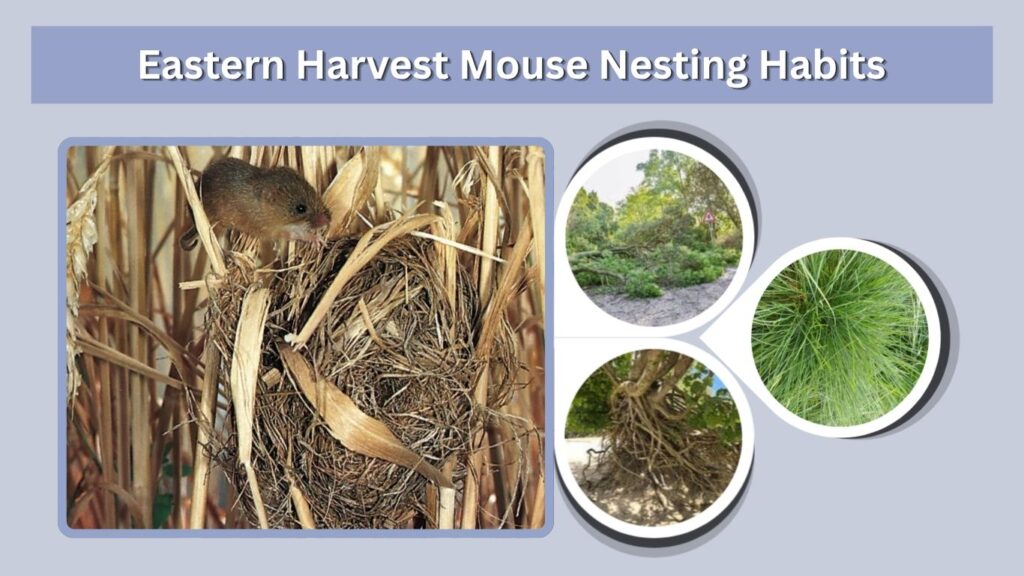
The eastern harvest mouse builds a small, round nest from finely shredded grass, leaves, weeds, and other plant fibers. A completed nest is often described as being approximately the size of a baseball.
Nest Locations
Nests may be positioned:
- On the ground beneath tangled plants
- At the base of a grass clump
- Under fallen vegetation or debris
- Several inches above the ground
- Within dense weeds or low shrubs
The nest usually has one entrance and is used for resting, shelter, and raising young. Unlike seasonal bird nests, mouse nests may be occupied throughout the year.
Reproduction and Young
Eastern harvest mice can breed during much of the year in favorable climates, although reproductive activity generally peaks during spring and fall. Regional studies have found relatively little breeding during the hottest summer months in some populations.
Pregnancy lasts approximately 21–22 days. A female may give birth to between one and eight young, but three or four is more typical.
Newborn mice are:
- Hairless
- Blind
- Unable to regulate their temperature effectively
- Completely dependent on their mother
Their eyes normally open after approximately 7–10 days. Weaning occurs between the second and fourth weeks, and young mice generally leave the nest by about four weeks old. They may become capable of breeding at approximately 11–12 weeks.
Eastern Harvest Mouse Lifespan
Eastern harvest mice generally have short lives. A population study in southeastern Virginia recorded an average observed lifespan of approximately 9.5 weeks after animals reached trappable age. However, some individuals can survive much longer, with reported longevity reaching at least ten months.
High mortality is balanced by rapid development and the ability to produce multiple litters. Weather, food shortages, flooding, habitat disturbance, disease, and predation all influence survival.
Eastern Harvest Mouse Predators and Food-Web Role
Eastern harvest mice provide food for numerous grassland and wetland predators.
Common predators may include:
- Owls
- Hawks
- Foxes
- Snakes
- Weasels
- Skunks
- Feral and domestic cats
Their nocturnal habits, dense habitat, dark back stripe, and quick movements help reduce the risk of capture. Even so, they are an important part of the food chain because they transfer energy from seeds and plants to larger animals.
They may also influence plant communities by consuming, carrying, and occasionally dispersing seeds.
Why Is the Eastern Harvest Mouse Threatened?
The eastern harvest mouse is not considered endangered across its entire range. It is classified as a species of low global conservation concern, and it is not federally listed as threatened or endangered in the United States.
However, its status differs among states and local populations. In Tennessee it is considered uncommon, while Texas records describe it as the rarest harvest mouse in that state despite no official threatened listing.
Potential local threats include:
- Conversion of grasslands into cropland
- Residential and commercial development
- Loss of wetlands and wet meadows
- Heavy grazing that removes dense vegetation
- Frequent mowing of field edges
- Fragmentation of old-field habitat
- Pesticide use that reduces food availability
Maintaining grassy field borders, wet meadows, roadside vegetation, and patches of dense cover can help protect local populations.
FAQs
Is an eastern harvest mouse yellow?
It is not normally bright yellow. Its fur is usually deep brown, reddish brown, or grayish brown. Some individuals have warm buff or reddish sides that may appear yellowish under certain lighting, but the belly is generally pale gray.
Does the eastern harvest mouse enter houses?
It is primarily an outdoor species associated with fields, marshes, and dense vegetation. It is less closely connected to buildings than the house mouse, although an individual may occasionally enter a structure while seeking shelter.
Is the eastern harvest mouse dangerous?
Eastern harvest mice are shy and generally avoid humans. Like all wild rodents, they should not be handled because they may bite when frightened and can carry parasites or microorganisms through urine, saliva, or droppings.
How is it different from a deer mouse?
The eastern harvest mouse is generally smaller and often has a narrow dark stripe along its back. Deer mice usually have more sharply contrasting white feet and underparts. Accurate identification may require examination by a mammal expert.
Can eastern harvest mice be kept as pets?
They are wild native animals rather than domesticated pets. Capturing one may violate local wildlife regulations, and confinement can cause significant stress. A mouse found injured or orphaned should be referred to a licensed wildlife rehabilitator.