
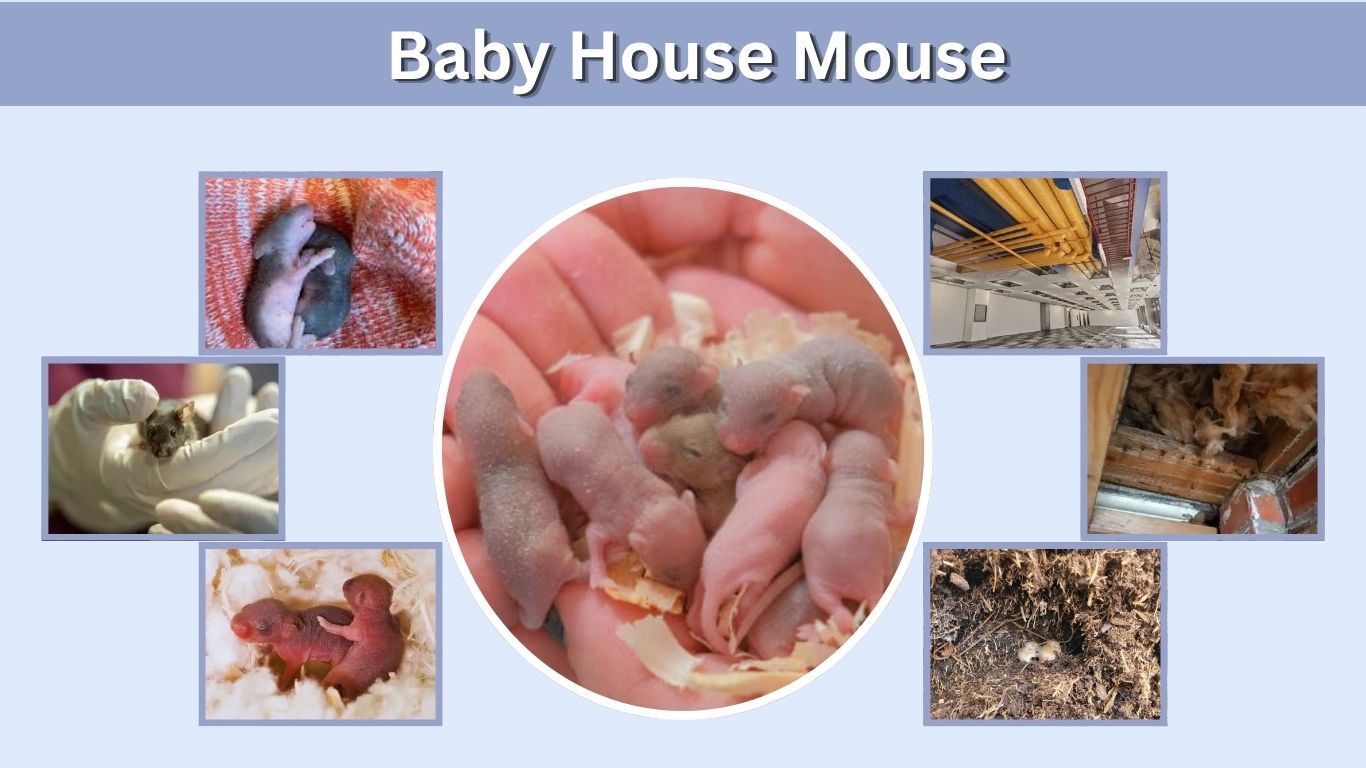
Finding a baby house mouse indoors often indicates that an adult female has built a nest somewhere nearby. Very young mice are born pink, blind, hairless, and completely dependent on their mother. Older juveniles have fur, open eyes, and enough mobility to wander from the nest. Avoid touching or feeding the animal until you determine its age and condition. Wild mice can carry pathogens and parasites, while improper feeding can cause aspiration or death. Contact a wildlife rehabilitator when an orphaned baby needs help.
Baby House Mouse Quick Facts
The house mouse, Mus musculus, reproduces quickly when food, warmth, water, and nesting material are available.
Basic information
| Feature | Description |
| Baby’s common name | Pup or pinkie |
| Scientific name | Mus musculus |
| Gestation period | Approximately 19–21 days |
| Typical litter | Usually 5–7 pups |
| Condition at birth | Blind, deaf, pink, and hairless |
| Fur development | Visible during the first two weeks |
| Eyes open | Approximately two weeks after birth |
| Weaning | Around three weeks |
| Independence | Usually begins around 3–4 weeks |
| Sexual maturity | Approximately 5–8 weeks |
What Does a Baby House Mouse Look Like?
Appearance changes rapidly during the first three weeks. Age determines whether the mouse needs its mother or may already be moving independently.
Baby mouse development stages
| Approximate age | Appearance and behavior |
| Newborn | Pink, hairless, eyes closed, minimal movement |
| 4–7 days | Skin darkens and fine fur begins appearing |
| 7–12 days | Body becomes furred; ears unfold |
| 12–16 days | Eyes open; movement becomes more coordinated |
| 2–3 weeks | Explores outside the nest and begins trying solid food |
| 3–4 weeks | Weaned or nearly weaned and resembles a small adult |
Development varies with health, nutrition, temperature, and litter size. A small mouse with open eyes is not necessarily a newborn; it may be a recently weaned juvenile.
Baby house mouse color
House mouse pups are pink at birth. Their developing fur may become grey, dusty brown, dark brown, or nearly black. The belly is usually greyish or cream rather than sharply white.
A baby’s adult color may not be obvious until its coat develops fully. Therefore, “brown baby house mouse” and “grey baby house mouse” normally describe color variation rather than different species.
Baby house mouse size and weight
Newborn house mice are only a few centimeters long and generally weigh around one gram. They grow quickly during nursing. A three-week-old juvenile may look like a miniature adult but still be considerably lighter and less coordinated.
Size alone is an unreliable identification feature because age, diet, health, sex, and species all influence growth.
Baby House Mouse vs Deer Mouse vs Baby Rat
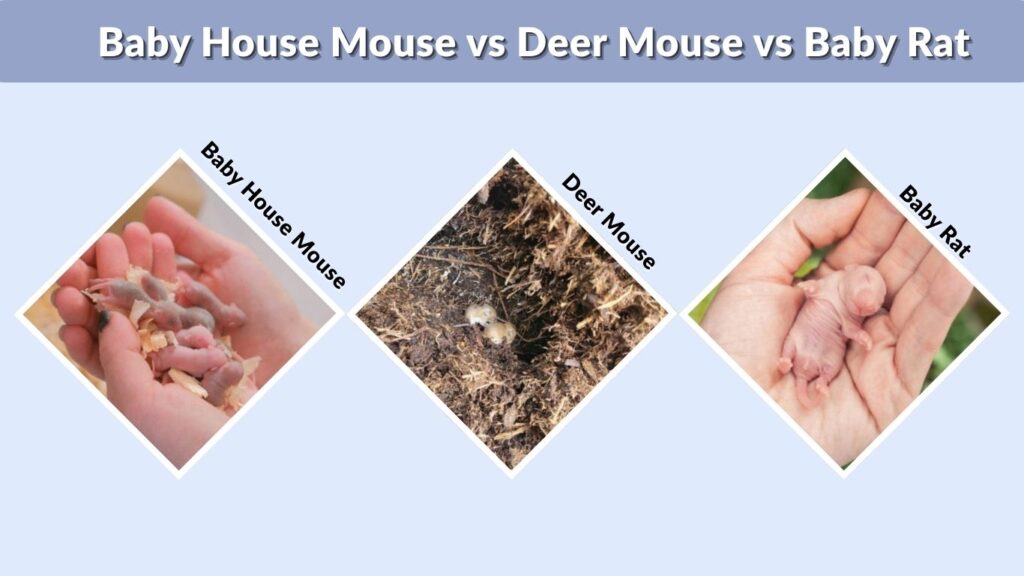
Several young rodents may enter buildings. Fur pattern, tail structure, body proportions, and location provide useful identification clues.
Identification differences
- House mouse: Grey or brown coat, pointed snout, large ears, and a mostly uniform-colored tail and belly.
- Deer mouse: Brown or grey upper body with distinctly white feet and belly; the tail is usually dark above and pale below.
- Baby rat: Larger head and feet, thicker tail, heavier body, and a comparatively blunt snout.
- Field mouse: A broad informal name that may describe deer mice, wood mice, voles, or other outdoor rodents.
A very young hairless rodent can be difficult to identify. Send clear photographs to a wildlife rehabilitator, pest professional, or local animal-control service instead of relying on color alone.
Found a Baby Mouse in Your House: Are There More?
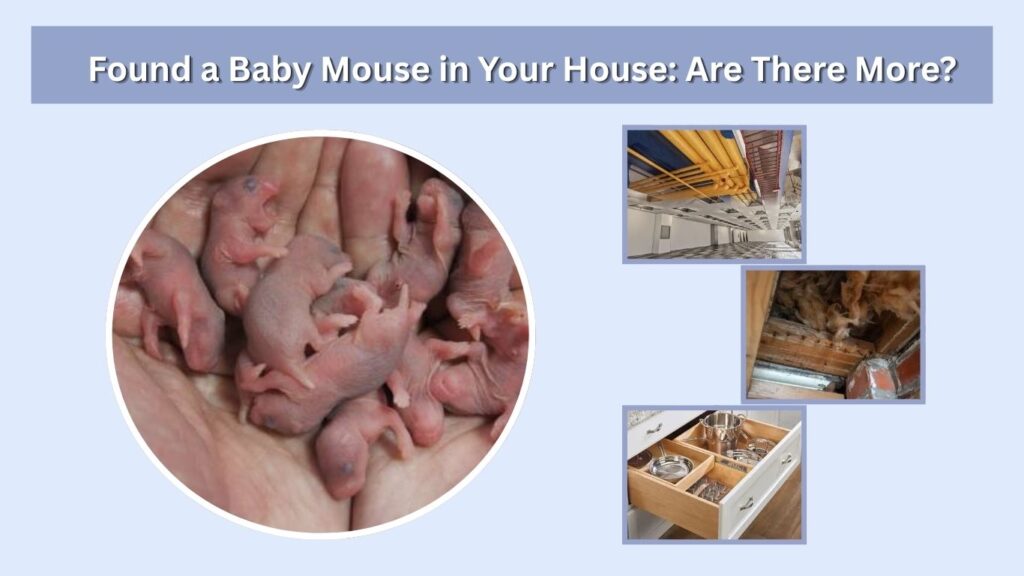
One baby—particularly a pink, hairless pup—strongly suggests that a nest and additional mice are nearby.
What one baby usually indicates
A newborn cannot travel far independently. It may have been dropped while the mother relocated her litter, carried away by another animal, or pushed from a disturbed nest.
Common nesting locations include:
- Wall and ceiling voids
- Cabinets and drawers
- Behind refrigerators or stoves
- Attics and insulation
- Stored boxes and clothing
- Upholstered furniture
- Basements and crawl spaces
- Spaces beneath flooring
- Utility cupboards
- Garages and sheds
A fully furred juvenile with open eyes can travel farther. However, its presence still suggests an active entry point or nearby mouse population.
Signs of an indoor nest
Look for scratching sounds, shredded paper or fabric, musky odors, gnaw marks, food damage, and small dark droppings. Do not reach blindly into suspected nesting material because an adult may bite.
Avoid sweeping or vacuuming dry droppings and nests. Disturbing contaminated dust may place microorganisms into the air.
What to Do With a Baby Mouse
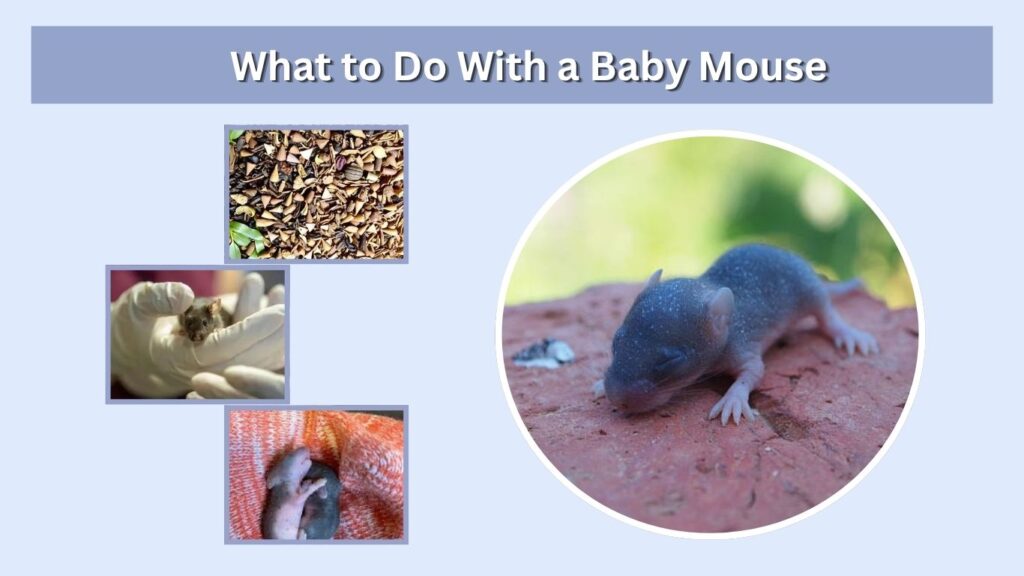
Your response should depend on whether the baby is healthy, injured, orphaned, or old enough to move independently.
Immediate steps
- Keep children and pets away.
- Wear disposable or washable gloves.
- Handle the mouse as little as possible.
- Place an injured or cold baby in a ventilated box.
- Add a soft cloth or plain paper towel.
- Keep the container warm, dark, and quiet.
- Contact a wildlife rehabilitator or veterinarian.
- Wash your hands after any contact.
A cold baby cannot digest food properly. Gentle warmth is the immediate priority, but it must not become overheated. Place a low, covered heat source beneath only half the container so the animal can move away from it.
Should you return it to the mother?
If you can safely identify the original nest without extensive disturbance, returning an uninjured baby may provide its best chance of survival. Move away and allow the mother privacy.
Do not place the baby where cats, dogs, traps, people, or machinery can reach it. Contact a rehabilitator if the mother is known to be dead, the nest was destroyed, or she does not return.
Do not give food or water immediately
Do not offer cow’s milk, plant milk, plain water, bread, or household baby formula. A tiny mouse can inhale liquid into its lungs when fed with an unsuitable bottle, dropper, or syringe.
Government wildlife guidance recommends keeping an orphaned animal warm, dark, and quiet without providing food or water unless a qualified rehabilitator gives instructions.
Baby House Mouse Care
Hand-rearing a newborn mouse requires species-appropriate formula, precise feeding quantities, temperature control, hygiene, and assistance with elimination.
Why professional care matters
A rehabilitator can assess hydration, injury, age, disease risk, and whether the animal is truly orphaned. Common hand-rearing problems include:
- Aspiration pneumonia
- Dehydration
- Diarrhea and bloating
- Incorrect formula concentration
- Feeding while the baby is cold
- Overfeeding
- Burns from heating equipment
- Failure to stimulate urination and defecation
- Poor preparation for release
Call before transporting the mouse because some rehabilitation centers cannot accept house mice or other nonnative rodents.
Can you hold a baby house mouse?
Handling should be limited to necessary rescue and transport. Use gloves or a soft cloth, support the entire body, and never lift the mouse by its tail.
Wash exposed skin afterward. Wild rodents can spread germs through saliva, urine, droppings, bites, and contaminated nesting material even when they look healthy.
Can You Keep a Baby House Mouse as a Pet?
Keeping a wild baby house mouse is generally not recommended. It may be restricted by local regulations, and raising it without appropriate release preparation can damage its natural behavior.
Wild mouse vs fancy mouse
A wild pup may become accustomed to its caregiver, but that does not make it domesticated. Domestication results from selective breeding over many generations.
Anyone wanting a pet should obtain a captive-bred fancy mouse from a responsible rescue or breeder. Fancy mice are domesticated house mice that are more suitable for managed housing, socialization, and veterinary care.
Never place a wild mouse with pet mice. It may introduce parasites or infectious diseases into the enclosure.
How Many Babies Does a House Mouse Have?
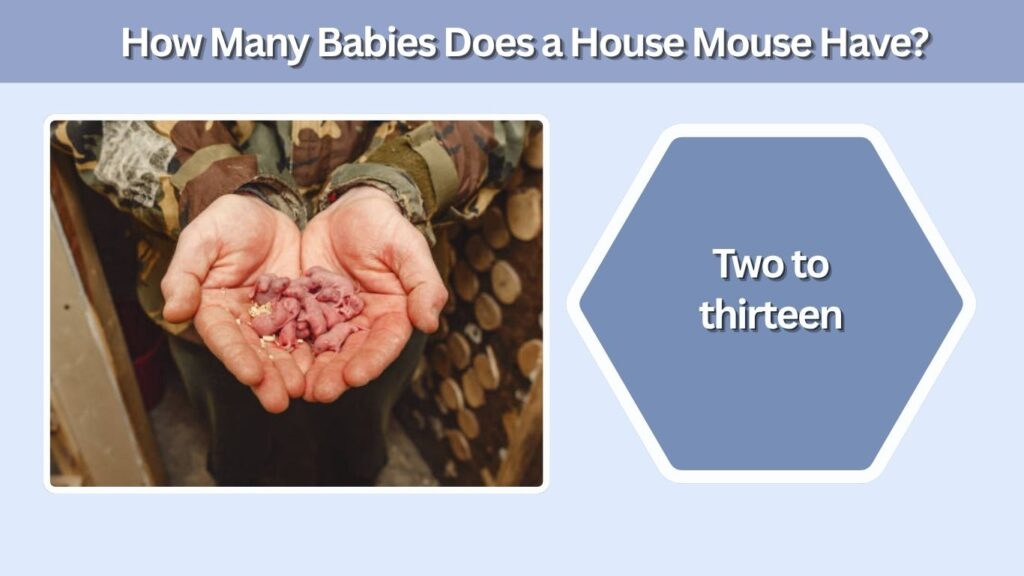
Female house mice reproduce rapidly, particularly inside warm buildings where food remains available throughout the year.
Litter size and frequency
Pregnancy lasts approximately 19–21 days. A female usually gives birth to five to seven babies, although litters can range from two to thirteen. Several litters may be produced within one year.
Young develop fur by around ten days and are generally weaned by three weeks. The Tennessee Wildlife Resources Agency reports that females may produce five to ten litters in a typical year under suitable conditions.
Why populations grow quickly
A female can mate again soon after giving birth, and her offspring reach reproductive age within several weeks. A warm house containing accessible food, water, and shelter can therefore support rapid population growth.
Removing one visible mouse without sealing entrances and eliminating food will rarely solve an established problem.
How to Catch or Remove a Baby Mouse
A hairless or injured pup should be contained for professional assessment. Mobile juveniles may be part of an active indoor infestation.
Safe containment
Place a ventilated box or small container over the baby and gently slide a piece of stiff cardboard beneath it. Wear gloves and avoid direct contact.
Do not chase the animal through the room or allow a cat or dog to catch it. If several pups are found, contact a pest-management professional or animal-control service before disturbing the nesting area.
Preventing additional mice
Seal gaps around doors, foundations, roofs, vents, pipes, cables, and utility lines. Store food in hard, sealed containers, clean crumbs promptly, repair leaks, and reduce cardboard or fabric clutter.
For an established infestation, the CDC recommends appropriately sized snap traps placed where children and pets cannot reach them. It advises against glue and live traps because frightened rodents may urinate and increase exposure risk.
Found a Dead Baby Mouse in the House
A dead mouse should be removed carefully because its body, parasites, and surrounding waste may contain pathogens.
Safe cleanup process
Wear rubber or plastic gloves. Spray the dead mouse, nesting material, trap, and surrounding surface with an appropriate disinfectant until thoroughly wet. Allow the disinfectant to remain for the label’s recommended contact time.
Pick everything up with paper towels, seal it in a plastic bag, place that bag inside a second bag, and dispose of it in a covered trash container. Disinfect the area, clean gloved hands, remove the gloves, and wash bare hands thoroughly.
What not to do
Never vacuum or sweep dry droppings, urine residue, or nesting material. This can send contaminated particles into the air.
Contact a professional when there is a large infestation, widespread contamination, heavy odor, inaccessible dead rodents, or evidence inside ventilation systems.
Does a Baby Mouse in the House Have a Meaning?
From a practical perspective, it means mice have gained access to shelter and may be breeding nearby. It should prompt an inspection for nests, droppings, food access, and structural gaps.
Some traditions associate mice with adaptability, attention to detail, fertility, or resourcefulness. These spiritual interpretations are cultural beliefs, not scientific explanations for why a baby mouse entered a building.
FAQs
These answers address the most common questions about finding, identifying, and helping baby house mice.
What is a baby house mouse called?
A baby mouse is commonly called a pup. A newborn hairless mouse may also be called a pinkie because of its pink skin. Pups are born blind, deaf, and dependent on their mother for warmth, feeding, cleaning, and protection.
Does one baby mouse mean there are more?
A hairless baby almost certainly came from a nearby nest that may contain siblings and an adult female. A furred, open-eyed juvenile can travel farther, but its presence still suggests an entry point or established mouse activity that should be investigated.
What can I feed a baby house mouse?
Do not provide cow’s milk, plant milk, plain water, bread, or human baby formula. Incorrect feeding can cause aspiration, digestive illness, dehydration, or death. Keep the baby warm and quiet while obtaining precise feeding instructions from a qualified wildlife rehabilitator or veterinarian.
Will a mother mouse return for her baby?
A mother may retrieve a displaced pup when it remains close to the nest and the area becomes quiet. Returning an uninjured baby only when doing so is safe, then observe from a distance. Seek professional advice if the mother is dead or does not return.
How can I tell a baby mouse from a baby rat?
A baby rat normally has larger feet, a broader head, a blunter snout, and a thicker tail relative to its body. A house mouse has a more pointed face, larger ears relative to its head, and a slender tail. Newborn identification may require expert help.