
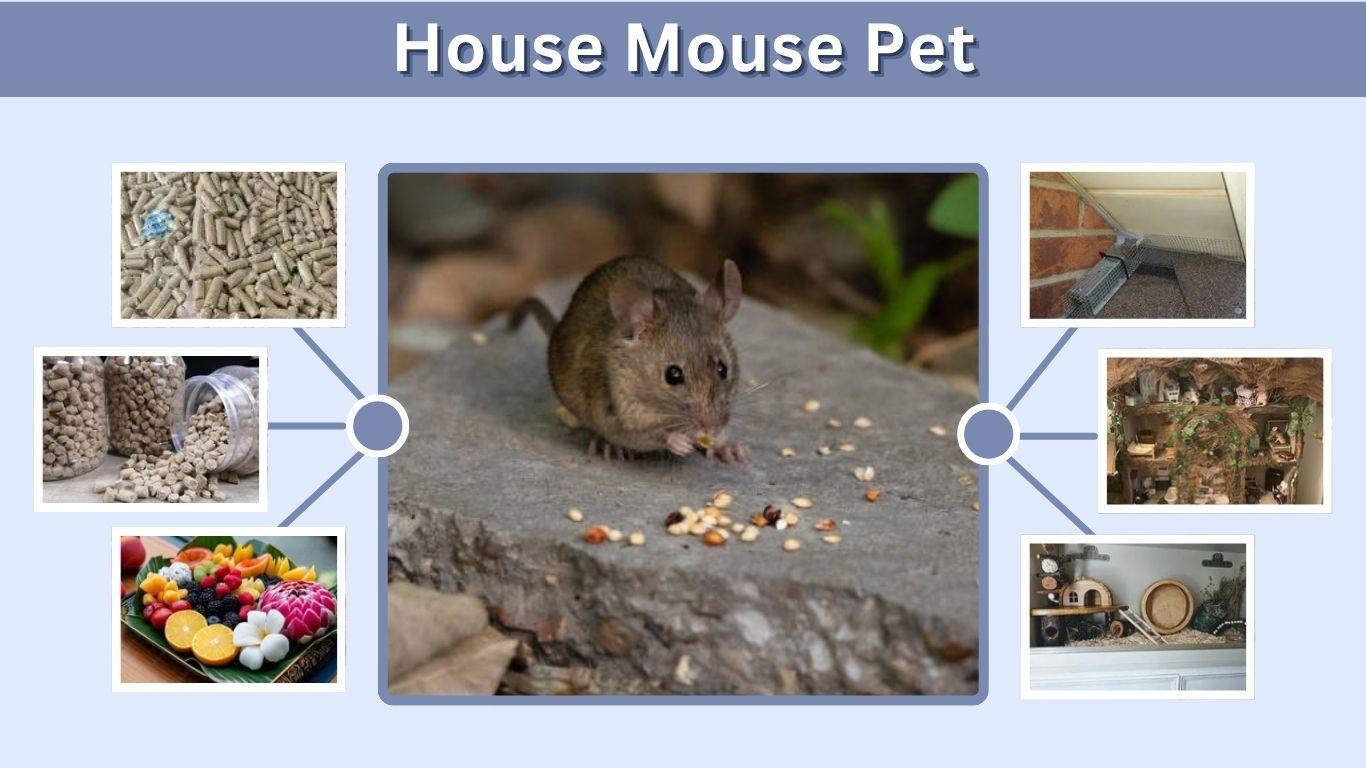
A domesticated house mouse can be an intelligent, entertaining pet, but capturing a wild mouse from your home is not recommended. Fancy mice sold by responsible breeders and rescues are domesticated forms of the house mouse, Mus musculus. They are more accustomed to captivity and human handling than their wild relatives. A wild house mouse may remain extremely fearful, carry diseases or parasites, and struggle in confinement. Anyone wanting a pet mouse should choose a healthy, captive-bred animal and prepare a secure, enriching home.
House Mouse Pet Quick Facts
Domesticated mice are inexpensive to feed, require relatively little space, and display complex social and exploratory behavior. However, they still need daily care and appropriate veterinary support.
Basic information
| Feature | Description |
| Scientific name | Mus musculus |
| Recommended pet | Captive-bred fancy mouse |
| Average lifespan | Approximately 1–3 years |
| Adult body length | Around 6–10 cm, excluding the tail |
| Activity | Most active during evening and night |
| Diet | Omnivorous |
| Social needs | Depend on sex and compatibility |
| Housing | Secure, ventilated enclosure |
| Temperament | Curious but often initially nervous |
| Care level | Beginner-friendly with proper preparation |
Can You Keep a House Mouse as a Pet?
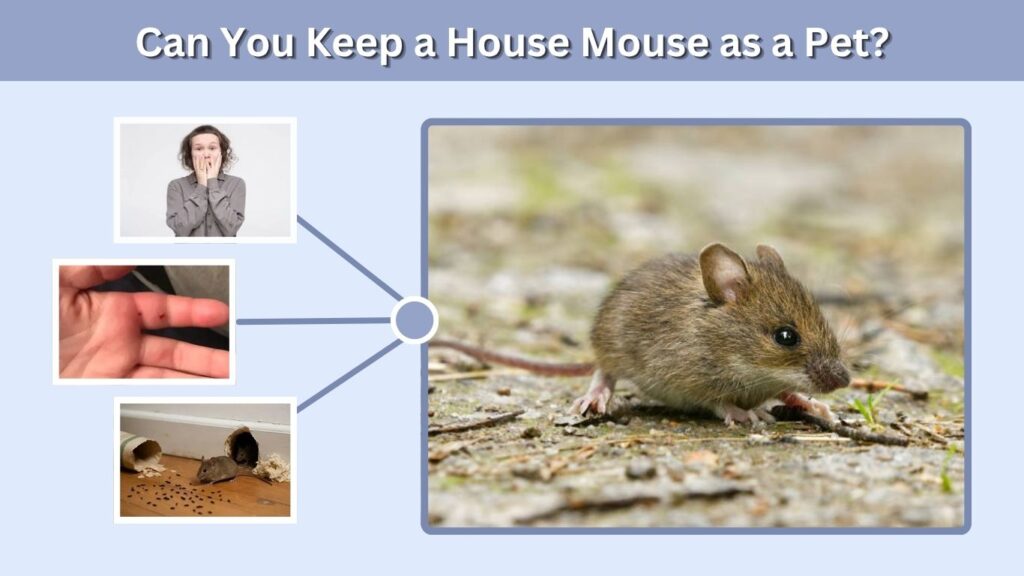
A captive-bred house mouse can make a suitable pet. Keeping a wild house mouse is more complicated and creates welfare and health concerns.
Wild vs domesticated house mice
| Feature | Wild House Mouse | Fancy Pet Mouse |
| Relationship with people | Fearful and poorly socialized | Bred for manageable behavior |
| Disease risk | Unknown exposure to pathogens | Lower risk from reputable sources |
| Parasites | May carry mites, fleas, or worms | Usually monitored and treated |
| Handling | Likely to panic, bite, or escape | Can learn to accept gentle handling |
| Captive welfare | May remain stressed | Adapted to living in managed care |
| Recommended as a pet | No | Yes |
Fancy mice may have white, black, brown, grey, cream, spotted, satin, long-haired, or other selectively bred appearances. Despite their variety, they are descended from the same species commonly called the house mouse.
Can you turn a wild mouse into a pet?
A wild adult may become less fearful, but it will not become domesticated during its lifetime. Domestication develops through selective breeding over many generations rather than through taming one individual.
Wild mice can carry diseases without appearing sick. Contact with their bites, urine, saliva, feces, nesting materials, fleas, or mites can expose people and pets to infection. The CDC advises against keeping wild rodents as pets.
What about a wild baby mouse?
An orphaned baby requires specialized warmth, hydration, feeding, and stimulation. Incorrect milk, excessive feeding, or aspiration can quickly become fatal. Keep the baby warm in a ventilated container and contact a wildlife rehabilitator, rescue organization, or veterinarian.
Do not automatically assume that a baby found alone has been abandoned. Its mother may be temporarily away collecting food or relocating the litter.
Choosing a Healthy Pet Mouse
A rescue, specialist breeder, or responsible pet store should provide information about the mouse’s age, sex, health, and social history.
Signs of a healthy mouse
- Bright, clear eyes
- Smooth and clean coat
- Quiet, regular breathing
- Clean nose and rear end
- Normal movement and balance
- Alert, curious behavior
- Healthy body condition
- No visible wounds, lumps, or hair loss
Avoid purchasing a mouse from an enclosure containing sick animals. Arrange an examination with an exotic-pet veterinarian after adoption, especially when the mouse has an unknown history.
Male or female mouse?
Female mice generally live successfully in compatible pairs or small groups. Companionship allows them to groom, sleep, forage, and interact together.
Adult males can be territorial and may fight severely, especially when introduced after maturity. Males raised together sometimes remain compatible, but owners must monitor them carefully. An intact male should never live with females because mice reproduce rapidly. A neutered male may live with females following veterinary advice.
Best House for a Pet Mouse
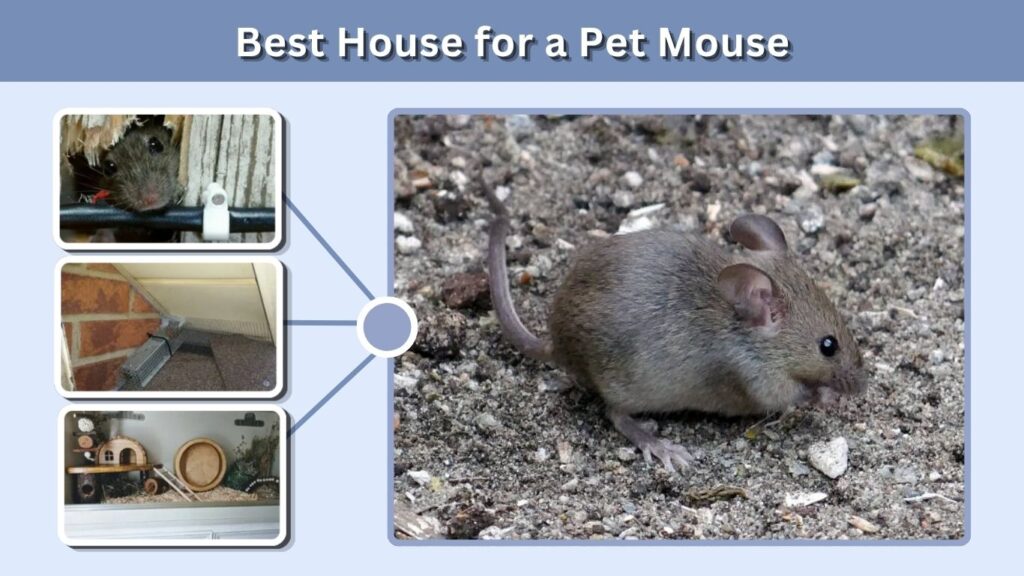
A proper mouse house must be secure, well ventilated, easy to clean, and large enough for natural movement and enrichment.
Recommended enclosure features
- Secure lid or doors
- Solid, waterproof floor
- Narrow bar spacing
- Large, ventilated living area
- Deep, dust-free bedding
- Multiple shelters and nesting areas
- Solid-surface exercise wheel
- Tunnels, ropes, branches, and platforms
- Food-scattering areas
- Safe objects for chewing
For two or three mice, the Merck Veterinary Manual recommends an enclosure measuring at least approximately 45 × 45 × 25 cm. More usable space and enrichment should be provided whenever possible. Mesh openings must be small enough to prevent escape.
Wire cage vs tank
A wire cage with a deep solid base generally provides good ventilation and climbing opportunities. Bar spacing should be approximately 6 mm or less for small mice.
A glass or plastic tank can retain bedding well, but it requires a large mesh top and careful ventilation. Poorly ventilated tanks trap moisture and ammonia from urine, increasing the risk of respiratory problems.
Where should the enclosure be placed?
Place the mouse house in a quiet, dry room away from direct sunlight, drafts, heaters, air conditioners, televisions, and loud speakers. A temperature around 18–22°C is generally comfortable.
Keep the enclosure away from cats, dogs, wild rodents, kitchens, and food-storage areas. Pet mice should not be housed permanently outdoors because of extreme temperatures, predators, insects, disease exposure, and escape risks.
Bedding and Nesting Materials
Mice naturally dig, tunnel, and build nests. A bare cage or thin layer of bedding does not support these behaviors.
Safe materials
Use deep, absorbent, dust-free paper or card-based bedding. Provide shredded plain tissue, paper, or suitable hay as nesting material.
Avoid fluffy cotton-like nesting products because fibers can become wrapped around legs and toes or cause intestinal obstruction if swallowed. Highly dusty sawdust and strongly scented materials may irritate a mouse’s respiratory system.
Cleaning the mouse house
Remove wet bedding, spoiled food, and heavily soiled areas every one or two days. Perform a more complete cleaning approximately once a week, depending on enclosure size and the number of mice.
Retain a small quantity of clean, dry nesting material during routine cleaning so the enclosure still smells familiar. Excessive cleaning that removes every scent mark may increase stress and territorial marking.
DIY Pet Mouse House Ideas
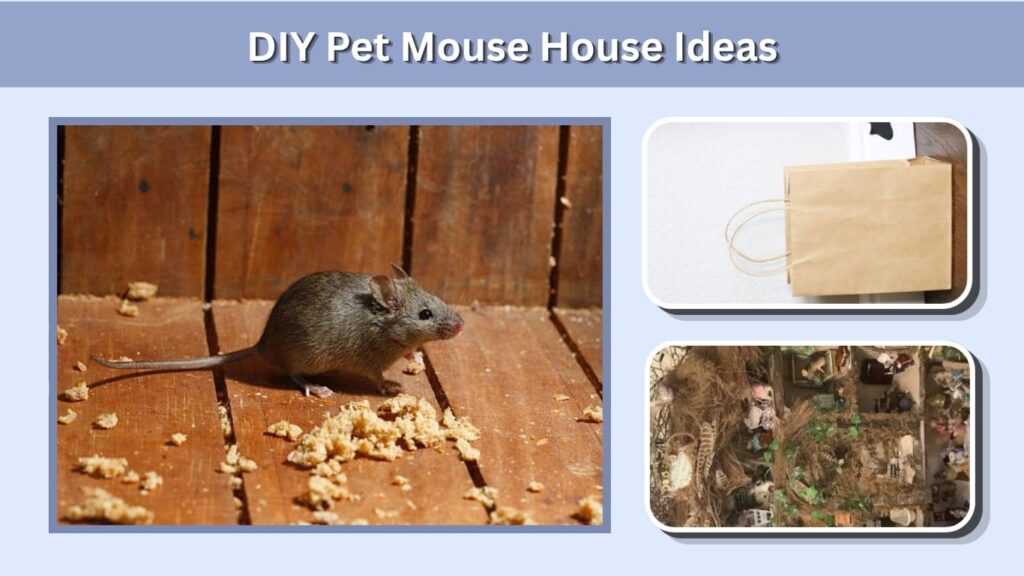
Simple homemade shelters can provide affordable enrichment, but the primary enclosure must remain escape-proof.
Safe DIY ideas
- Plain cardboard boxes with multiple doors
- Toilet-paper and paper-towel tubes
- Cardboard egg cartons
- Paper bags without handles
- Untreated wooden bridges
- Woven seagrass tunnels
- Hanging cardboard platforms
- Tissue-filled nesting boxes
- Digging boxes containing safe bedding
Create at least two exits in shelters so one mouse cannot trap another. Remove anything that becomes wet, heavily chewed, sharp, moldy, or soiled.
Materials to avoid
Do not use toxic paint, glue, tape with exposed adhesive, staples, treated timber, brittle plastic, fraying fabric, or small parts that could be swallowed. A wooden shelter may absorb urine, so it should be inspected regularly and replaced when it cannot be cleaned properly.
What Do Pet House Mice Eat?
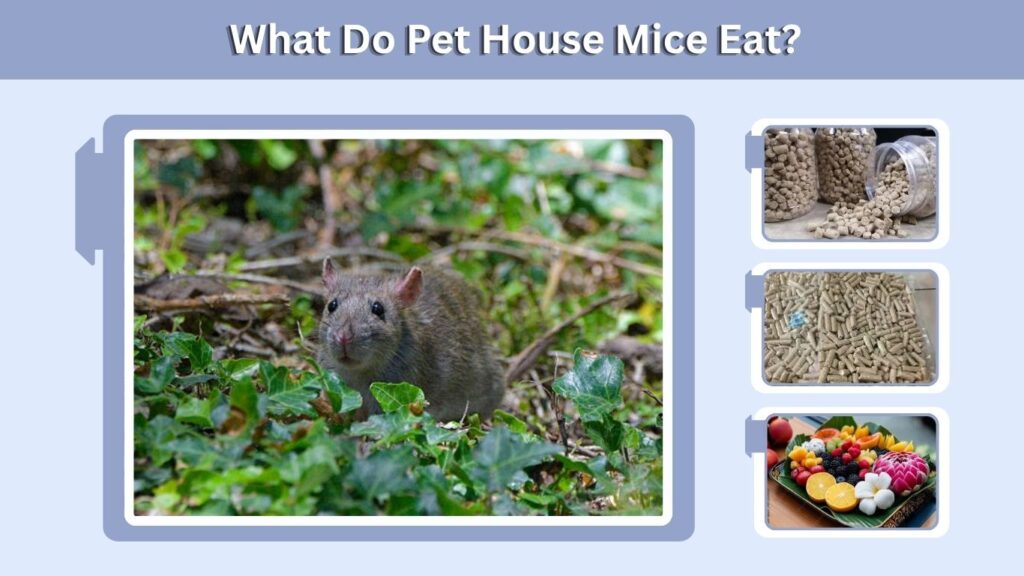
A balanced commercial mouse pellet or laboratory-style block should form the main diet. Pellets prevent selective eating and help wear the continuously growing front teeth.
Healthy feeding plan
Provide:
- Formulated mouse pellets or blocks
- Small portions of suitable vegetables
- Occasional fruit as a treat
- Limited seeds and grains
- Constant access to clean water
- Safe chew items
Scatter some of the daily food through clean bedding to encourage natural foraging. Treats should remain small because mice are vulnerable to obesity and nutritional imbalance.
Foods to avoid
Do not offer chocolate, caffeinated drinks, alcohol, highly salty snacks, sugary desserts, moldy food, sticky sweets, or unidentified wild plants. Remove fresh leftovers before they spoil.
Check the water bottle every day. A blocked or leaking nozzle can leave a mouse without water or soak its bedding.
Exercise and Enrichment
Mice are active animals that need opportunities to run, climb, chew, hide, explore, and search for food.
Essential enrichment
Provide a solid exercise wheel large enough for the mouse to run without sharply curving its back. Wheels with wire rungs or open gaps can trap feet and tails.
Rotate tunnels, ladders, ropes, boxes, climbing branches, and chew toys while preserving familiar shelters. Scattering food, hiding treats, and changing tunnel arrangements can encourage exploration without forcing human interaction.
Handling and Taming a Pet Mouse
A newly adopted mouse may need several days to become comfortable with its enclosure before handling begins.
Safe handling process
Offer treats from your fingers and allow the mouse to investigate your hand. Once comfortable, scoop it gently with both hands or encourage it to enter a tunnel or small container.
Handle the mouse close to a secure surface in case it jumps. Never lift a pet mouse by the end of its tail, chase it around the enclosure, squeeze its body, or hold it close to your face.
Health and Hygiene
Mice often hide illness until their condition becomes serious. Daily observation is therefore essential.
Signs that require veterinary attention
- Noisy, rapid, or difficult breathing
- Sneezing with eye or nasal discharge
- Reduced appetite or weight loss
- Diarrhea or a dirty rear end
- Persistent scratching or hair loss
- Lumps, swelling, or wounds
- Head tilting or poor balance
- Sudden inactivity
- Overgrown teeth
Contact an exotic-pet veterinarian promptly when symptoms appear. Respiratory disease and tumors are common concerns in pet mice.
Protecting human health
Wash your hands after handling mice, bedding, food bowls, or enclosure equipment. Keep the cage and cleaning supplies away from kitchens. Pregnant people, children under five, older adults, and anyone with weakened immunity should take additional precautions around rodents.
Best Mouse Traps for a House With Pets
A wild mouse infestation should be managed separately from captive pet mice. Never allow wild and pet mice to contact one another.
Pet-safe control approach
Seal entry holes, store food securely, clean spills, and remove accessible water and nesting materials. The CDC recommends appropriately sized snap traps and advises keeping every trap and bait completely inaccessible to children and pets. It discourages glue traps and live traps.
Place traps inside secured, tamper-resistant enclosures or inaccessible spaces. Avoid loose poison, which can directly poison pets or harm them when they catch a contaminated rodent. Use a licensed pest professional when safe placement cannot be guaranteed.
FAQs
These answers address common concerns about wild mice, pet housing, companionship, lifespan, and handling.
Can I keep a wild house mouse as a pet?
Keeping a wild house mouse is not recommended. It may carry diseases or parasites, remain severely stressed in captivity, and bite while attempting to escape. Choose a captive-bred fancy mouse instead, and contact a rehabilitator when a wild mouse is injured or orphaned.
How long does a pet house mouse live?
A well-cared-for pet mouse generally lives between one and three years. Genetics, diet, housing, respiratory health, tumors, stress, and veterinary care influence lifespan. Wild house mice often have shorter lives because they face predators, poison, traps, food shortages, and harsh weather.
What is the best house for a pet mouse?
The best enclosure is spacious, escape-proof, well ventilated, and fitted with a solid floor. It should contain deep paper-based bedding, several shelters, nesting material, tunnels, climbing equipment, chew toys, and a solid wheel that allows the mouse to run with a straight back.
Can a pet mouse live alone?
Female mice should normally live in a compatible pair or group. Adult males may fight and sometimes require individual housing with substantial enrichment and daily interaction. Social arrangements depend on sex, age, familiarity, neutering status, and temperament, so monitor every group for aggression.
Can pet mice be kept outside?
Pet mice should not be permanently housed outside. They are vulnerable to heat, cold, rain, predators, insects, wild rodents, and escape. Keep them indoors in a quiet, temperature-controlled room away from direct sunlight, drafts, kitchens, and cats or dogs.