
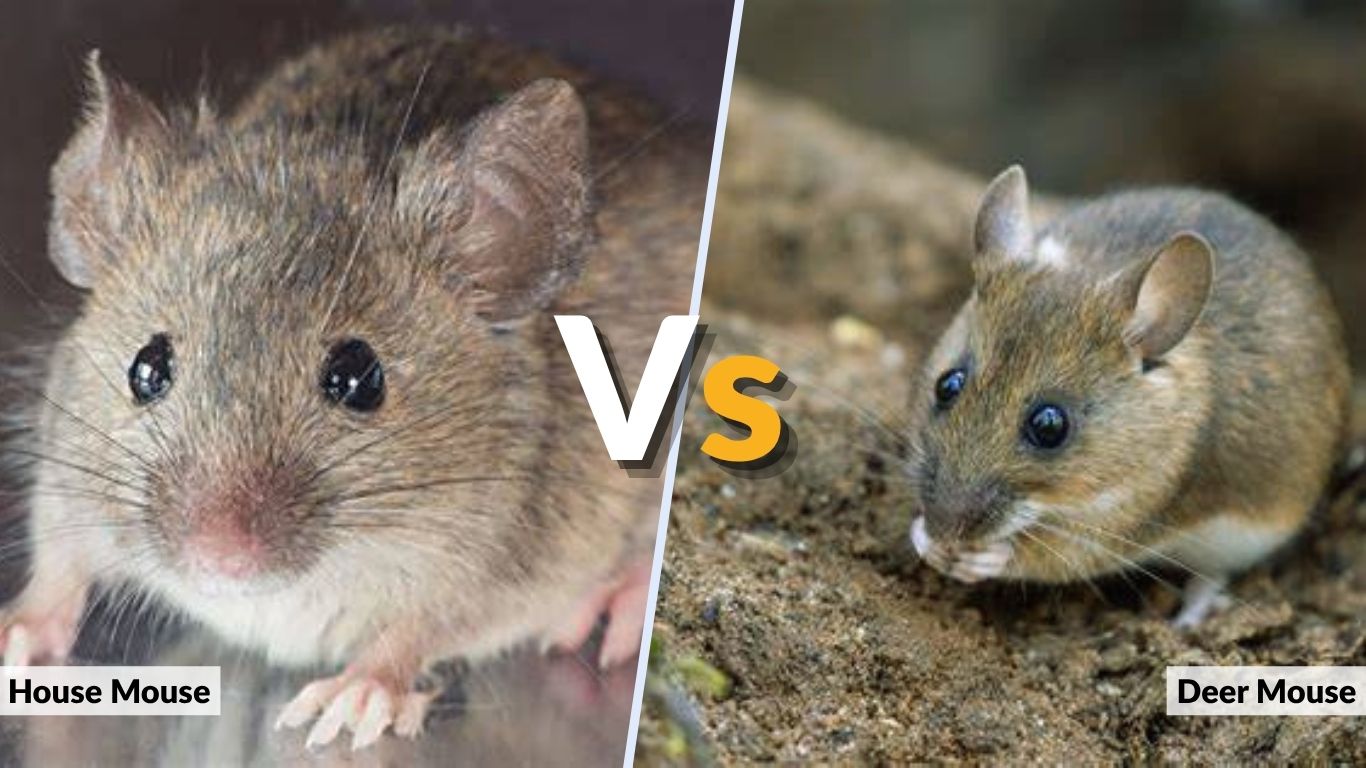
If you’ve spotted a small mouse in your home or garage, knowing whether it’s a deer mouse or a house mouse is more important than many people realize. While they look similar at first glance, these two rodents differ in appearance, habitat, behavior, and health risks. Deer mice are known carriers of hantavirus in some regions, whereas house mice are common indoor pests that contaminate food and damage property. This guide compares deer mouse vs house mouse, including identification, droppings, size, behavior, and the best ways to keep them out of your home.
Deer Mouse vs House Mouse at a Glance
Although both species are small rodents, several features make them easy to tell apart once you know what to look for.
| Feature | Deer Mouse | House Mouse |
| Scientific name | Peromyscus maniculatus | Mus musculus |
| Body color | Brown or reddish-brown with white belly | Uniform gray, brown, or dusty black |
| Belly | Bright white | Same color as back |
| Tail | Two-toned with white underside | Uniform dark color |
| Eyes | Large, dark eyes | Smaller eyes |
| Ears | Large, rounded ears | Smaller ears |
| Adult length | 5–8 inches (including tail) | 5–7.5 inches (including tail) |
| Typical habitat | Forests, fields, sheds, cabins | Homes, apartments, businesses |
| Disease concern | Can carry hantavirus | Can spread salmonella and other pathogens |
How to Identify a Deer Mouse vs House Mouse
Correct identification is the first step toward choosing the right control method.
Deer Mouse Identification
Look for these characteristics:
- Brown or reddish upper body
- Bright white belly and feet
- Large black eyes
- Large rounded ears
- Long tail with a dark top and white underside
- Agile climber and jumper
Deer mice have a clean, sharply defined color pattern. Their white underside is usually the easiest feature to recognize.
House Mouse Identification
House mice have a more uniform appearance.
- Gray, brown, or dusty-colored fur
- Cream or gray belly without a sharp color contrast
- Small eyes
- Smaller ears
- Long, mostly hairless dark tail
- Slender body
Unlike deer mice, house mice rarely have bright white feet or a distinctly white belly.
Deer Mouse vs House Mouse Size
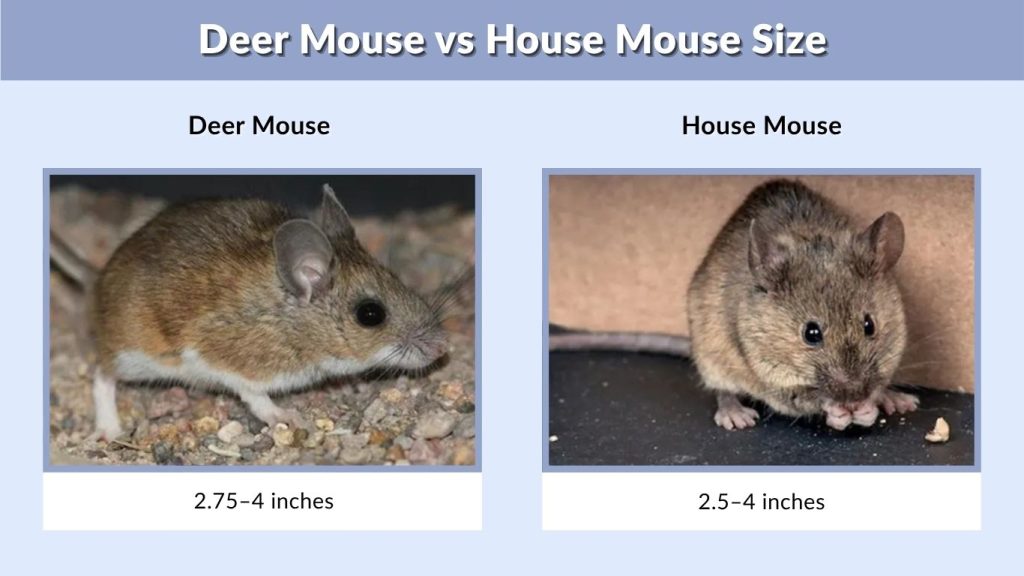
Many homeowners assume deer mice are much larger, but their sizes overlap.
| Measurement | Deer Mouse | House Mouse |
| Body length | 2.75–4 inches | |
| Tail length | 2–4 inches | 2.5–4 inches |
| Weight | 15–35 grams | 12–30 grams |
Since size alone isn’t reliable, use fur color, belly color, ears, and tail pattern for identification.
Deer Mouse vs House Mouse Behavior
Behavior often provides valuable clues.
Deer Mouse Behavior
Deer mice are primarily outdoor rodents. They live in:
- Woodlands
- Grasslands
- Farms
- Barns
- Cabins
- Garages
- Sheds
They usually enter homes during cold weather or when searching for food. Deer mice are excellent climbers and can jump surprisingly well.
House Mouse Behavior
House mice prefer living close to humans year-round. Common hiding places include:
- Kitchens
- Wall voids
- Attics
- Basements
- Storage rooms
- Behind appliances
House mice reproduce rapidly, making infestations grow quickly if left untreated.
Deer Mouse vs House Mouse Droppings
Droppings are often the first sign of an infestation.
Deer Mouse Droppings
Characteristics include:
- About ¼ inch long
- Oval shape
- Pointed ends
- Dark brown to black when fresh
- Found in garages, sheds, cabins, and storage areas
House Mouse Droppings
Typical features include:
- About ⅛–¼ inch long
- Rod-shaped
- Blunt or slightly pointed ends
- Dark when fresh, gray as they age
- Common around food sources, cabinets, and baseboards
Can You Tell Them Apart?
The differences are subtle. While deer mouse droppings often have more pointed ends, droppings alone are not a reliable way to identify the species. Look for other evidence, including fur color, tail pattern, nesting sites, and habitat.
Habitat and Distribution
Where you find the mouse can help narrow down the species.
Deer Mouse Habitat
Deer mice naturally occur throughout much of North America. They prefer:
- Forest edges
- Meadows
- Prairies
- Rural buildings
- Mountain regions
- Agricultural areas
They usually nest outdoors but may move indoors during winter.
House Mouse Habitat
House mice are found worldwide and thrive in human environments.
They commonly inhabit:
- Homes
- Restaurants
- Warehouses
- Offices
- Grocery stores
- Farms
Because they depend heavily on people for food and shelter, house mice are considered one of the world’s most successful pest species.
Health Risks
One of the biggest differences involves disease concerns.
Deer Mouse Risks
Deer mice can carry hantavirus, which is transmitted through contaminated droppings, urine, and saliva. Although infections are uncommon, they can be severe. Avoid sweeping or vacuuming mouse droppings, especially in cabins, sheds, or enclosed spaces where deer mice may be present.
House Mouse Risks
House mice contaminate food with urine and droppings. They may spread bacteria such as Salmonella, trigger allergies, and introduce fleas or mites into homes.
Nesting Habits
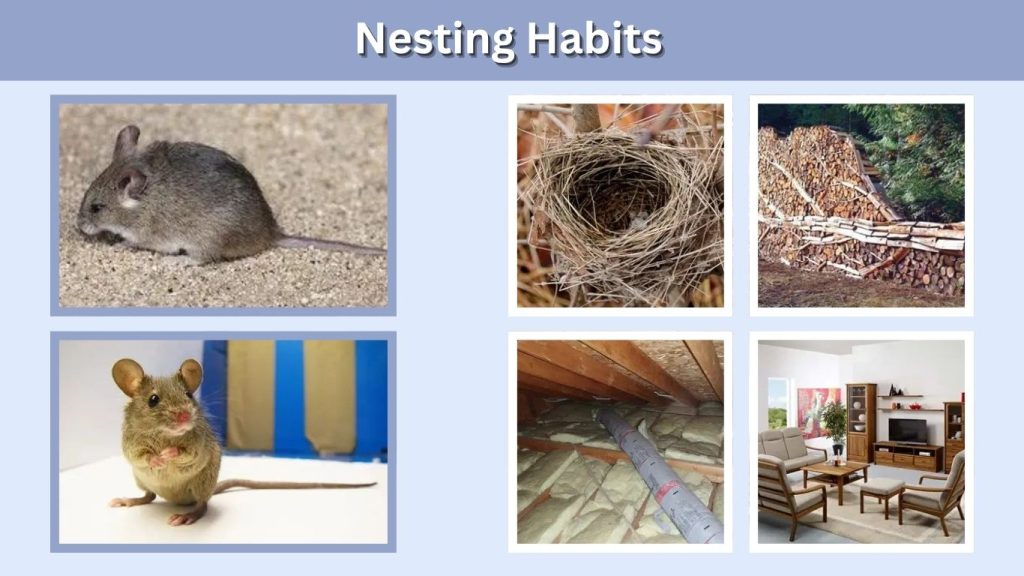
The two species build nests in different locations.
Deer mice often nest in:
- Hollow logs
- Tree stumps
- Bird nests
- Woodpiles
- Sheds
- Cabins
House mice typically nest in:
- Wall cavities
- Insulation
- Furniture
- Closets
- Kitchen cabinets
- Appliance voids
House mice usually build nests close to reliable food sources.
How to Prevent Deer Mice and House Mice

Most prevention methods work for both species.
- Seal cracks larger than ¼ inch around doors, pipes, and foundations.
- Store food in airtight containers.
- Clean up crumbs and spilled pet food.
- Remove clutter that provides nesting sites.
- Keep firewood away from the home.
- Trim vegetation near exterior walls.
- Install door sweeps and repair damaged screens.
- Use snap traps in areas with mouse activity if necessary.
If cleaning areas contaminated with deer mouse droppings, wear gloves and disinfect the area before wiping it clean.
Deer Mouse vs House Mouse: Which Is More Dangerous?
Neither mouse is aggressive toward people, but deer mice present the greater health concern because of their potential association with hantavirus. House mice, however, are far more likely to establish large indoor infestations that contaminate food and damage property.
Identifying the species helps you choose the safest cleanup methods and the most effective long-term prevention strategy.
FAQs
Is a deer mouse the same as a house mouse?
No. Deer mice (Peromyscus maniculatus) are native wild rodents with white bellies and two-toned tails, while house mice (Mus musculus) are introduced rodents that typically live alongside humans and have more uniform gray or brown coloring.
How can I tell if I have deer mice or house mice?
Look at the belly and tail. Deer mice have bright white undersides and two-colored tails, whereas house mice usually have solid-colored tails and a belly that closely matches the rest of their body.
Are deer mouse droppings different from house mouse droppings?
They are very similar. Deer mouse droppings often have more pointed ends, but droppings alone are not reliable for identification. Body markings and habitat provide more accurate clues.
Do deer mice come into houses?
Yes. Deer mice often enter homes, cabins, garages, and sheds during colder months in search of warmth and food, though they generally prefer living outdoors.
Which mouse is more common inside homes?
House mice are much more common in occupied homes because they are well adapted to living indoors year-round and reproduce quickly, making infestations more likely.