
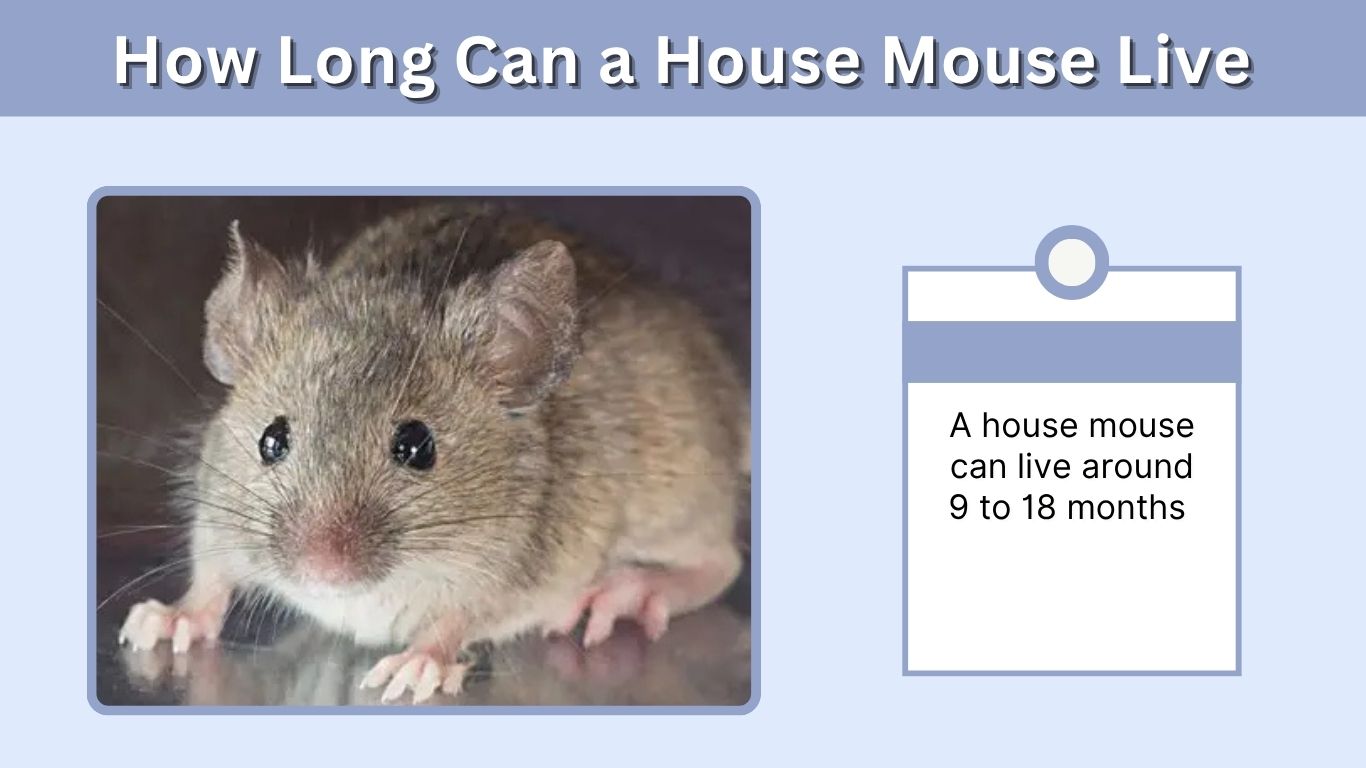
A house mouse can live around 9 to 18 months in many real-world conditions, but some may survive longer indoors if they have steady food, water, shelter, and few predators. Inside a house, mice often live longer than they would outdoors because they are protected from harsh weather and many natural enemies. Even one mouse can become a serious problem because house mice reproduce quickly and can breed throughout the year.
How Long Can a House Mouse Live?
House mice have short lives, but they reproduce fast. The University of Missouri Extension states that a mouse’s lifespan is usually about 9 months to 1 year, while NC State Extension says structure-invading mice generally live around 12 to 18 months, though reaching the upper range is uncommon in the wild.
| Situation | Average House Mouse Lifespan |
| Outdoors | Often less than 1 year |
| Inside a house | Around 9 to 18 months |
| Protected indoor conditions | Sometimes close to 2 years |
| Without food | Only a short time, usually days |
| Without water | Depends on moisture from food and environment |
A mouse inside your home may survive longer than one outdoors because it can hide in walls, cabinets, basements, attics, storage boxes, or under appliances.
How Long Can a Mouse Live in Your House?
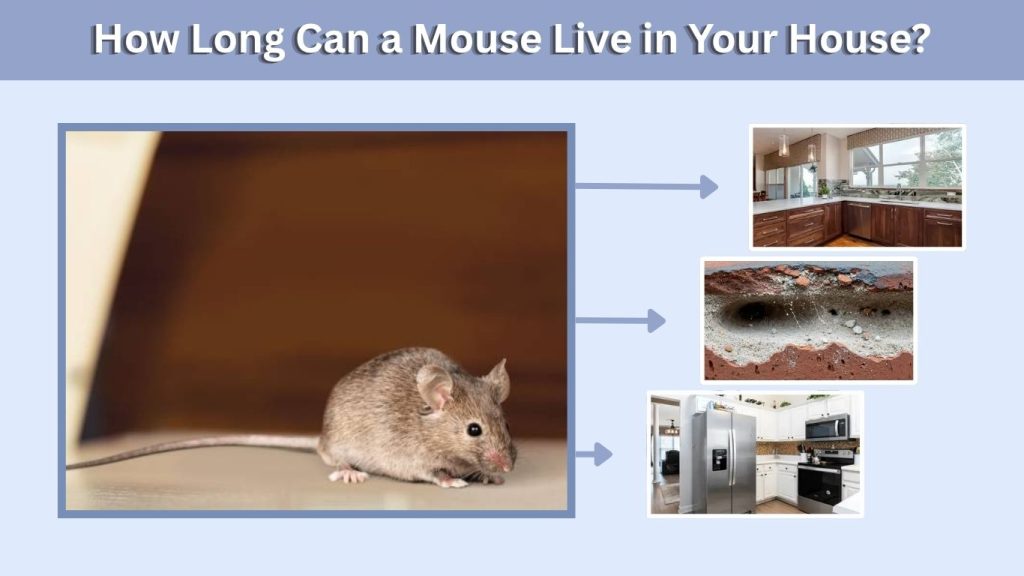
A mouse can live in your house for many months if it has access to crumbs, stored food, pet food, birdseed, nesting material, and hidden shelter. NC State Extension notes that house mice are well adapted to human buildings and may spend their entire lives inside a structure, including walls, storage boxes, drawers, appliances, and upholstered furniture.
That means a mouse is not always “just passing through.” If your home provides food and nesting space, it may stay, breed, and build a hidden population.
Why Mice Survive Well Indoors
House mice survive indoors because they need very little space and can hide in places people rarely check.
Common indoor hiding places include:
- Wall voids
- Kitchen cabinets
- Behind appliances
- Attics
- Basements
- Garages
- Storage boxes
- Furniture
- Crawl spaces
- Pantry corners
They are also active mostly at night, so you may not see them even when they are living nearby.
How Long Can a House Mouse Live Without Food?
A house mouse cannot live long without food, but it does not need a large meal to survive. Mice are nibblers, meaning they eat small amounts from many food sources.
In homes, a mouse may survive on:
- Crumbs
- Cereal
- Rice
- Pet food
- Birdseed
- Nuts
- Candy
- Bread
- Grease or food residue
- Stored pantry goods
This is why removing obvious food is helpful, but it may not solve the problem alone. A mouse can find tiny food particles behind appliances, under cabinets, or inside storage areas.
How Long Can a House Mouse Live Without Water?
House mice can survive with little free water. NC State Extension explains that mice can get by with little or no free water and can concentrate their urine, although they will drink water when it is available.
This means a mouse may not need a visible water bowl, leak, or puddle. It can get moisture from food, damp areas, condensation, or high-moisture foods. However, a dry, clean home with sealed food sources makes survival harder.
How Fast Can House Mice Reproduce?
The real danger is not just how long one mouse can live. It is how quickly mice multiply.
House mice reach reproductive maturity in about 6 to 10 weeks, and females can have 5 to 10 litters in a year. The University of Missouri Extension reports that a female usually has 5 or 6 young per litter, while NC State Extension notes that litter size can average 10 to 12 pups depending on age, resources, and season.
House Mouse Life Cycle
| Life Stage | Approximate Time |
| Gestation | About 19 to 21 days |
| Newborn pups | Blind, hairless, and dependent |
| Weaning | Around 3 weeks |
| Sexual maturity | About 6 to 10 weeks |
| Adult lifespan | Around 9 to 18 months |
Because mice mature so quickly, a small problem can become a larger infestation in a short time.
Can One Mouse Live Alone in a House?
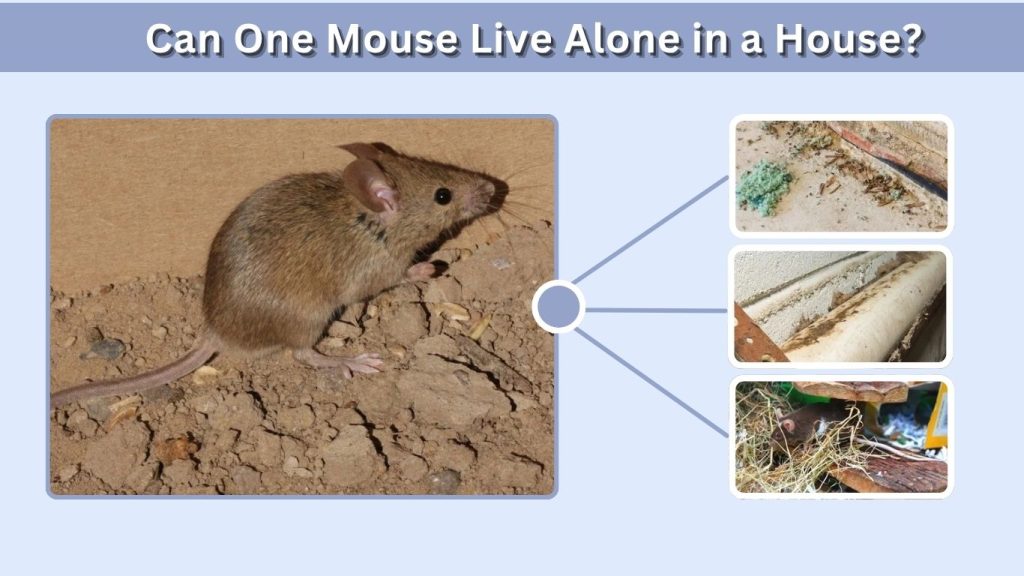
Yes, one mouse can live alone in a house, but seeing one mouse often means there may be more. Mice hide well, move mostly at night, and build nests in quiet places.
Signs that more than one mouse may be present include:
- Multiple droppings in different areas
- Scratching sounds at night
- Chewed food packaging
- Nesting material
- Greasy rub marks along walls
- Musky odor
- Repeated sightings
A single female can also start a population if she is pregnant or finds a mate nearby.
How Long Can House Mouse Mites Live?
House mouse mites are tiny parasites that may live on mice and in nesting areas. If mice are removed, mites may search for another host for a short time. Their survival depends on humidity, temperature, and whether they can find a host.
If you remove a mouse infestation, also clean nesting areas carefully while wearing gloves and a mask. Vacuuming, sealing entry points, and removing old nesting material can help reduce mite problems.
What Helps a House Mouse Live Longer Indoors?
A house mouse lives longer when it has easy access to food, water, warmth, and protection. Homes often provide all of these.
Things That Support Mouse Survival
- Open food containers
- Pet food left out overnight
- Birdseed stored in bags
- Crumbs under appliances
- Cluttered storage areas
- Warm wall voids
- Small entry holes
- Leaky pipes or damp spaces
- Unsealed garbage
The more resources your home provides, the easier it is for mice to survive and reproduce.
How to Shorten a Mouse Infestation
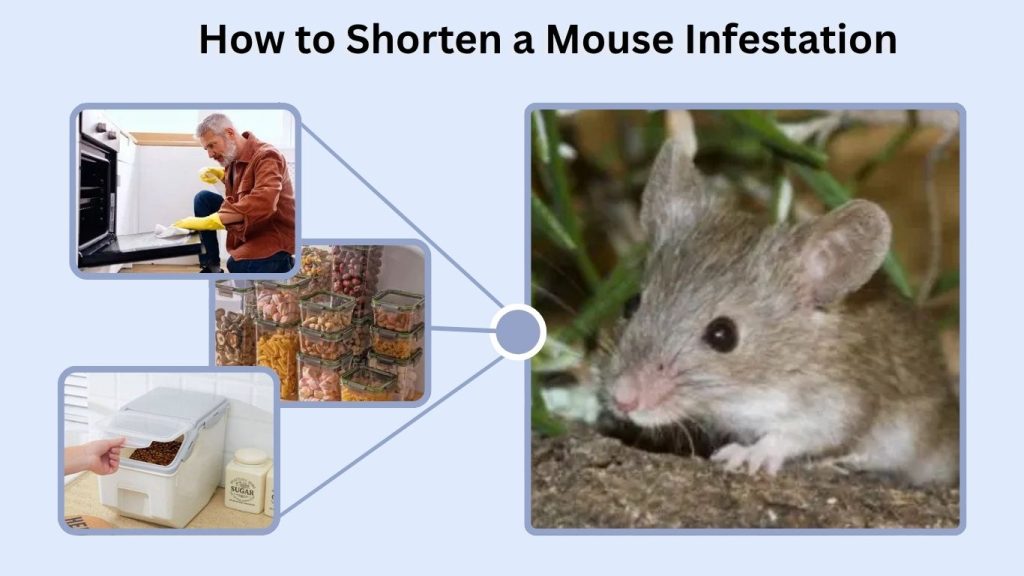
The best way to stop mice is to remove food, block entry points, and use traps where mice travel. Missouri Extension recommends sanitation, mouse-proof construction, and population reduction as the three main parts of house mouse control.
Practical Steps
- Store food in sealed containers
- Clean crumbs and grease behind appliances
- Keep pet food sealed
- Empty trash regularly
- Seal gaps larger than ¼ inch
- Use steel wool or metal for temporary plugging
- Place traps along walls
- Check traps daily
- Remove clutter near walls and storage areas
- Inspect garages, basements, and attics
Mice usually travel close to walls, so traps are more effective when placed along edges, behind objects, and near signs of activity.
FAQs
How long can a house mouse live inside?
A house mouse can often live around 9 to 18 months inside a building. Some may survive longer if they have steady food, water, warmth, and safe nesting areas. Indoor mice usually face fewer predators and less weather stress than outdoor mice.
How long can a mouse live in your house without food?
A mouse cannot live very long without food, but it can survive on tiny crumbs and hidden food particles. Even a small amount of cereal, pet food, birdseed, or pantry waste may be enough to keep it alive.
How long can a house mouse live without water?
House mice can survive with little free water because they can get moisture from food and conserve water well. Still, they will drink when water is available. Removing leaks and moisture sources helps make your home less suitable.
Does seeing one mouse mean an infestation?
Seeing one mouse does not always prove a large infestation, but it is a warning sign. Mice hide well and reproduce quickly. Droppings, chewing marks, nighttime scratching, and repeated sightings suggest that more mice may be present.
Can a mouse live its whole life in a house?
Yes, a house mouse can live its entire life inside a home or building. It may nest in walls, cabinets, storage boxes, appliances, or furniture if food and shelter are available. That is why early control is important.