
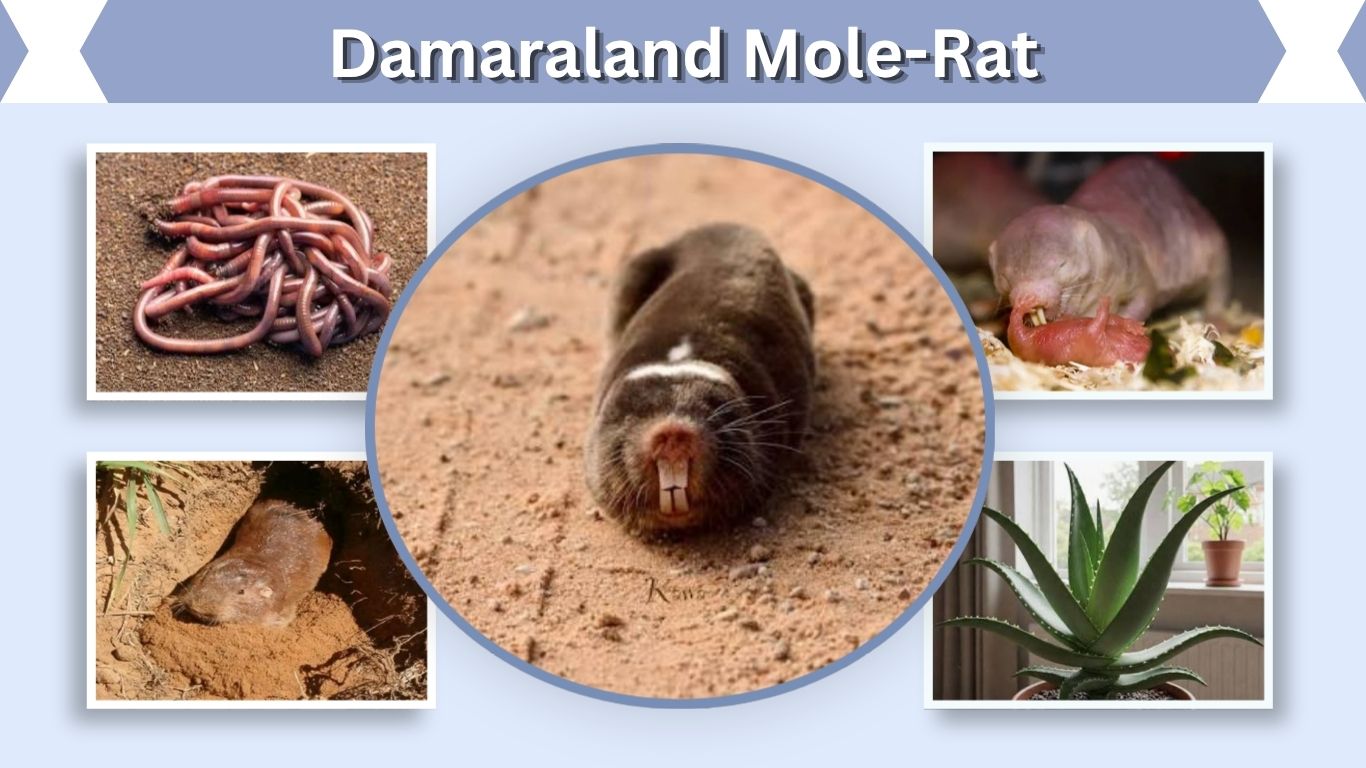
The Damaraland mole-rat is a strange but fascinating burrowing rodent from southern Africa. It lives almost entirely underground, builds tunnel systems, eats roots and tubers, and forms highly organized colonies led by a breeding female. Many people compare it with the naked mole-rat because both are rare examples of eusocial mammals. This guide explains what Damaraland mole-rats are, where they live, what they eat, how their queen system works, and whether they make good pets.
What Is a Damaraland Mole-Rat?
The Damaraland mole-rat, also called the Damara mole-rat, is a subterranean rodent known scientifically as Fukomys damarensis or Cryptomys damarensis. It is larger and furrier than the naked mole-rat and spends most of its life in underground colonies. The Smithsonian notes that this species ranges from western Zambia to northwestern South Africa.
| Feature | Damaraland Mole-Rat |
| Scientific name | Fukomys damarensis / Cryptomys damarensis |
| Animal type | Burrowing rodent |
| Range | Southern Africa |
| Lifestyle | Subterranean colony-living |
| Conservation status | Least Concern |
| Main diet | Roots, bulbs, tubers, leaves, occasional invertebrates |
Are Damaraland Mole-Rats Rodents?
Yes, Damaraland mole-rats are rodents, not true moles. Their large front teeth, compact body, short tail, and underground lifestyle make them well adapted for digging. Their teeth are especially important because they use them to gnaw through soil and find underground food.
What Do They Look Like?
Damara and mole-rats have thick, velvety fur that may be pale, yellowish, brown, gray, reddish, or dark. They have tiny eyes, very small external ears, a short tail, and strong digging limbs. Smithsonian lists their head-and-body length as about 4 to 8.5 inches, with a tail of about 0.5 to 1 inch.
Damaraland Mole-Rat Habitat and Range
Damaraland mole-rats live in dry parts of southern Africa where rainfall can be limited and food is hidden underground. They are found in woodlands, savannas, secondary forests, and dry soils where they can dig tunnel systems. Their burrow depth depends on the soil: looser soils often allow deeper tunnels.
Most of their life happens below the surface. A colony may include sleeping chambers, food storage areas, toilet chambers, and long tunnels that lead to feeding sites. During wet seasons, soil becomes easier to dig, so colonies expand tunnels and search for more food.
Damaraland Mole-Rat Diet
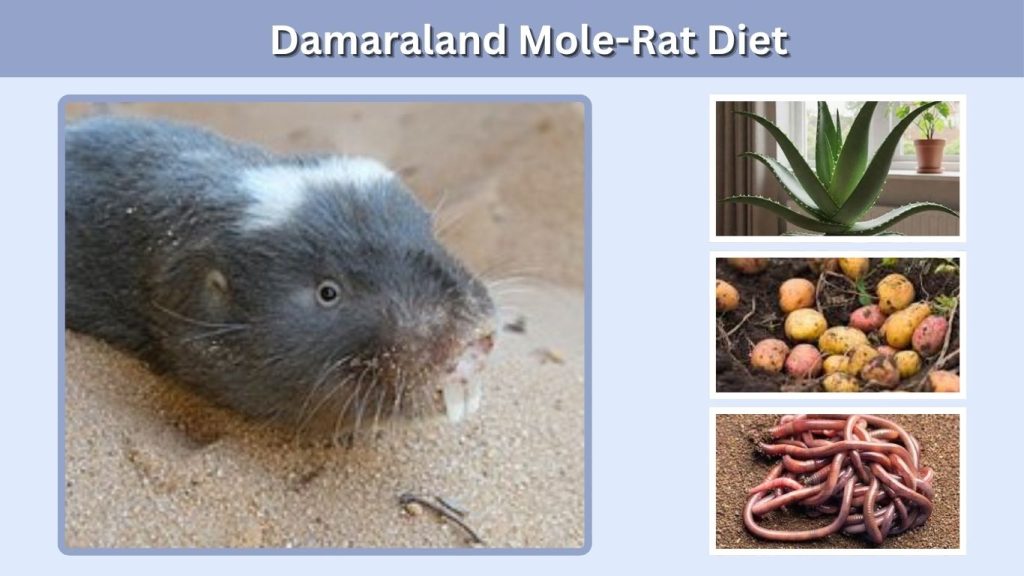
Damara and mole-rats are mainly herbivores, but they may eat some small invertebrates. Their diet includes roots, bulbs, tubers, aloe leaves, and other underground plant parts. Animal Diversity Web also lists earthworms, larvae, and termites among occasional foods.
10 Foods Damaraland Mole-Rats Eat
- Roots
- Bulbs
- Tubers
- Aloe leaves
- Underground plant stems
- Leaves
- Sweet potatoes in captivity
- Turnips in captivity
- Earthworms
- Insect larvae or termites
Their underground food sources are not always easy to find. This is one reason cooperation is useful: several mole-rats can dig and search together, then store food for the colony.
Eusocial Behavior and Colony Life
Damaraland mole-rats are famous because they are one of the few mammals described as eusocial. Eusocial animals live in highly organized groups where only certain members reproduce and others help with work such as digging, defense, food gathering, and pup care. San Diego Zoo describes naked mole-rats and Damaraland mole-rats as the only two mammal species that are eusocial.
The Queen and Breeding Males
A colony usually has one main breeding female, often called the queen. One or two large males may breed with her. The rest of the colony members are nonbreeding workers. These workers are usually related offspring from different generations.
The queen is important because she produces the young that keep the colony going. If the breeding female dies, some colonies may break apart or reorganize, especially if no replacement breeding female becomes established.
Caste System and Worker Roles
Damaraland mole-rat society is sometimes described as a caste system. This does not mean workers are permanently sterile, but reproduction is strongly limited inside the colony. Workers may dig tunnels, carry food, guard the burrow, and help care for pups. Animal Diversity Web describes a tunnel system with nesting, toilet, and food-storage areas, plus workers that dig, forage, and store food.
Damaraland Mole-Rat Tunnel System
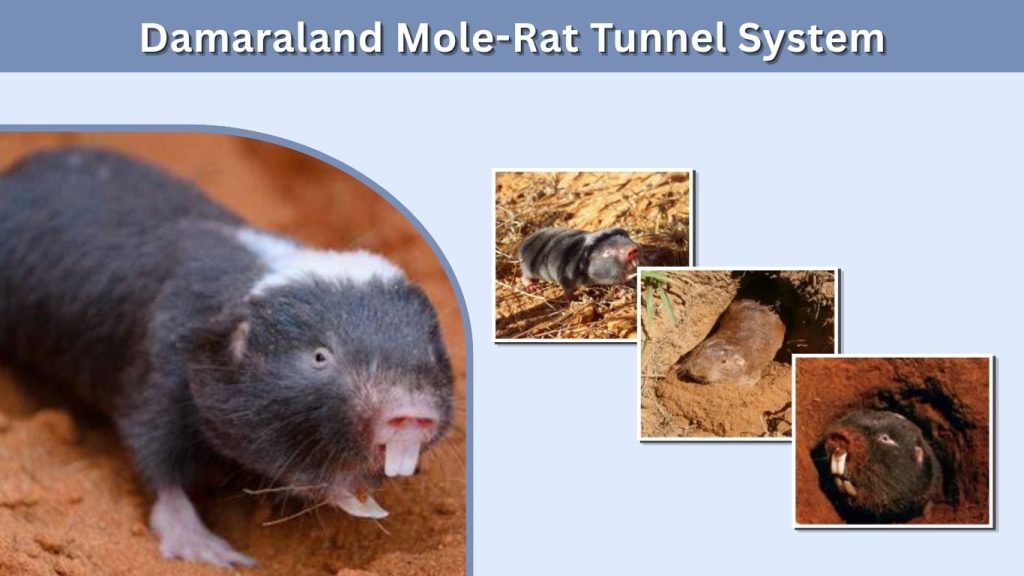
A Damaraland mole-rat tunnel system is more than a simple hole in the ground. It is a network of passageways and chambers designed for survival underground.
| Tunnel Part | Purpose |
| Main tunnel | Travel route through the burrow |
| Nest chamber | Shared sleeping and pup-care area |
| Food chamber | Storage area for roots and tubers |
| Toilet chamber | Waste area |
| Side tunnels | Soil removal and access to feeding zones |
They often push soil behind them and move it toward side tunnels, where it forms mounds on the surface. Most new digging happens when the ground is wet and easier to move. In dry seasons, they may use existing tunnels instead of digging many new ones.
Damaraland Mole-Rat Lifespan and Reproduction
Damara and mole-rats can live surprisingly long for small rodents. The Smithsonian states that they can live more than 15 years in human care. Rosamond Gifford Zoo lists a wild lifespan of about 5–6 years and more than 15 years in human care.
Gestation usually lasts around 78 to 92 days, and litters are small. The Smithsonian lists an average litter size of three young and notes that females usually have no more than two litters per year.
Damaraland Mole-Rat vs Naked Mole-Rat
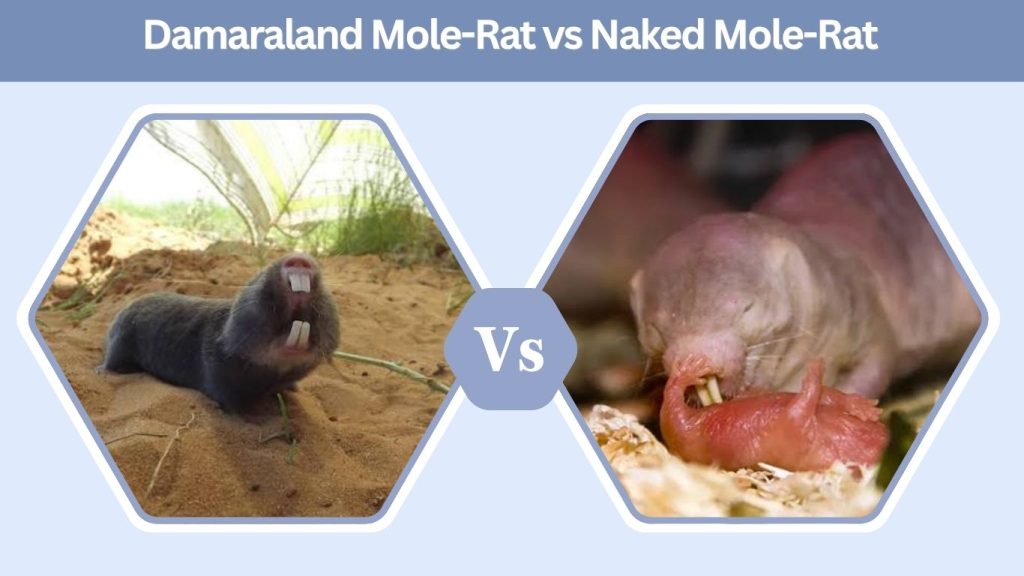
Damaraland mole-rats and naked mole-rats are often compared because both live underground and have eusocial colonies. However, they are not the same animal.
Damara and mole-rats are furrier, usually less wrinkled, and live in smaller colonies than naked mole-rats. Naked mole-rats are nearly hairless and may form much larger colonies. Both species show a queen-led social structure, but their appearance, range, and colony size are different.
Can You Buy a Damaraland Mole-Rat?
Some searches include “Damaraland mole rat for sale,” but this animal is not a normal pet. It is a specialized wild rodent that needs a colony, controlled underground-style housing, proper diet, and expert care. It is mainly kept by zoos, research facilities, and licensed institutions.
A Damaraland mole-rat is not a good choice for a beginner pet owner. Before buying any exotic mammal, people should check local wildlife laws, import rules, animal welfare rules, and permit requirements. In most cases, learning about them through zoos or educational exhibits is the safer and more responsible option.
FAQs
Are Damaraland mole-rats dangerous?
They are not dangerous to people in the way venomous animals are, but they can bite strongly if handled or threatened. Their large incisors are made for digging and gnawing, so they should not be treated like tame pet rodents.
Are Damaraland mole-rats blind?
They have very small eyes and poor vision, but they are adapted for underground life. They depend more on touch, smell, sound, air movement, and vibrations than on sight.
What is the Damaraland mole-rat queen?
The queen is the main breeding female in the colony. She produces most or all of the young, while nonbreeding colony members help with digging, food collection, defense, and pup care.
What do Damaraland mole-rats eat in the wild?
They mainly eat roots, bulbs, tubers, aloe leaves, and other underground plant parts. They may also eat small invertebrates such as earthworms, larvae, and termites.
Are naked mole-rats and Damaraland mole-rats the same?
No. They are different species, but both are underground African rodents with eusocial colonies. Damaraland mole-rats are furrier and generally live in smaller colonies, while naked mole-rats are nearly hairless and can form very large colonies.