
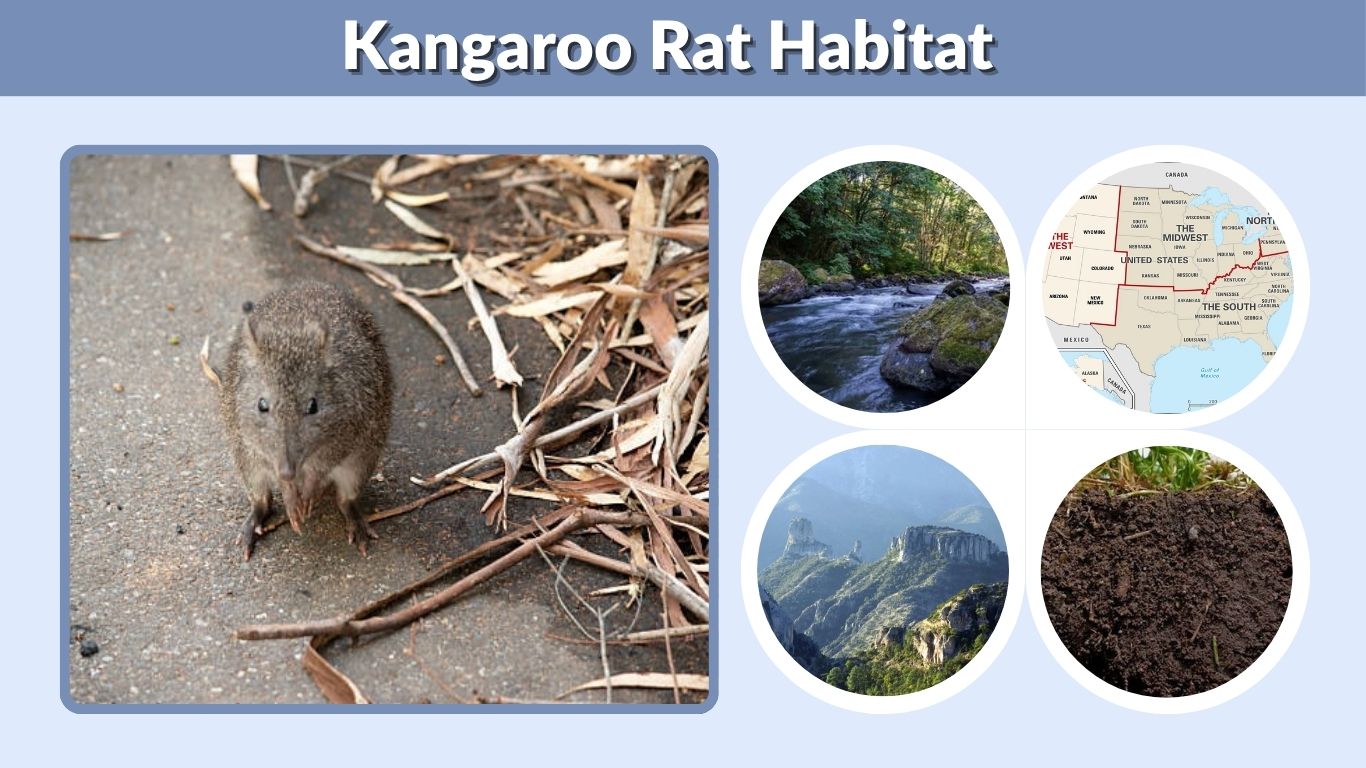
Kangaroo rats live in some of the driest habitats in North America, especially deserts, sandy flats, open grasslands, scrublands, and dry valleys. Their habitat is closely connected to loose soil, seed-producing plants, and safe burrow sites. These small rodents are famous for surviving in harsh places where water is rare, temperatures change quickly, and predators hunt mostly at night.
What Is the Natural Habitat of a Kangaroo Rat?
Kangaroo rats are mainly found in dry, open habitats. They prefer places where the soil is loose enough for digging and where seeds are available for food. Many species live in desert and semi-desert regions, but some are more common in grasslands or sandy washes.
General Habitat Description
The typical kangaroo rat habitat includes open ground, scattered plants, dry soil, and enough space for jumping. These animals do not usually live in thick forests or wet areas. They need open land because their survival depends on fast movement and strong hearing.
Most kangaroo rats build burrows underground. These burrows protect them from hot daytime temperatures, cold nights, and predators. A burrow may include nesting chambers, food storage areas, and several entrances.
Main Habitat Features
Kangaroo rats usually choose habitats with specific natural features. These features help them find food, hide safely, and move quickly across the land.
Important habitat features include:
- Loose sandy or soft soil for digging
- Open ground with low vegetation
- Seed-producing grasses and shrubs
- Dry climate with low rainfall
- Burrow-friendly slopes, flats, or washes
- Safe areas away from heavy disturbance
- Good visibility for spotting predators
These habitat needs explain why kangaroo rats are strongly linked with deserts, dry grasslands, and scrubland ecosystems.
Kangaroo Rat Habitat Biome
The main biome of kangaroo rats is the desert biome. However, they may also live in semi-arid grassland and shrubland biomes. These habitats have limited rainfall, strong sunlight, and plants adapted to dry conditions.
In desert biomes, kangaroo rats avoid heat by staying underground during the day. At night, they leave their burrows to collect seeds. This lifestyle helps them save water and energy.
Where Do Kangaroo Rats Live?
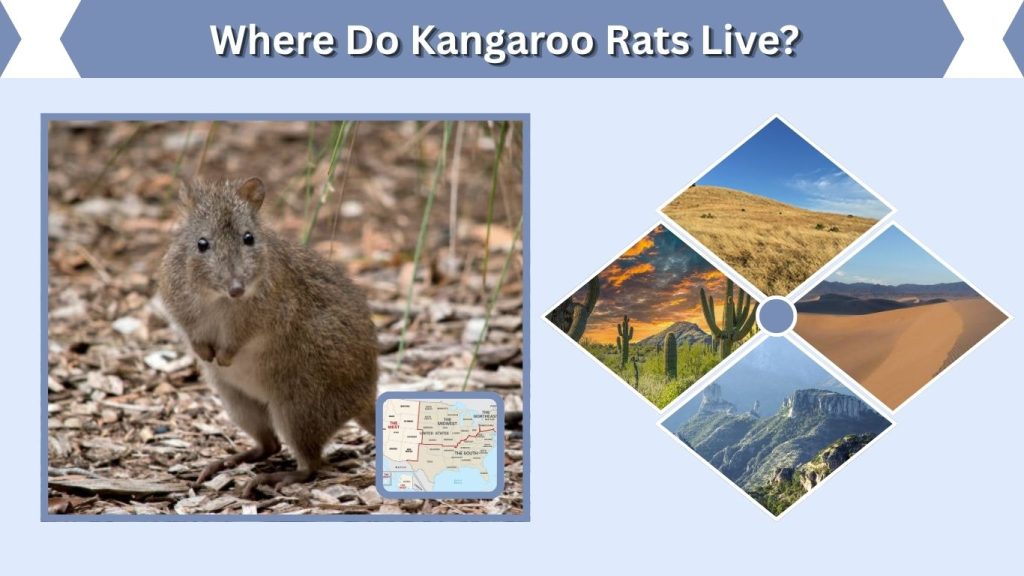
Kangaroo rats live mainly in western and southwestern North America. They are especially associated with the dry regions of the United States and northern Mexico. Their range depends on species, soil type, food supply, and local climate.
Kangaroo Rat Habitat Range
Kangaroo rats are found across many dry landscapes in North America. Their range includes deserts, arid valleys, sandy plains, dry grasslands, and scrubland areas.
Common regions include:
- Southwestern United States
- Western United States
- Northern Mexico
- California dry grasslands
- Mojave Desert areas
- Sonoran Desert areas
- Great Basin dry regions
- Texas grassland regions
Different species occupy different parts of this broad range. Some species are widespread, while others live only in small, protected, or highly specific habitats.
Kangaroo Rat Habitat Map
A kangaroo rat habitat map would mainly show dry western North America. The map would highlight areas with deserts, sandy soils, dry shrublands, and open grasslands.
For example, the desert kangaroo rat is linked with the Mojave, Sonoran, and Great Basin desert regions. The giant kangaroo rat is mainly associated with California’s San Joaquin Valley and nearby grassland areas. The Texas kangaroo rat is connected to parts of north-central Texas.
Do Kangaroo Rats Live in Maine?
Kangaroo rats do not naturally live in Maine. Maine has a cooler, wetter climate with forests, wetlands, and different soil conditions. Kangaroo rats are adapted to dry western habitats, not the moist habitats of the northeastern United States.
This is why searches like “kangaroo rat habitat Maine” usually come from confusion. Kangaroo rats are North American animals, but their natural range is not spread across the whole continent.
Desert Kangaroo Rat Habitat
The desert kangaroo rat is one of the most classic examples of a desert-adapted rodent. It lives in some of the hottest and driest parts of southwestern North America. Its habitat is usually sandy, open, and sparsely covered with desert plants.
Desert Habitat Requirements
Desert kangaroo rats need loose, sandy soil where they can dig burrows. They also need enough desert plants that produce seeds. Their habitat is often dry, open, and covered with sparse vegetation.
Common desert habitat features include:
- Sandy desert flats
- Dune-like areas
- Sparse shrubs
- Creosote bush areas
- Dry washes
- Open desert scrub
- Low plant cover
- Hot days and cool nights
This habitat allows them to dig, store seeds, and escape predators quickly.
Why Sandy Soil Matters
Sandy soil is very important for desert kangaroo rats. It allows them to create underground burrows without too much effort. Burrows are essential because they provide shelter from extreme desert conditions.
Inside the burrow, temperature and humidity are more stable than above ground. This helps kangaroo rats conserve water and avoid dangerous daytime heat.
Desert Plants and Food Supply
The desert kangaroo rat depends heavily on seeds from desert plants. Grasses, shrubs, and other dryland plants provide the seeds they collect and store.
After rainfall, more plants may grow and produce seeds. During dry periods, stored seeds become very important. A habitat without enough seed-producing plants cannot support a healthy kangaroo rat population.
Species-Specific Kangaroo Rat Habitats
Different kangaroo rat species have different habitat preferences. Some prefer sandy deserts, while others live in grasslands, alluvial washes, or open scrublands. Understanding species-specific habitat helps explain why some kangaroo rats are common and others are rare.
Common Kangaroo Rat Habitats by Species
| Kangaroo Rat Species | Main Habitat | Region |
| Desert kangaroo rat | Sandy desert, dunes, desert scrub | Southwestern North America |
| Giant kangaroo rat | Open grassland and dry plains | California |
| Ord’s kangaroo rat | Sandy soils, grasslands, shrublands | Western and central North America |
| Merriam’s kangaroo rat | Desert scrub and arid lands | Southwestern United States and Mexico |
| Texas kangaroo rat | Shortgrass and mixed grassland | North-central Texas |
| San Bernardino kangaroo rat | Alluvial sage scrub and sandy washes | Southern California |
| Stephens’ kangaroo rat | Open grassland and coastal sage scrub edges | Southern California |
This table shows that “kangaroo rat habitat” is not one single place. It changes depending on the species and local environment.
Giant Kangaroo Rat Habitat
The giant kangaroo rat lives mainly in California’s dry grassland habitat. It prefers open, relatively flat areas with low vegetation and suitable soil for burrow systems. This species is strongly associated with the San Joaquin Valley region.
The giant kangaroo rat is important because it changes its habitat through digging and seed storage. Its burrow systems can influence soil structure, plant growth, and the movement of nutrients in the ecosystem.
Ord’s Kangaroo Rat Habitat
Ord’s kangaroo rat has a wider habitat range than some rare species. It can live in sandy soils, open grasslands, shrublands, and dry plains. It is often found in areas where vegetation is not too dense.
This species depends on seeds and burrows like other kangaroo rats. Loose soil and open habitat are still important, even when the landscape is not a true desert.
California Kangaroo Rat Habitats
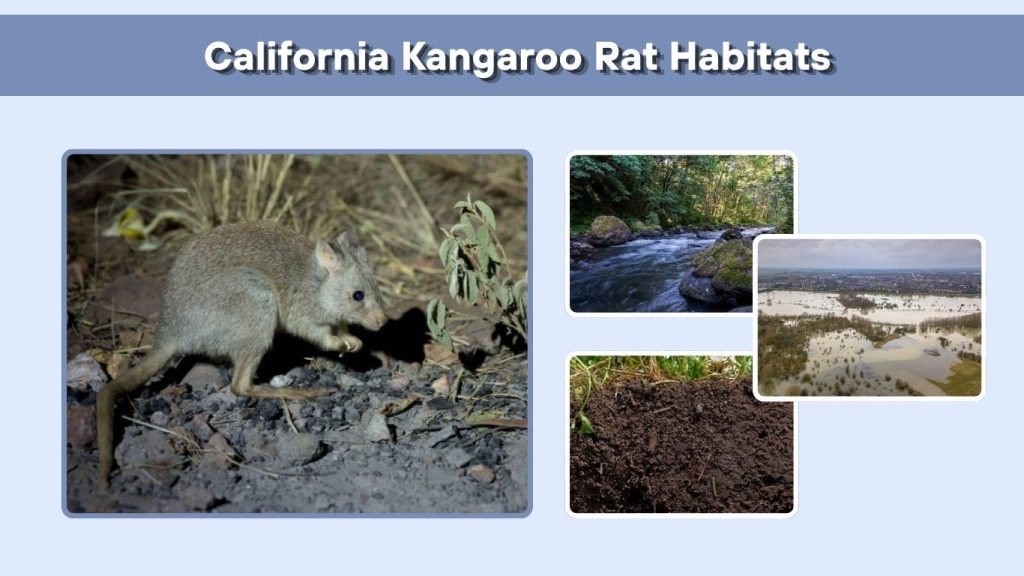
California is home to several important kangaroo rat species and subspecies. Some are common in dry regions, while others are rare and protected because their habitats have been reduced or fragmented.
San Bernardino Kangaroo Rat Habitat
The San Bernardino kangaroo rat lives in scattered patches of alluvial sage scrub. These habitats are usually found near sandy river washes and floodplain systems. The soil is loose, sandy, and shaped by natural water movement.
This kangaroo rat is now limited to isolated areas in southern California. Its habitat has been affected by development, flood control, mining, and changes to natural river systems.
Stephens’ Kangaroo Rat Habitat
Stephens’ kangaroo rat is found in southern California. It usually lives in open grassland and sparse shrubland areas. It prefers low vegetation where it can move freely and detect predators.
Habitat loss and fragmentation have been major concerns for this species. Development can divide its habitat into smaller patches, making it harder for populations to stay connected.
Fresno, Morro Bay, and Tipton Kangaroo Rat Habitats
Several California kangaroo rats are known from limited or specialized habitats. These include the Fresno kangaroo rat, Morro Bay kangaroo rat, and Tipton kangaroo rat.
Their habitats may include:
- Dry valley grasslands
- Sandy coastal areas
- Alkali sink habitats
- Open scrublands
- Sparse vegetation zones
- Burrow-friendly soils
Because these habitats can be small and easily disturbed, some local kangaroo rat populations are vulnerable.
Kangaroo Rat Burrow Habitat
A kangaroo rat’s burrow is one of the most important parts of its habitat. Without burrows, these animals would struggle to survive heat, cold, predators, and food shortages.
Structure of the Burrow
Kangaroo rat burrows are usually built underground in sandy or soft soil. A burrow may have one entrance or several entrances, depending on the species and soil condition.
A typical burrow may include:
- Main tunnel
- Nesting chamber
- Food storage chamber
- Escape entrance
- Shallow side tunnels
- Plugged openings for protection
The burrow is more than a hiding place. It is a shelter, food storage area, nursery, and climate-control system.
Why Burrows Help Them Survive
Burrows protect kangaroo rats from the most dangerous parts of desert life. Above ground, daytime heat can be intense. Underground, the temperature is cooler and more stable.
Burrows also help protect them from predators such as snakes, owls, foxes, coyotes, and badgers. When danger appears, a kangaroo rat can quickly retreat underground.
Food Storage in Burrows
Kangaroo rats often store seeds inside their burrows. This stored food helps them survive when fresh seeds are hard to find.
Seed storage is especially important in dry habitats where food availability changes with rainfall. In good seasons, they collect extra seeds. In poor seasons, these stored seeds may help them survive.
Habitat Adaptations of Kangaroo Rats
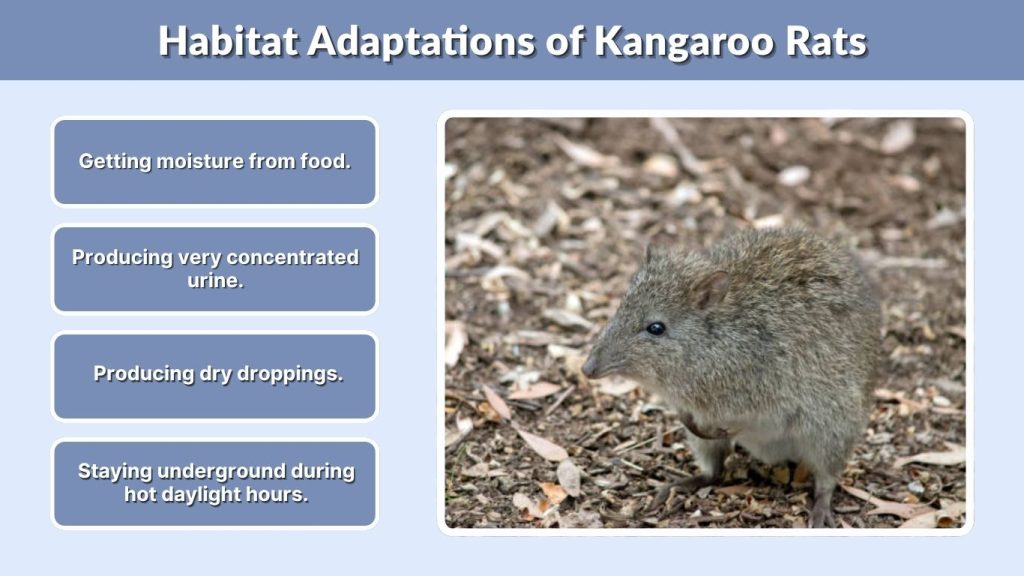
Kangaroo rats have many adaptations that match their habitat. Their bodies and behaviors are designed for dry, open, and predator-filled environments.
Adaptations for Dry Habitats
Kangaroo rats are famous for surviving with very little water. They get much of their moisture from seeds and conserve water through special body functions.
Their dry-habitat adaptations include:
- Getting moisture from food
- Producing very concentrated urine
- Producing dry droppings
- Staying underground during hot daylight hours
- Being active mostly at night
- Storing seeds for dry periods
- Living in burrows with stable conditions
These adaptations allow kangaroo rats to live in habitats where many mammals would need more direct water sources.
Adaptations for Open Ground
Open habitats can be dangerous because predators can see prey easily. Kangaroo rats survive by being fast, alert, and agile.
Their large hind legs allow them to jump quickly. Their long tail helps them balance. Their large ears help them hear predators before they get too close.
Adaptations for Seed-Based Habitats
Kangaroo rats are seed specialists. Their cheek pouches let them carry seeds back to their burrows without swallowing them.
This is useful in habitats where seeds are scattered across the ground. They can gather food quickly, avoid staying exposed too long, and save food for later.
Kangaroo Rat Habitat Loss
Habitat loss is one of the biggest threats to many kangaroo rat species. Some species still have stable populations, but others have declined because their habitats have been changed or destroyed.
Causes of Habitat Loss
Kangaroo rat habitat can be damaged by many human activities. The biggest problem is the loss of open land with loose soil and native seed-producing plants.
Common causes include:
- Urban development
- Road construction
- Agriculture
- Industrial land use
- Flood control projects
- Mining or soil disturbance
- Invasive plants
- Habitat fragmentation
- Heavy grazing in sensitive areas
When habitat is changed too much, kangaroo rats may lose burrow sites, food sources, and safe movement areas.
Why Habitat Fragmentation Is a Problem
Fragmentation happens when large habitats are divided into smaller pieces. Roads, buildings, farms, and other barriers can separate kangaroo rat populations.
Small isolated populations are more vulnerable. They may have less genetic diversity, fewer mates, and fewer safe places to move. This is especially important for rare species like the San Bernardino kangaroo rat and Stephens’ kangaroo rat.
Conservation and Protection
Some kangaroo rat habitats are protected through conservation plans, wildlife refuges, habitat management programs, and critical habitat designations. These efforts focus on protecting open land, restoring native vegetation, and reducing harmful disturbance.
Protecting kangaroo rat habitat also helps many other desert and grassland species. Birds, reptiles, insects, plants, and other mammals may all benefit from the same habitat protection.
FAQs
What habitat do kangaroo rats live in?
Kangaroo rats live in dry, open habitats such as deserts, sandy flats, scrublands, grasslands, and dry washes. They prefer loose soil for digging burrows and areas with seed-producing plants. Most species are found in western and southwestern North America, especially in arid and semi-arid regions.
Do kangaroo rats live only in deserts?
No, kangaroo rats do not live only in deserts. Many species live in desert habitats, but others live in grasslands, shrublands, sandy plains, and alluvial wash areas. The exact habitat depends on the species. Some prefer sandy deserts, while others are more connected to dry grassland ecosystems.
What is the habitat of the giant kangaroo rat?
The giant kangaroo rat mainly lives in dry grassland habitats in California. It prefers open, relatively flat areas with low vegetation and soil suitable for burrows. Its habitat has been reduced by agriculture, development, and land-use changes, which is why it is a conservation concern.
Why do kangaroo rats need burrows?
Kangaroo rats need burrows for shelter, food storage, nesting, and protection from predators. Burrows also help them avoid extreme desert temperatures. During the hot day, they stay underground where conditions are cooler and more stable. At night, they come out to search for seeds.
Are kangaroo rat habitats endangered?
Some kangaroo rat habitats are threatened, especially in California and Texas where development, agriculture, and habitat fragmentation have changed natural landscapes. Not every kangaroo rat species is endangered, but several rare species and subspecies depend on protected habitats to survive long term.