
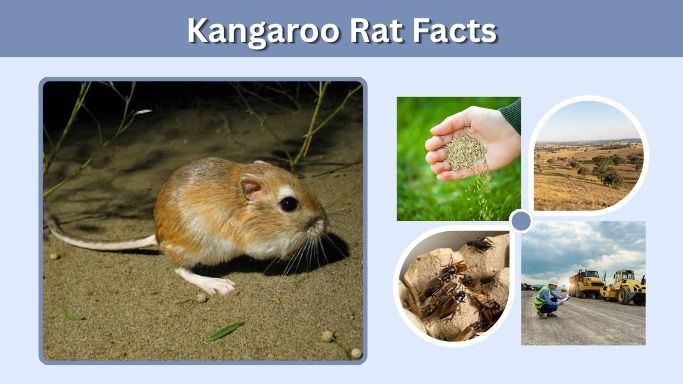
Kangaroo rats are small desert rodents known for their long back legs, powerful jumps, and incredible ability to survive without drinking much water. They are not kangaroos, but they move in a similar hopping style. These animals live in dry parts of North America, where they use speed, sharp hearing, seed storage, and special body adaptations to survive harsh desert life.
What Is a Kangaroo Rat?
Kangaroo rats are small nocturnal rodents from the genus Dipodomys. They are called kangaroo rats because they have large hind legs and hop like tiny kangaroos. Most species live in deserts, grasslands, sandy areas, and dry shrublands.
Basic Kangaroo Rat Identification
Kangaroo rats are easy to recognize if you know their main body features. They are usually small, light-colored, and built for jumping across open ground at night.
Key identification features include:
- Small body with a large head
- Long, powerful back legs
- Short front legs
- Large eyes for night vision
- Big ears for detecting predators
- Long tail, often with a dark or white tip
- Soft tan, brown, or sandy-colored fur
- Strong jumping movement instead of normal running
Most kangaroo rats are about 3.5 to 5.5 inches long in body length, not including the tail. Their tail can be as long as, or even longer than, the body. This tail helps them balance while jumping.
Why They Are Called Kangaroo Rats
The name comes from their hopping movement. Like kangaroos, kangaroo rats use their strong hind legs to leap forward quickly. They do not walk like common rats most of the time. Instead, they bound across the desert floor in quick jumps.
Their movement helps them escape snakes, foxes, owls, coyotes, and other predators. A sudden jump can confuse an attacker and give the kangaroo rat enough time to reach its burrow.
Are Kangaroo Rats True Rats?
Kangaroo rats are rodents, but they are not the same as city rats or house rats. They belong to a different family called Heteromyidae. They are more closely related to pocket mice than to common brown rats.
Unlike many house rats, kangaroo rats usually avoid human homes. They are wild desert animals that spend most of their time around burrows, seeds, and dry open habitats.
Where Do Kangaroo Rats Live?
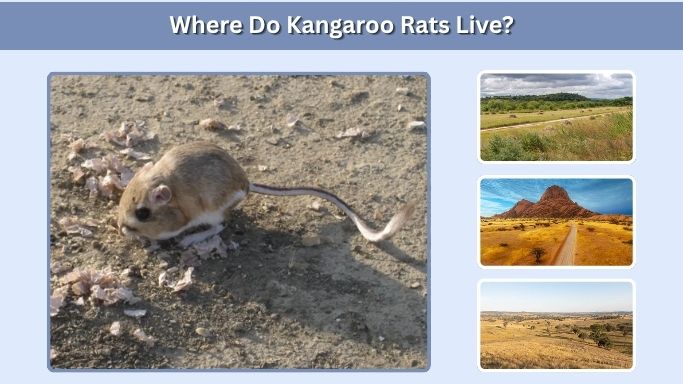
Kangaroo rats mostly live in dry regions of western North America. Their habitats include deserts, sandy flats, grasslands, scrublands, and dry valleys. They are especially well known in the southwestern United States and northern Mexico.
Desert Habitat
Many kangaroo rats are desert specialists. They live in places where daytime temperatures can be very hot and water is scarce. To survive, they stay underground during the day and become active at night.
Their burrows protect them from heat, cold, and predators. A burrow may have tunnels, chambers, food storage areas, and several entrances. These underground homes help them keep a stable body temperature.
Grasslands and Shrublands
Not all kangaroo rats live only in deep desert. Some species live in open grasslands, sagebrush areas, and dry plains. The Texas kangaroo rat, for example, is linked with open grassland habitats.
These habitats provide seeds, grasses, and enough loose soil for digging. Kangaroo rats prefer areas where they can move quickly and detect predators before being caught.
Species and Habitat Table
| Kangaroo Rat Type | Common Habitat | Notable Fact |
| Desert kangaroo rat | Sandy deserts and dry flats | Extremely adapted to dry conditions |
| Merriam’s kangaroo rat | Deserts and scrublands | One of the most widespread species |
| Ord’s kangaroo rat | Grasslands, deserts, and sandy soils | Found across a wide range |
| Giant kangaroo rat | California grasslands | One of the largest kangaroo rat species |
| Texas kangaroo rat | North Texas grasslands | Linked to open prairie-like areas |
| San Bernardino kangaroo rat | Sandy river wash areas | A rare and protected form |
Amazing Kangaroo Rat Adaptations
Kangaroo rats are famous for their desert survival skills. Their bodies and behaviors help them live where many animals would struggle. These adaptations allow them to find food, avoid predators, save water, and stay cool.
They Can Survive With Very Little Water
One of the most amazing kangaroo rat facts is that they can survive without drinking free-standing water for long periods. They get much of their moisture from the seeds they eat.
Their bodies are very good at conserving water. They produce very concentrated urine and dry droppings, which helps reduce water loss. This is one reason they are such successful desert animals.
Powerful Jumping Legs
Kangaroo rats have long hind legs that act like springs. These legs help them leap quickly across sandy ground. Some can jump several feet in one bound when escaping danger.
Their jumping ability is not only for speed. It also helps them make sudden turns. This makes them harder for snakes and other predators to catch.
Long Tail for Balance
A kangaroo rat’s tail is not just decoration. It works like a balancing tool when the animal jumps, turns, or lands.
Important tail functions include:
- Helps balance during long jumps
- Supports quick direction changes
- Helps the body stay stable while moving fast
- May help with communication or display in some situations
- Makes the animal more agile in open desert spaces
Without its long tail, a kangaroo rat would not be as controlled or graceful while hopping.
What Do Kangaroo Rats Eat?
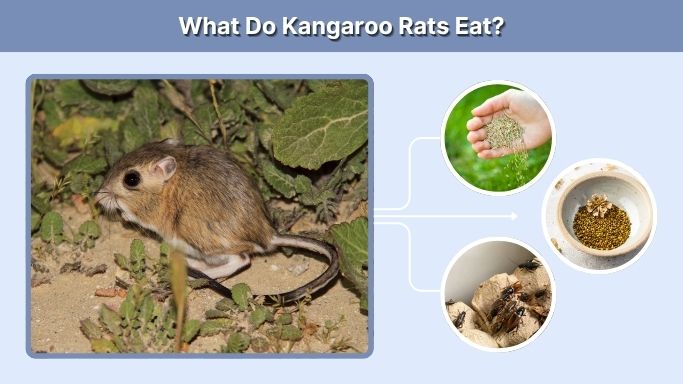
Kangaroo rats mainly eat seeds, but their diet can change depending on habitat and season. They are excellent food gatherers and often store seeds underground for later use.
Main Food Sources
Seeds are the most important part of a kangaroo rat’s diet. They collect seeds from grasses, desert plants, shrubs, and weeds. Some may also eat green plant parts, stems, leaves, fruits, or small insects when available.
Common foods include:
- Grass seeds
- Wildflower seeds
- Shrub seeds
- Desert plant seeds
- Grains from dry plants
- Occasional insects
- Fresh green vegetation after rain
Their cheek pouches help them carry food back to the burrow. These pouches are fur-lined and open outside the mouth, allowing them to transport seeds without swallowing them.
Food Storage Behavior
Kangaroo rats are natural seed hoarders. They collect seeds and hide them in burrows or shallow caches in the soil. This behavior helps them survive when food is not easy to find.
Some stored seeds are eaten later, while others may be forgotten. Forgotten seeds can sprout and grow, meaning kangaroo rats may also help spread plants in their ecosystem.
Night Feeding
Kangaroo rats are mostly nocturnal. They come out at night to search for food because the desert is cooler and safer after sunset.
Night activity helps them avoid daytime heat and reduce water loss. Their large eyes and sharp senses help them find food and watch for predators in low light.
Fun Facts About Kangaroo Rats
Kangaroo rats are small, but they have many surprising abilities. These fun facts make them one of the most interesting desert rodents in North America.
Interesting Facts for Kids
Kangaroo rats are popular in animal fact sheets because their survival skills are easy to understand and fun to learn.
Fun facts include:
- They hop like tiny kangaroos.
- They can live in very dry deserts.
- They carry seeds in cheek pouches.
- They are mostly active at night.
- They use burrows as safe homes.
- They can jump quickly to escape snakes.
- They get water from food instead of drinking often.
- Their long tail helps them balance.
- They have large ears for hearing danger.
- They are important seed collectors in desert ecosystems.
These facts show how a small animal can be perfectly designed for a difficult environment.
They Are Excellent Escape Artists
Kangaroo rats are prey animals, so they must react fast. When a snake strikes, a kangaroo rat may leap high, kick away, or change direction quickly. This quick response can save its life.
Their strong legs, sensitive hearing, and nighttime awareness all work together. Even though they are small, they are not helpless.
They Help the Desert Ecosystem
Kangaroo rats play an important role in dry habitats. By collecting and storing seeds, they affect where plants grow. They also serve as food for predators.
Owls, snakes, foxes, bobcats, coyotes, and badgers may all depend on small rodents like kangaroo rats. This makes them an important part of the desert food web.
Different Types of Kangaroo Rats
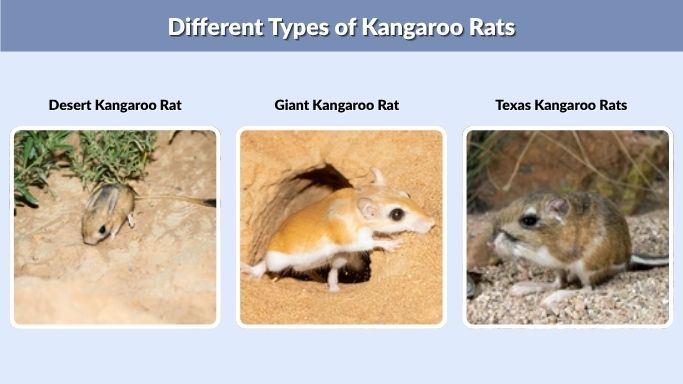
There are many kangaroo rat species, and each one has slightly different features, range, and habitat needs. Some are common, while others are rare or threatened.
Desert Kangaroo Rat
The desert kangaroo rat is one of the best-known species. It lives in dry, sandy areas and is highly adapted to desert conditions. Its pale fur helps it blend into sand and dry soil.
This species is known for its ability to survive in very arid places. Like other kangaroo rats, it avoids heat by staying in burrows during the day and coming out at night.
Giant Kangaroo Rat
The giant kangaroo rat is one of the largest kangaroo rat species. It is found in parts of California and is strongly connected to grassland habitats. This species is well known because of its conservation status.
Giant kangaroo rats create burrow systems and clear areas around their entrances. Their seed-eating and digging behavior can influence the structure of local plant communities.
Merriam’s, Ord’s, and Texas Kangaroo Rats
Several other species are also searched often because they are common, widespread, or regionally important.
Examples include:
- Merriam’s kangaroo rat: Common in desert and scrubland areas.
- Ord’s kangaroo rat: Found in sandy soils, grasslands, and dry habitats.
- Texas kangaroo rat: Known from parts of Texas and linked to grassland environments.
- Fresno kangaroo rat: A rare form associated with California habitats.
- San Bernardino kangaroo rat: A protected kangaroo rat connected to sandy wash habitats.
- Tipton kangaroo rat: Another California species with conservation concern.
These species show that kangaroo rats are not all the same. Some are widespread, while others need very specific habitat conditions.
Baby Kangaroo Rat Facts
Baby kangaroo rats are born in underground burrows where they are safer from predators and harsh weather. The mother cares for them until they are developed enough to leave the nest.
Birth and Early Growth
Baby kangaroo rats are born small, helpless, and without full fur. They depend on their mother for warmth, milk, and protection. The burrow provides shelter during this delicate stage.
As they grow, their fur develops, their eyes open, and their legs become stronger. Eventually, they begin learning how to move, gather food, and survive outside the burrow.
Reproduction
Breeding season can vary by species and environment. Rainfall and food availability often affect reproduction. When seeds and plants are more available, kangaroo rats may have better chances of raising young successfully.
A female may have a small litter, usually with a few babies. Since survival in the desert is difficult, safe burrows and good food supply are important for young kangaroo rats.
Young Kangaroo Rat Survival
Young kangaroo rats must quickly learn survival behaviors. They need to avoid predators, find seeds, and use burrows properly.
Their survival depends on:
- Safe nesting chambers
- Enough seed supply
- Protection from predators
- Good hearing and quick movement
- Suitable sandy or loose soil for burrows
- Dry habitat with enough plant life
Once mature, they live mostly solitary lives like adult kangaroo rats.
Are Kangaroo Rats Endangered?
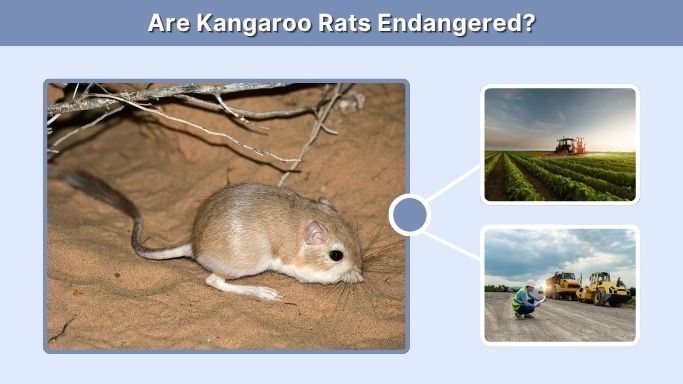
Some kangaroo rat species are common, but others are rare, threatened, or endangered. Their biggest problems usually come from habitat loss, land development, agriculture, road building, and changes to natural grassland or desert systems.
Giant Kangaroo Rat Conservation
The giant kangaroo rat is one of the best-known endangered kangaroo rat species. It depends on specific grassland habitats in California. When these areas are converted or disturbed, the species can decline.
Because giant kangaroo rats affect soil and seed movement, protecting them can also help protect other grassland wildlife.
Habitat Loss Problems
Kangaroo rats need open land, loose soil, native plants, and safe burrow areas. When land is heavily developed or changed, they may lose food sources and shelter.
Small, isolated populations can become more vulnerable over time. This is why some regional species and subspecies are carefully monitored or protected.
Why They Matter
Kangaroo rats matter because they are part of a balanced desert and grassland ecosystem. They move seeds, dig soil, feed predators, and help shape plant communities.
Protecting kangaroo rats also protects the habitats they share with birds, reptiles, insects, plants, and other mammals.
FAQs
Are kangaroo rats dangerous to humans?
Kangaroo rats are not usually dangerous to humans. They are shy wild rodents that prefer to avoid contact. They do not normally enter homes like common rats. Still, people should not handle wild kangaroo rats because any wild animal can bite if scared or stressed.
Do kangaroo rats really never drink water?
Kangaroo rats can survive for long periods without drinking free-standing water because they get moisture from seeds and conserve water very efficiently. However, saying they never drink in every possible situation is too simple. Their main desert survival skill is getting enough water from food.
What is the most interesting fact about kangaroo rats?
One of the most interesting facts is their ability to survive in dry deserts with very little water. They combine seed-based moisture, concentrated urine, dry droppings, nighttime activity, and underground burrows to reduce water loss and handle extreme desert conditions.
What eats kangaroo rats?
Kangaroo rats are eaten by many desert predators. Common predators include owls, snakes, foxes, coyotes, bobcats, badgers, and other carnivores. Their fast jumping, sharp hearing, and sudden direction changes help them escape many attacks, especially at night.
Are kangaroo rats the same as rat-kangaroos?
No, kangaroo rats and rat-kangaroos are different animals. Kangaroo rats are North American rodents, while rat-kangaroos are marsupials from Australia. The names sound similar because both have hopping movements and long hind legs, but they belong to different animal groups.