
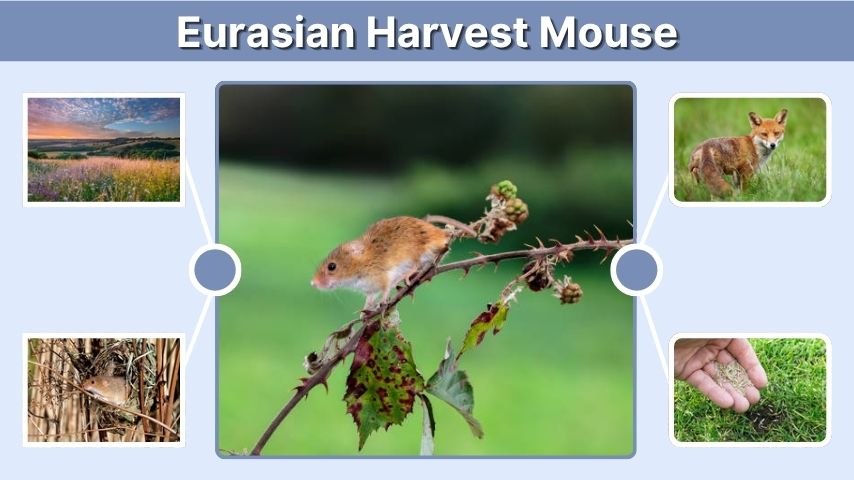
The Eurasian harvest mouse is one of the smallest rodents in Europe and Asia. Known for its tiny body, reddish-brown fur, and amazing climbing skills, this mouse often lives among tall grasses, reed beds, hedgerows, and crop fields. It is especially famous for building round woven nests above the ground. This guide explains its habitat, diet, behavior, life cycle, and key facts.
What Is a Eurasian Harvest Mouse?
The Eurasian harvest mouse is a small rodent with a lightweight body, long tail, and excellent climbing ability. Its scientific name is Micromys minutus. Unlike many ground-dwelling mice, it spends much of its time climbing through grasses and plants.
Appearance and Size
The Eurasian harvest mouse is tiny compared with many other mice. It has warm brown or reddish-brown fur on the back and lighter fur underneath. Its small rounded ears, pointed nose, and bright eyes give it a delicate appearance.
One of its most useful features is its long, flexible tail. The tail helps it balance and grip stems while moving through tall vegetation. This makes the harvest mouse especially well adapted to life above the ground.
Why It Is Called a Harvest Mouse
The name “harvest mouse” comes from its connection with fields, crops, and harvest-time landscapes. These mice are often found in grassy farmland, cereal crops, reed beds, and meadows.
Although they may live near crops, Eurasian harvest mice are not usually seen as serious pests. They are small, secretive, and play a natural role in grassland ecosystems.
Where Do Eurasian Harvest Mice Live?
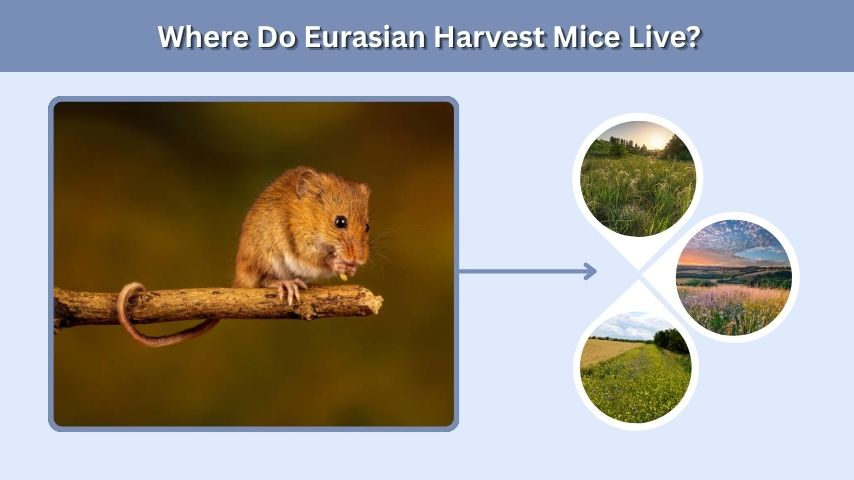
Eurasian harvest mice live across parts of Europe and Asia. They prefer habitats with dense vegetation, especially places where they can climb, hide, feed, and build nests.
Natural Habitat
The Eurasian harvest mouse is most often found in tall grasses, reed beds, meadows, hedgerows, wetlands, field margins, and crop fields. It needs dense plant cover because this protects it from predators and provides nesting material.
Good habitats usually include:
- Tall grasses
- Reeds and rushes
- Cereal crops
- Wildflower meadows
- Hedgerows
- Field edges
- Wetland vegetation
- Overgrown ditches
These habitats give the mouse food, shelter, climbing support, and safe places to raise young.
Geographic Range
The Eurasian harvest mouse is found in many parts of Europe and Asia. Its range includes areas from western Europe through central and eastern Europe and into parts of Asia.
However, its numbers can vary from place to place. In some areas, changes in farming, loss of grasslands, and removal of hedgerows can reduce suitable habitat.
Why Dense Vegetation Matters
Dense vegetation is essential because Eurasian harvest mice are small and vulnerable. Tall grasses and reeds help them hide from birds, foxes, weasels, snakes, and domestic cats.
Vegetation also acts like a natural climbing frame. The mouse moves between stems using its feet and tail, often traveling above the ground instead of running openly on the soil.
Eurasian Harvest Mouse Quick Facts
The table below gives a simple overview of the Eurasian harvest mouse and its main characteristics.
| Feature | Details |
|---|---|
| Common Name | Eurasian harvest mouse |
| Scientific Name | Micromys minutus |
| Animal Type | Small rodent |
| Habitat | Grasslands, reed beds, fields, hedgerows |
| Diet | Seeds, grains, berries, insects, plant material |
| Nest Type | Round woven nest above ground |
| Activity | Mostly active at night and twilight |
| Main Threats | Habitat loss, predators, intensive farming |
What Do Eurasian Harvest Mice Eat?
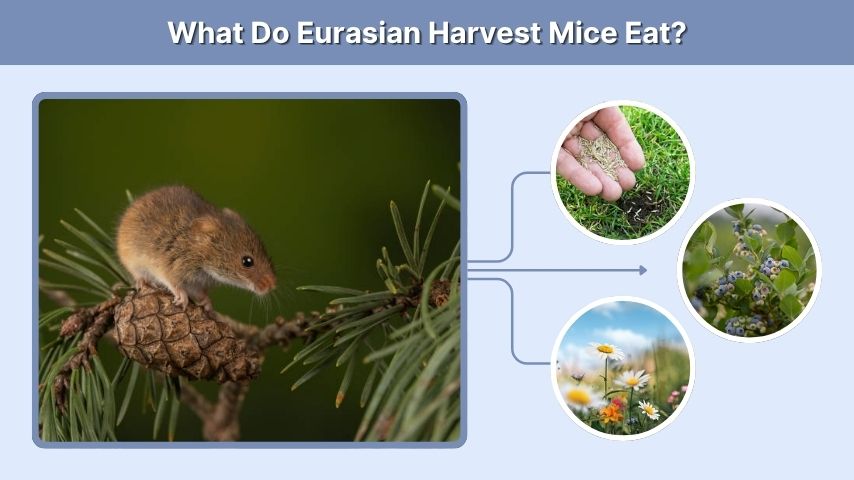
The Eurasian harvest mouse is an omnivore, meaning it eats both plant-based and animal-based foods. Its diet changes depending on season, habitat, and food availability.
Main Foods
Eurasian harvest mice eat a variety of small foods found in grassland and field habitats. Their diet often includes seeds, grains, berries, fruits, insects, and soft plant parts.
Common foods include:
- Grass seeds
- Cereal grains
- Small berries
- Fruits
- Insects
- Plant shoots
- Flower parts
- Small invertebrates
Seeds and grains are especially important in fields and grasslands. Insects can provide extra protein, especially during breeding seasons.
Seasonal Diet Changes
In warmer months, the mouse may eat more insects, fresh plant material, and seeds. During late summer and autumn, grains and seeds become more important.
Food availability can change sharply during winter. In colder months, harvest mice may move closer to ground cover, hedgerows, or sheltered vegetation where they can find food and protection.
Do Harvest Mice Store Food?
Eurasian harvest mice may use sheltered areas and dense vegetation to feed safely, but they are not famous for large food stores like some other rodents. Instead, they rely on finding small food sources in their habitat.
Because they are so small, they need regular access to food and safe cover.
Behavior of the Eurasian Harvest Mouse
The Eurasian harvest mouse is shy, quick, and highly agile. Its behavior is shaped by its small size and need to avoid predators.
Climbing Ability
One of the most impressive things about the Eurasian harvest mouse is its climbing skill. It can climb thin grass stems and reeds using its feet and tail.
Its tail is prehensile, which means it can grip objects. This helps the mouse hold onto stems while feeding or moving through vegetation. Few mice are as well adapted to climbing through grass as the harvest mouse.
Activity Pattern
Eurasian harvest mice are often active at night or during twilight. This helps them avoid predators and move safely through cover.
They are usually secretive, so people may live near them without ever seeing one. Signs such as nests in tall grass may be easier to notice than the mouse itself.
Social Behavior
Harvest mice are generally solitary or loosely social. During breeding season, males and females come together to mate. Mothers care for the young in carefully built nests.
Outside breeding periods, they may share habitat with other harvest mice, but they do not live in large organized colonies like ants or bees.
Eurasian Harvest Mouse Nests
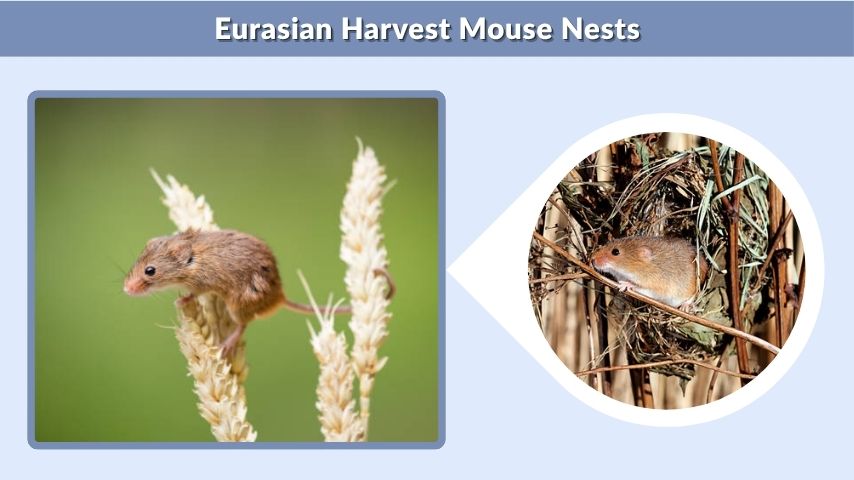
The Eurasian harvest mouse is famous for building neat, round nests above the ground. These nests are one of the most recognizable signs of the species.
What Does the Nest Look Like?
A harvest mouse nest is usually round or ball-shaped. It is woven from grass leaves and plant fibers, often attached to upright stems above the ground.
The nest can be hidden among tall grass, reeds, or crop plants. It is carefully woven so it stays supported by the surrounding vegetation.
Breeding Nests
Breeding nests are usually stronger and more carefully built than temporary resting nests. A female uses the breeding nest to give birth and care for her young.
These nests are often placed above ground level to reduce danger from damp soil and some predators. The surrounding vegetation provides camouflage.
Resting Nests
Harvest mice may also build simpler nests for resting or shelter. These may not be as strong as breeding nests but still provide protection.
Because the species depends on tall vegetation for nesting, mowing, cutting, or clearing grass at the wrong time can destroy nests.
Life Cycle and Reproduction
The Eurasian harvest mouse has a fast life cycle. Like many small rodents, it can reproduce quickly when conditions are suitable.
Breeding Season
The breeding season usually occurs during warmer months when food is available and vegetation is dense. Females build nests in tall grass or reeds and give birth to small litters.
Good weather, safe nesting sites, and plenty of food can support successful breeding.
Baby Harvest Mice
Baby harvest mice are born tiny, blind, and helpless. The mother keeps them warm and feeds them milk until they grow strong enough to leave the nest.
As they develop, young mice grow fur, open their eyes, and begin exploring. They mature quickly compared with many larger mammals.
Lifespan
Eurasian harvest mice generally have short lives in the wild. Many small rodents face high risks from predators, weather, food shortage, and habitat disturbance.
Some individuals may live longer in safe conditions, but in the wild, survival is often difficult.
Predators and Threats
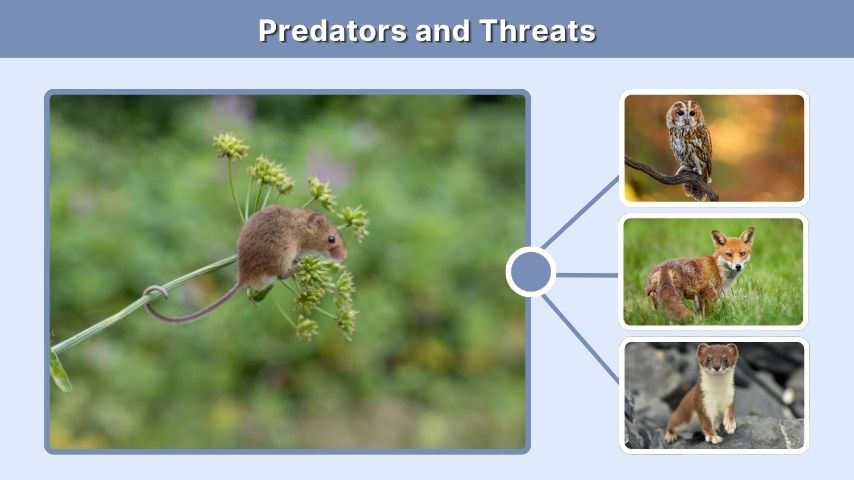
Because the Eurasian harvest mouse is very small, it has many natural predators. Its survival depends heavily on hiding, climbing, and using dense vegetation.
Natural Predators
Many animals may prey on harvest mice, including birds of prey, owls, foxes, weasels, snakes, and domestic cats. Predators are one reason the mouse avoids open ground.
Common predators include:
- Owls
- Hawks and kestrels
- Foxes
- Weasels
- Stoats
- Snakes
- Domestic cats
- Larger rodents in some areas
Dense plant cover helps reduce the risk of being caught.
Habitat Loss
Habitat loss is one of the biggest threats to Eurasian harvest mice. When meadows, hedgerows, reed beds, and field margins disappear, the mice lose feeding and nesting areas.
Modern farming can also affect them. Frequent mowing, pesticide use, removal of rough grass, and clean field edges may reduce suitable habitat.
Weather and Seasonal Risks
Cold winters, flooding, drought, and heavy rain can affect harvest mouse survival. Since they are small, they are vulnerable to temperature changes and food shortages.
Wetlands and reed beds can be useful habitats, but flooding may destroy nests if water levels rise too quickly.
Importance in the Ecosystem
The Eurasian harvest mouse may be tiny, but it plays a valuable role in its ecosystem. It helps connect plant, insect, and predator food webs.
Role as Prey
Harvest mice are food for many predators. Owls, kestrels, foxes, and weasels all benefit from small rodents as part of their diet.
This makes the harvest mouse an important part of grassland and farmland ecosystems.
Seed and Insect Control
By eating seeds, grains, and small insects, harvest mice take part in natural food cycles. They may help disperse small plant material and influence insect populations in minor ways.
Their presence can also indicate healthy grassy habitat with enough cover and food.
Conservation and Protection
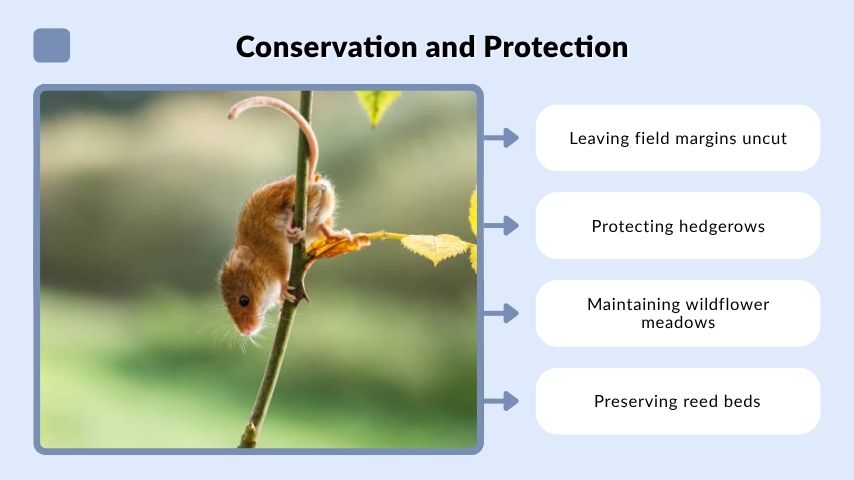
Protecting Eurasian harvest mice usually means protecting the habitats they need. Grasslands, hedgerows, reed beds, and field margins are especially important.
How to Help Harvest Mice
Landowners, gardeners, and conservation groups can help by keeping areas of tall vegetation and reducing unnecessary cutting.
Helpful actions include:
- Leaving field margins uncut
- Protecting hedgerows
- Maintaining wildflower meadows
- Preserving reed beds
- Reducing pesticide use
- Cutting grass outside nesting periods when possible
- Creating wildlife-friendly garden edges
Even small patches of rough grass can help provide shelter and movement routes.
Why Habitat Corridors Matter
Harvest mice benefit from connected habitats. Hedgerows, ditches, grass strips, and meadow edges allow them to move safely between feeding and nesting areas.
When habitats are isolated, small populations may struggle to survive.
Interesting Facts About Eurasian Harvest Mice
The Eurasian harvest mouse has many unique traits that make it different from other mice.
Quick Facts
Here are some interesting facts about this tiny rodent:
- It is one of the smallest rodents in Europe.
- It has a tail that helps it grip plant stems.
- It builds round nests above the ground.
- It often lives in tall grass, reeds, and crop fields.
- It eats seeds, grains, berries, insects, and plant material.
- It is shy and rarely seen in open areas.
- Its nests are often easier to find than the mouse itself.
- It plays an important role as prey for many animals.
FAQs
Where does the Eurasian harvest mouse live?
The Eurasian harvest mouse lives in grasslands, reed beds, hedgerows, wetlands, crop fields, and field margins. It prefers dense vegetation where it can climb, hide, feed, and build round woven nests above the ground.
What does a Eurasian harvest mouse eat?
A Eurasian harvest mouse eats seeds, grains, berries, fruits, insects, plant shoots, and small invertebrates. Its diet changes with the season. Seeds and grains are important, while insects provide extra protein during warmer months.
Why is the Eurasian harvest mouse special?
The Eurasian harvest mouse is special because it is tiny, agile, and excellent at climbing grass stems. It has a flexible tail that helps it grip vegetation and is famous for building round woven nests above the ground.
Do Eurasian harvest mice live in houses?
Eurasian harvest mice usually live in natural vegetation, not houses. They prefer tall grass, reeds, hedgerows, and crop fields. Unlike common house mice, they are more closely linked to outdoor grassy habitats.
Are Eurasian harvest mice endangered?
Their conservation status can vary by region. In some places, they may be affected by habitat loss, intensive farming, and removal of tall vegetation. Protecting grasslands, hedgerows, reed beds, and field margins can help support local populations.