
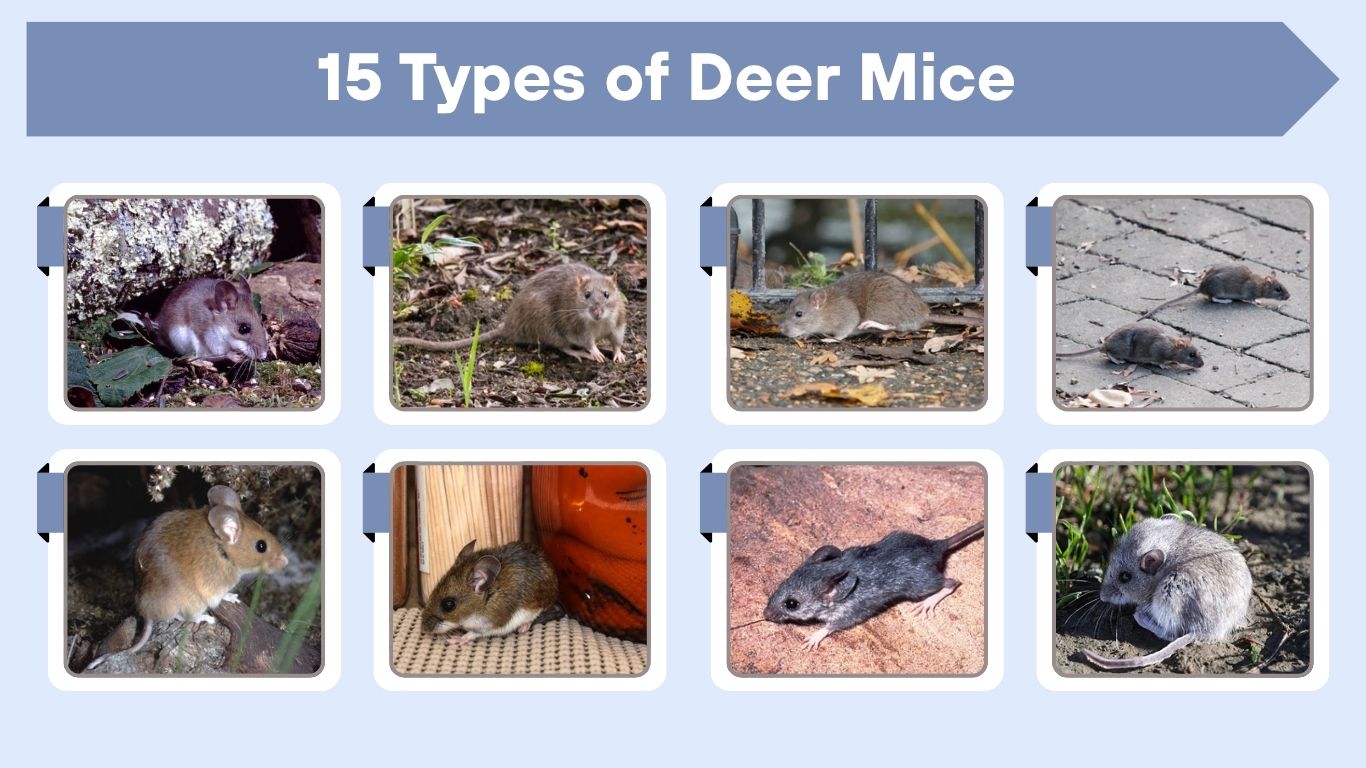
Deer mice are small, active rodents known for their large eyes, rounded ears, soft fur, and pale undersides. Many species look similar, but details such as body color, tail pattern, habitat, range, and behavior can help with identification. These mice live in forests, grasslands, deserts, farms, rocky slopes, brushlands, and sometimes rural buildings. They are mostly nocturnal and feed on seeds, fruits, nuts, fungi, insects, and grains. This guide covers 15 common types of deer mice, with simple identification details, habitat notes, behavior, diet, lifespan, and useful facts for recognizing them more easily.
1. North American Deer Mouse
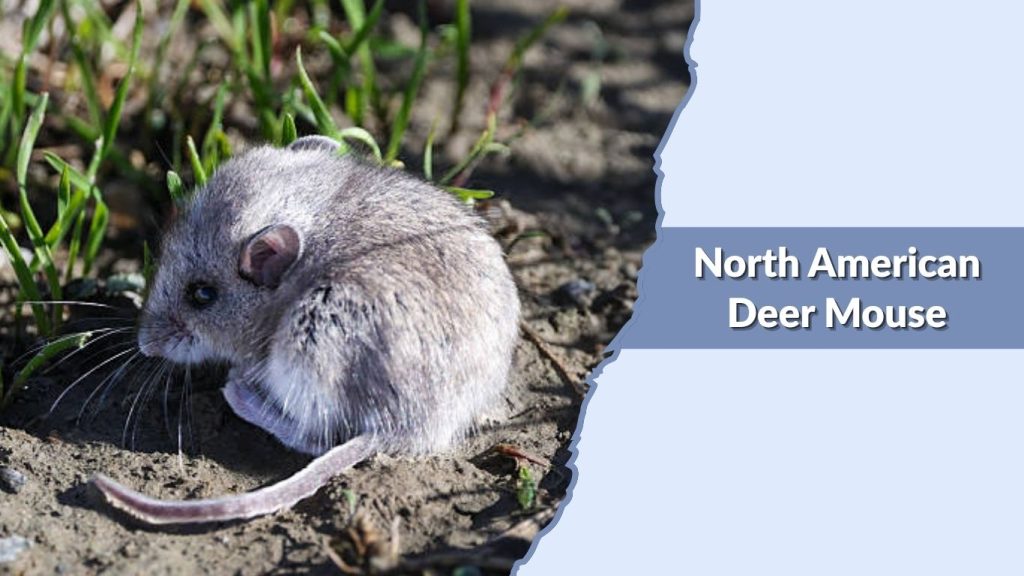
The North American Deer Mouse is a small, quick-moving rodent known for its large eyes, rounded ears, and two-toned body color. It is commonly found in forests, grasslands, farms, fields, and rural buildings. This mouse gets its name from its deer-like coloring, with a brownish back and a pale white underside.
Identification
- Small mouse with a slender body and long tail.
- Fur is usually brown, grayish brown, or reddish brown on the back.
- Belly, feet, and underside are usually white or pale.
- Eyes are large and dark.
- The ears are rounded and fairly large for its head.
- The tail is often sharply two-colored, dark above and pale below.
- Often confused with the White-footed Mouse because both have pale feet and similar body shape.
Habitat and Distribution
The North American Deer Mouse is widely found across North America. It can live in forests, grasslands, deserts, farms, brushy areas, fields, cabins, sheds, and rural homes. This adaptable species uses nests made from grass, leaves, fur, and other soft materials, often placing them in burrows, logs, rock piles, tree cavities, or sheltered indoor spaces.
Behavior and Diet
The North American Deer Mouse is mostly active at night. It is quick, alert, and good at climbing, jumping, and hiding from predators. Its diet includes seeds, grains, nuts, berries, fruits, fungi, and insects. In colder months, it may store food in hidden places and enter buildings or protected shelters for warmth and safety.
Lifespan
In the wild, the North American Deer Mouse usually has a short lifespan because it faces many predators, harsh weather, disease, and food shortages. Many live less than a year, though some may survive longer in good conditions. In protected environments, they can live longer than they usually do in the wild.
2. White-footed Mouse
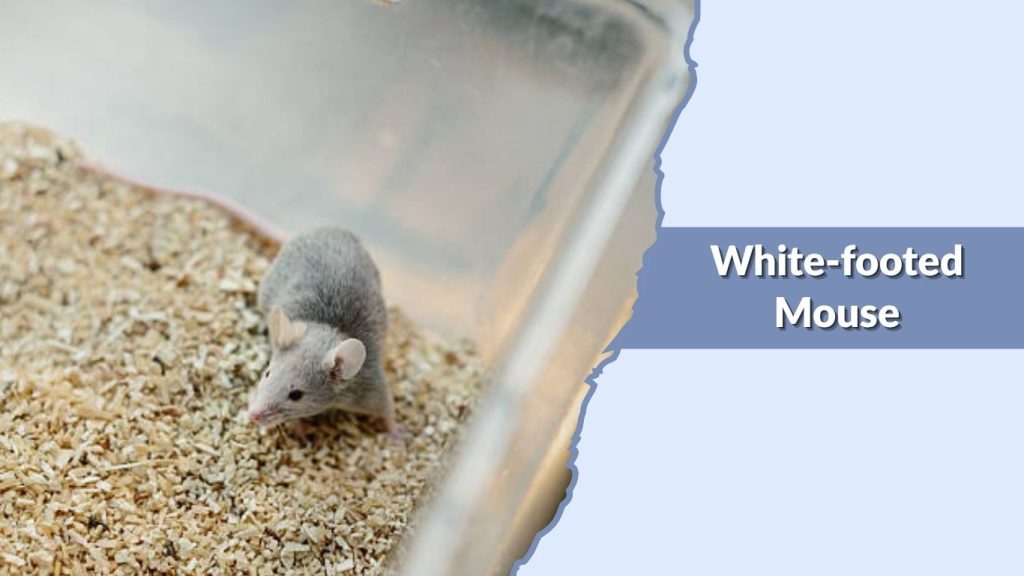
The White-footed Mouse is a small woodland rodent known for its pale feet, large ears, and brownish upper body. It is closely related to the deer mouse and can look very similar at first glance. This species is common in forests, brushy areas, farms, gardens, and buildings near wooded habitats.
Identification
- Small mouse with a slender body and soft fur.
- The back is usually brown, grayish brown, or reddish brown.
- Belly and feet are white or pale-colored.
- Eyes are large, dark, and rounded.
- The ears are fairly large and rounded.
- The tail is usually long and may be slightly two-colored.
- Often confused with the North American Deer Mouse because both have white feet and pale undersides.
Habitat and Distribution
The White-footed Mouse is widely found in eastern and central North America. It prefers forests, woodland edges, brushy fields, hedgerows, farms, parks, and suburban areas with nearby cover. It may nest in tree cavities, logs, burrows, rock piles, leaf litter, sheds, barns, and sometimes homes.
Behavior and Diet
The White-footed Mouse is mostly nocturnal and becomes active after dark. It is a good climber and often searches for food on the ground, in shrubs, and in trees. Its diet includes seeds, nuts, berries, fruits, fungi, insects, and grains. It may store food for colder months when natural food becomes harder to find.
Lifespan
In the wild, the White-footed Mouse usually lives less than a year because of predators, cold weather, disease, and food shortages. Some individuals may survive longer in protected habitats with good food and shelter. In captivity or very favorable conditions, they can live longer than they typically do outdoors.
3. Cotton Mouse
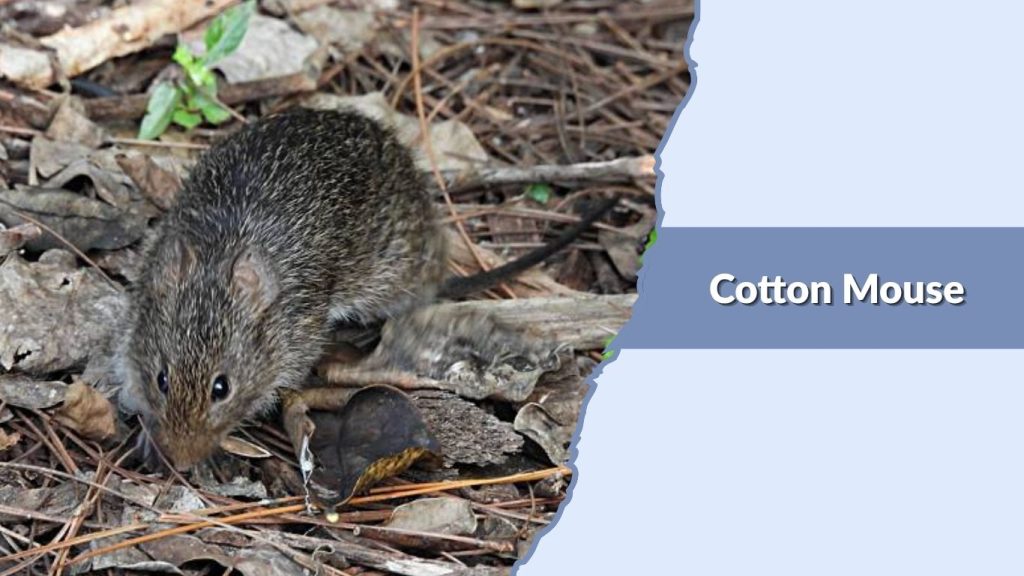
The Cotton Mouse is a medium-sized mouse known for its soft fur, large ears, and white feet. It is closely related to deer mice and white-footed mice but is often found in warmer, wetter habitats. This species is common in bottomland forests, swamps, marsh edges, and dense vegetation in the southeastern United States.
Identification
- Small to medium-sized mouse with a rounded body.
- Fur is usually brown, grayish brown, or reddish brown on the back.
- Belly and feet are white or pale-colored.
- Ears are large, rounded, and thinly furred.
- Eyes are large and dark.
- The tail is fairly long and may be darker above and lighter below.
- Often looks similar to the White-footed Mouse but is usually associated with wetter southern habitats.
Habitat and Distribution
The Cotton Mouse is mainly found in the southeastern United States. It lives in swamps, marsh edges, bottomland forests, river floodplains, dense shrubs, and wet woodland areas. It may also use logs, tree cavities, burrows, brush piles, and abandoned structures for shelter and nesting.
Behavior and Diet
The Cotton Mouse is mostly active at night and spends much of its time searching for food under cover. It eats seeds, fruits, nuts, berries, fungi, insects, and other small invertebrates. It is a good climber and may move through low vegetation, logs, and tree roots while foraging.
Lifespan
In the wild, the Cotton Mouse usually has a short lifespan because it faces predators, flooding, disease, and seasonal food changes. Many individuals live less than a year, although some may survive longer in protected habitats with good shelter and steady food. Like many small rodents, it reproduces quickly to maintain its population.
4. Oldfield Mouse
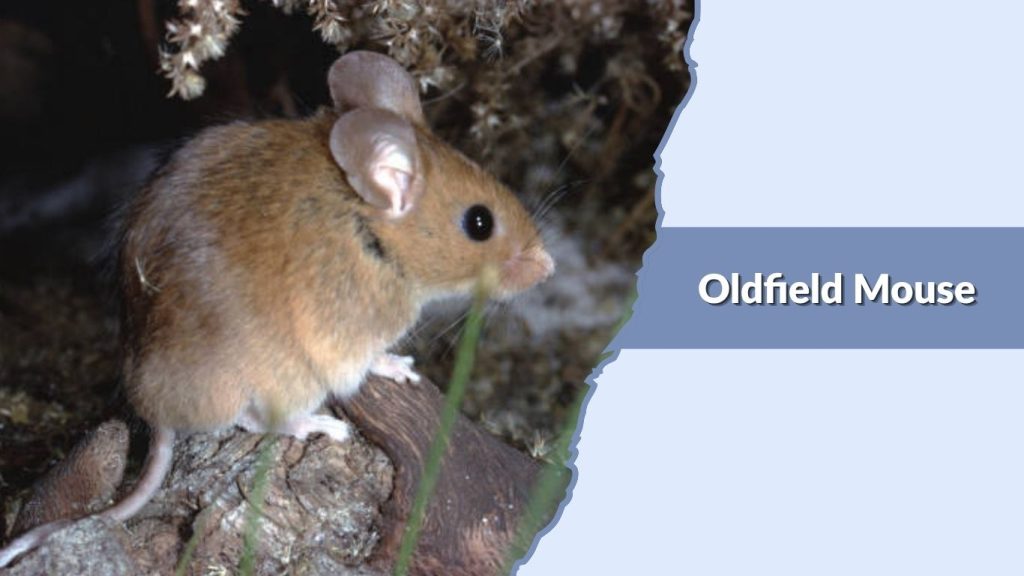
The Oldfield Mouse is a small, pale-colored rodent often found in sandy fields, coastal dunes, scrublands, and open grassy habitats. It is closely related to deer mice but is usually associated with warmer southeastern environments. This mouse is known for digging burrows and using open, dry habitats with low vegetation.
Identification
- Small mouse with a slender body and soft fur.
- The back is usually pale brown, grayish brown, or sandy-colored.
- Belly, feet, and underside are white or pale.
- Eyes are large and dark.
- Ears are rounded and fairly noticeable.
- The tail is shorter than that of many other deer mouse relatives.
- Often identified by its pale color and preference for sandy, open habitats.
Habitat and Distribution
The Oldfield Mouse is mainly found in the southeastern United States. It lives in old fields, coastal dunes, sandy scrublands, grasslands, pine flatwoods, roadsides, and open habitats with loose soil. It often digs burrows for shelter, nesting, and protection from predators and harsh weather.
Behavior and Diet
The Oldfield Mouse is mostly nocturnal and becomes active after sunset. It feeds on seeds, grains, fruits, grasses, and small insects. It often forages near its burrow and uses low vegetation or ground cover for safety. Its burrowing behavior helps it survive in exposed sandy habitats where shelter may be limited.
Lifespan
In the wild, the Oldfield Mouse usually has a short lifespan because of predators, weather, disease, and changing food supply. Many individuals live less than a year, although some may survive longer in safe areas with good shelter and enough food. Like many small mice, it reproduces quickly during favorable conditions.
5. Cactus Mouse
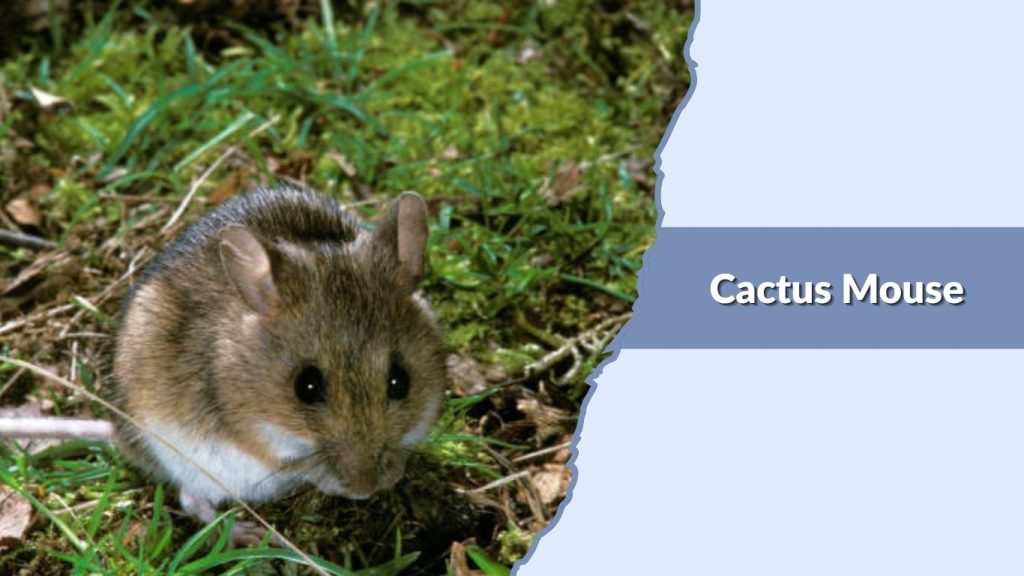
The Cactus Mouse is a small desert-dwelling mouse known for its pale coloring, large ears, and ability to survive in dry habitats. It is closely related to deer mice and is commonly found in deserts, rocky slopes, scrublands, and cactus-filled areas of the southwestern United States and Mexico.
Identification
- Small mouse with a slender body and soft fur.
- Fur is usually pale brown, sandy brown, grayish brown, or buff-colored.
- Belly, feet, and underside are usually white or pale.
- The ears are large and rounded.
- Its eyes are large and dark, helping it see in low light.
- The tail is fairly long and often darker above and lighter below.
- Often recognized by its pale desert coloring and large ears.
Habitat and Distribution
The Cactus Mouse lives in dry regions of the southwestern United States and northern Mexico. It is often found in deserts, cactus scrub, rocky hillsides, dry washes, grasslands, and shrublands. It uses burrows, rock crevices, plant cover, and abandoned shelters to hide from predators and avoid extreme daytime heat.
Behavior and Diet
The Cactus Mouse is mostly active at night, when desert temperatures are cooler. It feeds on seeds, grasses, fruits, cactus parts, insects, and other small food items found in dry habitats. It may get some moisture from its food, which helps it survive in places where open water is limited.
Lifespan
In the wild, the Cactus Mouse usually has a short lifespan because it faces predators, drought, heat, food shortages, and disease. Many individuals live less than a year, but some may survive longer when food, shelter, and weather conditions are favorable. Its quick breeding helps maintain populations in harsh desert environments.
6. Canyon Mouse
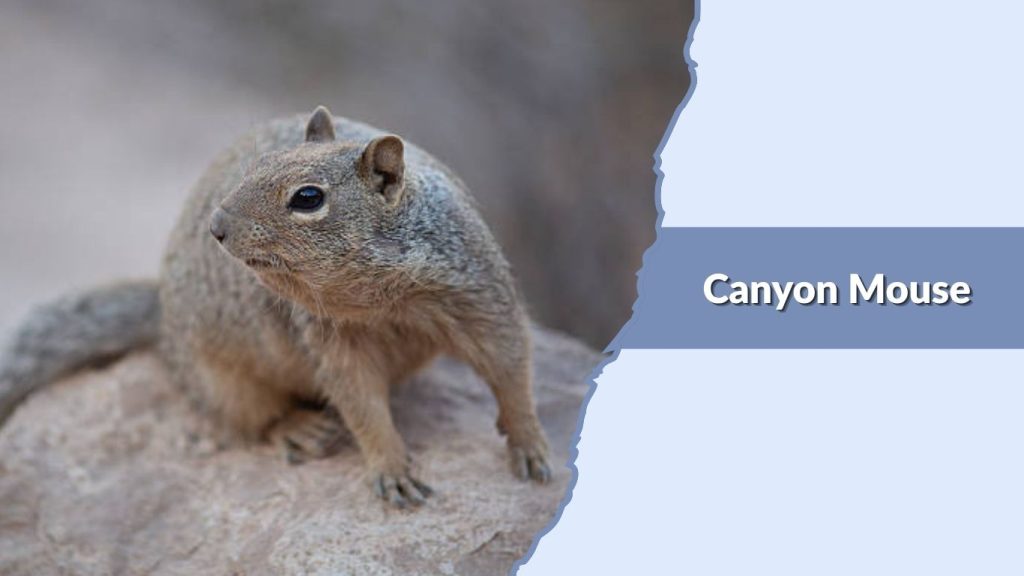
The Canyon Mouse is a small rodent closely related to deer mice and is commonly found in rocky, dry landscapes. It is known for its pale brown to grayish fur, large ears, and ability to live among cliffs, canyons, desert slopes, and rocky outcrops. This species is mostly active at night and avoids daytime heat by staying hidden in sheltered places.
Identification
- Small mouse with a slender body and soft fur.
- Fur is usually pale brown, grayish brown, or sandy-colored.
- Belly, feet, and underside are usually white or light-colored.
- Ears are large and rounded.
- Eyes are large and dark.
- Tail is fairly long and may be darker above and lighter below.
- Often recognized by its rocky habitat and pale desert-like coloring.
Habitat and Distribution
The Canyon Mouse is mainly found in dry regions of the southwestern United States and Mexico. It lives in rocky canyons, cliffs, desert slopes, shrublands, dry washes, and areas with scattered vegetation. Rock crevices, ledges, burrows, and sheltered spaces provide protection from predators and extreme temperatures.
Behavior and Diet
The Canyon Mouse is mostly nocturnal, becoming active after sunset when temperatures are cooler. It feeds on seeds, grasses, fruits, berries, cactus materials, and insects when available. It often forages close to rocks or vegetation, using cover to avoid owls, snakes, foxes, and other predators.
Lifespan
In the wild, the Canyon Mouse usually has a short lifespan because of predators, drought, disease, and limited food in dry habitats. Many individuals live less than a year, though some may survive longer in protected areas with stable shelter and food. Like many small mice, it reproduces quickly when conditions are favorable.
7. Brush Mouse
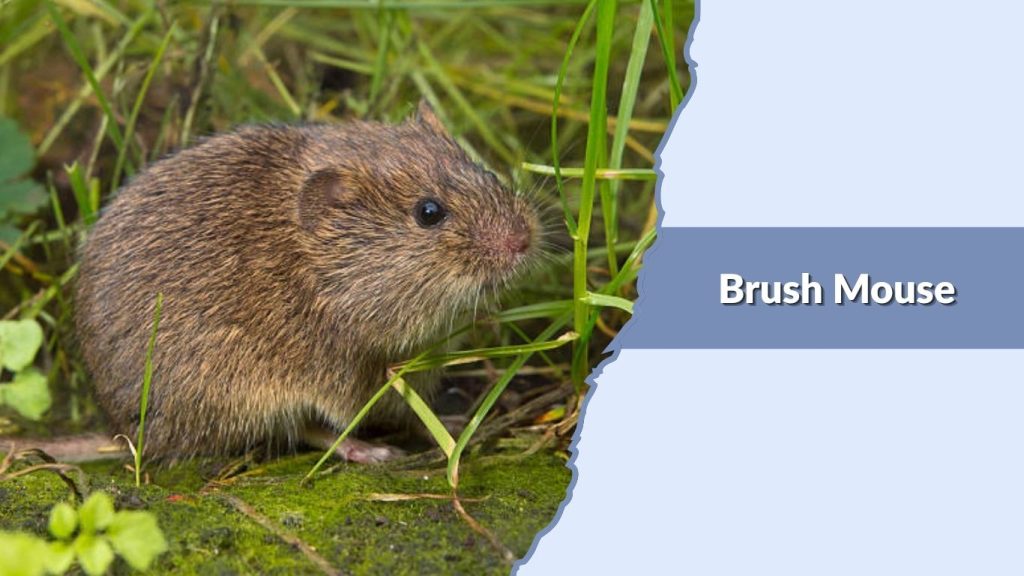
The Brush Mouse is a small deer mouse relative known for its soft brown fur, pale underside, large ears, and long tail. It is commonly found in rocky areas, brushy slopes, woodlands, canyons, and dry habitats of the southwestern United States and Mexico. This mouse is mostly active at night and often stays close to cover for safety.
Identification
- Small mouse with a slender body and soft fur.
- The back is usually brown, grayish brown, or reddish brown.
- Belly, feet, and underside are usually white or pale.
- Ears are large, rounded, and easy to notice.
- Eyes are large and dark.
- Tail is long and often slightly darker above than below.
- Often found near brush, rocks, shrubs, and woodland edges.
Habitat and Distribution
The Brush Mouse is mostly found in the southwestern United States and Mexico. It lives in brushy woodlands, rocky slopes, canyons, chaparral, oak-juniper areas, desert edges, and dry forests. It often uses rock crevices, burrows, logs, shrubs, and dense vegetation for nesting and protection.
Behavior and Diet
The Brush Mouse is nocturnal and usually becomes active after sunset. It feeds on seeds, fruits, berries, nuts, fungi, insects, and other small food items. It is a good climber and often moves through shrubs, rocks, and low vegetation while searching for food and avoiding predators.
Lifespan
In the wild, the Brush Mouse usually lives less than a year because of predators, disease, weather, and food shortages. Some individuals may survive longer when shelter and food are stable. Like many small rodents, it can reproduce quickly when conditions are favorable, helping maintain its population.
8. California Mouse
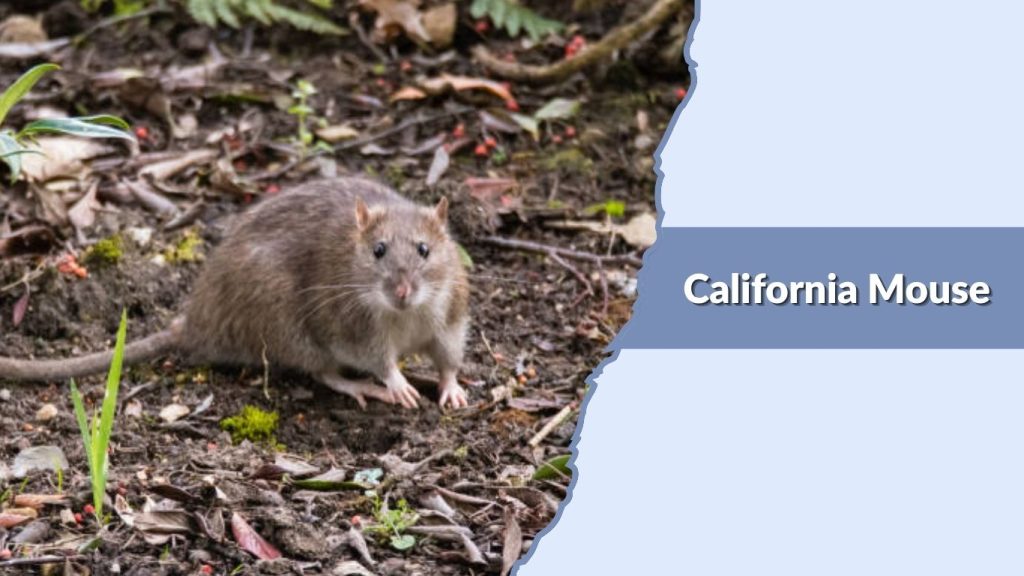
The California Mouse is a medium-sized deer mouse relative known for its large ears, long tail, and brownish-gray fur. It is mainly found in California and nearby regions, especially in chaparral, woodlands, brushy areas, and coastal scrub. Unlike many small mice, this species is notable for forming strong pair bonds.
Identification
- Medium-sized mouse with a slender but sturdy body.
- Fur is usually brown, grayish brown, or tawny on the back.
- Belly, feet, and underside are usually pale or whitish.
- Ears are large, rounded, and easy to notice.
- Eyes are large and dark.
- The tail is long and often darker above and lighter below.
- Larger than many other deer mouse relatives in its range.
Habitat and Distribution
The California Mouse is mostly found in California and parts of northwestern Mexico. It lives in chaparral, oak woodlands, coastal scrub, brushy slopes, canyon edges, and dry forest habitats. It often uses shrubs, logs, rock piles, burrows, and dense vegetation for cover, nesting, and protection from predators.
Behavior and Diet
The California Mouse is mostly nocturnal and becomes active after dark. It feeds on seeds, fruits, berries, nuts, fungi, insects, and other plant material. It often forages close to shrubs or ground cover where it can quickly hide. This species is also known for pair bonding, with males and females often sharing nesting and parental duties.
Lifespan
In the wild, the California Mouse usually has a short lifespan because of predators, disease, food shortages, and harsh outdoor conditions. Many individuals live less than a year, although some may survive longer in safe habitats with steady food and shelter. In protected conditions, they can live longer than they usually do in nature.
9. Pinyon Mouse
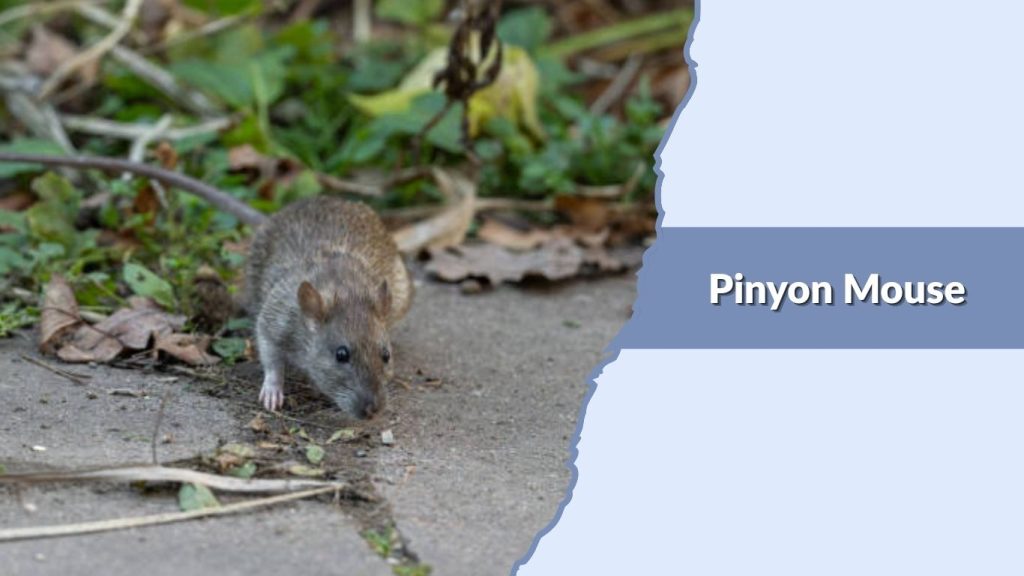
The Pinyon Mouse is a small deer mouse relative often found in dry woodlands, rocky slopes, and shrub-covered habitats. It is closely associated with pinyon-juniper woodlands and other arid landscapes of western North America. This mouse has large ears, a long tail, and soft brownish fur with a pale underside.
Identification
- Small mouse with a slender body and soft fur.
- The back is usually brown, grayish brown, or tawny.
- Belly, feet, and underside are usually white or pale.
- Ears are large, rounded, and noticeable.
- Eyes are large and dark.
- The tail is long and often darker above and lighter below.
- Commonly associated with pinyon-juniper woodlands, rocks, and dry slopes.
Habitat and Distribution
The Pinyon Mouse is found in western North America, especially in dry woodlands, pinyon-juniper habitats, rocky hillsides, canyons, chaparral, and shrublands. It often shelters in rock crevices, burrows, logs, tree cavities, and dense vegetation. Areas with seeds, nuts, and protective cover are especially important for this species.
Behavior and Diet
The Pinyon Mouse is mostly nocturnal and becomes active after dark. It feeds on seeds, nuts, berries, fruits, fungi, insects, and other small food items. In pinyon-juniper habitats, it may rely heavily on seeds and plant material. It often forages near rocks, shrubs, and trees where it can quickly escape predators.
Lifespan
In the wild, the Pinyon Mouse usually lives a short life because of predators, drought, disease, and seasonal food shortages. Many individuals survive less than a year, though some may live longer in protected habitats with stable food and shelter. Like other small mice, it can reproduce quickly when conditions are favorable.
10. Texas Mouse
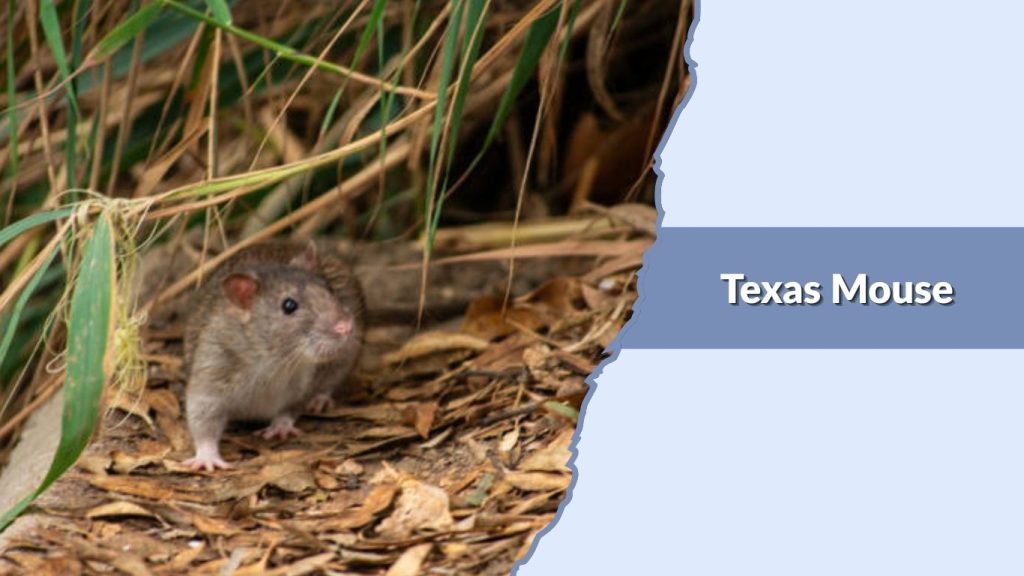
The Texas Mouse is a small deer mouse relative found mainly in rocky and brushy habitats of the south-central United States and northern Mexico. It has soft brownish fur, pale underparts, large ears, and a long tail. This mouse is mostly nocturnal and usually stays close to rocks, shrubs, and other cover for protection.
Identification
- Small mouse with a slender body and soft fur.
- The back is usually brown, grayish brown, or tawny.
- Belly, feet, and underside are usually white or pale.
- Ears are large, rounded, and noticeable.
- Eyes are large and dark.
- The tail is fairly long and often darker above than below.
- Often found near rocky slopes, brushy areas, and dry woodlands.
Habitat and Distribution
The Texas Mouse is mainly found in Texas, nearby parts of the south-central United States, and northern Mexico. It lives in rocky hillsides, brushlands, dry woodlands, canyons, shrub-covered slopes, and areas with dense ground cover. It often shelters in rock crevices, burrows, logs, brush piles, and protected spaces under vegetation.
Behavior and Diet
The Texas Mouse is mostly active at night, when it searches for food and avoids daytime heat. Its diet includes seeds, berries, fruits, nuts, fungi, insects, and other small food items. It usually forages close to cover, using rocks, shrubs, and low plants to hide from predators such as snakes, owls, foxes, and larger mammals.
Lifespan
In the wild, the Texas Mouse usually has a short lifespan because of predators, disease, harsh weather, and seasonal food shortages. Many individuals live less than a year, though some may survive longer in protected habitats with steady food and shelter. Like many small rodents, it can reproduce quickly when conditions are favorable.
11. Rock Mouse
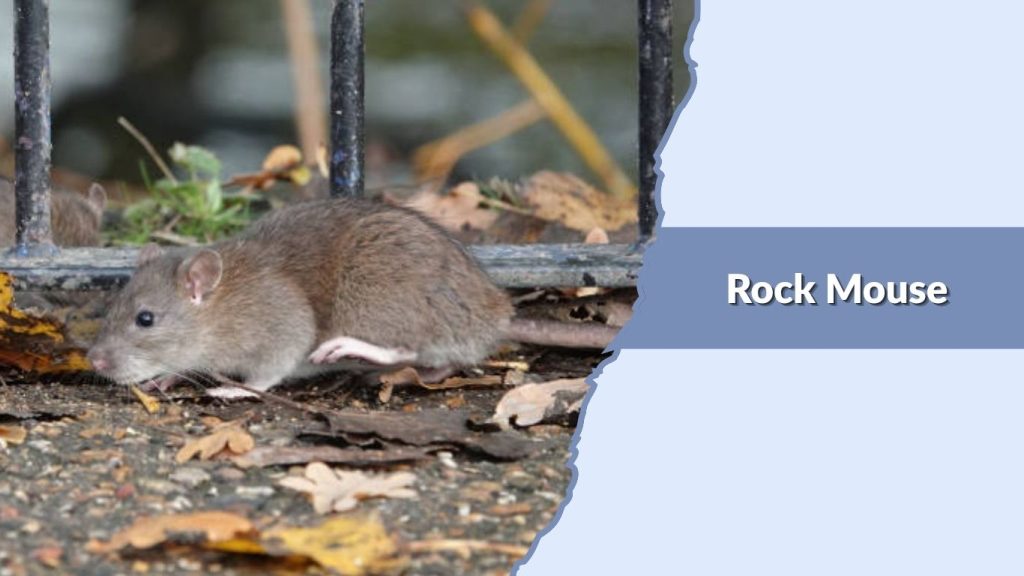
The Rock Mouse is a small deer mouse relative commonly found in dry, rocky habitats. It is known for its soft brownish fur, pale underside, large ears, and ability to live among cliffs, boulders, canyons, and rocky slopes. This mouse is mostly active at night and uses cracks, crevices, and sheltered spaces for protection.
Identification
- Small mouse with a slender body and soft fur.
- The back is usually brown, grayish brown, or sandy-colored.
- Belly, feet, and underside are usually white or pale.
- Ears are large, rounded, and noticeable.
- Eyes are large and dark.
- The tail is fairly long and may be darker above and lighter below.
- Often recognized by its strong association with rocky habitats.
Habitat and Distribution
The Rock Mouse is usually found in dry, rugged landscapes of the southwestern United States and Mexico. It lives around rocky slopes, cliffs, canyon walls, boulder fields, desert scrub, dry washes, and open woodlands. Rock crevices, burrows, ledges, and vegetation provide shelter from predators and extreme weather.
Behavior and Diet
The Rock Mouse is mostly nocturnal, becoming active after sunset to search for food. It eats seeds, grasses, berries, fruits, cactus material, insects, and other small food items. It usually forages close to rocks or shrubs, where it can quickly hide from snakes, owls, foxes, and other predators.
Lifespan
In the wild, the Rock Mouse usually has a short lifespan because of predators, drought, disease, and limited food in dry habitats. Many individuals live less than a year, though some may survive longer in protected areas with good shelter and steady food. Like other small mice, it reproduces quickly when conditions are favorable.
12. Golden Mouse
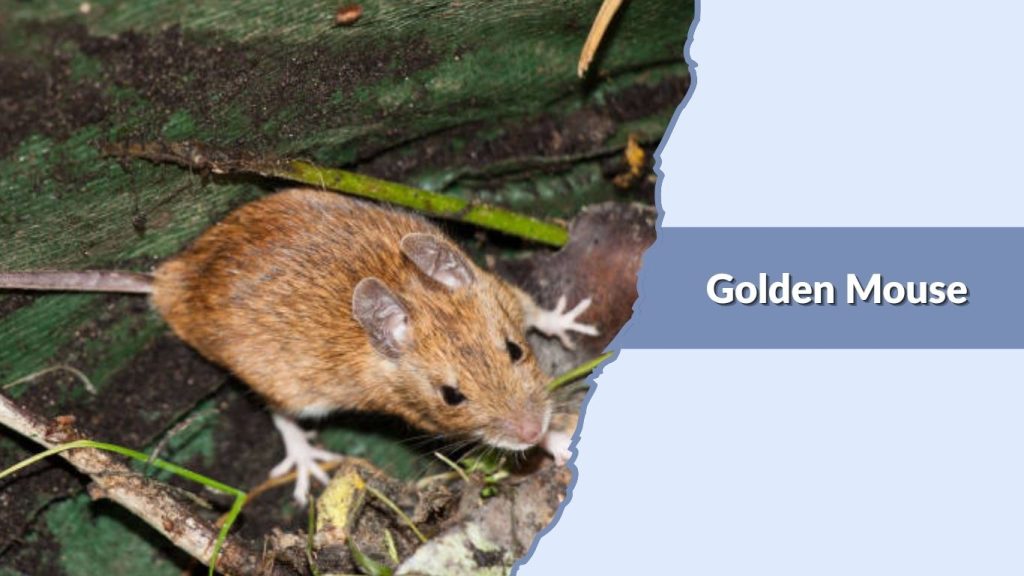
The Golden Mouse is a small rodent known for its warm golden-brown fur, pale underside, and excellent climbing ability. It is closely related to deer mice and is often found in dense vegetation, shrubs, vines, and woodland edges. This species is mostly active at night and often builds nests above the ground.
Identification
- Small mouse with a soft, golden-brown to orange-brown back.
- Belly, feet, and underside are usually white or pale.
- Eyes are large, dark, and rounded.
- The ears are fairly large and rounded.
- The tail is long and often slightly darker above than below.
- Body color is warmer and more golden than many similar mice.
- Often associated with vines, shrubs, thickets, and dense vegetation.
Habitat and Distribution
The Golden Mouse is mainly found in the southeastern United States. It lives in forests, woodland edges, swamps, thickets, vine tangles, brushy fields, and areas with dense shrubs. Unlike many ground-dwelling mice, it often uses vegetation above the ground and may build nests in vines, bushes, or small trees.
Behavior and Diet
The Golden Mouse is mostly nocturnal and is a skilled climber. It often moves through vines, shrubs, and low branches while searching for food. Its diet includes seeds, berries, fruits, nuts, insects, and other small food items. Dense cover helps protect it from predators such as owls, snakes, foxes, and larger mammals.
Lifespan
In the wild, the Golden Mouse usually has a short lifespan because of predators, disease, storms, and food shortages. Many individuals live less than a year, but some may survive longer in safe habitats with good shelter and steady food. Its ability to nest above the ground helps it avoid some ground-level dangers.
13. Woodland Deer Mouse
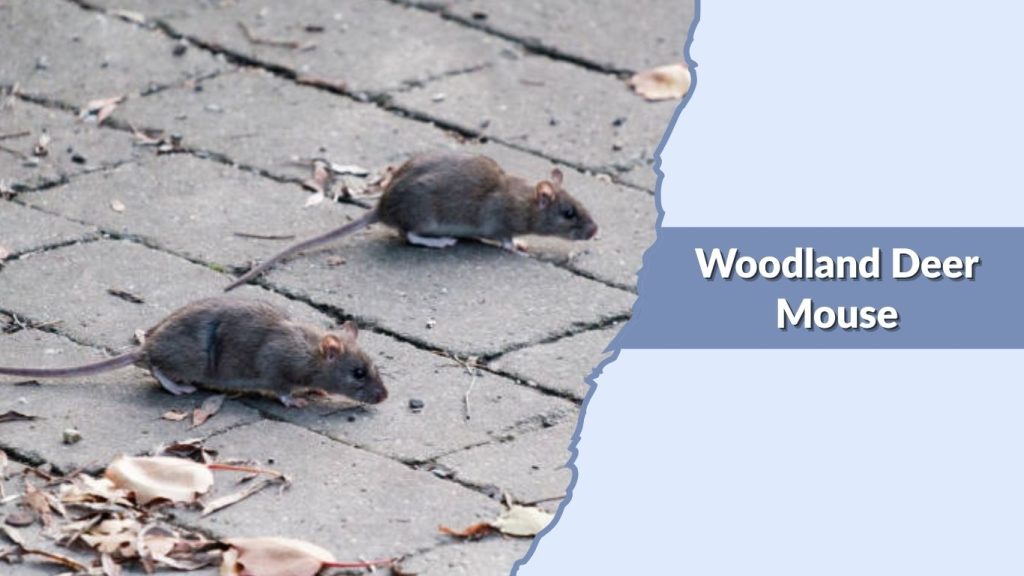
The Woodland Deer Mouse is a small forest-dwelling rodent known for its brownish upper body, pale underside, large eyes, and rounded ears. It is often found in wooded habitats where leaf litter, logs, roots, and shrubs provide cover. Like other deer mice, it is mostly active at night and feeds on a variety of plant and animal foods.
Identification
- Small mouse with a slender body and soft fur.
- The back is usually brown, grayish brown, or reddish brown.
- Belly, feet, and underside are usually white or pale.
- Eyes are large and dark.
- Ears are rounded and fairly large.
- The tail is often long and may be darker above and lighter below.
- Commonly associated with forests, woodland edges, logs, and leaf litter.
Habitat and Distribution
The Woodland Deer Mouse is usually found in forests, woodland edges, brushy areas, parks, and natural areas with plenty of ground cover. It may use hollow logs, tree roots, burrows, rock piles, leaf litter, and abandoned nests for shelter. Dense vegetation and fallen wood provide protection from predators and harsh weather.
Behavior and Diet
The Woodland Deer Mouse is mostly nocturnal and spends the night searching for food. It eats seeds, nuts, berries, fruits, fungi, insects, and other small invertebrates. It is a good climber and may move through shrubs, logs, and low branches while foraging. In colder seasons, it may store food in hidden places.
Lifespan
In the wild, the Woodland Deer Mouse usually lives less than a year because of predators, disease, cold weather, and food shortages. Some individuals may survive longer in safe habitats with steady food and shelter. Its quick breeding cycle helps maintain populations even when many individuals have short lives.
14. Western Deer Mouse
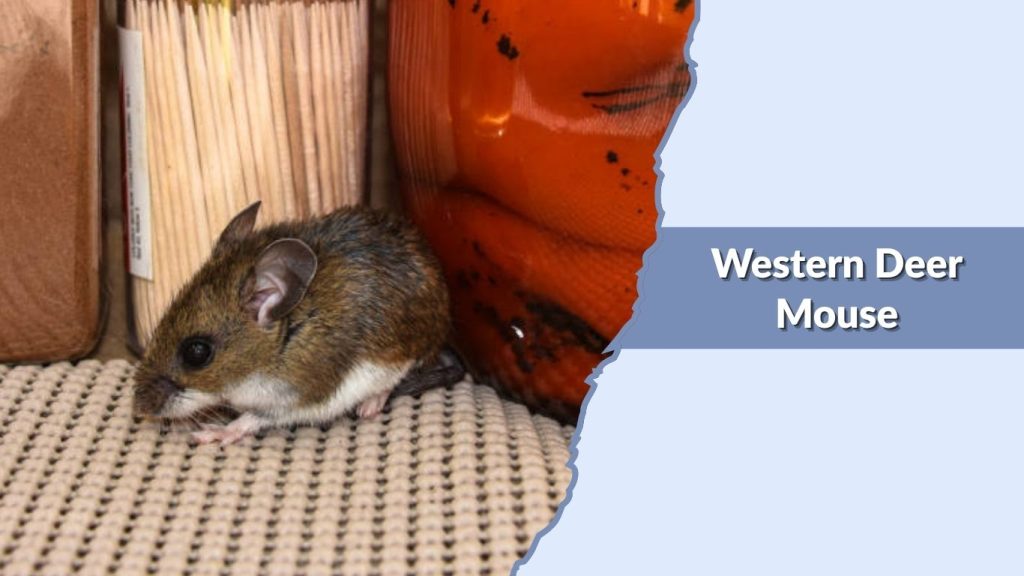
The Western Deer Mouse is a small, adaptable rodent found in many western habitats. It has large eyes, rounded ears, a pale underside, and a long tail that may be darker above and lighter below. This mouse is mostly active at night and can live in forests, grasslands, deserts, farms, and rocky areas.
Identification
- Small mouse with a slim body and soft fur.
- The back is usually brown, grayish brown, reddish brown, or sandy brown.
- Belly, feet, and underside are usually white or pale.
- Eyes are large, dark, and rounded.
- Ears are rounded and fairly large.
- The tail is often long and two-toned, with a darker top and lighter underside.
- Similar to other deer mice, so habitat and location can help with identification.
Habitat and Distribution
The Western Deer Mouse is found across many parts of western North America. It can live in forests, grasslands, deserts, shrublands, farms, fields, rocky slopes, and rural buildings. This species is highly adaptable and uses burrows, logs, rock crevices, tree cavities, brush piles, and sheltered structures for nesting and protection.
Behavior and Diet
The Western Deer Mouse is mostly nocturnal and becomes active after sunset. It feeds on seeds, grains, nuts, fruits, berries, fungi, insects, and other small food items. It is a good climber and jumper, often using vegetation, rocks, and ground cover to move safely while avoiding predators.
Lifespan
In the wild, the Western Deer Mouse usually lives less than a year because of predators, disease, harsh weather, and food shortages. Some individuals may survive longer in protected habitats with reliable food and shelter. Like many small rodents, it reproduces quickly when conditions are favorable.
15. Eastern Deer Mouse
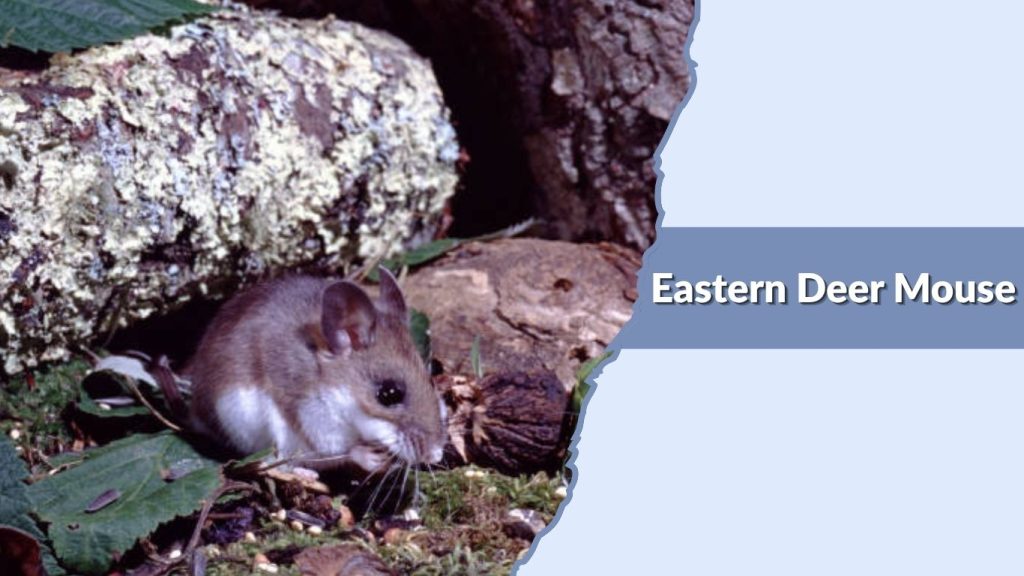
The Eastern Deer Mouse is a small, agile rodent known for its large eyes, rounded ears, brownish upper body, and white underside. It is often found in forests, fields, farms, brushy areas, and rural buildings. Like other deer mice, it is mostly active at night and can adapt to many different habitats.
Identification
- Small mouse with a slender body and soft fur.
- Back is usually brown, reddish brown, or grayish brown.
- Belly, feet, and underside are usually white or pale.
- Eyes are large, dark, and rounded.
- The ears are rounded and fairly large for its head.
- The tail is often long and two-toned, darker above and lighter below.
- Similar to other deer mice and white-footed mice, location and habitat can help with identification.
Habitat and Distribution
The Eastern Deer Mouse is commonly found in eastern parts of North America. It lives in forests, woodland edges, grasslands, fields, farms, brush piles, cabins, sheds, and rural homes. It usually nests in sheltered places such as burrows, hollow logs, tree cavities, rock piles, leaf litter, and protected indoor spaces.
Behavior and Diet
The Eastern Deer Mouse is mostly nocturnal and becomes active after sunset. It feeds on seeds, grains, nuts, berries, fruits, fungi, insects, and other small food items. It is quick, alert, and good at climbing and jumping. During colder months, it may store food and seek shelter in protected places.
Lifespan
In the wild, the Eastern Deer Mouse usually lives less than a year because of predators, disease, cold weather, and food shortages. Some individuals may survive longer in safe areas with steady food and shelter. Its fast breeding cycle helps keep populations stable even when many individuals have short lives.
FAQs
What is a deer mouse?
A deer mouse is a small rodent known for its large eyes, rounded ears, brownish back, and pale underside. It gets its name from its deer-like color pattern. Deer mice are mostly active at night and are commonly found in forests, fields, farms, grasslands, and rural buildings.
Where do deer mice usually live?
Deer mice live in many habitats, including forests, grasslands, deserts, farms, brushy areas, rock piles, cabins, sheds, and rural homes. They often nest in burrows, hollow logs, tree cavities, leaf litter, abandoned nests, or sheltered indoor spaces where they can stay hidden and protected.
What do deer mice eat?
Deer mice are omnivores and eat many different foods. Their diet includes seeds, grains, nuts, berries, fruits, fungi, insects, and other small invertebrates. During colder months, some deer mice store food in hidden places to help them survive when food is harder to find.
Are deer mice dangerous?
Deer mice are not aggressive, but they can carry diseases and contaminate food or surfaces with droppings and urine. It is best not to handle them directly. If deer mice enter a home, safe cleanup methods and proper sealing of entry points are important.
How can you identify a deer mouse?
A deer mouse usually has a brown or grayish-brown back, white belly, pale feet, large dark eyes, rounded ears, and a long tail that may be darker above and lighter below. Because some species look similar, habitat, location, size, and tail pattern can help with identification.