
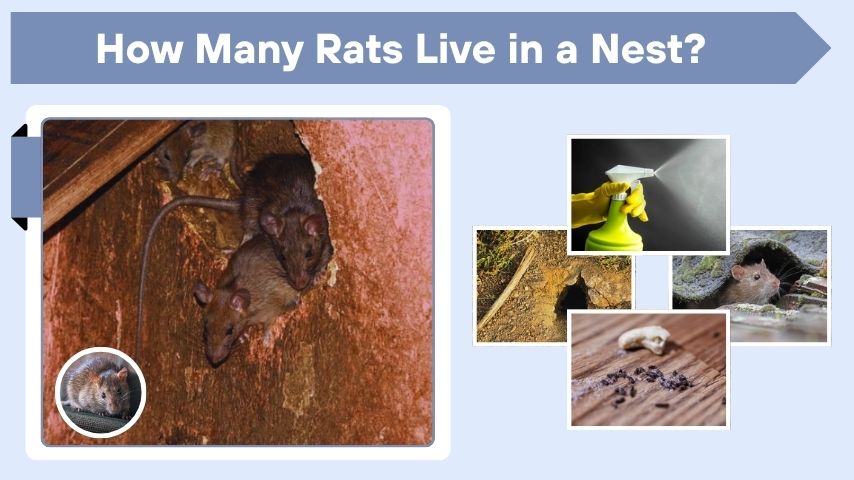
Rat nests can contain only a few rats or grow into large colonies depending on the species, location, and food supply. Many homeowners are surprised by how quickly rat populations increase once a nest becomes established. Roof rats, brown rats, and pack rats all build nests differently and may live in groups of varying sizes. Indoor nests are often hidden inside walls, attics, or basements, while outdoor nests may be underground or hidden in vegetation. Understanding how many rats live in a nest helps people recognize infestations early and prevent serious damage.
How Many Rats Are Usually in a Nest?
The number of rats living in a nest depends on the species, available shelter, and nearby food sources. Some nests may hold only a breeding pair and their young, while larger infestations can contain dozens of rats spread across connected nesting areas.
Average Number of Rats in a Nest
Most rat nests commonly contain:
- Two to ten adult rats
- Mothers with babies
- Juvenile rats from recent litters
- Multiple generations living nearby
- Small family groups sharing food sources
Large infestations may involve several connected nests instead of one single nest.
Why Rat Nest Sizes Vary
Rat populations increase faster in areas with easy access to food, water, and shelter. Safe nesting spots inside buildings or near garbage sources allow colonies to grow rapidly. Outdoor nests may remain smaller if predators or weather conditions limit survival rates.
Can One Nest Hold Many Rats?
A single nesting area can support many rats if resources are plentiful. In severe infestations, several nests may connect through tunnels, walls, ceilings, or crawl spaces, creating a larger colony network throughout the property.
Types of Rat Nests
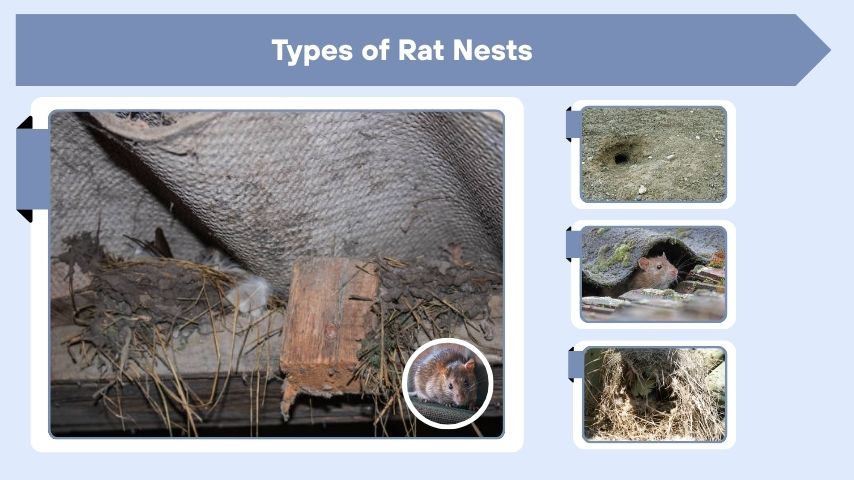
Different rat species build different types of nests. Understanding nesting behavior helps identify which species may be living around a home or building.
Brown Rat Nests
Brown rats usually create nests underground or near foundations. They often dig burrows close to trash, sewers, or food storage areas. These rats are strong diggers and commonly live in larger colonies than roof rats.
Roof Rat Nests
Roof rats prefer elevated nesting locations such as:
- Attics
- Roof spaces
- Trees
- Garages
- Wall cavities
- Storage sheds
Roof rat nests often contain mothers, babies, and several younger rats living close together.
Pack Rat Nests
Pack rats build messy nests using sticks, leaves, paper, and shiny objects they collect. These nests are more common in dry or desert environments and usually house smaller family groups.
How Rat Colonies Grow So Quickly
Rats reproduce extremely fast, which is one reason infestations can become serious in a short time. A small nest may turn into a large colony within months if conditions remain favorable.
Rat Reproduction Rates
Female rats can produce multiple litters every year. Each litter may contain several babies, and young rats mature quickly. This rapid breeding cycle allows colonies to expand continuously.
How Many Young Are in a Nest of Roof Rats?
Roof rat mothers commonly give birth to:
- Four to eight babies per litter
- Several litters each year
- Young rats that mature within months
- Multiple generations sharing nearby nests
A single female can contribute to a large infestation surprisingly quickly.
Why Infestations Spread Fast
Once rats discover reliable food and shelter, they continue breeding and expanding into nearby areas. Hidden nesting spaces inside walls, attics, or crawl spaces make infestations difficult to detect early.
Signs There May Be Multiple Rats in a Nest
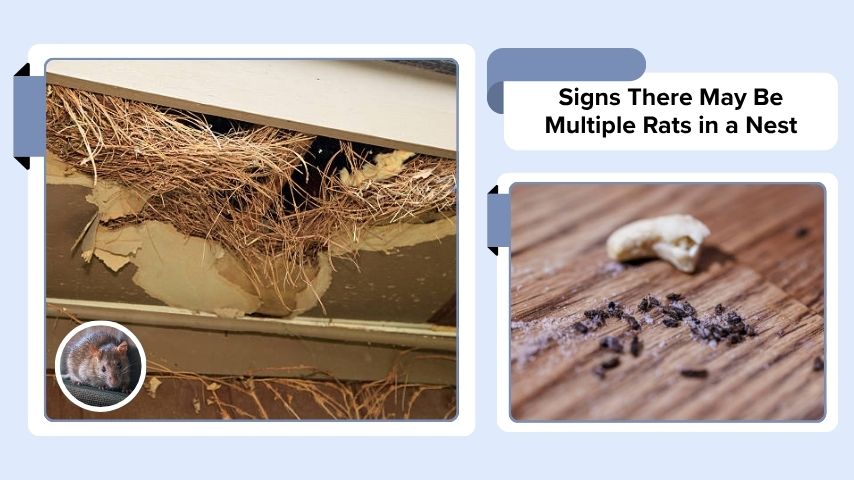
A larger nest or colony often leaves visible warning signs around the property. Recognizing these clues early can help prevent severe infestations.
Noises in Walls and Ceilings
Scratching, squeaking, or movement sounds during the night may indicate several rats traveling between nests and feeding areas.
Droppings and Strong Odors
Large colonies usually leave behind noticeable droppings and strong ammonia-like odors from urine accumulation.
Multiple Entry Points
Common entry signs include:
- Chewed wall openings
- Gaps near pipes
- Damaged vents
- Gnaw marks on wood
- Greasy rub marks along walls
These pathways allow rats to move safely between nesting and feeding areas.
Where Rats Build Nests
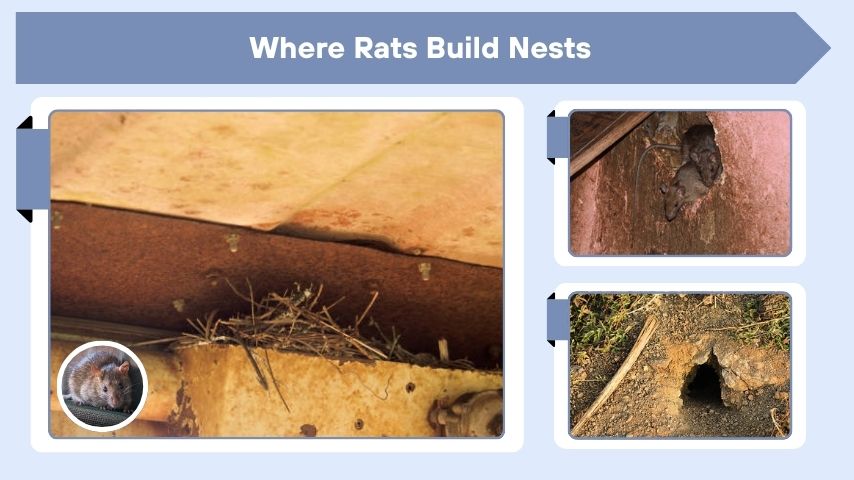
Rats choose locations that provide warmth, protection, and easy access to food and water. Indoor nests are often hidden in quiet areas rarely disturbed by humans.
Indoor Rat Nest Locations
Common indoor nesting spots include:
- Attics
- Basements
- Behind appliances
- Inside wall cavities
- Crawl spaces
- Storage rooms
Soft materials such as insulation, paper, and fabric are often used to build nests.
Outdoor Rat Nest Locations
Outdoor rats commonly nest underground, beneath wood piles, inside thick vegetation, or near dumpsters and sheds. These locations protect colonies from predators and weather conditions.
Roof Rat Nesting Habits
Roof rats are excellent climbers and prefer elevated nesting areas. Trees, rooflines, attics, and upper floors provide safe spaces for breeding and shelter.
How Many Rats in a Nest Outside?
Outdoor rat nests can vary greatly in size depending on food availability and nearby shelter. Rats living near garbage, farms, gardens, or sewer systems often form larger colonies because resources are easier to find. Outdoor nests may also connect through underground tunnels and hidden pathways.
Garden and Yard Rat Nests
Rats often build nests in gardens and yards where shelter and food are available. Common outdoor nesting locations include:
- Burrows under sheds
- Dense bushes and vegetation
- Wood and compost piles
- Under decks and porches
- Near outdoor garbage bins
These nests may contain several adult rats along with younger rats from recent litters.
Farm and Barn Infestations
Farms and barns provide ideal conditions for large rat colonies because food is constantly available. Grain storage, animal feed, and water sources allow populations to grow quickly. In some severe infestations, dozens of rats may live within connected nesting areas.
Urban Outdoor Rat Colonies
City rats often live near dumpsters, alleys, sewers, and abandoned structures. Urban colonies may spread across multiple nests connected through tunnels and travel routes.
Rat Nest Behavior and Social Structure
Rats are social animals that usually live in groups rather than alone. Colonies often consist of family members sharing nesting areas and feeding territories.
Do Rats Live Alone or in Groups?
Most rats prefer living in colonies because group living improves survival. Younger rats learn feeding routes and hiding places from older rats within the colony.
Dominant Rats and Colony Hierarchy
Rat colonies often develop social hierarchies. Larger or stronger rats may dominate feeding areas and nesting spaces, while weaker rats remain at the edges of the group.
Mother Rats and Baby Rats
Female rats are protective mothers and usually keep babies hidden deep inside nests. Young rats remain in the nest until they are strong enough to search for food independently.
How to Find a Rat Nest
Finding a rat nest early can prevent a small problem from becoming a major infestation. Nests are often hidden, but rats usually leave clues behind.
Common Signs of a Rat Nest
Homeowners may notice several warning signs, including:
- Scratching noises at night
- Droppings near food areas
- Chewed wires or wood
- Strong unpleasant odors
- Torn insulation or paper
These signs often indicate active nesting nearby.
Rat Tracks and Travel Paths
Rats usually follow the same travel routes repeatedly. Grease marks along walls, footprints in dust, and narrow pathways through vegetation may help locate nesting sites.
Using Traps and Cameras
Monitoring tools such as motion cameras and traps can help identify how many rats are active and where nests may be located.
How to Get Rid of Rat Nests
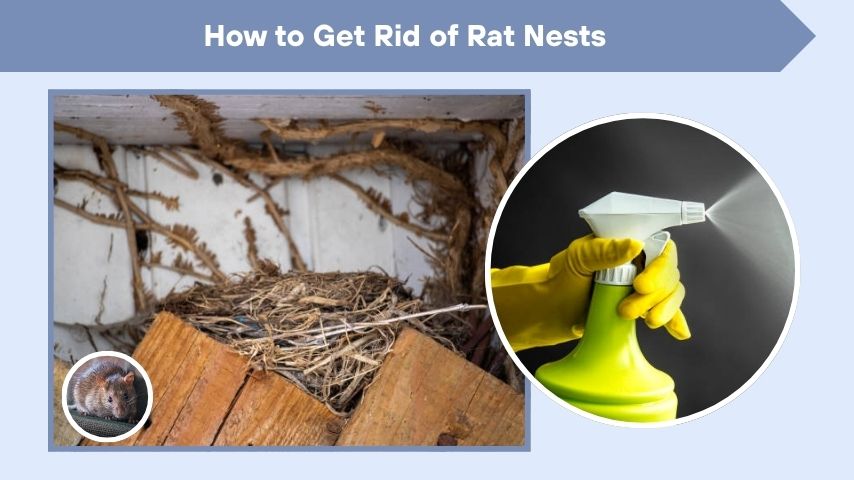
Removing rat nests quickly is important because rat populations grow fast and may spread diseases or damage property. Proper cleanup and exclusion methods help stop infestations from returning.
Why Nest Removal Matters
Rat nests contain droppings, urine, and bacteria that may create health risks for humans and pets. Removing nests also helps interrupt breeding cycles before colonies expand further.
Safe Rat Nest Cleanup
People cleaning rat nests should always use proper protection, including:
- Gloves
- Face masks
- Disinfectant sprays
- Sealed trash bags
- Protective clothing
Avoid sweeping dry droppings because this may spread contaminated dust into the air.
Rat Control Methods
Common rat control strategies include sealing entry points, using traps, removing food sources, and improving sanitation. Severe infestations may require professional pest control services.
Rat Nest Risks and Dangers
Rat infestations create serious health and property risks when left untreated. Larger colonies increase the chance of contamination and structural damage inside buildings.
Disease Risks From Rat Nests
Rats may spread diseases through urine, droppings, saliva, and contaminated surfaces. Exposure to nesting materials can also trigger allergies or breathing problems.
Structural Damage Caused by Rats
Rats constantly chew to keep their teeth trimmed. This behavior may damage:
- Electrical wiring
- Wooden beams
- Pipes and insulation
- Food packaging
- Plastic materials
Chewed wires may even increase the risk of house fires.
Food and Water Contamination
Rat colonies often contaminate kitchens, storage spaces, and water sources. Even small infestations can spread bacteria and spoil stored food supplies.
FAQs
How many rats are usually in a nest?
Most rat nests contain two to ten rats, but larger infestations may involve dozens of rats spread across several connected nesting areas.
Can one rat mean there is a nest nearby?
Yes, rats are social animals and rarely live completely alone. Seeing one rat often means more rats or a nearby nest may already exist.
How many babies can a roof rat have?
Roof rats commonly produce four to eight babies per litter and may have several litters every year under favorable conditions.
Do rats use the same nest for a long time?
Rats may continue using the same nest if food, water, and shelter remain available. They may also expand into nearby areas as the colony grows.
Where are rat nests usually hidden indoors?
Indoor rat nests are commonly hidden inside attics, wall cavities, basements, crawl spaces, garages, and behind large appliances.