
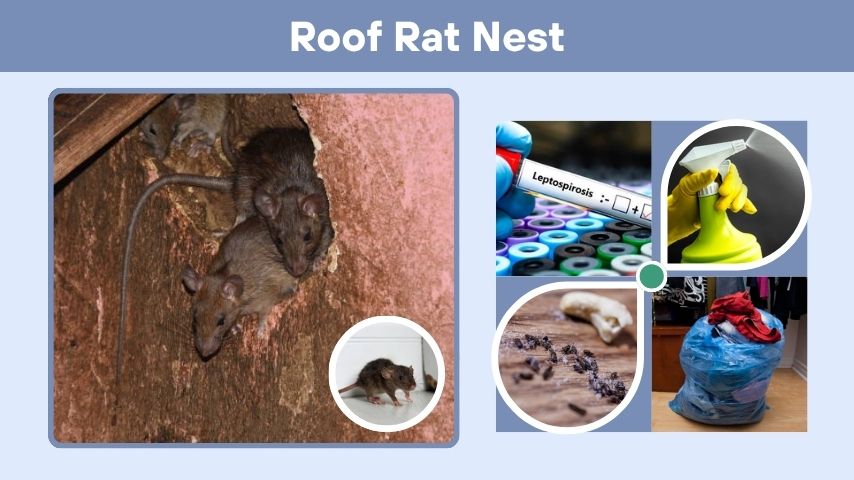
Roof rats are skilled climbers that often build nests in attics, roofs, walls, barns, and trees near homes. These rodents prefer dark elevated spaces where they can hide safely while searching for food and water at night. A hidden roof rat nest can quickly lead to serious problems such as damaged insulation, chewed electrical wires, unpleasant odors, and contamination from droppings and urine.
Understanding what a roof rat nest looks like and where roof rats commonly nest can help homeowners detect infestations early. This guide explains nesting habits, warning signs, removal methods, and prevention tips for roof rats.
What Is a Roof Rat Nest?
A roof rat nest is a hidden shelter made from soft materials collected by roof rats for sleeping, breeding, and protection. These nests are usually built in elevated dark locations where predators and people rarely disturb them. Roof rats use nearby materials to create warm nesting spaces that support growing colonies and young rats.
What Roof Rats Use to Build Nests
Roof rats gather many lightweight materials to build comfortable nests inside homes or trees. Soft nesting materials help keep baby rats warm and protected.
Common Nesting Materials
- Insulation
- Shredded paper
- Leaves
- Fabric scraps
- Cardboard pieces
- Plant fibers
What Does a Roof Rat Nest Look Like?
Roof rat nests often appear messy and loosely packed. They may look like piles of shredded material hidden inside insulation, wall spaces, or tree branches. Fresh nests may also contain droppings, food scraps, and greasy rub marks nearby.
Roof Rat Nest Size
Small infestations may contain only one nest, while larger infestations can spread across several hidden areas in the attic or roof. Nest size often increases as more rats join the colony and breeding activity continues.
Where Do Roof Rats Nest?
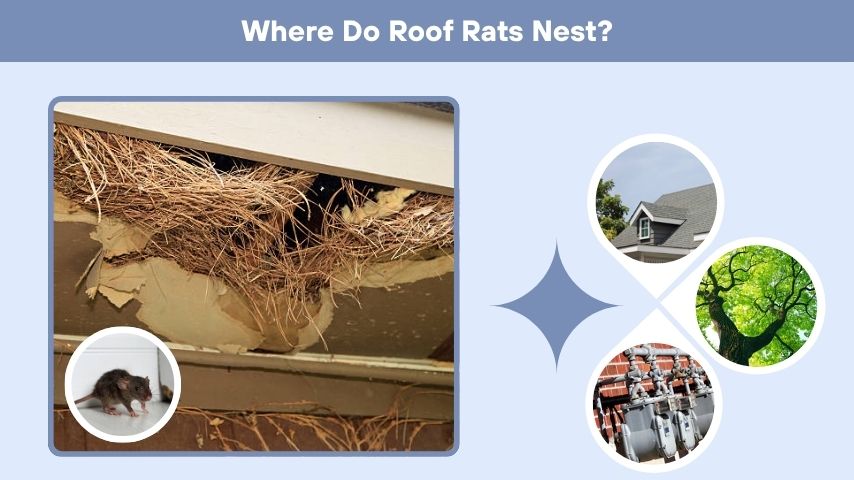
Roof rats prefer warm elevated locations with easy access to food and water. They commonly nest inside buildings but also build nests outdoors in trees and dense vegetation. Their climbing ability allows them to move easily between roofs, branches, utility lines, and attic openings without being noticed during the daytime.
Roof Rat Nests in Attics
Attics are one of the most common nesting places for roof rats because they provide darkness, warmth, and protection. Rats often hide under insulation or near stored boxes where they remain undisturbed for long periods.
Roof Rat Nests in Trees
Common Tree Nesting Areas
- Palm trees
- Dense branches
- Fruit trees
- Thick shrubs
- Tree cavities
Roof Rat Nests in Walls and Roof Spaces
Roof rats frequently enter wall voids and roof gaps through damaged vents or openings. These hidden spaces provide safety from predators while allowing easy movement throughout the structure.
Roof Rat Nesting Habits
Roof rats are nocturnal animals that spend most of the day hiding in nests and become active after sunset. Their nesting behavior helps protect them from predators and harsh weather conditions. Because roof rats reproduce quickly, even a small infestation can grow into a major problem if nesting areas are not discovered early.
Why Roof Rats Prefer High Places
Roof rats naturally seek elevated areas because climbing helps them avoid danger. Roofs, trees, rafters, and attics also provide direct access to food sources around homes and buildings.
When Roof Rats Are Most Active
Roof rats are usually most active during nighttime hours when homes become quieter. They often search for food in kitchens, garages, barns, and outdoor garbage areas after dark.
How Far Roof Rats Travel From Nests
Travel Behavior
- Searching for food
- Looking for water
- Exploring nearby roofs
- Moving along tree branches
- Following utility lines
Signs of a Roof Rat Nest
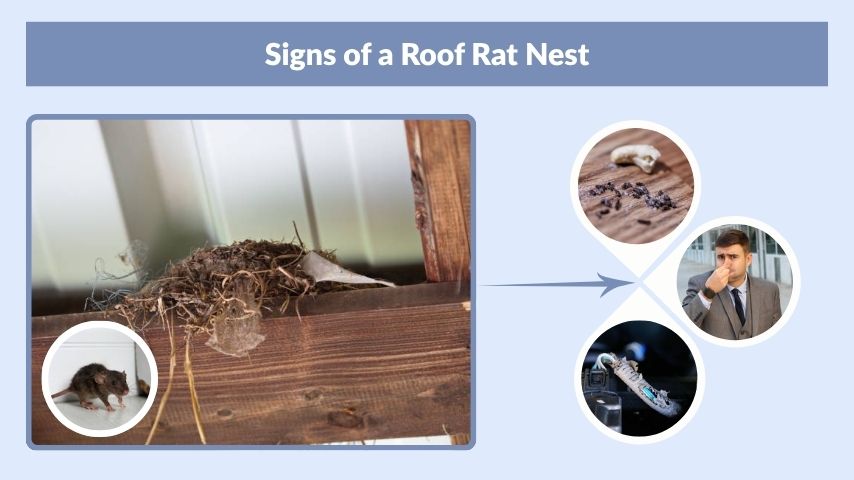
Roof rat infestations often remain hidden until clear warning signs begin appearing around the home. Strange nighttime noises, droppings, and damaged materials are common indicators that rats may be nesting nearby. Detecting these signs early can help prevent serious property damage and reduce the risk of larger infestations spreading throughout the building.
Noises in the Roof or Attic
Roof rats commonly make scratching, running, and chewing sounds during the night. These noises are often heard above ceilings, inside walls, or near attic spaces where nests are hidden.
Droppings and Odors
Common Signs
- Small dark droppings
- Strong urine smell
- Nest debris
- Grease marks on surfaces
- Chewed materials
Damage Around the Home
Roof rats may chew electrical wires, damage insulation, and contaminate stored items with droppings and urine. Gnaw marks on wood, plastic, or food containers are also common signs of rat activity.
How Many Roof Rats Live in a Nest?
Roof rat colonies can grow quickly because these rodents breed several times throughout the year. A single nest may begin with only a few rats but can expand rapidly if food and shelter remain available. Understanding colony size and breeding habits helps homeowners recognize why early removal is important.
Average Number of Rats in a Nest
Some roof rat nests contain only a breeding pair and young rats, while larger infestations may involve several connected nesting areas throughout the attic or roof space.
How Many Babies Roof Rats Have
Female roof rats can produce multiple litters every year. Each litter may contain several baby rats, allowing infestations to increase rapidly in a short period of time.
How Fast Roof Rat Populations Grow
Roof rats reproduce quickly when food, water, and shelter are easy to find. A small infestation can become a serious problem within months if nests are not removed. Because young rats mature rapidly, multiple generations may live in the same area at the same time.
Population Facts
Breeding Information
- Multiple litters yearly
- Fast reproduction cycle
- Several babies per litter
- Young rats mature quickly
- Colonies expand rapidly
Dangers of Roof Rat Nests
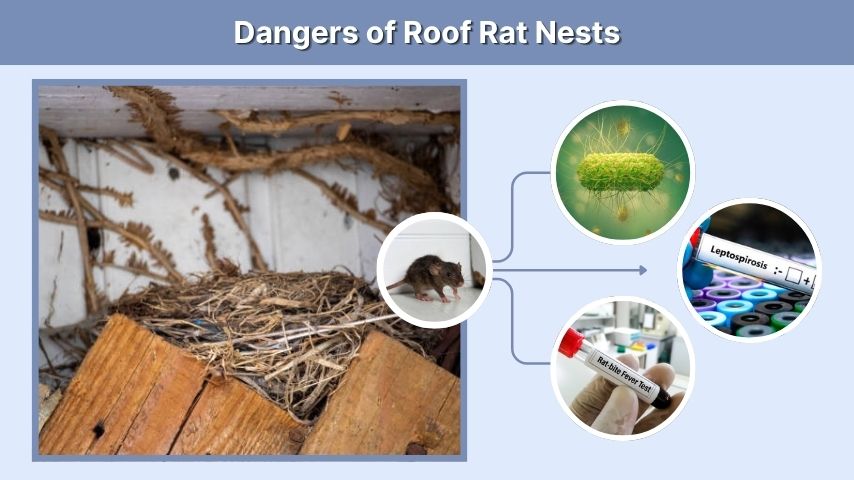
Roof rat nests create both health and property risks inside homes and buildings. Rats contaminate surfaces with droppings and urine while constantly chewing on materials around the nest. Large infestations may also attract insects and create unpleasant odors that spread through walls, ceilings, and ventilation systems.
Health Risks
Roof rats may carry harmful bacteria and diseases that can spread through contaminated food, nesting materials, or droppings. Cleaning nests without proper protection may increase exposure to germs and airborne particles.
Possible Diseases
- Salmonella
- Leptospirosis
- Rat-bite fever
- Hantavirus risks
- Food contamination illnesses
Fire Hazards From Chewed Wires
Roof rats constantly gnaw on objects to keep their teeth worn down. Electrical wiring inside attics and walls is often damaged during infestations, increasing the risk of sparks and house fires.
Structural Damage
Roof rats can tear insulation, damage wood, and destroy stored materials while building nests. Long-term infestations may weaken areas of the attic or contaminate belongings with urine and droppings.
How to Find a Roof Rat Nest
Finding roof rat nests early helps prevent larger infestations and reduces the amount of property damage caused over time. Nests are usually hidden in quiet elevated spaces that remain undisturbed during the day. Careful inspection of roofs, attics, trees, and wall spaces often reveals signs of nesting activity.
Inspecting the Attic
Look carefully around insulation, storage boxes, and roof corners for droppings, shredded nesting materials, and greasy marks. Flashlights can help reveal hidden nests behind stored items or beams.
Checking Trees and Rooflines
Inspection Areas
- Palm fronds
- Dense branches
- Roof edges
- Utility lines
- Overhanging limbs
Signs Around Walls and Vents
Roof rats often leave gnaw marks, greasy smears, and strong odors near entry points. Scratching noises inside walls during nighttime hours may also indicate nearby nesting activity.
How to Remove a Roof Rat Nest
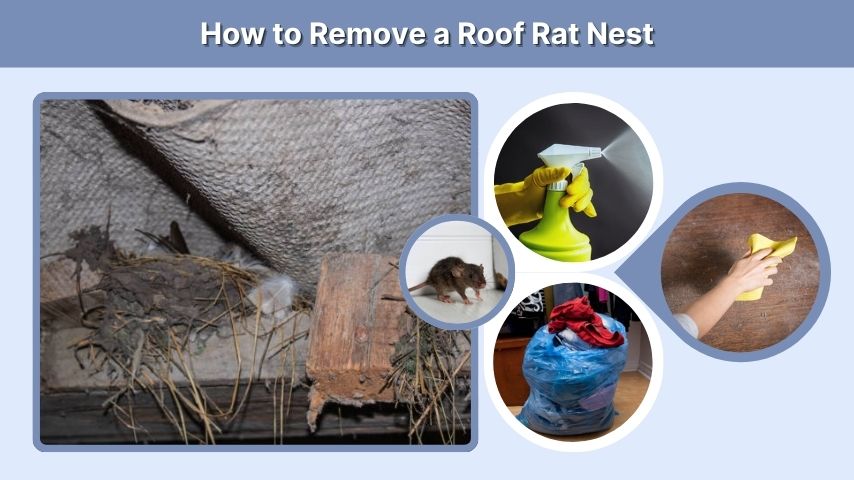
Removing roof rat nests safely is important because nests may contain bacteria, parasites, and contaminated materials. Protective equipment helps reduce exposure while cleaning. Large infestations may require professional pest control services, especially when nests are difficult to reach or rats continue returning after removal.
Safety Precautions Before Removal
Protective gloves, masks, and long sleeves should be worn before touching nesting materials. Avoid sweeping dry droppings because particles may spread into the air.
Cleaning and Disposal Steps
Removal Process
- Remove nesting materials carefully
- Spray disinfectant on contaminated areas
- Seal waste in plastic bags
- Clean nearby surfaces thoroughly
- Dispose of contaminated items safely
When to Call Pest Control
Professional pest control may be necessary for large infestations, repeated nesting problems, or nests hidden deep inside walls and roof structures. Experts can also help seal entry points and prevent future infestations.
How to Prevent Roof Rats From Nesting
Preventing roof rats from entering homes is easier than removing established nests later. Roof rats look for easy shelter, food, and water sources near buildings. Simple maintenance and cleanup routines can greatly reduce the chances of attracting rats around homes, garages, barns, and outdoor trees.
Seal Entry Points
Roof rats can squeeze through surprisingly small openings around vents, roofs, and utility lines. Sealing gaps helps block access into attics and wall spaces.
Trim Tree Branches
Prevention Tips
- Cut branches near roofs
- Remove fallen fruit
- Reduce thick vegetation
- Trim climbing pathways
- Clear roof debris
Eliminate Food and Water Sources
Secure trash bins, clean outdoor eating areas, and store pet food properly to reduce food access. Fixing leaks and removing standing water can also make properties less attractive to roof rats.
Roof Rats in Trees vs Attics
Roof rats commonly build nests both outdoors and indoors depending on shelter availability. Tree nests often remain hidden in dense branches, while attic nests provide warmth and protection year-round. Indoor nests are usually more dangerous because rats can damage electrical systems and spread contamination inside living spaces.
Tree Nest Characteristics
Outdoor nests are often made from leaves, twigs, and plant materials hidden high in trees or shrubs. Palm trees are especially attractive nesting locations for roof rats.
Attic Nest Characteristics
Attic nests commonly include insulation, shredded fabric, cardboard, and paper. These nests are usually larger and more protected than outdoor nests because indoor conditions remain stable year-round.
Which Nesting Area Is More Dangerous?
Indoor attic nests are generally more dangerous because they increase fire risks, contamination, and structural damage inside homes. Outdoor tree nests may still lead to infestations if rats easily travel from trees onto rooftops.
FAQs
What does a roof rat nest look like?
A roof rat nest usually looks like a messy pile of shredded materials such as insulation, paper, leaves, or fabric. Nests are often hidden in attics, roofs, trees, or wall spaces and may contain droppings, food scraps, and strong odors nearby.
Where do roof rats usually build nests?
Roof rats commonly build nests in attics, roofs, wall voids, garages, barns, and trees with dense branches. They prefer warm elevated places that provide shelter, protection from predators, and easy access to food and water sources.
How many roof rats live together in a nest?
A small roof rat nest may contain only a few rats, while larger infestations can involve many connected nests throughout a building. Because roof rats reproduce quickly, colonies can grow rapidly if nests are not removed early.
Can roof rats nest in trees?
Yes, roof rats often build nests in trees, especially palm trees, fruit trees, and dense vegetation. Tree nests are usually made from leaves, twigs, and plant materials and may allow rats easy access to nearby roofs and buildings.
How do you safely remove a roof rat nest?
Wear gloves, a mask, and protective clothing before removing a roof rat nest. Carefully collect nesting materials, disinfect contaminated areas, and seal waste in plastic bags for disposal. Large infestations or hidden nests may require professional pest control services.