
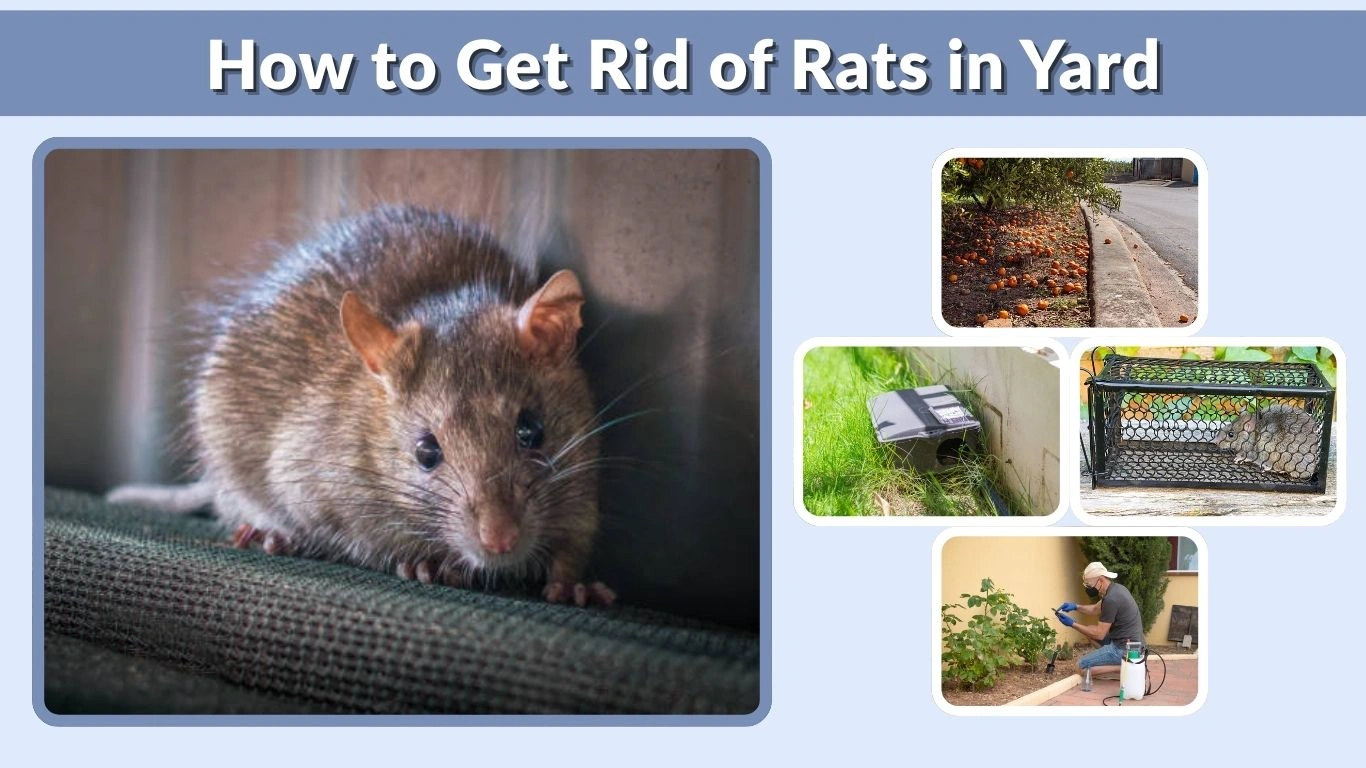
Rats in the yard can quickly become a serious problem if left untreated. These rodents are attracted to outdoor spaces that provide easy access to food, water, and shelter. Once rats settle into a yard, they may damage gardens, dig burrows, contaminate surfaces, and eventually move closer to the home. Because rats reproduce rapidly, a small problem can grow into a larger infestation within a short time.
Outdoor rats are more than just a nuisance. They can spread bacteria and disease, damage property, and attract predators such as snakes. Identifying the signs of rats early and taking proper control measures is the best way to prevent long-term infestations. In this guide, you’ll learn what attracts rats to yards, how to spot infestation signs, and the most effective ways to get rid of rats outside.
Why Are Rats in Your Yard?
Rats are constantly searching for places that provide food, shelter, and water. Yards with easy access to these resources become ideal nesting areas for outdoor rat populations.
Common Rat Species Found Outdoors
Two of the most common rat species found around homes and yards are Norway rats and roof rats.
Norway rats are larger rodents that usually live close to the ground. They often dig burrows in soil and hide beneath decks, sheds, wood piles, or dense vegetation.
Roof rats are smaller and better climbers. They prefer elevated areas such as trees, attics, roofs, and fences. Both species may enter yards if food and shelter are available.
Understanding which type of rat is present can help determine where they are hiding and how they are accessing the property.
What Attracts Rats to a Yard?
Several common yard conditions attract rats and encourage nesting activity.
Typical attractants include:
- Unsecured garbage bins
- Fallen fruit from trees
- Bird seed on the ground
- Outdoor pet food
- Compost piles
- Standing water
- Dense bushes and vegetation
Food availability is one of the strongest reasons rats remain in a yard. Even small amounts of accessible food can support a growing population.
Shelter is equally important. Overgrown landscaping, clutter, and wood piles provide hidden nesting areas where rats feel protected from predators.
Signs of Rats in Your Yard
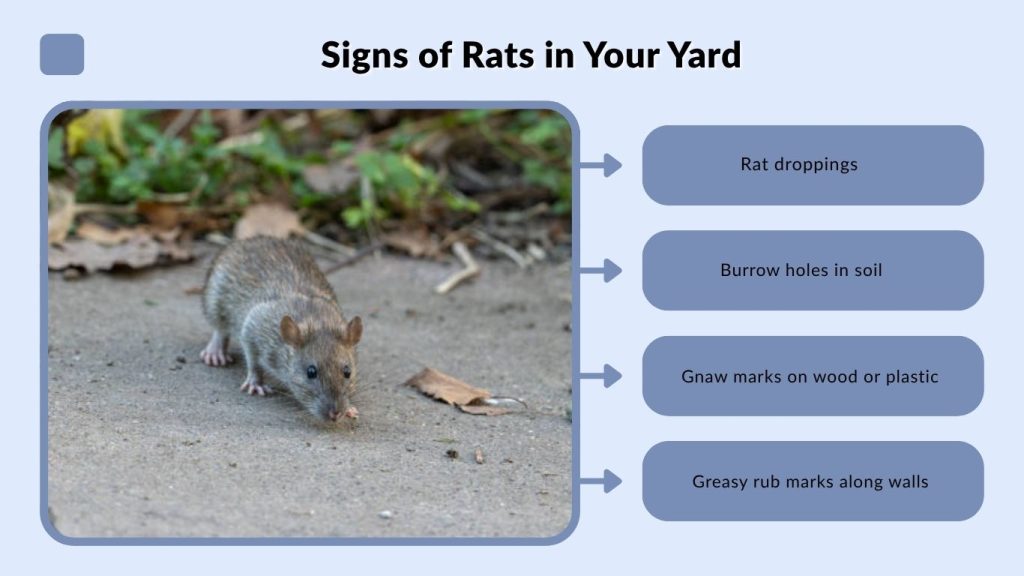
Recognizing the early signs of outdoor rats can help stop an infestation before it becomes severe. Rats are often most active at night, so homeowners may notice evidence before actually seeing the animals themselves.
Common Signs of Outdoor Rats
Several warning signs may indicate rats are living in or near the yard.
Common signs include:
- Rat droppings
- Burrow holes in soil
- Gnaw marks on wood or plastic
- Greasy rub marks along walls
- Scratching or movement noises at night
Rat droppings are usually dark, pellet-shaped, and found near food sources or nesting areas. Fresh droppings appear moist and dark, while older droppings become dry and gray.
Gnaw marks are another major indicator because rats constantly chew to wear down their teeth. Damaged wood, plastic containers, hoses, and wires may suggest rodent activity.
Rat Holes in Yard
Rat burrows are one of the clearest signs of outdoor infestation. These holes are commonly found near structures, fences, decks, sheds, or thick vegetation.
Typical rat holes may appear as:
- Small round openings in soil
- Tunnels near foundations
- Burrows hidden under bushes
- Dirt piles around entry holes
Norway rats especially rely on underground burrows for nesting and protection. Active burrows may show smooth edges, fresh dirt, or visible rat tracks nearby.
Ignoring burrows often allows the infestation to continue growing.
Dangers of Rats in the Yard
Outdoor rats create several health, safety, and property concerns for homeowners. Even if rats remain outside initially, infestations may eventually spread into garages, sheds, or homes.
- Spread bacteria and disease
- Damage gardens and landscaping
- Attract predators such as snakes
- Chew wires and outdoor materials
- Reproduce rapidly and increase infestation size
Rats are known carriers of harmful bacteria and diseases that can spread through droppings, urine, and contaminated surfaces. Pets and children may also come into contact with contaminated soil or outdoor objects.
Garden damage is another common issue. Rats may eat vegetables, fruits, seeds, and plant roots while digging through soil and mulch.
Their constant chewing behavior can also damage irrigation lines, storage containers, fencing, and outdoor wiring.
How to Get Rid of Rats in Yard
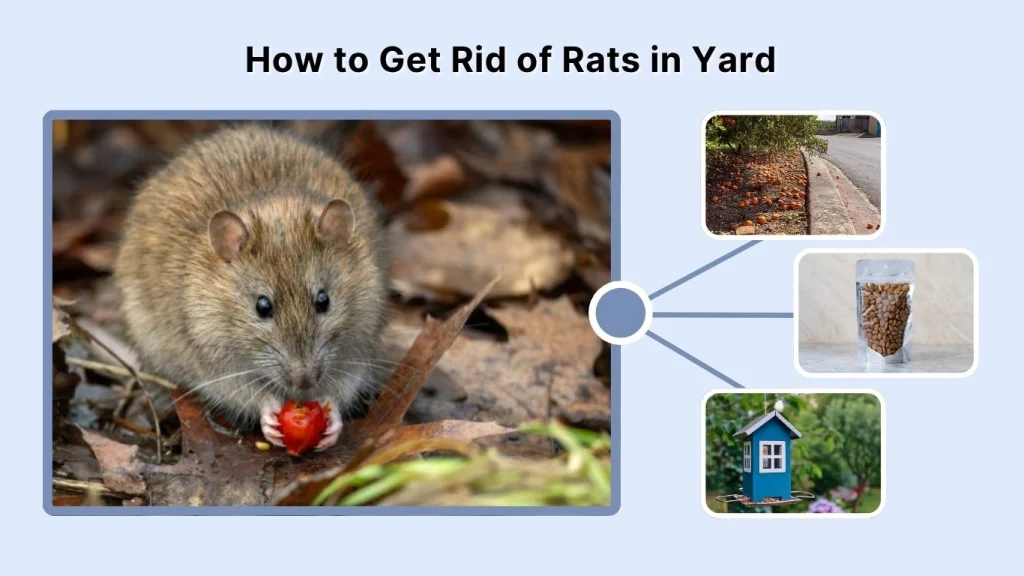
Effective rat control usually requires combining several methods rather than relying on a single solution. Removing food, reducing shelter, and using traps together provides the best long-term results.
Remove Food Sources
The first step in controlling outdoor rats is eliminating easy food access.
Important food prevention steps include:
- Secure trash can lids tightly
- Clean fallen fruit from the ground
- Store pet food indoors
- Clean bird feeder areas regularly
- Keep compost bins sealed
Bird feeders are a surprisingly common rat attractant because spilled seed provides an easy meal source. Compost piles containing food scraps may also attract rodents if not properly secured.
Reducing food availability forces rats to search elsewhere for survival.
Eliminate Water Sources
Rats need water daily, so removing moisture sources can make the yard less attractive.
Common water sources include:
- Leaking outdoor faucets
- Standing water containers
- Pet water bowls left overnight
- Poor drainage areas
Even small amounts of water may support rat activity. Fixing leaks and improving drainage can help discourage nesting behavior.
Reduce Shelter Areas
Rats prefer hidden, protected nesting spaces where they feel safe from predators and human activity.
Reducing shelter involves:
- Trimming dense bushes
- Removing wood and debris piles
- Cleaning cluttered storage areas
- Keeping grass short
- Clearing overgrown vegetation
Yards with thick ground cover provide ideal hiding spots for rats. Open, well-maintained spaces are less attractive because rodents become more exposed to predators.
Regular yard maintenance is one of the most effective long-term prevention methods.
Best Rat Traps for Yard
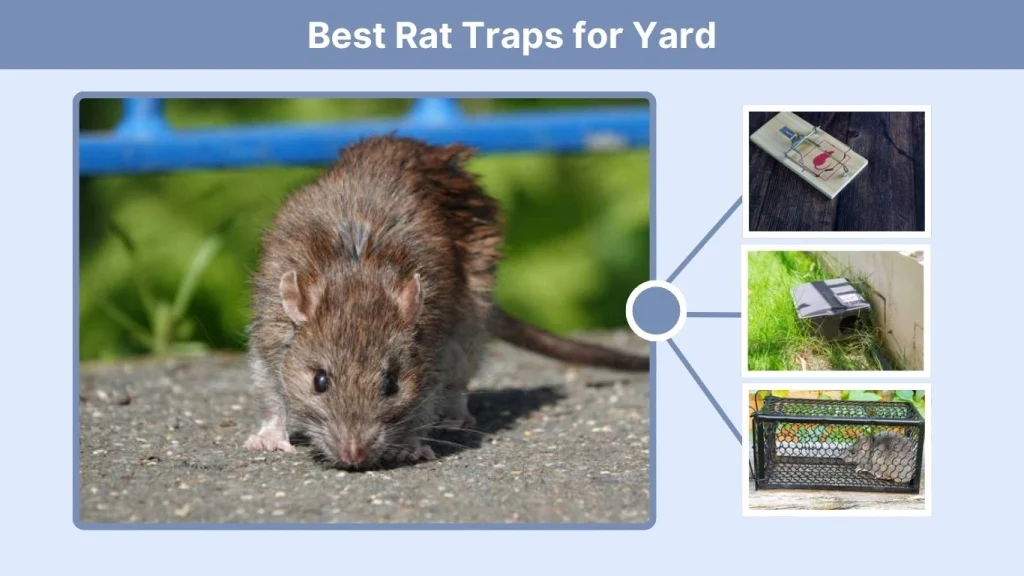
Outdoor traps can help reduce rat populations effectively when placed correctly near burrows, travel paths, or feeding areas.
- Snap traps
- Electronic traps
- Live traps
- Bait stations
- Multi-catch traps
Snap traps remain one of the fastest and most effective options for outdoor rat control. Electronic traps are another popular choice because they provide quick results with less direct contact.
Live traps capture rats without killing them, although relocation may not always solve the problem permanently if attractants remain in the yard.
Proper trap placement is essential for success. Rats tend to travel along walls, fences, and hidden pathways rather than crossing open spaces.
Natural Ways to Get Rid of Rats Outside
Some homeowners prefer starting with natural rat control methods before using stronger measures such as poison or professional extermination. While natural solutions may not eliminate a large infestation completely, they can help discourage rats and reduce outdoor activity when combined with proper yard maintenance.
- Peppermint oil around entry areas
- Predator scents to discourage nesting
- Keeping outdoor areas clean
- Reducing food and shelter access
- Encouraging natural predators like owls
Peppermint oil is commonly used because rats dislike strong smells. Cotton balls soaked with peppermint oil may be placed near burrows, sheds, or garbage areas, although the scent must be refreshed regularly to remain effective.
Cleaning food debris is one of the most important natural prevention methods. Even small food sources such as fallen fruit, spilled bird seed, or pet food can attract rats quickly.
Some homeowners also use owl boxes or encourage natural predators to help control rodent populations naturally. While this may not solve severe infestations, it can help reduce activity over time.
Rat Poison vs Traps
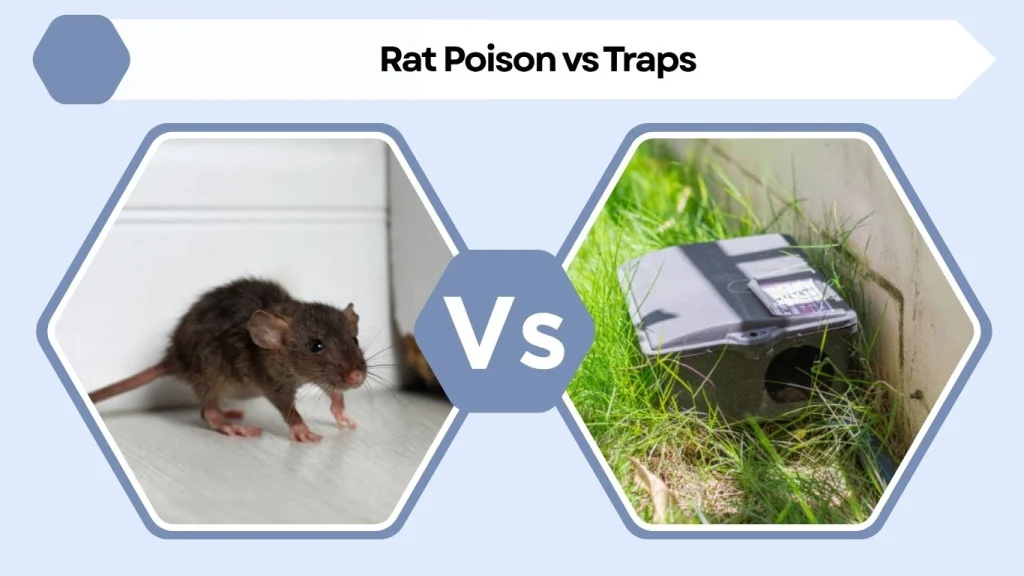
Both poison and traps are commonly used to control rats outdoors, but each method has advantages and disadvantages. Choosing the right option depends on the size of the infestation, safety concerns, and whether pets or wildlife are present nearby.
| Method | Pros | Cons |
| Snap Traps | Fast and effective | Requires monitoring |
| Electronic Traps | Quick kill with less contact | More expensive |
| Live Traps | Non-lethal option | Rats may return |
| Poison Bait | Useful for larger infestations | Dangerous to pets and wildlife |
| Bait Stations | Controlled poison placement | Slower visible results |
Traps are often preferred because they allow homeowners to monitor rat activity directly and avoid leaving poisoned rodents hidden in inaccessible areas.
Poison bait can reduce larger populations but carries additional risks. Pets, wildlife, and even birds of prey may be harmed if they consume poisoned rodents or bait directly. For households with children or pets, enclosed bait stations are generally safer than exposed poison.
How to Keep Rats Out of Your Yard
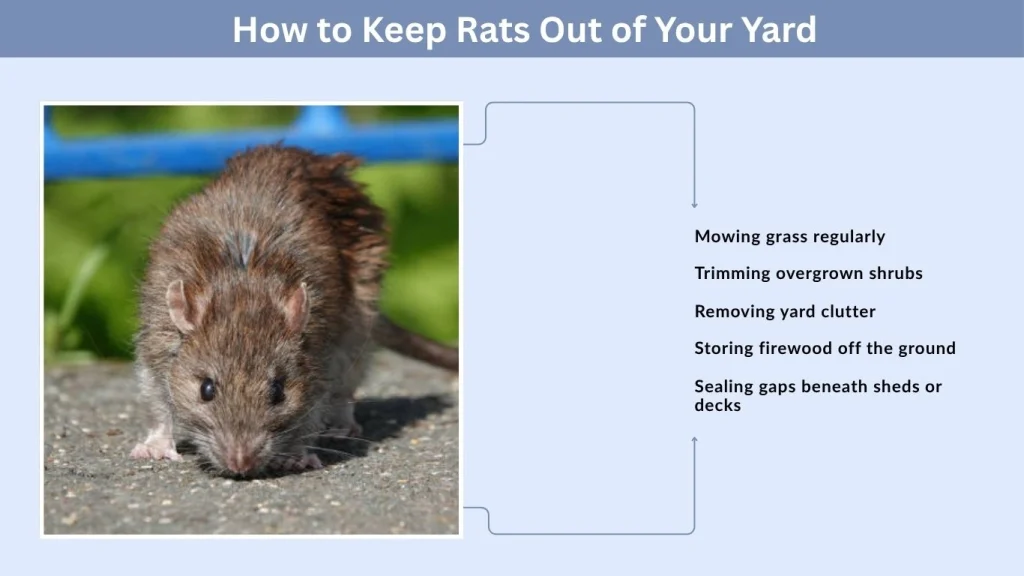
Long-term prevention is the most effective way to stop rats from returning after removal efforts. Even if traps reduce the population temporarily, rats may come back if food and shelter remain available.
Yard Maintenance Tips
Keeping the yard clean and open reduces the number of safe hiding places available for rodents.
Helpful maintenance practices include:
- Mowing grass regularly
- Trimming overgrown shrubs
- Removing yard clutter
- Storing firewood off the ground
- Sealing gaps beneath sheds or decks
Overgrown vegetation creates hidden pathways where rats can travel safely without being seen. Maintaining a cleaner yard makes the environment less attractive for nesting.
Food Prevention Strategies
Preventing access to food is one of the most important steps in long-term rat control.
Important prevention methods include:
- Using rodent-proof trash cans
- Cleaning bird feeder spills
- Storing compost securely
- Removing outdoor pet food at night
Even small amounts of accessible food can support an active rat population. Consistent food control greatly improves the effectiveness of traps and other removal methods.
When to Call Professional Pest Control
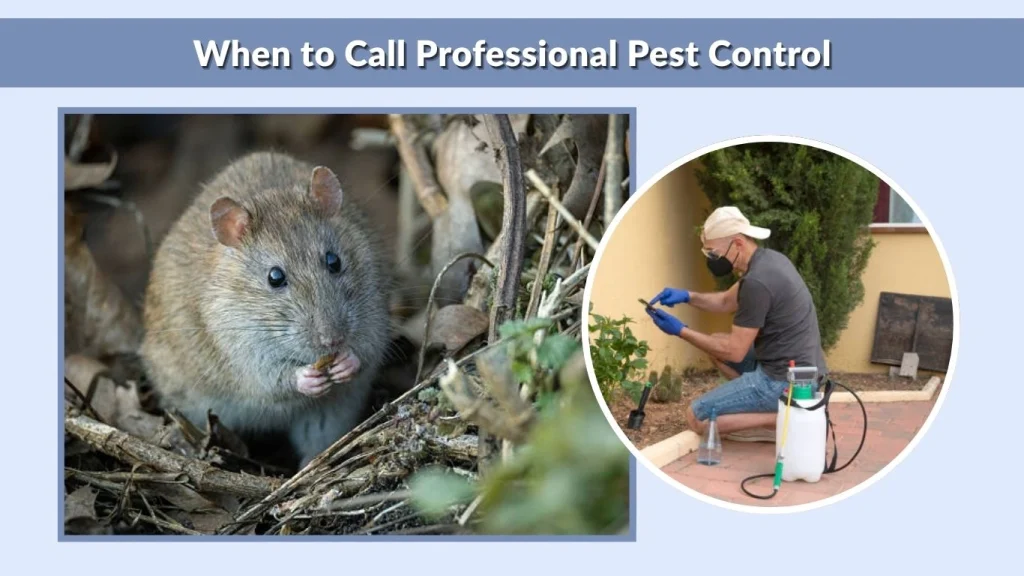
Some outdoor rat infestations become too large or difficult to manage with home methods alone. Professional pest control may be necessary when rat activity continues despite repeated cleanup and trapping efforts.
Signs You Need Professional Help
Certain situations often indicate the need for professional treatment.
Warning signs include:
- Large numbers of rats visible at night
- Repeated infestations returning quickly
- Rats entering the home or garage
- Strong odors from nesting areas
- Extensive burrow systems in the yard
Professionals can identify hidden nesting areas and determine how rats are entering the property.
What Professionals May Use
Pest control experts often combine several advanced methods to eliminate infestations more effectively.
These may include:
- Professional-grade bait systems
- Exclusion and sealing techniques
- Property inspections
- Long-term monitoring programs
Professional treatment is especially useful when rats have spread into walls, crawl spaces, attics, or underground burrow systems that are difficult to access safely.
Common Mistakes When Trying to Get Rid of Rats
Many homeowners unintentionally make mistakes that allow outdoor rat problems to continue growing. Avoiding these errors can improve the success of control efforts.
- Leaving food sources available
- Ignoring burrows and nesting sites
- Using too few traps
- Placing traps incorrectly
- Relying only on poison
One of the biggest mistakes is focusing only on killing rats without removing the reasons they are attracted to the yard in the first place.
Another common issue is poor trap placement. Rats usually travel close to walls, fences, and hidden edges rather than crossing open areas, so traps placed randomly in open spaces are often ineffective.
Ignoring burrows also allows rats to continue nesting and reproducing even after some rodents are removed.
Health Risks Associated With Rats
Outdoor rats can create serious health concerns because they spread bacteria, parasites, and diseases through droppings, urine, saliva, and contaminated surfaces.
Diseases Linked to Rats
Several illnesses are associated with rodent infestations, including:
- Leptospirosis
- Salmonella
- Hantavirus
Although disease transmission is not guaranteed, exposure risk increases when droppings and urine accumulate around outdoor living areas.
Risks From Rat Droppings
Rat droppings can contaminate soil, storage areas, pet spaces, and outdoor surfaces.
Possible risks include:
- Airborne particles during cleanup
- Food contamination
- Exposure for children and pets
- Spread of bacteria through contact surfaces
Proper cleanup and protective equipment are important when handling areas contaminated by rodents.
FAQs
What attracts rats to your yard?
Food, water, shelter, garbage, bird seed, compost piles, and dense vegetation commonly attract rats to outdoor spaces.
What do rat holes in the yard look like?
Rat holes are usually small burrow openings near foundations, sheds, decks, fences, or thick vegetation where rodents hide and nest.
What is the fastest way to get rid of rats outside?
Removing food sources, reducing shelter, and using traps together is usually the fastest and most effective way to control outdoor rats.
Are rats in the yard dangerous?
Yes, rats can spread diseases, contaminate outdoor areas, damage property, and eventually move closer to homes or buildings.
Do natural rat repellents really work?
Natural repellents may discourage rats temporarily, but combining prevention, sanitation, and trapping methods is usually much more effective for long-term control.