

The brown rat is one of the most common and widespread rodents in the world. Often found in cities, farms, and near human settlements, it has adapted extremely well to different environments. While it plays a role in ecosystems, it is also known as a major pest due to its ability to spread disease and damage property. Understanding how to identify brown rats, where they live, and how they behave is essential for managing and preventing infestations. In this guide, you’ll learn everything you need to know about this highly adaptable rodent.
What Is a Brown Rat?
The brown rat, also known as the Norway rat, is a large rodent species that is commonly found in urban and rural areas. It is known for its strong survival instincts, intelligence, and ability to thrive in environments close to humans.
Scientific Name and Classification
The scientific name of the brown rat is Rattus norvegicus. Despite the name “Norway rat,” it did not originate in Norway but is believed to have come from Asia before spreading worldwide.
It belongs to the rodent family, which includes mice, squirrels, and other similar mammals. Over time, the brown rat has become one of the most successful and adaptable rodent species on the planet.
Common Names
Brown rats are known by several names depending on the region and context. Some of the most common names include:
- Norway rat
- Sewer rat
- Street rat
These names often reflect the environments where they are commonly found, such as sewers, streets, and urban areas.
Brown Rat Identification
Correct identification is important when dealing with rodents, as different species may require different control methods. Brown rats have several distinct physical features that make them easier to recognize.
Physical Characteristics
Brown rats typically have coarse brown or gray fur. Their bodies are stocky and strong, giving them a heavier appearance compared to other rat species.
They have a blunt nose, small ears, and relatively small eyes. One of their key identifying features is their tail, which is thick and usually shorter than the length of their body.
Adult brown rats can grow quite large, often reaching up to 9–11 inches in body length, not including the tail. Their size alone can help distinguish them from smaller rodents.
Brown Rat vs Black Rat
Brown rats are often confused with black rats, but there are several differences between the two.
Brown rats are larger and heavier, with a more robust body. Black rats, on the other hand, are slimmer and have longer tails relative to their body length.
Their habitats also differ. Brown rats prefer ground-level areas such as burrows and basements, while black rats are more likely to be found in higher places like attics and trees.
Understanding these differences can help you identify which type of rat you are dealing with and choose the right control approach.
Where Do Brown Rats Live?
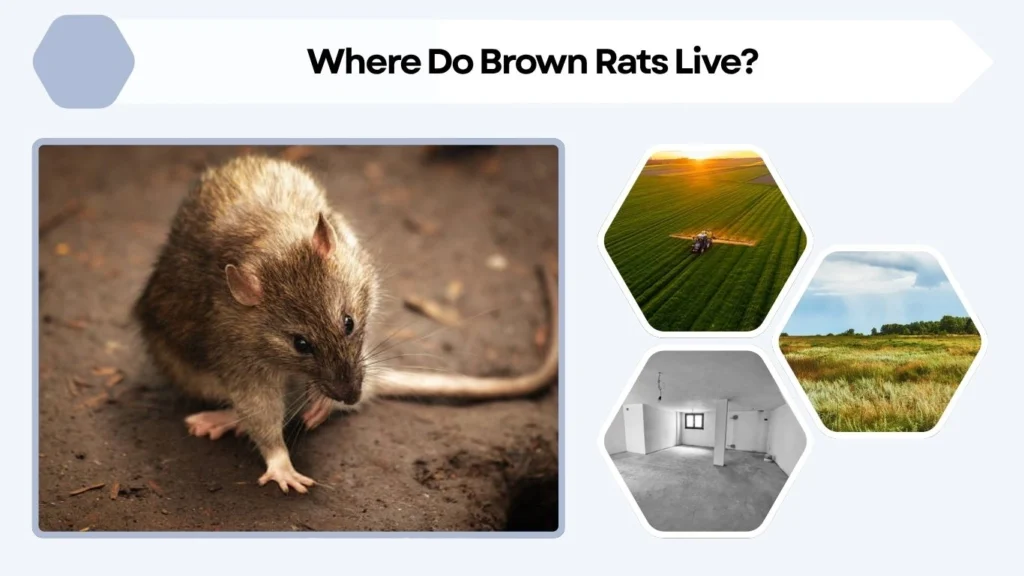
Brown rats are highly adaptable and can survive in a wide range of environments. They are most commonly found in areas where food and water are easily available.
Common Habitats
In urban areas, brown rats are often found in sewers, basements, and near garbage disposal sites. These locations provide both shelter and a steady food supply.
In rural settings, they may live on farms, fields, and near water sources such as rivers and ponds. They are particularly attracted to places where crops or stored food are available.
Their ability to live in both urban and rural environments makes them one of the most widespread rodent species.
Nesting Behavior
Brown rats typically build nests in hidden and protected areas. They often dig burrows underground, which serve as their primary shelter.
These burrows can be found near building foundations, under sidewalks, or in open fields. Inside structures, they may nest in walls, crawl spaces, or other dark and quiet areas.
Their nesting sites are usually close to food sources, allowing them to move quickly between shelter and feeding areas.
What Do Brown Rats Eat?
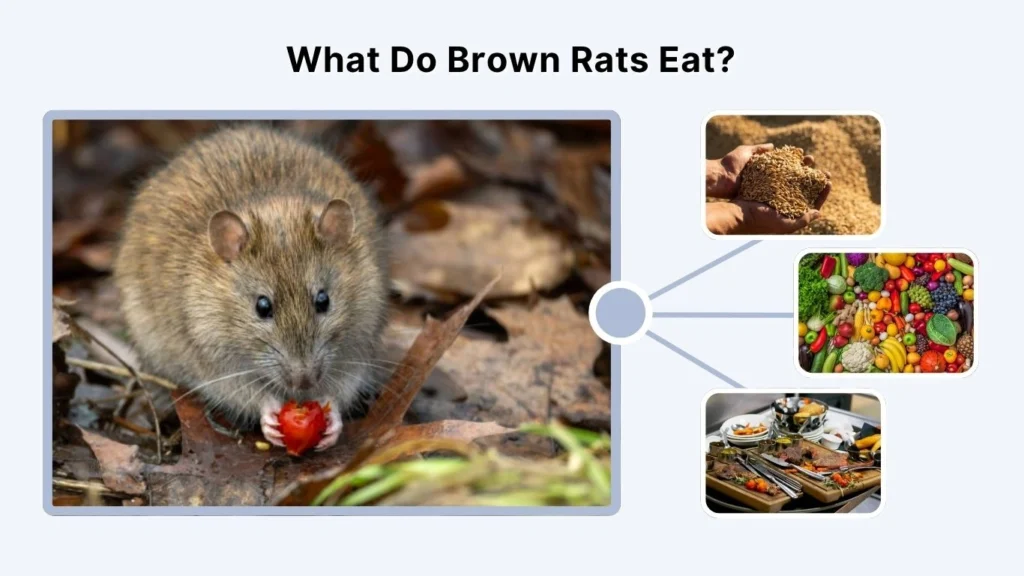
Brown rats are omnivores, meaning they eat both plant and animal-based foods. Their flexible diet is one of the reasons they are so successful in different environments.
- Grains and seeds
- Fruits and vegetables
- Meat and food scraps
- Garbage and waste
- Pet food
Brown rats are opportunistic feeders, which means they will eat whatever is available. In urban areas, they rely heavily on human food waste.
They are also known to store food in their nests for later use. This behavior helps them survive during times when food is scarce.
Because they can eat such a wide variety of foods, controlling their food sources is a key step in preventing infestations.
Brown Rat Behavior
Understanding brown rat behavior is important for detecting their presence and controlling their population. Their habits and patterns can reveal signs of infestation.
- Nocturnal (most active at night)
- Excellent swimmers
- Highly intelligent and cautious
- Reproduce quickly
- Live in groups
Brown rats are primarily nocturnal, meaning they are most active during the night. This is why infestations may go unnoticed until they become severe.
They are also excellent swimmers and can travel through sewer systems and waterways with ease. This ability allows them to spread quickly across different areas.
Their intelligence makes them cautious around new objects, including traps. This behavior, known as “neophobia,” can make them difficult to control.
Brown Rat Life Cycle and Lifespan
Brown rats reproduce quickly, which is one of the main reasons infestations can grow rapidly if not controlled. Understanding their life cycle helps explain how populations expand in a short time.
Reproduction
Brown rats are prolific breeders. A single female can produce multiple litters each year, with each litter containing around 6 to 12 pups.
The gestation period is short—about three weeks—allowing populations to increase quickly. Young rats grow fast and can begin reproducing within a few months, which adds to the rapid growth of infestations.
This high reproduction rate makes early detection and control essential.
Lifespan
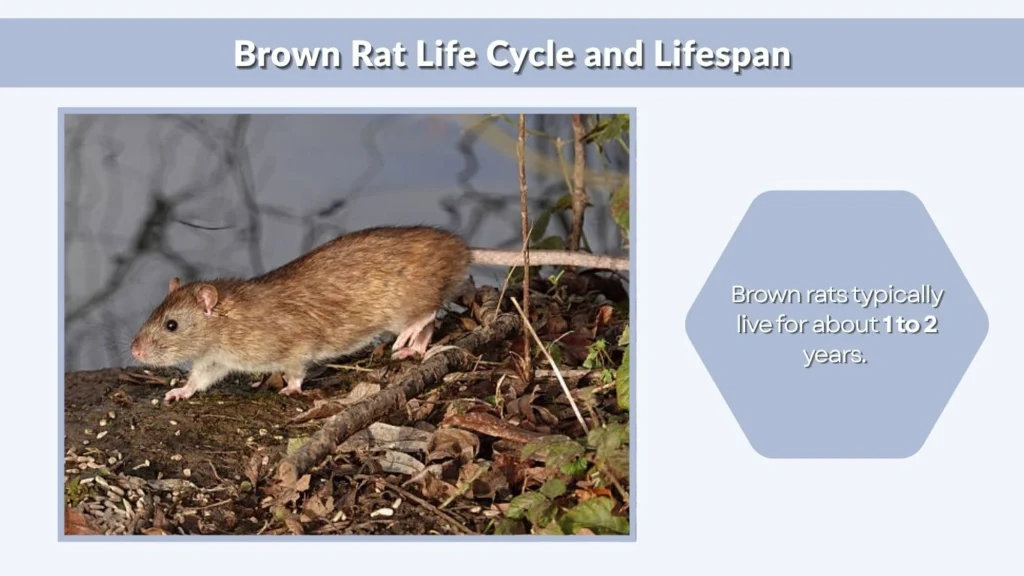
In the wild, brown rats typically live for about 1 to 2 years. However, many do not reach this age due to predators, disease, and environmental challenges.
In protected environments, such as inside buildings, they may live longer due to access to food and shelter. Even within a short lifespan, they can produce many offspring, contributing to population growth.
Are Brown Rats Dangerous?
Brown rats can pose both health and property risks, especially when they live close to humans. While they generally avoid direct contact, their presence can still create serious problems.
Risk Overview
| Risk Type | Description |
| Disease | Can spread bacteria and viruses |
| Property damage | Gnaw wires, wood, insulation |
| Contamination | Food and surfaces |
| Bites | Rare but possible |
Brown rats are known carriers of various diseases, which can spread through their droppings, urine, or direct contact. They can also carry parasites such as fleas and mites.
Health Risks
The main concern with brown rats is contamination. They can spread harmful bacteria to food and surfaces, which may lead to illness.
In addition, their constant gnawing behavior can damage electrical wires, increasing the risk of fires. This makes them not only a health hazard but also a safety concern for homes and buildings.
Although rat bites are rare, they can occur if a rat feels threatened or cornered.
Signs of a Brown Rat Infestation
Recognizing early signs of an infestation is important for preventing a larger problem. Brown rats often leave clear evidence of their presence.
- Droppings in hidden or dark areas
- Gnaw marks on wood, plastic, or wires
- Scratching or movement noises at night
- Burrows near foundations or outdoor spaces
- Grease marks along walls and surfaces
Droppings are one of the most common signs. They are usually dark, small, and found near food sources or nesting areas.
Scratching noises inside walls or ceilings often indicate active movement. Since rats are nocturnal, these sounds are usually heard at night.
Grease marks occur because rats follow the same paths repeatedly, leaving behind oily residues from their fur.
How to Get Rid of Brown Rats
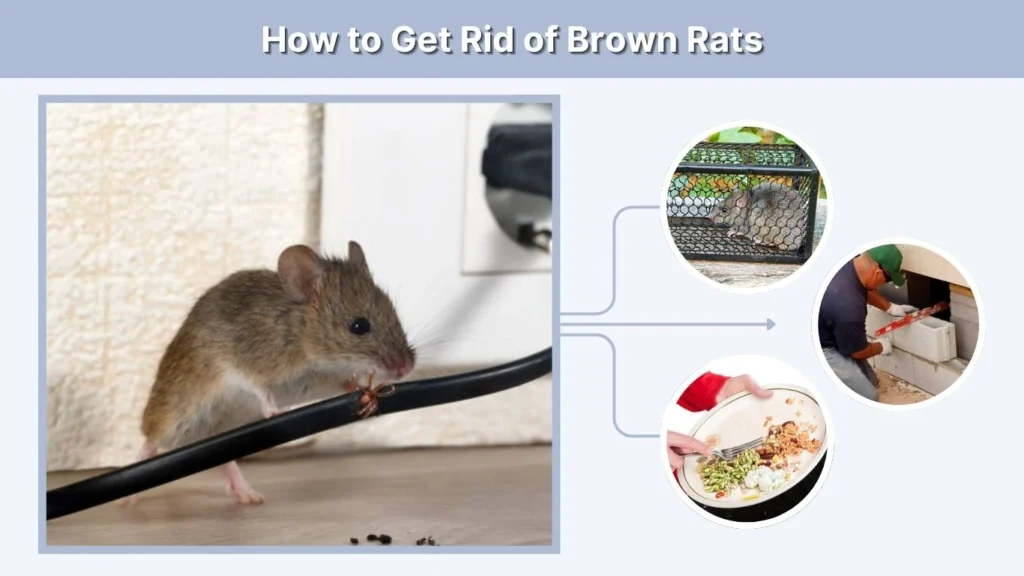
Effective control requires a combination of methods. Simply removing visible rats is not enough—you must address the root causes of the infestation.
- Use traps such as snap traps or live traps
- Seal all entry points in walls and foundations
- Remove access to food and water
- Use rodenticides carefully (if necessary)
- Maintain cleanliness and sanitation
Traps are one of the most common methods for removing rats. Placing them in areas where rats are active increases effectiveness.
Sealing entry points is essential to prevent new rats from entering. Even small openings can allow rats to squeeze through.
Eliminating food sources is equally important. Without access to food, rats are less likely to stay in the area.
How to Prevent Brown Rats
Prevention is the best way to avoid dealing with infestations. Simple steps can make your home less attractive to rats.
- Store food in sealed containers
- Dispose of garbage properly
- Seal cracks, holes, and gaps
- Remove clutter and hiding spots
- Eliminate standing water sources
Keeping your environment clean is one of the most effective prevention methods. Rats are attracted to areas with easy access to food and shelter.
Regular inspections can help you identify potential entry points before they become a problem. Fixing these early can save time and effort later.
Interesting Facts About Brown Rats
Brown rats have several surprising traits that make them highly adaptable and successful as a species.
- They can swim long distances and survive in water
- They have excellent memory and problem-solving skills
- They adapt quickly to new environments
- They are social animals that live in groups
- They are found on almost every continent
Their intelligence is one of their most notable traits. Brown rats can learn from experience and avoid traps, which makes them challenging to control.
They are also highly adaptable, able to survive in both urban and rural environments. This adaptability has contributed to their global spread.
FAQs
What is a brown rat?
A brown rat is a common rodent species also known as the Norway rat. It is widely found in urban and rural areas and is known for its adaptability and ability to live near humans.
Are brown rats dangerous to humans?
Yes, they can pose risks by spreading diseases, contaminating food, and causing property damage. However, direct attacks on humans are rare.
What do brown rats eat?
Brown rats are omnivores and eat a wide variety of foods, including grains, fruits, meat, garbage, and pet food.
Where do brown rats live?
They live in burrows, sewers, buildings, and areas near food and water sources. They prefer hidden, dark spaces for nesting.
How do you get rid of brown rats?
You can use traps, seal entry points, remove food sources, and maintain cleanliness to control and prevent infestations.